Tensions are roiling the North Atlantic Treaty Organization after a leaked internal Pentagon email laid out potential retaliatory measures against alliance members that have declined to back US military efforts in the ongoing Iran conflict, sparking a fierce debate over alliance cohesion and the future of collective defense commitments. The leak, first reported by Reuters via an unnamed senior US official, triggered immediate pushback from NATO leadership, affected member states and key European allies, who have moved quickly to reject any suggestion that membership could be revoked or suspended.
The controversy stems from growing friction between the US administration under Donald Trump and several NATO allies over responses to the Iran conflict that escalated after joint US-Israeli strikes on Iran in late February. Following the attacks, Iran restricted commercial shipping through the Strait of Hormuz, one of the world’s most critical chokepoints for global energy supplies. Spain has drawn particular US ire for its refusal to grant US forces access to its two military installations — Naval Station Rota and Morón Air Base — to launch offensive operations against Iran.
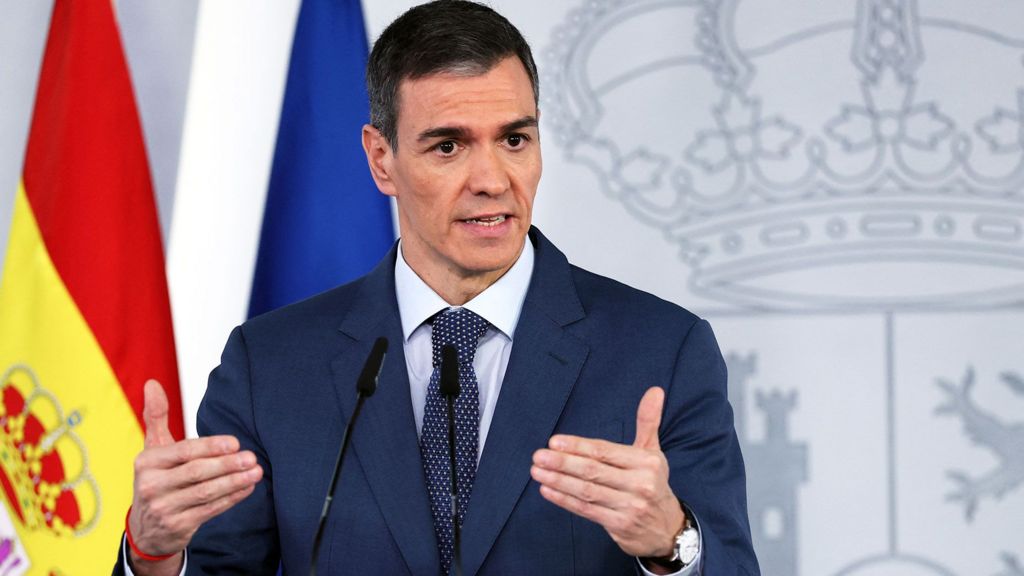
In the wake of the report claiming Washington was exploring options to suspend Spanish membership over its stance, a NATO spokesperson told the BBC that the alliance’s founding Washington Treaty contains no mechanism whatsoever to suspend or expel member states. Spanish Prime Minister Pedro Sánchez also dismissed the leaked memo outright, noting that Madrid only recognizes formal official communications from the US government. “We do not work based on emails. We work with official documents and official positions taken, in this case, by the government of the United States,” Sánchez told reporters. He added that Spain remains committed to full cooperation with its allies, but that all actions will adhere strictly to international law.
Beyond potential action against Spain, the leaked email also outlined a far more provocative proposal: reassessing longstanding US diplomatic support for the United Kingdom’s sovereignty claim over the Falkland Islands, a South Atlantic territory that is also claimed by Argentina as the Malvinas. The 1982 Falklands War between the UK and Argentina ended in British control of the archipelago, which sits roughly 300 miles off Argentina’s coast and 8,000 miles from the UK. UK Prime Minister Keir Starmer has already drawn a line against deeper involvement in the Iran conflict, saying that expanding UK participation in the war or supporting the current US port blockade of Iran runs counter to British national interests. While the UK has allowed the US to use its military bases for strikes on Iranian targets and has deployed Royal Air Force jets to shoot down Iranian drones, Starmer’s government has stopped short of full backing for the US campaign.
Other retaliatory options outlined in the memo included removing so-called “difficult” allied nations from key leadership positions within the alliance’s bureaucratic structure. The memo did not propose a full US withdrawal from NATO or the permanent closure of American military bases across Europe, the source told Reuters. Instead, it framed access to basing, staging and overflight rights as the non-negotiable baseline for alliance participation, arguing that members that refuse to extend these privileges should face consequences.
Trump has spent months openly criticizing NATO allies for what he frames as unequal burden-sharing and a lack of reciprocity in security commitments. Just last month, he repeated his longstanding claim that NATO has been a “one-way street” for the US, writing that “We will protect them, but they will do nothing for us.”
In an official comment following the leak, Pentagon Press Secretary Kingsley Wilson did not deny the existence of the internal memo, and echoed the president’s criticism of alliance members. “Despite ‘everything’ the US has done for its NATO allies, ‘they were not there for us,’” Wilson stated. She added that the Defense Department will work to present the president with actionable options to ensure that allies move beyond being a “paper tiger” and begin contributing their fair share to collective defense efforts, declining to offer further detail on internal deliberations.
Key European leaders have moved quickly to tamp down divisions and reaffirm their commitment to alliance unity in the wake of the leak. Italian Prime Minister Giorgia Meloni used a recent EU summit in Cyprus to call on all NATO members to close ranks, arguing that the alliance remains an indispensable source of collective strength for the transatlantic community. “We must work to strengthen NATO’s European pillar… which must clearly complement the American one,” Meloni told reporters.
A German government spokesperson echoed that sentiment in a regular Berlin press briefing, saying that Spain’s NATO membership is not in any doubt: “Spain is a member of NATO. And I see no reason why that should change.” Other European powers, including France, have joined the UK in saying they will only commit to securing the Strait of Hormuz after a lasting ceasefire or end to the conflict. The BBC has reached out to both the Pentagon and 10 Downing Street for additional comment on the leak and the proposals outlined in the memo.