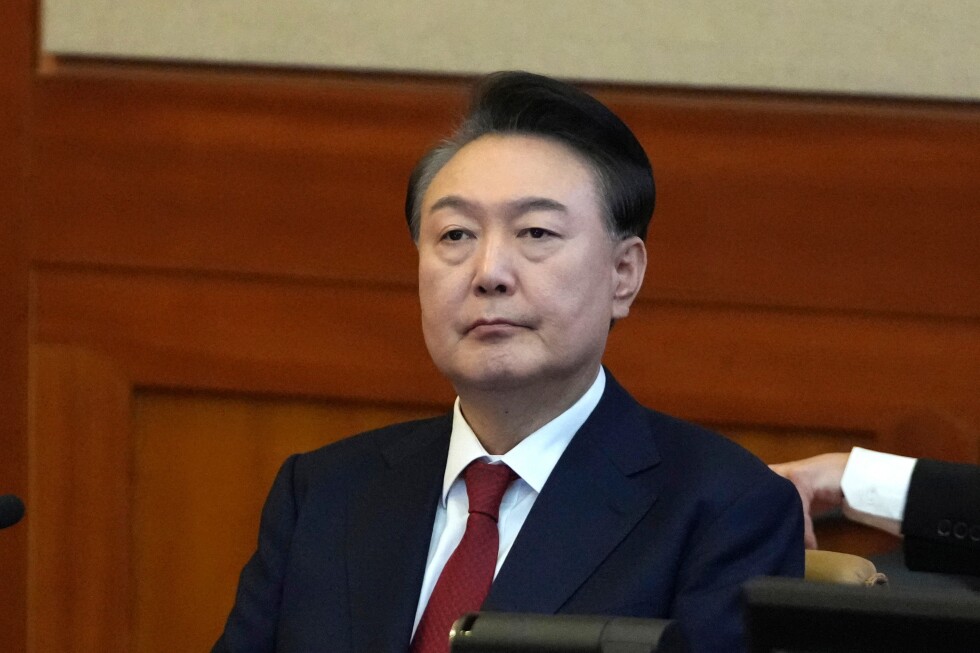
In a major development marking the closing phase of the criminal trial against former South Korean President Yoon Suk Yeol, state prosecutors have formally asked the Seoul Central District Court to sentence the ousted conservative leader to 30 years in prison over explosive allegations that he deliberately stoked cross-border tensions with North Korea to consolidate authoritarian power at home.
The charges against Yoon, which include aiding an adversarial power and multiple counts of abuse of authority, are part of a sprawling set of indictments connected to his short-lived, controversial declaration of martial law in December 2024. Special prosecutors led by independent investigator Cho Eun-suk argued in court Friday that Yoon and his top national security allies orchestrated unauthorized drone flights over Pyongyang roughly two months before the martial law declaration. Prosecutors allege the provocative drone incursions were intended to ratchet up inter-Korean hostilities, creating a manufactured crisis that Yoon could exploit to justify imposing domestic martial law, during which he labeled rival liberal political factions as North Korea-aligned “anti-state” forces.
North Korea first publicly accused South Korea of flying surveillance drones over Pyongyang to drop anti-regime propaganda leaflets on three separate occasions in October 2024. Then-Defense Minister Kim Yong Hyun, a close confidant of Yoon, initially issued an ambiguous denial of the claims, before South Korea’s Defense Ministry later revised its position to state it could neither confirm nor deny Pyongyang’s allegations. The incident triggered a sharp spike in cross-border tensions that lasted through the end of 2024.
Yoon ultimately moved forward with his late-night martial law declaration on December 3, 2024. In a live televised address to the nation, he attacked opposition liberal parties over a series of policy disputes, most notably their impeachment of his top appointed officials and cuts to his administration’s proposed budget. The extraordinary decree was overturned just six hours after it was announced, after a quorum of opposition and ruling-party lawmakers breached blockades set up by armed soldiers and police that Yoon had deployed to shut down access to the National Assembly. Lawmakers voted unanimously to invalidate the martial law order, forcing Yoon’s cabinet to formally rescind the measure.
The political fallout from the crisis unfolded rapidly: Yoon was suspended from presidential duties on December 14, 2024, following impeachment by the liberal-controlled National Assembly, and the Constitutional Court formally removed him from office in April 2025. He was taken into custody in July 2025 and has since stood trial on multiple overlapping criminal charges connected to the martial law incident. Earlier this year, the Seoul Central District Court found Yoon guilty of the more severe charge of rebellion and sentenced him to life in prison. Both Yoon, who has maintained his innocence, and prosecutors — who had originally pushed for a death sentence in that case — have appealed the verdict. Yoon’s legal team has repeatedly denied all allegations against him, and had no immediate public response to Friday’s 30-year sentence request.
Prosecutors are also seeking a 25-year prison term for Kim Yong Hyun, Yoon’s former defense minister and a key co-conspirator who they say helped plan the martial law declaration and mobilize military forces to implement it. In a public statement released Friday, Cho’s investigation team alleged that Yoon deliberately sought to create a de facto state of war between the two Koreas as part of a premeditated plot to remove political opponents, monopolize state power and extend his time in office beyond his legal term.
Yoon’s brief martial law declaration plunged South Korea into one of its most severe political crises in modern history, paralyzing domestic governance, halting high-level diplomatic engagement, and triggering significant volatility in South Korean financial markets. The political turmoil only stabilized after Yoon’s liberal rival, Lee Jae Myung, won a snap presidential election in June 2025. Shortly after taking office, Lee signed into law legislation authorizing independent, wide-ranging investigations into the martial law incident and all other criminal allegations against Yoon, his wife, and his close political associates.