分类: politics

  • What does a war win look like for US, Israel and Iran?

    What does a war win look like for US, Israel and Iran?

    The Middle Eastern military confrontation enters its third week with escalating intensity as Iran demonstrates unexpected resilience against combined US-Israeli operations. The conflict, initiated on February 28 as a voluntary military engagement by Washington and Jerusalem, has evolved into a protracted struggle with no clear resolution in sight.

    Tehran’s Islamic regime is engaged in a battle for survival while simultaneously executing a strategy of asymmetric warfare designed to inflict maximum regional and global economic disruption. Despite inferior conventional military capabilities compared to the US-Israeli alliance, Iranian forces have maintained operational continuity and institutional stability, rapidly appointing Mojtaba Khamenei as successor to the slain supreme leader.

    The American position, characterized by contradictory objectives and unclear strategic goals, contrasts sharply with Israel’s explicitly stated ambition to dismantle both the Iranian regime and diminish Iranian state sovereignty. Prime Minister Netanyahu has further articulated expansionist territorial ambitions based on biblical references to ‘greater Israel,’ receiving unexpected endorsement from US Ambassador Mike Huckabee.

    Military analysts observe that the conflict has entered a critical phase where missile and interceptor inventories may determine the eventual outcome. Meanwhile, Iran continues to leverage regional proxy networks and economic pressure tactics, attempting to transform the bilateral confrontation into a broader regional crisis that might compel Gulf Arab states to intervene diplomatically.

    The humanitarian consequences continue to mount, with Iranian and Lebanese civilian populations bearing disproportionate casualties. The conflict has already triggered global energy market disruptions through attacks on critical infrastructure including Kharg Island’s oil export facilities, though Trump administration officials maintain these economic impacts remain temporary.

    As the war progresses without clear exit strategies, international observers anticipate either material exhaustion or political declaration of victory as potential conclusion scenarios, though neither outcome promises regional stability in the polarized post-conflict landscape.

  • China issues further extension to rural land contracts

    China issues further extension to rural land contracts

    In a landmark move to safeguard agricultural stability and protect farmer interests, China has announced a comprehensive 30-year extension for rural land contracts upon their expiration. The policy directive, jointly issued by the General Offices of the Communist Party of China Central Committee and the State Council on March 18, 2026, establishes detailed frameworks affecting hundreds of millions of rural residents.

    The guideline outlines 15 specific measures centered on preserving collective land ownership, maintaining the household-based contract system, and ensuring social stability across rural communities. This extension represents a critical component of China’s ongoing rural reform initiatives, building upon pilot programs that have been progressively expanded since 2020 under the supervision of the Ministry of Agriculture and Rural Affairs.

    Implementation will commence with large-scale pilot programs across 29 provincial-level regions throughout 2026. The policy explicitly prohibits the redistribution of farmland between villages and mandates that existing land arrangements remain fundamentally unchanged. No organization or individual may illegally adjust or reclaim contracted land, ensuring stability for current landholders.

    The extension process will follow standardized procedures including formation of specialized working groups, verification of land data, public consultation on extension plans, contract signing ceremonies, and certificate updates. Particular attention is given to protecting vulnerable groups including women affected by marital status changes and farmers who have migrated to urban areas.

    Notably, the guidelines introduce mechanisms for voluntary and compensated withdrawal from land contract rights, while imposing strict limits on reserve land management—capping such allocations at 5% of total collective farmland. Local authorities are instructed to complete all contract extensions within one year following expiration of existing agreements, with emphasis on coordinated implementation and transparent ownership clarification.

  • Defense spokesman: Philippine ‘farce’ won’t shake China’s resolve on Huangyan Island

    Defense spokesman: Philippine ‘farce’ won’t shake China’s resolve on Huangyan Island

    China’s Ministry of National Defense has issued a strong condemnation of recent Philippine Coast Guard activities near Huangyan Island (also known as Scarborough Shoal), characterizing them as carefully orchestrated propaganda efforts rather than legitimate maritime operations. Senior Colonel Jiang Bin, speaking as defense spokesman, delivered Beijing’s official response to what he described as Manila’s provocative tactics in the disputed waters.

    The criticism specifically addresses an incident on March 7 when a Philippine reconnaissance aircraft carrying journalists allegedly received warnings from Chinese naval vessels while conducting patrols near the island. The Philippine Coast Guard had announced intentions to increase transparency through enhanced public communication and additional patrols, claiming these measures would counter Chinese assertiveness in the region.

    Jiang dismissed these actions as ‘self-directed farces’ designed to fabricate a false narrative of victimhood. ‘Edited footage and fabricated lies can never change China’s sovereignty over our islands and reefs in the South China Sea, including Huangyan Island,’ he stated during Wednesday’s briefing. The spokesman emphasized that China considers its sovereignty over the island and adjacent waters ‘indisputable’ under international law.

    The defense spokesman further asserted that China’s response to Philippine maneuvers remained ‘legitimate, professional and restrained’ given the circumstances. Jiang confirmed that China would continue implementing ‘effective countermeasures’ against any actions deemed violations of Chinese rights or provocations in the region, underscoring Beijing’s determination to safeguard its territorial claims through appropriate legal and military channels.

  • Venezuela’s acting president names new defense chief to replace longtime Maduro loyalist

    Venezuela’s acting president names new defense chief to replace longtime Maduro loyalist

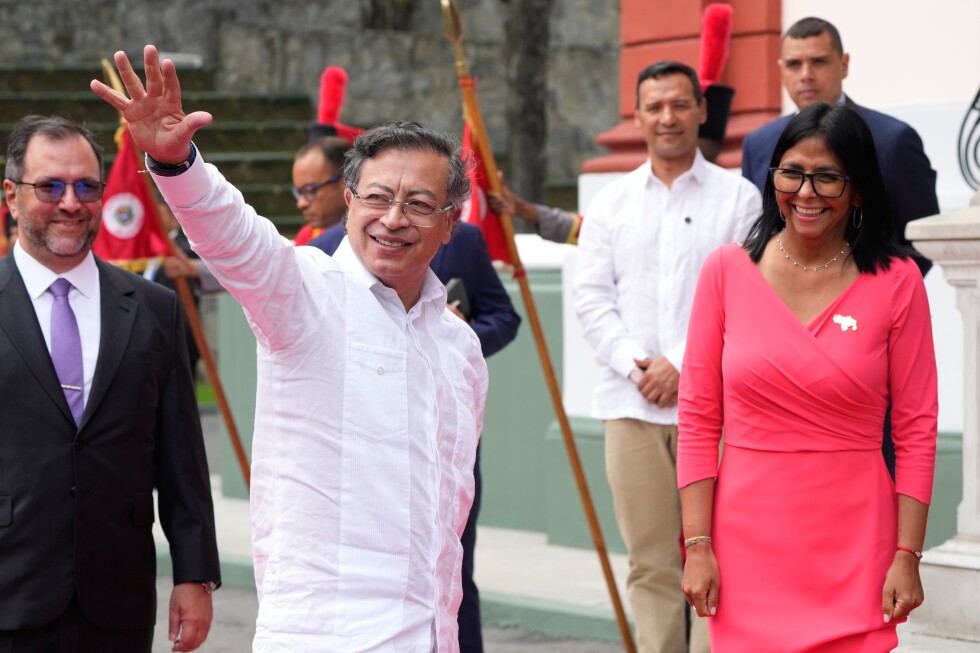
    CARACAS, Venezuela — In a significant governmental reorganization, Venezuela’s Acting President Delcy Rodríguez unveiled a comprehensive Cabinet restructuring on Wednesday, most notably replacing Defense Minister Gen. Vladimir Padrino López with Gen. Gustavo González López. The transition, announced via Rodríguez’s Telegram channel, takes immediate effect as the administration navigates heightened U.S. pressure following former President Nicolás Maduro’s capture.

    Rodríguez expressed gratitude to Padrino López for his ‘loyalty to the Homeland’ while conveying confidence in his future governmental roles. The leadership change occurs just over ten weeks after Rodríguez assumed executive authority, triggered by the January 3rd U.S. military operation that apprehended Maduro to face drug trafficking charges in American courts.

    The newly appointed defense chief brings substantial intelligence expertise to the position but carries controversial credentials. González López faced U.S. sanctions for his involvement in suppressing 2014 street protests and recently commanded both the presidential honor guard and the military’s formidable counterintelligence agency since Rodríguez’s security detail reshuffle in early January.

    Padrino López had served as one of the most enduring Cabinet members since Maduro’s 2013 inauguration and held the defense portfolio since 2014, representing a pillar of military support for the former administration. The cabinet realignment signals a strategic repositioning as the current leadership faces intensified international scrutiny over governing the resource-abundant nation.

  • ‘We are crazy radicals’: Israel’s anti-war protesters struggle against ruling consensus

    ‘We are crazy radicals’: Israel’s anti-war protesters struggle against ruling consensus

    A small but determined anti-war movement is beginning to surface in Israel as the military conflict with Iran enters its third week, presenting a stark contrast to the overwhelming national consensus supporting the campaign. Despite facing widespread public opposition and official scrutiny, dissenting voices are organizing modest demonstrations in major cities including Jerusalem and Tel Aviv.

    Recent protests, typically numbering fewer than one hundred participants, have featured activists wearing orange jumpsuits and masks depicting Prime Minister Benjamin Netanyahu while chanting anti-war slogans. These demonstrations have drawn criticism from passersby and faced rapid dispersal by police authorities, with several activists reportedly arrested in Haifa and Tel Aviv.

    The dissent emerges against a backdrop of significant human cost. Israeli casualties currently stand at fifteen fatalities, including nine victims of a direct strike on Beit Shemesh, while Iranian and Lebanese casualties number in the thousands with millions displaced across the region.

    According to recent polling data from the Israel Democracy Institute, 92.5% of Israeli citizens support Operation Roaring Lion, the codename for the current military campaign. Support among Palestinian citizens of Israel is significantly lower, with 65% expressing opposition.

    A coalition of eighty Jewish and Arab organizations recently delivered an open letter to both Netanyahu and U.S. President Donald Trump, criticizing the operation as pursuing “unattainable goals” while lacking “a clear exit strategy.” The letter was coordinated by It’s Time, a peacebuilding coalition whose creative director Mika Almog (granddaughter of former Prime Minister Shimon Peres) argues the conflict has created severe domestic consequences including school closures, economic disruption, and constant danger for Israeli children.

    Almog traces regional instability to the unresolved Israeli-Palestinian conflict, noting that seven million Palestinians “living under occupation” without future prospects creates inevitable deterioration. She emphasizes that since the 1995 assassination of Prime Minister Yitzhak Rabin, peace negotiations have not been presented to the public as realistic options.

    Political opposition has largely reinforced rather than challenged the government’s position. Main rival Naftali Bennett expressed full support for military leadership, while opposition leader Yair Lapid advocated for destructive strikes on Iran’s oil infrastructure. Mainstream media has predominantly echoed establishment views, with Haaretz columnist Gideon Levy noting that “raising doubts about the war is not legitimate” in current discourse.

    Despite the challenging environment, protesters like 23-year-old Orthodox Jew Lawrence Shenkin maintain that “war is a temporary measure with temporary solutions” until genuine peace is achieved. Analysts suggest that if the conflict extends for months, criticism may gain broader traction as domestic costs increase.

  • Turkey tightens military-transit rules to stop illicit arms trade

    Turkey tightens military-transit rules to stop illicit arms trade

    Ankara has significantly enhanced regulatory oversight of military equipment and defense-related goods transiting through Turkish territory under a newly enacted regulation. The framework, formally published in the Official Gazette on Monday, establishes comprehensive inspection protocols for defense industry products and components moving through Turkish transit routes or being re-exported by Turkish entities under transit trade arrangements.

    The cornerstone of the new regulation mandates that shippers must obtain a formal letter of conformity from the Ministry of Trade before moving controlled items through Turkish territory. The ministry will conduct thorough assessments of each application in consultation with relevant institutions and organizations. Shipments lacking this mandatory documentation will be prohibited from transiting through Turkey.

    Notably, the regulation extends beyond conventional military hardware, granting authorities inspection rights over products not typically classified as military components. The Ministry of Trade reserves the right to initiate conformity procedures when there is suspicion of potential military application, identified risks to national or international security, possible human rights violations, or concerns regarding adverse consequences for international relations.

    Turkish officials familiar with the matter clarified that the primary objective is to strengthen oversight of re-export activities rather than facilitate weapons transit. One official emphasized Ankara’s determination to prevent Turkey from becoming a hub for illicit arms trading, enabling more effective monitoring of cargo origins, contents, and final destinations.

    Defense industry experts speaking anonymously revealed that the regulation specifically targets attempts by arms dealers to utilize Turkish routes for channeling weapons from Eastern Europe and the Balkans into conflict zones. Particular concerns have been raised about weapons destined for Libya and Sudan, with suppliers allegedly using Turkish ports and borders as transit points due to direct shipment restrictions.

    The timing of the implementation has generated discussion on social media platforms, with some commentators questioning potential implications for NATO weapon transfers and Iran’s military imports given Turkey’s extensive border with Iran. However, official sources maintain the regulation is exclusively focused on preventing unauthorized arms trafficking through Turkish territory.

  • Trump nominee for Homeland Security chief grilled at fiery Senate hearing

    Trump nominee for Homeland Security chief grilled at fiery Senate hearing

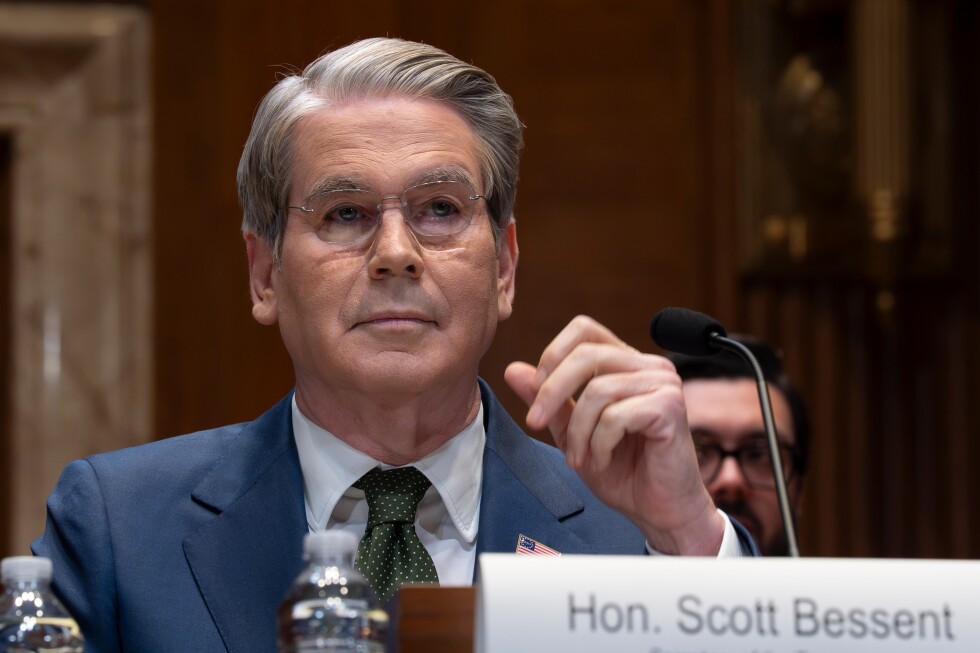
    In a heated Senate confirmation hearing on Wednesday, Markwayne Mullin, President Donald Trump’s nominee to lead the Department of Homeland Security, faced intense scrutiny over immigration policy and past controversial statements. The Oklahoma senator appeared before the Senate Homeland Security Committee, where he clashed notably with Committee Chairman Rand Paul, a fellow Republican who later announced he would oppose Mullin’s nomination.

    The hearing revealed deep divisions within the Republican party, with Paul confronting Mullin about past comments in which Mullin had called Paul a ‘freaking snake’ and suggested he understood why Paul had been assaulted by a neighbor in 2017. Paul questioned whether someone with ‘anger issues’ should lead an agency responsible for setting proper examples for immigration enforcement personnel.

    Mullin distanced himself from his fired predecessor Kristi Noem, who was dismissed partly due to her handling of a recent operation against undocumented migrants in Minnesota that resulted in federal agents shooting dead two U.S. citizen protesters. Mullin retracted previous remarks describing one of the deceased as a ‘deranged individual,’ conceding, ‘I shouldn’t have said that.’

    Regarding his vision for DHS, Mullin stated he aims to reduce the agency’s constant media presence: ‘My goal in six months is that we’re not the lead story every single day.’ He proposed restructuring ICE to focus more on transport rather than front-line enforcement and requiring judicial warrants for home or business entries unless pursuing known felons. Mullin also advocated for maintaining but restructuring FEMA, contrary to some administration proposals to eliminate the agency.

    With Republicans holding an 8-7 majority on the committee, Mullin’s nomination advancement requires a simple majority. Democratic Senator John Fetterman indicated he maintains an ‘open mind’ about the nomination. The committee vote is scheduled for Thursday.

  • ‘Act of domination’: Top Tory MP criticised for attack on Muslims praying in Trafalgar Square

    ‘Act of domination’: Top Tory MP criticised for attack on Muslims praying in Trafalgar Square

    A prominent Conservative MP has sparked widespread condemnation across Britain’s political spectrum after characterizing Muslim prayers at a public Ramadan event as an “act of domination.” Nick Timothy, former Downing Street chief of staff and current shadow justice secretary, faced bipartisan criticism for his remarks about the “Open Iftar” gathering in London’s Trafalgar Square that attracted multi-faith participants including Mayor Sadiq Khan.

    Timothy took to social media platform X on Monday to share footage of the prayer session, asserting that “mass ritual prayer in public places is an act of domination” and specifically targeting the adhan (Islamic call to prayer) as “a declaration of domination.” His comments ignited immediate backlash from parliamentary colleagues who defended Britain’s tradition of religious expression in public spaces.

    Independent MP Adnan Hussain responded by sharing historical images of Hindu, Jewish, and Sikh religious events held in the same landmark square, directly challenging Timothy: “Do you object when Sikhs, Hindus or Jews gather in Trafalgar Square? Or is it only Muslims you smear with talk of ‘domination’?”

    The criticism extended across party lines with former Conservative Attorney General Dominic Grieve noting that Trafalgar Square has historically hosted Christian and other religious events with official permission. Grieve warned that Timothy’s position either advocated for French-style secularism contrary to British tradition or represented outright discrimination against Muslims.

    Senior Labour figures intensified the rebuke, with Deputy Prime Minister David Lammy accusing Timothy of “fanning the flames of division” and Deputy Labour Leader Lucy Powell labeling his reaction “extreme” and reflective of “desperate hatred.”

    In contrast, Reform UK MPs Richard Tice and Sarah Pochin supported Timothy’s position, with Pochin traveling to the square to film a condemnation of what she termed a “domineering show of religious authority.” The event organizers, Ramadan Tent Project, emphasized their mission to “bring communities together and spread the spirit of Ramadan” through events open to all, including vulnerable and homeless individuals.

  • As Zambia nears election season, some warn against the ‘sextortion’ of female candidates

    As Zambia nears election season, some warn against the ‘sextortion’ of female candidates

    LUSAKA, Zambia — A disturbing pattern of sexual exploitation has emerged within Zambia’s political landscape, with senior male party officials allegedly demanding sexual favors from female election candidates in exchange for political endorsements. The scandal has triggered widespread condemnation from politicians and women’s rights advocates across the nation.

    The issue gained national attention when Mainga Kabika, Permanent Secretary of the government’s Gender Division, revealed this week that her office had received ten formal complaints of sexual harassment. The complaints allege that various high-ranking party officials—including chairpersons, youth leaders, and other senior figures—have solicited sexual exchanges for endorsing women candidates in Zambia’s upcoming August 13 national elections.

    Kabika issued a public appeal urging aspiring female candidates to gather concrete evidence against perpetrators, though she refrained from identifying specific parties or individuals implicated in the allegations.

    Saboi Imboela, President of the opposition National Democratic Congress, confirmed to The Associated Press that this problematic practice recurs during every election cycle. She noted that qualified candidates frequently find themselves sidelined for refusing to comply with these inappropriate demands, resulting in less capable individuals securing nominations instead.

    In response to the crisis, female politicians and NGOs including the Zambia National Women’s Lobby have established a special committee to combat what Imboela terms ‘sextortion.’ The initiative includes a toll-free helpline to support victims and document cases.

    The timing is particularly significant as Zambia prepares for comprehensive elections that will determine the presidency, parliamentary representatives, and local councilors. The nation currently suffers from severe gender imbalance in politics, with women occupying merely 15% of parliamentary seats according to the Inter-Parliamentary Union.

    Golden Nachibinga, Executive Director of the Zambia National Women’s Lobby, emphasized that previous allegations of similar misconduct have historically deterred women from political participation. Venna Banda, a mayoral aspirant for the ruling United Party for National Development, acknowledged her own encounters with sexual harassment during her political journey and urged women to resist such advances, while acknowledging the particular vulnerability of inexperienced candidates.

    Despite being a stable democracy, Zambia maintains a largely conservative and patriarchal social structure. The government attempted to address gender disparities last year by legislation reserving at least 20 parliamentary seats for women while also promoting representation for youth and disabled persons. President Hakainde Hichilema has previously acknowledged gender imbalances in Zambian politics, though his administration includes Vice President Mutale Nalumango, one of the nation’s highest-ranking female officials.

  • Five takeaways from Markwayne Mullin’s Homeland Security confirmation hearing

    Five takeaways from Markwayne Mullin’s Homeland Security confirmation hearing

    In a politically charged confirmation hearing, Oklahoma Senator Markwayne Mullin faced rigorous questioning from Senate colleagues regarding his nomination to lead the Department of Homeland Security. The hearing occurred amid a partial government shutdown that has left DHS without funding for five weeks, affecting approximately 280,000 employees who continue working without pay.

    Mullin, known for his combative rhetorical style, promised a transformed approach to immigration enforcement while committing to protect all Americans regardless of political differences. ‘I can have different opinions with everybody in this room, but as Secretary of Homeland Security, I’ll be protecting everybody,’ Mullin stated during the three-hour proceedings.

    The nomination hearing revealed deep partisan divisions, with Republicans criticizing Democrats for the funding impasse while Democrats pressed Mullin on Immigration and Customs Enforcement (ICE) practices. Several Democratic senators questioned Mullin about his previous controversial comments, including his remarks about Alex Pretti, a 37-year-old man fatally shot by federal immigration officials in Minneapolis. While expressing regret for his characterization of Pretti as ‘deranged,’ Mullin declined to apologize to the family pending investigation completion.

    Judicial warrants emerged as a significant point of contention, with Senator Richard Blumenthal (D-Connecticut) raising concerns about ICE agents allegedly being instructed to break into homes without proper authorization. Mullin committed to requiring judicial warrants for property entries unless agents are actively pursuing someone inside.

    The hearing took a dramatic turn when Senator Rand Paul (R-Kentucky), the committee chair, confronted Mullin about his past comments seemingly endorsing political violence. Paul referenced his own 2017 assault where he suffered six broken ribs, noting Mullin had previously stated he understood why the attack occurred. Despite this contentious exchange, Mullin’s nomination appears likely to advance with expected support from Senator John Fetterman (D-Pennsylvania).

    In an unexpected display of reconciliation, Sean O’Brien, president of the International Brotherhood of Teamsters, appeared in the front row. O’Brien had verbally attacked Mullin during a 2023 hearing, leading to a near-physical altercation that went viral. The two men have since reconciled, with Mullin shaking only O’Brien’s hand as he approached the dais, demonstrating an unexpected political détente.