分类: politics

  • 2 men appear in court accused of ‘hostile’ surveillance of UK’s Jewish community for Iran

    2 men appear in court accused of ‘hostile’ surveillance of UK’s Jewish community for Iran

    Two Iranian nationals have appeared before Westminster Magistrates’ Court in London facing allegations of conducting hostile surveillance operations against British Jewish targets on behalf of Iranian intelligence services.

    Nematollah Shahsavani, a 40-year-old Iranian-British dual national, and Alireza Farasati, a 22-year-old Iranian citizen residing in London, are formally charged with engaging in activities likely to assist a foreign intelligence service between July 9 and August 15 of the previous year. Both defendants were arrested on March 6 as part of a broader national security investigation.

    Prosecutor Louise Attrill presented evidence indicating the defendants targeted multiple significant locations within London’s Jewish community, including the Israeli Embassy, a Jewish community center, an educational institution, and Britain’s oldest synagogue. The surveillance operation allegedly sought to gather intelligence on individuals and establishments connected to the Israeli and Jewish communities in the United Kingdom.

    During the preliminary hearing, neither defendant entered a formal plea. However, Farasati’s legal representation indicated their client would contest the charges. Chief Magistrate Paul Goldspring ordered both men remanded in custody pending their next appearance at London’s Central Criminal Court scheduled for April 17.

    The investigation has revealed broader implications for UK-Iran relations, with two additional British-Iranian nationals arrested in connection with the same probe subsequently released without charge. This case emerges against a backdrop of heightened security concerns, as MI5 Director General Ken McCallum disclosed in October that British authorities had disrupted more than twenty potentially lethal Iran-backed plots within the preceding twelve-month period.

  • Iranian president condemns attacks on Iran’s energy infrastructure

    Iranian president condemns attacks on Iran’s energy infrastructure

    Iranian President Masoud Pezeshkian has issued a stern condemnation of what he characterized as coordinated U.S. and Israeli assaults on Iran’s critical energy infrastructure. The presidential denunciation came through an official statement on social media platform X, responding directly to aerial strikes targeting facilities within Iran’s massive South Pars gas field in the southern region of the country.

    President Pezeshkian warned that such aggressive military actions risk escalating regional tensions to dangerous levels, potentially triggering “uncontrollable consequences” that could extend beyond the Middle East to engulf global stability. The Iranian leader’s statement emphasized that targeted attacks on national energy assets represent a severe provocation that could fundamentally alter the regional security landscape.

    Echoing the presidential sentiment, Iranian Parliament Speaker Mohammad Bagher Ghalibaf separately declared that a “new level of confrontation” had been initiated, invoking the principle of reciprocal retaliation. Ghalibaf’s social media post characterized the attacks as acts of “suicide for them (the enemies),” suggesting Tehran possesses both the capability and determination to respond in kind.

    According to Iranian state media reports, the assaults specifically targeted natural gas facilities connected to the offshore South Pars field, one of the world’s largest natural gas deposits shared between Iran and Qatar. Israeli media outlets, citing anonymous official sources, attributed the strikes to the Israeli Air Force.

    This development follows the February 28 joint U.S.-Israeli operations that struck Tehran and multiple Iranian cities, resulting in the death of Supreme Leader Ali Khamenei along with senior military personnel and civilians. Those previous attacks prompted Iran to launch extensive missile and drone counterstrikes against Israeli territory and American military installations across the Middle East, signaling a dangerous escalation in long-standing regional tensions.

  • China issues pilot work guideline for rural land contracts extension

    China issues pilot work guideline for rural land contracts extension

    The Chinese government has unveiled a comprehensive framework for implementing a nationwide pilot program extending rural land contracts by three decades beyond their current expiration dates. The landmark guideline, jointly issued by the General Office of the Communist Party of China Central Committee and the General Office of the State Council on Wednesday, establishes a structured approach to managing the transition of agricultural land rights.

    The policy document outlines fifteen specific measures designed to strengthen protections for farmers’ contractual land rights, improve rural land management systems, and reinforce organizational leadership structures. Central to the initiative is the reaffirmation of two fundamental principles: the collective ownership of rural land remains unchanged, and the household contract responsibility system continues as the cornerstone of agricultural operations.

    Agricultural authorities have been preparing for this transition since 2020, gradually expanding pilot programs across various provinces. The current initiative will implement province-wide trials across 29 provincial-level regions throughout 2026, representing the most extensive testing of the land contract extension system to date.

    This policy addresses a critical juncture in China’s agricultural development timeline. The household contract responsibility system, implemented in the 1980s, initially granted 15-year land use rights to farming households. These contracts were subsequently renewed for 30 years during the 1990s. With the second-round contracts anticipated to enter their expiration peak between 2026 and 2028, the new guideline provides a systematic framework for managing this transition while ensuring social stability in rural communities.

  • Japan on the horns of dilemma: Experts

    Japan on the horns of dilemma: Experts

    Tokyo faces mounting political pressure as it navigates Washington’s controversial request for naval support in the Strait of Hormuz, exposing fundamental tensions between Japan’s pacifist constitution and its alliance obligations. The diplomatic challenge arrives ahead of Prime Minister Sanae Takaichi’s scheduled meeting with US President Donald Trump, creating a complex geopolitical balancing act for the Japanese government.

    Political opposition has intensified following Trump’s call for five nations, including Japan, to provide naval escorts through the strategic waterway. Former Prime Minister Shigeru Ishiba emphasized the central legal question during a Fuji Television appearance, stating that Japan must first determine whether US airstrikes on Iran comply with international law before considering any military deployment.

    Academic experts have entered the fray, with Yamaguchi University professor Atsushi Koketsu telling China Daily that US and Israeli strikes clearly violated international law and the UN Charter. Koketsu criticized Tokyo’s reluctance to address the legality of US actions, noting this silence contradicts Japan’s self-proclaimed identity as a peaceful nation committed to international legal norms.

    The legal framework presents additional complications. Under Japan’s 2015 security legislation, any deployment would require both international legal justification and classification as a “situation threatening Japan’s survival.” The Nikkei Asia reported that government deliberations from 2015 explicitly stated Japan would not support uses of force that violate international law.

    Beyond legal considerations, energy security emerges as a critical factor. The Middle East remains Japan’s primary energy source, and military involvement could damage carefully maintained diplomatic relationships with regional partners, particularly Iran. Koketsu warned that close alignment with US policy might undermine Japan’s long-term energy security and regional standing.

    Public opinion appears strongly opposed to involvement, with an Asahi Shimbun poll showing 82% of respondents rejecting support for US strikes against Iran. Media outlets including the Tokyo Shimbun have editorialized against participation, arguing Japan should avoid military entanglement and resist US pressure.

    The government’s position remains cautiously non-committal. Prime Minister Takaichi told the House of Councillors Budget Committee that Japan currently has no plans to dispatch Self-Defense Force vessels, while avoiding direct commentary on the legality of US military operations against Iran.

  • Cuba restores power after blackout amid US blockade

    Cuba restores power after blackout amid US blockade

    Cuba has successfully restored electricity nationwide following an extensive 29-hour blackout that plunged its entire population of 10 million into darkness, according to energy officials. The grid was fully reconnected by 6:11 pm Tuesday, though authorities cautioned that power shortages may persist due to insufficient generation capacity.

    The restoration came after technicians managed to reactivate the Antonio Guiteras power plant, a decades-old facility that serves as the cornerstone of Cuba’s energy infrastructure. This development offers limited relief to citizens already weary from months of intermittent outages caused by severe fuel shortages and aging power generation systems.

    The blackout occurred against the backdrop of intensifying US pressure on the Caribbean nation. The Trump administration has implemented measures to restrict Cuba’s access to oil supplies, including cutting off Venezuelan shipments and threatening tariffs on countries that attempt to fill the gap. President Donald Trump explicitly stated on Monday that he could “take” Cuba and would be “doing something with Cuba very soon.”

    Cuban President Miguel Diaz-Canel responded defiantly to Washington’s threats, criticizing what he described as “almost daily public threats against Cuba” and asserting that any external aggressor would encounter “unbreakable resistance.” In a social media post following power restoration, he accused the US of attempting to “announce plans to take over the country, its resources, its properties, and even the very economy they seek to suffocate in order to force us to surrender.”

    The political confrontation escalated as US Secretary of State Marco Rubio dismissed Cuba’s recent decision to allow exiles to invest and own businesses as insufficient for meaningful free-market reforms. Meanwhile, a US State Department official attributed the grid collapse to the Cuban government’s mismanagement.

    Diplomatic channels remain open but contentious. Tanieris Dieguez, Cuba’s deputy chief of mission in Washington, told AFP that while Cuba is prepared for broad discussions with the US and welcomes increased investment, the nation’s political system and constitutional model are non-negotiable. “The only thing that Cuba asks for in any conversation is respect to our sovereignty and to our right to self-determination,” she emphasized.

    International concern over the situation grew as Russia’s Foreign Ministry condemned US actions as “gross interference in the domestic affairs of a sovereign state” and pledged necessary support for Cuba. The ministry statement accused the US of deliberately ratcheting up “the atmosphere of confrontation.”

  • DR Congo and Rwanda agree to ease tensions after talks in US

    DR Congo and Rwanda agree to ease tensions after talks in US

    In a significant diplomatic development, the Democratic Republic of Congo and Rwanda have committed to implementing concrete measures to reduce bilateral tensions through negotiations facilitated by the United States in Washington. This breakthrough follows recent U.S. sanctions imposed on the Rwandan Defence Forces and four senior officials for their alleged direct support of the M23 rebel group operating in eastern DR Congo.

    The trilateral joint statement outlines coordinated steps toward de-escalation, with both nations reaffirming their commitment to mutual sovereignty and territorial integrity. As part of the agreement, Rwanda will initiate military disengagement and remove defensive installations from specified areas within Congolese territory. Concurrently, DR Congo has pledged to intensify time-bound operations against the Democratic Forces for the Liberation of Rwanda (FDLR), an armed faction including participants in the 1994 Rwandan genocide that remains active in the eastern regions.

    This diplomatic initiative occurs against the backdrop of a stalled peace process despite a U.S.-brokered agreement signed in December. The M23 rebel group continues to maintain control over substantial territories in eastern DR Congo, including the major urban centers of Goma and Bukavu. Recent military movements near the Burundian border have raised concerns about potential regional escalation.

    Rwanda maintains that its military presence constitutes defensive measures against security threats posed by armed groups in DR Congo, consistently denying allegations of supporting M23 rebels. The Congolese government has conversely been accused of violating the peace agreement through indiscriminate drone attacks and ground offensives.

    Washington has warned that continued Rwandan military support to M23 forces, coupled with their strategic positioning, creates substantial risk of transforming the conflict into a broader regional confrontation.

  • EU scrambles to contain energy costs from war in Middle East

    EU scrambles to contain energy costs from war in Middle East

    European Union leaders convened in Brussels on Thursday for an emergency summit addressing the escalating energy crisis triggered by ongoing Middle East conflicts. The assembly of 27 national leaders focused on mitigating soaring oil and gas prices that threaten economic stability across the bloc.

    The emergency meeting, prompted by supply disruptions in key energy-producing regions and critical shipping corridors, saw leaders rejecting previous appeals from former U.S. President Donald Trump for military deployment to secure the Strait of Hormuz. This vital maritime passage facilitates global transportation of approximately 21 million barrels of oil daily alongside significant liquefied natural gas shipments.

    Belgian Prime Minister Bart De Wever voiced grave concerns during pre-summit remarks, stating: “We face a compounded energy predicament. Pre-existing price elevations have been severely exacerbated by regional conflicts, creating dangerous structural economic vulnerabilities if left unaddressed.”

    The European Commission presented member states with multiple financial mechanisms designed to cushion economic impacts across diverse markets from Romania to Ireland. However, officials acknowledged that no singular policy solution would sufficiently buffer the EU’s varied economic landscapes from energy market shocks.

    Diplomatic divisions emerged regarding the Middle East conflict positioning. Dutch Prime Minister Rob Jetten characterized the situation as “a U.S. and Israel-initiated conflict against Iran,” while emphasizing European non-involvement in military operations. Jetten advocated for intensified sanctions against Tehran and increased support for opposition factions, reflecting the EU’s preference for economic pressure over military engagement.

    The summit also addressed growing apprehensions about potential refugee crises stemming from regional instability, adding migration concerns to the already complex energy security agenda.

  • Iran’s nuclear materials and equipment by no means ‘obliterated’

    Iran’s nuclear materials and equipment by no means ‘obliterated’

    Despite President Trump’s declaration that military strikes had ‘completely obliterated’ Iran’s nuclear capabilities, emerging evidence suggests Tehran’s enriched uranium stockpiles remain largely intact within fortified underground facilities. The ongoing conflict has created a precarious nuclear standoff with no clear resolution strategy from the administration.

    According to intelligence assessments, approximately 441 kilograms of 60% enriched uranium—material capable of weapons conversion—survived the June 2025 bombings. These critical stockpiles are believed to be secured within deep tunnel networks near Isfahan, the Pickaxe Mountain facility at Natanz, and the previously targeted Fordow site. Military officials acknowledge the practical impossibility of destroying these deeply buried facilities using conventional bunker-buster munitions.

    The survival of these materials presents multiple security dilemmas: Iran could potentially weaponize existing stocks within weeks, unauthorized transfers could occur during governmental instability, or terrorist organizations might eventually access the materials. The situation echoes post-Soviet collapse concerns regarding loose nuclear materials.

    Options for addressing the threat range from diplomatic engagement to high-risk military operations. Cooperative removal, similar to Project Sapphire’s 1994 operation in Kazakhstan, remains theoretically possible but politically challenging. Alternatively, special forces operations could attempt secure or disable the materials, though defense experts warn such missions would be ‘very perilous’ and require substantial military commitment.

    Complicating matters further, Iran maintains additional nuclear assets including 6 tons of 5% enriched uranium, centrifuge arrays, weapons design documentation, and scientific expertise—all essentially immune to aerial bombardment. The persistence of these capabilities suggests the military campaign may have inadvertently strengthened Iran’s determination to pursue nuclear weapons while failing to eliminate the fundamental threat.

    The current impasse highlights the limitations of military solutions against distributed nuclear programs. Many experts argue that durable security ultimately requires diplomatic frameworks similar to the 2015 JCPOA agreement, which the Trump administration abandoned in 2018. The ongoing conflict has likely diminished prospects for such diplomatic solutions for the foreseeable future, creating enduring nuclear security challenges in the region.

  • Indonesia detains four soldiers over acid attack on activist

    Indonesia detains four soldiers over acid attack on activist

    Indonesian military authorities have taken four intelligence personnel into custody following their alleged involvement in a brutal acid assault on prominent human rights advocate Andrie Yunus. The attack occurred last week when two assailants on a motorcycle doused Yunus with corrosive liquid while he was riding his motorcycle in Jakarta.

    Yunus, a leading investigator with KontraS (Commission for the Disappeared and Victims of Violence), sustained severe chemical burns covering approximately 20% of his body, including his hands, facial area, chest region, and eyes. The assault transpired shortly after Yunus had recorded a podcast discussing the military’s expanding influence within Indonesia’s political landscape.

    The incident has triggered widespread condemnation from international human rights organizations and domestic civil society groups. Volker Türk, the United Nations High Commissioner for Human Rights, expressed profound concern regarding the attack, while KontraS characterized it as a deliberate attempt to suppress critical voices against military overreach.

    Military Police Commander Yusri Nuryanto confirmed that investigations are underway to establish the precise motive behind the assault. The detained soldiers belong to military intelligence units, raising serious questions about institutional accountability.

    Human rights organizations have documented that Yunus had received multiple threatening communications from unidentified sources in the days preceding the attack. The Civil Society Coalition, an umbrella organization representing various rights groups, revealed that Yunus had been investigating authorities’ handling of violent anti-government demonstrations that occurred last year.

    President Prabowo Subianto, a former military general, faces mounting pressure to authorize an independent probe into the incident. While the president has not personally addressed these demands, his spokesperson announced on Tuesday that Subianto has mandated an “objective, transparent, and expedited investigation” into the matter.

    This attack highlights ongoing concerns about the safety of activists in Indonesia, where rights defenders have repeatedly reported intimidation tactics including threatening messages, animal carcasses, and incendiary devices directed at those criticizing government policies.

  • European Union summit will focus on Iran war and a loan to Ukraine blocked by Hungary

    European Union summit will focus on Iran war and a loan to Ukraine blocked by Hungary

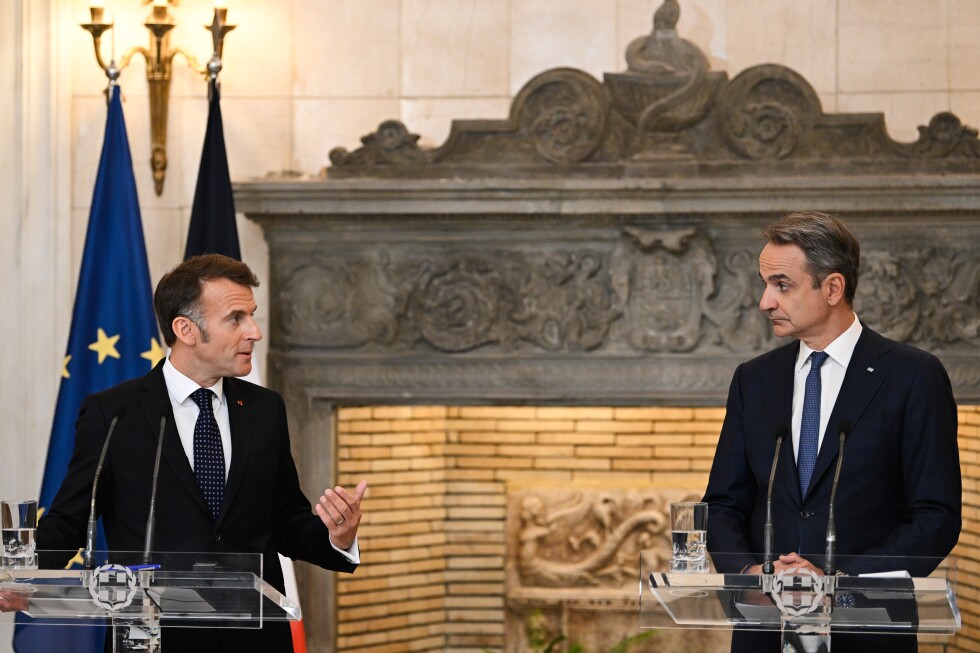
    BRUSSELS — European Union leaders convened an urgent summit on Thursday to address multiple overlapping crises, with Hungarian Prime Minister Viktor Orbán’s obstruction of a critical €90 billion ($104 billion) loan package for Ukraine dominating discussions. The funding deadlock has exposed deep fractures within the 27-nation bloc as Ukraine faces severe budgetary shortfalls in its ongoing defense against Russian aggression.

    The Brussels gathering also prioritized developing coordinated responses to escalating energy price shocks and potential refugee flows stemming from Middle Eastern instability. Many EU members have resisted pressure from former U.S. President Donald Trump to deploy military resources to secure the Strait of Hormuz, instead favoring diplomatic solutions to ensure global energy security.

    According to senior European diplomats speaking anonymously, the European Commission has proposed a comprehensive ‘toolbox’ of market-specific measures to mitigate economic disruptions from the war. This approach acknowledges the diverse energy markets across member states that require tailored solutions rather than one-size-fits-all policies.

    The Ukraine aid package, initially agreed upon at December’s summit, has been stalled since Orbán reversed his position following a January drone attack on the Druzhba oil pipeline. The Hungarian leader, facing reelection next month, has launched an aggressive media campaign portraying both EU leadership and Ukrainian officials as adversaries. ‘If there is no oil, there is no money,’ Orbán declared in a social media statement this week.

    European Commission President Ursula von der Leyen has attempted to break the impasse by offering EU funding to repair the damaged pipeline and develop alternative fuel supply routes for Hungary and Slovakia, whose Prime Minister Robert Fico has similarly adopted pro-Russia positions.

    Ukrainian President Volodymyr Zelenskyy emphasized the critical nature of the blocked funds, stating that while financing mechanisms might vary, ‘there is simply no alternative to strengthening our army.’ German Chancellor Friedrich Merz echoed this urgency, condemning the blockade as domestically motivated and calling for accelerated sanctions against Russia alongside the vital financial package.