分类: politics

  • ‘No oil, no money’: Orban brings Ukraine standoff to Brussels

    ‘No oil, no money’: Orban brings Ukraine standoff to Brussels

    A critical European Union summit in Brussels has been overshadowed by a deepening confrontation between Hungarian Prime Minister Viktor Orban and Ukrainian leadership, placing a vital €90 billion ($104 billion) financial package for Kyiv in jeopardy. The dispute centers on the Druzhba oil pipeline, a crucial energy conduit running from Russia through Ukraine to Hungary, which has suffered damage and subsequently halted oil flows to landlocked Hungary and Slovakia.

    Orban, maintaining his position as Moscow’s closest ally within the EU bloc, has explicitly linked the restoration of oil transit to the approval of Ukrainian aid. In a stark ultimatum, he declared, “No oil, no money,” asserting that President Volodymyr Zelensky must ensure the pipeline’s reopening to receive the EU funds. This stance frames the economic lifeline for a nation at war as conditional on resolving a bilateral infrastructure issue.

    Kyiv has vehemently rejected this linkage, characterizing the Hungarian leader’s demands as outright “blackmail” that inappropriately connects technical repairs to essential military and financial support against Russian aggression. While the European Commission has attempted to mediate by dispatching a technical team to address the pipeline damage, Budapest dismissed these efforts as mere “theatre,” demonstrating no willingness to compromise.

    EU diplomats express widespread frustration, noting that Orban had previously consented to the loan package at a December summit. The deadlock presents a significant challenge for other member states, who must navigate the delicate balance of pressuring Hungary without bolstering Orban’s domestic narrative as an EU maverick, particularly as he faces a tight electoral contest on April 12th. With Ukraine requiring the funds by early May, the Brussels summit represents a critical juncture, yet insiders remain pessimistic about a breakthrough, acknowledging there is no viable “Plan B” should Orban refuse to honor his prior commitment.

  • Top US intelligence official says it’s not her job to determine imminent threats

    Top US intelligence official says it’s not her job to determine imminent threats

    A tense Senate Intelligence Committee hearing on Wednesday revealed significant tensions between the intelligence community and the White House regarding the ongoing military engagement with Iran. Director of National Intelligence Tulsi Gabbard asserted that determining what constitutes an “imminent threat” to the United States falls exclusively within presidential authority, not the intelligence community’s purview.

    The hearing, occurring during the fourth week of joint U.S.-Israel operations against Iran, focused extensively on whether President Trump received adequate intelligence assessments before initiating hostilities. Democratic senators expressed particular concern about the administration’s apparent surprise when Iran retaliated by targeting Washington’s Gulf partners and moving to block the strategically vital Strait of Hormuz.

    Senator Jon Ossoff (D-GA) directly questioned whether intelligence assessments had identified an imminent nuclear threat from Iran, to which Gabbard responded: “Senator, the only person who can determine what is and is not an imminent threat is the president… it is not the intelligence community’s responsibility.” This exchange highlighted the fundamental disagreement between legislators and the intelligence director regarding proper threat assessment protocols.

    The proceedings revealed additional complications stemming from Gabbard’s appointment. Democrats suggested her longstanding anti-war stance—maintained during her tenure as both a Democratic and Republican congresswoman—may have contributed to her marginalization within administration decision-making circles.

    CIA Director John Ratcliffe intervened during the hearing to defend the administration’s preparedness, stating intelligence officials had provided constant briefings regarding Iran’s capabilities and intentions. He revealed that intelligence indicated “Iran had specific plans to hit US interests in energy sites across the region,” prompting protective measures before Operation Epic Fury.

    The human cost of the conflict emerged during testimony, with disclosures that six soldiers died in Kuwait during the initial 48 hours of hostilities at an inadequately fortified facility. Additionally, over one million U.S. citizens across the region received only shelter-in-place instructions after hostilities began, with evacuation plans delayed several days.

    Public opinion appears to be turning against the administration’s handling of the conflict. A Yahoo/YouGov survey released Wednesday showed two-thirds of Americans disapprove of President Trump’s management of rising gasoline prices directly linked to the Iranian conflict.

  • Saudi analyst says kingdom will activate defence pact with Pakistan if it joins Iran war

    Saudi analyst says kingdom will activate defence pact with Pakistan if it joins Iran war

    A prominent Saudi geopolitical analyst has revealed that any direct Saudi involvement in a US-Israeli military campaign against Iran would trigger the kingdom’s mutual defense agreement with Pakistan, potentially bringing Pakistani nuclear capabilities into the regional conflict.

    Salman al-Ansari, a respected Saudi geopolitical researcher, stated in an exclusive interview with Canada’s CBC News that full Saudi military engagement would make Iran “the biggest loser” due to the automatic activation of the Riyadh-Islamabad defense pact. “We can say it literally that there is a nuclear umbrella over Saudi Arabia,” al-Ansari emphasized during the revealing discussion.

    The significant defense agreement, formalized last year following Israeli strikes on Hamas negotiators in Doha, establishes a collective security framework structurally comparable to NATO’s Article 5. Official documents from both governments explicitly state that “any aggression against either country shall be considered an aggression against both,” creating potential obligations for Pakistani military assistance if Saudi territory faces sustained attacks.

    This development occurs amid escalating regional tensions, with Saudi infrastructure already experiencing repeated assaults from Iranian ballistic missiles and drone attacks. Critical facilities including the US Embassy in Riyadh, Prince Sultan Air Base, and vital energy installations have been targeted, while Iran’s strategic control over the Strait of Hormuz has significantly impacted Saudi oil exports.

    Despite developing alternative energy export routes like the East-West pipeline, which maintains approximately four million barrels per day in crude sales bypassing Hormuz, Saudi leadership faces mounting pressure regarding potential direct involvement in offensive operations against Iran. The kingdom, along with other Gulf states, had previously lobbied the Trump administration against military engagement with Tehran.

    The Pakistan dimension introduces complex global implications, potentially internationalizing the conflict beyond the Middle East. Pakistani Foreign Minister Ishaq Dar recently confirmed discussing the defense pact directly with Iranian counterpart Abbas Araghchi, noting Tehran’s demand for assurances that Saudi territory wouldn’t serve as a staging ground for attacks against Iran.

    Energy dependencies further complicate the situation, with Pakistan relying heavily on Gulf crude oil and natural gas imports. In a significant development this week, a Pakistani-flagged tanker successfully transited the Strait of Hormuz with its tracking systems active—the first vessel carrying non-Iranian crude to do so—following apparent diplomatic negotiations between Islamabad and Tehran.

  • How Finnish supermarkets are central to the country’s defence

    How Finnish supermarkets are central to the country’s defence

    In the face of potential Russian aggression, Finnish corporations are demonstrating unprecedented commitment to national defense through meticulously crafted contingency plans. Spearheading this initiative is Janne Ahtoniemi, Head of Risk Management at S Group, Finland’s nationwide supermarket chain, who emphasizes that private enterprises fully recognize their critical role in maintaining national security.

    The Nordic nation has evolved its decades-old ‘total defense’ strategy into a more robust ‘comprehensive security’ framework since Russia’s 2022 invasion of Ukraine. This approach integrates military and civilian sectors, with major businesses across defense, transportation, cybersecurity, and food supply chains developing detailed emergency protocols. These plans address scenarios ranging from conventional warfare and cyber attacks to disruptions in food, water, and financial systems.

    Finland’s Security Strategy for Society, introduced last year, serves as the foundational document guiding this public-private collaboration. Critical businesses participate in ‘preparedness committees’ with government representatives and engage in national training exercises. Supermarket rivals S Group and Kesko both maintain strategic reserves of essential commodities—including flour, sugar, and cooking oils—stored in specialized warehouses and underground bunkers with backup power generators.

    Jyrki Tomminen, an executive at Kesko, states: ‘We want to do our part to ensure Finnish society functions daily, regardless of circumstances.’ This corporate dedication stems from deep-seated cultural values, explains Dr. Jennifer De Paola, a psychologist at Helsinki University. ‘Finnish children associate happiness with feeling safe, and this safety-focus continues into adulthood,’ she notes, highlighting the nation’s exceptional trust in institutions and low corruption levels.

    Professor Frank Martella, a philosophy academic and navy reservist, exemplifies how Finnish citizens might be deployed based on current skills rather than past military service. As security expert Tom Woolmore observes, Finland’s resilience is built on societal equality and mutual trust—values that enable both corporations and citizens to maintain confidentiality about specific defense preparations while investing significantly in national security.

  • Sadiq Khan says Labour should pledge to rejoin EU

    Sadiq Khan says Labour should pledge to rejoin EU

    In a significant political intervention, London Mayor Sadiq Khan has publicly urged the Labour Party to commit to rejoining the European Union in its next general election manifesto. Speaking exclusively to Italian publication la Repubblica, Khan characterized Brexit as an ongoing catastrophe that has inflicted substantial economic, social, and cultural damage upon both London and the broader United Kingdom.

    The Mayor proposed that Britain should initially seek readmission to the EU’s customs union and single market frameworks before pursuing full membership restoration. Remarkably, Khan suggested this political realignment might be achievable without conducting another national referendum, stating that evolving ‘facts and evidence’ have made reintegration ‘inevitable’.

    This provocative stance triggered immediate backlash from Conservative officials, who accused Prime Minister Keir Starmer of exercising insufficient authority over his party. A Conservative spokesperson derisively claimed Starmer was ‘in office but not in power,’ citing simultaneous policy challenges from prominent Labour figures including Angela Rayner on immigration and Ed Miliband on foreign affairs.

    The political confrontation escalated as former Prime Minister Sir John Major delivered a scathing assessment of Brexit’s consequences during an address at King’s College London. Major revealed that Britain’s separation from Europe has resulted in approximately £100 billion in lost trade and £40 billion in forfeited tax revenues annually, describing the situation as creating ‘enormous damage to the lives and livelihoods of the British people.’

    While Reform UK pledged to resist any reengagement with EU structures, Green Party leader Zack Polanski echoed Khan’s criticisms, labeling Brexit an unmitigated ‘disaster.’ Even as Major acknowledged full EU reinstatement remains improbable in the immediate future, he emphatically advocated for rapidly rebuilding economic and diplomatic ties with European neighbors.

    The emerging debate signals profound political divisions regarding Britain’s post-Brexit trajectory, with growing calls for policy reassessment from multiple political quarters as economic indicators continue demonstrating negative impacts.

  • US-Israeli war on Iran ‘unjustified and unlawful’, French ambassador tells MEE

    US-Israeli war on Iran ‘unjustified and unlawful’, French ambassador tells MEE

    In an exclusive interview with Middle East Eye, France’s ambassador to Oman Nabil Hajlaoui has delivered a sharp diplomatic rebuke of the US-Israeli military campaign against Iran, characterizing the operation as both unjustified and outside international legal frameworks. The ambassador’s remarks, recorded for The David Hearst Podcast, represent a significant public divergence between Western allies regarding Middle East military strategy.

    Hajlaoui articulated France’s position with notable clarity: ‘This military operation exists outside of international law and we cannot endorse it in any way. We see no justification, no supporting Security Council resolution, nor any situation requiring such rapid escalation to military action.’

    The timing of the offensive, launched on February 28th, proved particularly troubling according to the French diplomat. The attacks coincided with a critical juncture in Oman-mediated negotiations between Washington and Tehran that had shown promising developments. Ambassador Hajlaoui revealed that French officials had received briefings indicating substantive progress in these talks, with several elements ‘moving in the right direction.’

    This assessment aligns with recent statements from Omani Foreign Minister Badr bin Hamad Al Busaidi, who three weeks prior had announced Iran’s agreement to never stockpile enriched uranium and to degrade existing nuclear material to ‘the lowest level possible’ through an irreversible conversion process into fuel. The US-Israeli military operation commenced merely one day after these diplomatic breakthroughs.

    Hajlaoui expressed understanding regarding Iran’s anger following the attacks, noting the natural frustration when ‘you discuss and then you are attacked.’ While acknowledging that Tehran’s concessions remained ‘very far from American expectations,’ the ambassador identified broader sticking points including Iran’s ballistic missile program and regional activities that Western powers view as destabilizing.

    The French diplomat suggested Israel likely drove the momentum toward military confrontation rather than prolonged negotiations, stating: ‘I’m really not informed of the way the Israelis and Americans discussed this preparation, but we can just see that the momentum was pushed by the Israelis.’

    This military escalation has generated profound disappointment in Muscat according to Hajlaoui, who described the mood as one of ‘clear dismay’ at what he termed a ‘collective failure to prevent war.’ The ambassador warned that Gulf states are being unwillingly drawn into a conflict they did not seek, despite their recent efforts to rebuild relations with Tehran.

    Hajlaoui issued sobering warnings about the conflict’s potential expansion, noting the absence of clear limits to escalation. He highlighted the particularly grave economic implications should Iran close the Strait of Hormuz—the world’s most critical oil chokepoint through which approximately 20% of global oil output and one-third of liquefied natural gas transit.

    While France has deployed an aircraft carrier to the region as reassurance to partners, Hajlaoui emphasized that France has no intention of involvement ‘in any way in this war.’ The nation is collaborating with allies to monitor the strategic strait but will refrain from active intervention during ongoing military operations.

    The ambassador characterized potential US troop deployment as ‘a very big game changer’ that would contradict the administration’s stated policy of avoiding ‘endless wars.’ Such escalation would represent ‘an incredible political risk’ and a total policy shift according to Hajlaoui.

    Finally, the diplomat expressed concern about the undermining of multilateralism internationally, citing reduced US contributions to UN agencies and the creation of alternative forums competing with established international institutions.

  • Rebuilding Syria’s northeast: Damascus’ toughest test yet

    Rebuilding Syria’s northeast: Damascus’ toughest test yet

    In Syria’s volatile northeast, a dramatic geopolitical transformation has unfolded with unprecedented speed, marking a pivotal shift in the country’s post-Assad landscape. The region has witnessed the astonishingly rapid collapse of Kurdish-led autonomous rule, replaced by a fragile reintegration process under Damascus’ authority that now faces its most critical examination.

    The Syrian government achieved a remarkably swift reassertion of control across territories previously held by the Syrian Democratic Forces (SDF), following a comprehensive military campaign supported by tribal fighters that triggered a widespread retreat. This development culminated in a January 30 agreement establishing a permanent ceasefire and a phased roadmap for incorporating the northeast’s military and civilian institutions back into state control.

    Senior security official Abu Qasem characterized the stunning reversal, noting that “fifteen years of self-rule ended in a fortnight.” He attributed the rapid collapse to sustained coordination between Damascus and tribal elements, combined with diminished U.S. support for the SDF that quickly eroded their operational viability.

    The government of Ahmed al-Sharaa has initiated confidence-building measures, including a landmark decree recognizing Kurdish identity and language rights, restoring citizenship to previously disenfranchised Kurds, and declaring Nowruz a national holiday—Syria’s first formal acknowledgment of Kurdish national rights since independence in 1946.

    Practical reintegration steps have followed, with Hasakah governor Nour al-Din Ahmad announcing the reopening of provincial roads, reactivation of Qamishli airport, reinstatement of dismissed employees, resumption of transport links with the capital, and prisoner releases. The government simultaneously expanded governors’ administrative and spending powers, implementing a decentralized local administration model negotiated with the SDF.

    Despite these developments, Middle East Forum analyst Aymenn Tamimi believes the fundamental power dynamics favor Damascus: “The objective is clear: to build a centralized state that does not tolerate autonomous or rival political projects.”

    Significant security challenges have emerged during the transition, particularly regarding detention facilities. The chaotic transfer of al-Aqtan prison in Raqqa province—where 126 minors were reportedly abused in SDF custody—and the disorderly withdrawal from al-Hol camp, which housed thousands of Islamic State-linked families, have raised concerns about escaped detainees and security vacuums.

    The Islamic State has sought to exploit this instability, declaring a “new phase” of operations against Syrian authorities whom they’ve branded apostates. Meanwhile, the U.S. completed transferring over 5,700 adult male IS detainees from Syria to Iraq during the transition period.

    Economically, the northeast represents both tremendous opportunity and challenge for Damascus. The region contains Syria’s most significant oil and gas resources, grain-producing land, and key cross-border routes. Syrian economist Yazan Enayeh notes that “Syria’s reassertion of control over northeast oil and gas fields is a game changer,” potentially generating substantial fiscal revenues and energy self-sufficiency.

    However, Abu Qasem observed striking underdevelopment in former SDF-controlled areas, raising questions about resource allocation. The ultimate test for Damascus will be whether reclaimed control can translate into tangible benefits for the war-weary region through security, essential services, job creation, and inclusive governance that accommodates one of Syria’s most diverse and unpredictable regions.

  • US intelligence chief says Iran’s regime ‘intact’ but ‘degraded’

    US intelligence chief says Iran’s regime ‘intact’ but ‘degraded’

    In a significant congressional hearing on global threats, US Director of National Intelligence Tulsi Gabbard characterized Iran’s regime as structurally “intact” but operationally “largely degraded” following military strikes targeting its leadership and defense capabilities. The Wednesday testimony before Congress marked the first public intelligence briefing since the outbreak of the 12-Day War in February 2025 and featured unprecedented scrutiny of the administration’s justification for military action.

    The hearing gained particular significance following Tuesday’s resignation of National Counterterrorism Center Director Joe Kent, who publicly contradicted the administration’s position by stating Iran posed “no imminent threat” to the United States. This divergence highlighted deepening institutional tensions within the intelligence community regarding the justification for military engagement.

    When pressed by Democratic Senator Jon Ossoff regarding whether she personally assessed Iran as an imminent threat, Gabbard deferred executive authority, stating: “The only person who can determine what is and is not an imminent threat is the president.” This response sparked further questioning about the intelligence community’s role in the decision-making process that led to the June 2025 military campaign jointly conducted with Israel.

    CIA Director John Ratcliffe presented a contrasting view to Kent’s assessment, testifying that “Iran has been a constant threat to the United States for an extended period of time, and posed an immediate threat at this time.” The divergence underscored the complex and sometimes contradictory intelligence assessments surrounding Iranian capabilities and intentions.

    Gabbard revealed that intelligence agencies had long anticipated potential Iranian aggression in the Strait of Hormuz, a critical global shipping channel that Iran has effectively shut down since hostilities began. She noted the Defense Department implemented “pre-emptive planning measures” based on intelligence assessments predicting Iran “would likely hold the Strait of Hormuz” during conflict.

    The hearing also uncovered notable omissions in Gabbard’s public testimony compared to her prepared written remarks. While her submitted testimony asserted US-Israeli attacks had “obliterated” Iran’s nuclear enrichment program with “no efforts” to rebuild, these claims were omitted from her oral presentation. When questioned by Democratic Senator Mark Warner about this discrepancy, Gabbard cited time constraints, prompting Warner to suggest she had selectively omitted information contradicting the president’s narrative.

    Lawmakers further probed the intelligence community’s involvement in presidential decision-making, with Senator Angus King questioning whether intelligence officials were present during final deliberations on military action. Ratcliffe acknowledged participating in “dozens and dozens” of meetings with the president but could not identify a specific decision-making moment.

    The extensive hearing illuminated ongoing tensions between legislative oversight and executive authority while revealing substantive disagreements within the intelligence establishment regarding the characterization of threats posed by Iran.

  • What does a war win look like for US, Israel and Iran?

    What does a war win look like for US, Israel and Iran?

    The Middle Eastern military confrontation enters its third week with escalating intensity as Iran demonstrates unexpected resilience against combined US-Israeli operations. The conflict, initiated on February 28 as a voluntary military engagement by Washington and Jerusalem, has evolved into a protracted struggle with no clear resolution in sight.

    Tehran’s Islamic regime is engaged in a battle for survival while simultaneously executing a strategy of asymmetric warfare designed to inflict maximum regional and global economic disruption. Despite inferior conventional military capabilities compared to the US-Israeli alliance, Iranian forces have maintained operational continuity and institutional stability, rapidly appointing Mojtaba Khamenei as successor to the slain supreme leader.

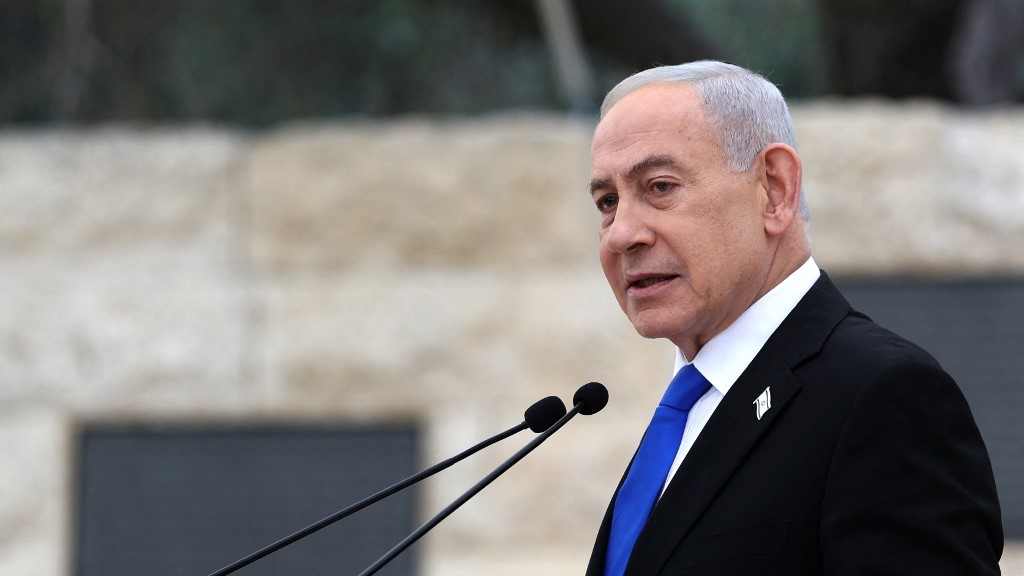
    The American position, characterized by contradictory objectives and unclear strategic goals, contrasts sharply with Israel’s explicitly stated ambition to dismantle both the Iranian regime and diminish Iranian state sovereignty. Prime Minister Netanyahu has further articulated expansionist territorial ambitions based on biblical references to ‘greater Israel,’ receiving unexpected endorsement from US Ambassador Mike Huckabee.

    Military analysts observe that the conflict has entered a critical phase where missile and interceptor inventories may determine the eventual outcome. Meanwhile, Iran continues to leverage regional proxy networks and economic pressure tactics, attempting to transform the bilateral confrontation into a broader regional crisis that might compel Gulf Arab states to intervene diplomatically.

    The humanitarian consequences continue to mount, with Iranian and Lebanese civilian populations bearing disproportionate casualties. The conflict has already triggered global energy market disruptions through attacks on critical infrastructure including Kharg Island’s oil export facilities, though Trump administration officials maintain these economic impacts remain temporary.

    As the war progresses without clear exit strategies, international observers anticipate either material exhaustion or political declaration of victory as potential conclusion scenarios, though neither outcome promises regional stability in the polarized post-conflict landscape.

  • China issues further extension to rural land contracts

    China issues further extension to rural land contracts

    In a landmark move to safeguard agricultural stability and protect farmer interests, China has announced a comprehensive 30-year extension for rural land contracts upon their expiration. The policy directive, jointly issued by the General Offices of the Communist Party of China Central Committee and the State Council on March 18, 2026, establishes detailed frameworks affecting hundreds of millions of rural residents.

    The guideline outlines 15 specific measures centered on preserving collective land ownership, maintaining the household-based contract system, and ensuring social stability across rural communities. This extension represents a critical component of China’s ongoing rural reform initiatives, building upon pilot programs that have been progressively expanded since 2020 under the supervision of the Ministry of Agriculture and Rural Affairs.

    Implementation will commence with large-scale pilot programs across 29 provincial-level regions throughout 2026. The policy explicitly prohibits the redistribution of farmland between villages and mandates that existing land arrangements remain fundamentally unchanged. No organization or individual may illegally adjust or reclaim contracted land, ensuring stability for current landholders.

    The extension process will follow standardized procedures including formation of specialized working groups, verification of land data, public consultation on extension plans, contract signing ceremonies, and certificate updates. Particular attention is given to protecting vulnerable groups including women affected by marital status changes and farmers who have migrated to urban areas.

    Notably, the guidelines introduce mechanisms for voluntary and compensated withdrawal from land contract rights, while imposing strict limits on reserve land management—capping such allocations at 5% of total collective farmland. Local authorities are instructed to complete all contract extensions within one year following expiration of existing agreements, with emphasis on coordinated implementation and transparent ownership clarification.