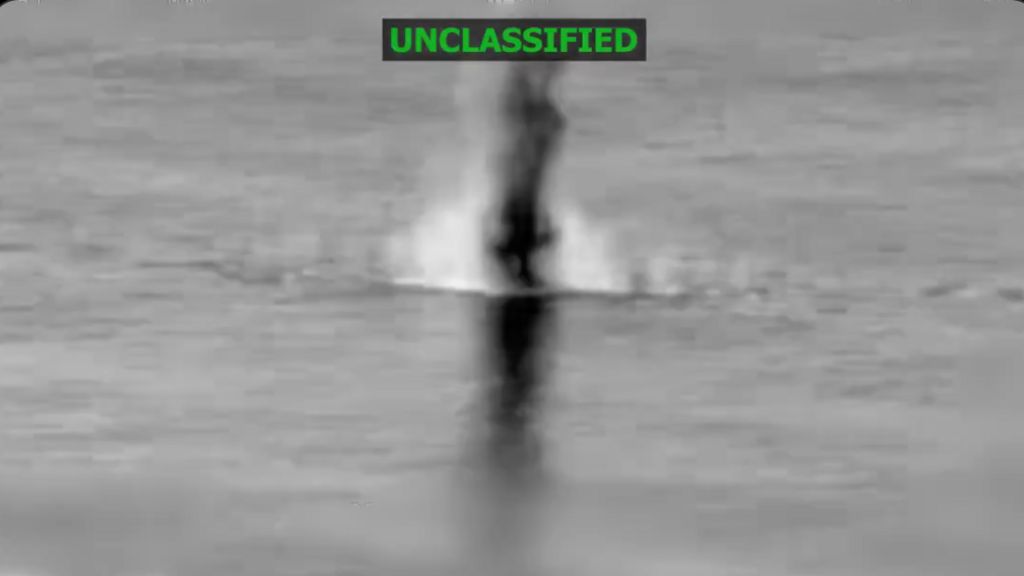
The United States Southern Command has confirmed that American military forces carried out a fresh lethal strike against a vessel suspected of drug trafficking in the eastern Pacific Ocean, resulting in the deaths of two people on board. The combatant command, whose operational jurisdiction spans South America, Central America and the Caribbean, made the announcement via a public post on the social platform X on Friday.
US military officials stated that intelligence assessments definitively linked the targeted vessel to active narco-trafficking activity, noting it was traveling along well-documented smuggling corridors that criminal networks regularly use to move illicit narcotics in the Eastern Pacific. This latest operation marks a continuation of a sweeping campaign that first launched under the Trump administration back in September, which has seen dozens of similar strikes carried out against suspect trafficking craft.
In their official statement, Southern Command confirmed that “two male narco-terrorists” were killed in the April 24 kinetic strike, and added that no American service members were injured during the operation. The command detailed: “At the direction of Southern Command commander Gen. Francis L Donovan, Joint Task Force Southern Spear conducted a lethal kinetic strike on a vessel operated by Designated Terrorist Organizations.” Alongside the announcement, the task force published verified footage showing what analysts identify as a small fishing-style vessel being hit, triggering a massive explosion that engulfed the craft in flames.
Since the campaign’s launch, US forces have carried out dozens of strikes against boats that US officials claim are moving large quantities of illicit drugs toward American borders. Data from CBS News, the US-based partner of the BBC, shows that more than 180 people have been killed in these operations over the past eight months.
However, the entire campaign has faced growing scrutiny, as the US military has so far failed to release public evidence confirming that the targeted boats were actually carrying drugs or were crewed by confirmed drug smugglers. This lack of transparency has fueled widespread criticism from legal and human rights groups, who have raised urgent questions about the legality of the cross-border strikes. A number of international legal experts have argued that the operations may violate established international law, as they target unidentified people on the high seas without providing any opportunity for due process to rule out civilian involvement.
The Trump administration has repeatedly defended the campaign, maintaining that all strikes are conducted in full compliance with domestic and international law. In a formal statement submitted to Congress last year, the White House said that President Trump had formally determined the United States is in a state of armed conflict with transnational drug cartels, and that all crew members of drug smuggling boats qualify as enemy combatants eligible for targeting.
Strike frequency has dropped noticeably since January, when US forces seized Venezuelan President Nicolas Maduro, whom the Trump administration has accused of collaborating with transnational criminal networks in narco-terrorism operations. Maduro has repeatedly and vehemently denied all such allegations.