A weeks-long swirl of speculation over a potential U.S. policy shift on the Falkland Islands sovereignty dispute has been directly quelled by Secretary of State Marco Rubio, who downplayed suggestions of change as an overblown reaction to an internal brainstorming document. The controversy began last week when news outlet Reuters published details from a leaked internal Pentagon email, which floated potential punitive measures against NATO allies that refused to back recent U.S. military action against Iran. Among the options cited was a possible review of the longstanding U.S. position on Falkland Islands sovereignty, a long-running point of tension between the United Kingdom and Argentina.
Speaking to The Sun on Thursday, Rubio pushed back against widespread media and political reaction to the leak, framing the document as nothing more than a draft of unvetted ideas. “It was just an email with some ideas,” Rubio told the outlet, adding that public and political response to the leak had been “overexcited.” The secretary of state’s comments came one day after he held talks on the issue with UK Foreign Secretary Yvette Cooper during a meeting in Washington, D.C.
Rubio reaffirmed that the United States’ longstanding neutral stance on the sovereignty dispute remains fully intact. “Our position on the islands remains one of neutrality. We acknowledge that there are conflicting claims of sovereignty between Argentina and the UK. We recognise the de facto United Kingdom administration of the islands but take no position regarding sovereignty claims of either party,” he said.
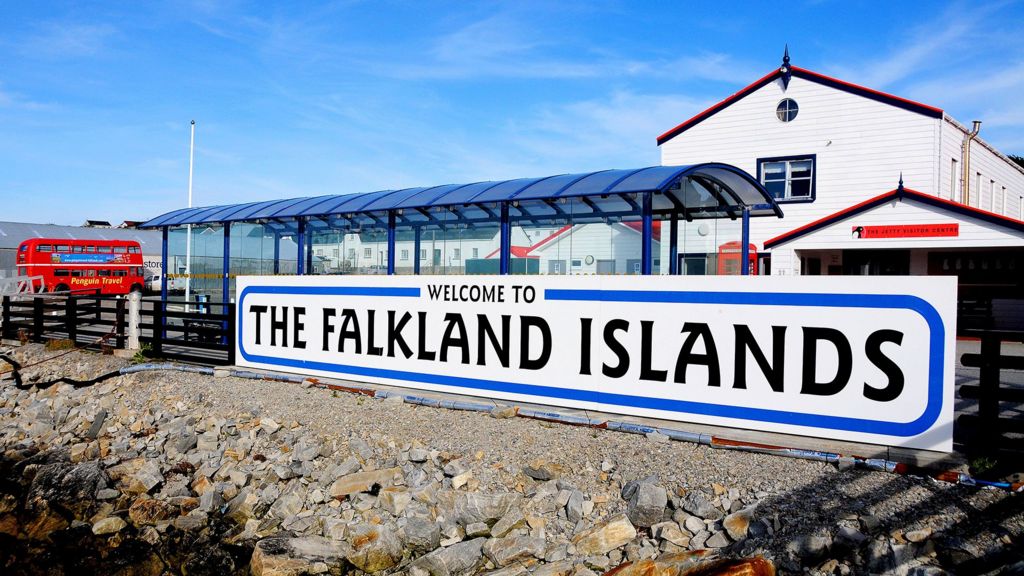
Located 483 kilometers off the Argentine coast in the southwest Atlantic, the Falkland Islands (known as the Malvinas to Argentina) have been the center of a sovereignty clash for nearly 200 years. The UK has administered the islands as an overseas territory since 1833, but Argentina asserts it inherited legal claim to the archipelago from the Spanish crown following its independence, and points to the islands’ geographic proximity to the South American mainland as further justification for its claim.
The dispute boiled over into open conflict in 1982, when Argentine military forces invaded the islands in an attempt to seize control by force. A 10-week undeclared war ended with the surrender of Argentine forces to a British military task force, leaving 649 Argentine soldiers, 255 British service members, and three Falkland Islanders dead. Today, the UK maintains a permanent military garrison of more than 1,000 personnel on the islands to deter any future aggression. A 2013 referendum of the archipelago’s 1,672 eligible voters saw 99.8 percent of participants back remaining a UK overseas territory, on a turnout of more than 90 percent.
For decades, the U.S. has officially held a position of neutrality in the dispute, formally recognizing British de facto administration while offering quiet diplomatic and military backing to the UK. The leaked memo sparked immediate fears in London that a shift in U.S. policy would strengthen Argentina’s ongoing international campaign to press its sovereignty claim. Following the leak, a Downing Street spokesperson reaffirmed the UK’s unwavering position: “The Falkland Islands have previously voted overwhelmingly in favour of remaining a UK overseas territory, and we’ve always stood behind the islanders’ right to self-determination and the fact that sovereignty rests with the UK.”
The leaked Pentagon proposal emerged against a backdrop of transatlantic tension following recent U.S.-Israeli strikes against Iran. The UK declined to join the offensive strikes, a choice that angered U.S. President Donald Trump, though it has permitted the U.S. military to use British bases for defensive strikes against Iranian missile sites. In addition to the Falklands policy review, the leaked memo also reportedly suggested pushing for Spain’s suspension from NATO as another potential punishment for non-participation. Adding another layer of context to the speculation, President Trump has maintained close political ties to Argentine President Javier Milei, who has made renewed claims to the Falklands a core part of his foreign policy agenda.