On Thursday, Bloomberg News reported that U.S. Central Command (Centcom) has formally requested authorization from the U.S. Department of Defense to deploy the U.S. military’s highly classified Dark Eagle hypersonic missile system to the Middle East. The request comes amid shifting military positioning from Iran that has outmaneuvered existing American strike capabilities, opening the door for a potential first-ever operational use of the long-delayed advanced weapon against targets deep within Iranian territory, while keeping U.S. deployment platforms well outside the range of Iran’s existing air defense networks.
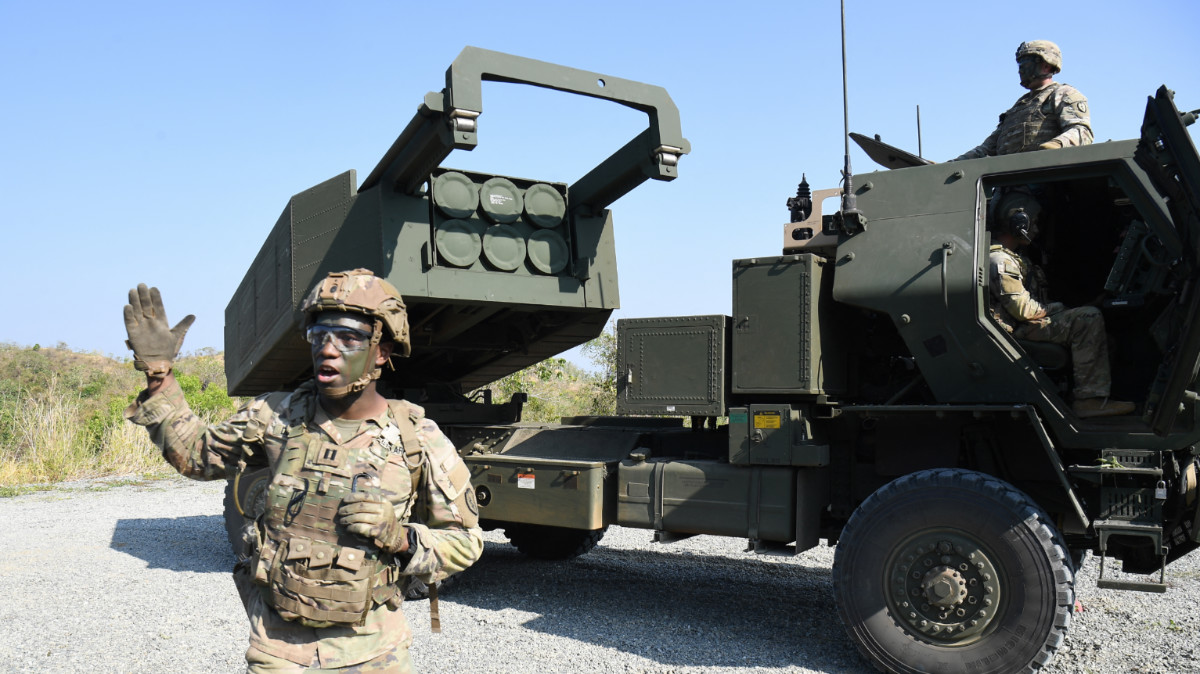
The impetus for Centcom’s request traces to new intelligence confirming Iran has relocated its ballistic missile launch facilities beyond the strike range of the U.S. Precision Strike Missile, a supersonic surface-to-surface weapon fired from the Army’s High Mobility Artillery Rocket System (HIMARS). With these assets now out of reach of current conventional strike options, U.S. military leaders have turned to the untested Dark Eagle system, which boasts an officially cited range of more than 2,776 kilometers—more than enough to hit targets across Iran from regional deployment positions.
If the request gains approval, this deployment would mark the first operational fielding of the Dark Eagle, a program that has faced years of development delays. The weapon could see active combat use if the Trump administration moves forward with new offensive strikes against Iran. Parallel reporting from Axios on Thursday confirmed that President Donald Trump has already received briefings from Centcom outlining plans for a new round of attacks on Iranian targets. According to Axios’ sources, U.S. military planners have drafted proposals for “short and powerful” strikes focused on key Iranian infrastructure, a move shaped by the ongoing deadlock in diplomatic peace talks between the two sides.
The proposed deployment of the $15 million-per-unit Dark Eagle has already drawn skepticism from defense analysts. Originally designed to counter advanced integrated air defense systems operated by nuclear-armed major powers China and Russia, the weapon is vastly overengineered for the Iranian threat environment, experts note. This mismatch has raised questions about the strategic and financial wisdom of expending one of the U.S.’s limited stockpiles—currently only eight completed Dark Eagle missiles exist, per Bloomberg’s reporting—against a country President Trump has repeatedly publicly described as already militarily defeated.
Despite longstanding claims from the Trump administration that the U.S. maintains unchallenged air superiority across Iranian airspace, a recent incident underscores Iran’s still-functional defensive capabilities: earlier this month, Iranian air defenses successfully shot down a U.S. F-15E Strike Eagle fighter jet. At present, direct large-scale combat between U.S. and Iranian forces has paused under a fragile, informal ceasefire, with both sides shifting their focus to maritime pressure campaigns in strategic waterways. The U.S. and Iran have each seized commercial vessels in the Gulf of Oman and Indian Ocean in recent weeks as both seek to assert dominance over the Strait of Hormuz, the critical chokepoint through which roughly 20% of the world’s global oil supplies pass.
Military analysts widely agree that both powers are using the current ceasefire window to rearm, regroup, and reposition their forces for potential future conflict, as diplomatic efforts to reach a permanent end to hostilities remain completely deadlocked. In recent weeks, new reporting has shed light on external military support to Iran: Middle East Eye was the first outlet to confirm that Iran has received advanced air defense systems from China, and a subsequent New York Times report added that Beijing may also have shipped shoulder-fired anti-air missiles to Tehran.
The three-month-long conflict has already taken a significant toll on U.S. military capabilities, multiple official and media reports confirm. The New York Times reported earlier this month that sustained combat operations have drastically depleted U.S. global ammunition stockpiles, forcing the Pentagon to reallocate critical military stockpiles originally positioned for deterrence missions in Asia and Europe to the Middle East. Both offensive and defensive weapons systems have been drawn down, including the same Precision Strike missiles now rendered less effective by Iran’s relocation, as well as Patriot air defense interceptor missiles. On Wednesday, the Pentagon confirmed that direct war costs to the U.S. have already reached $25 billion.
This week, President Trump rejected a proposed peace deal put forward by Tehran that would have addressed non-nuclear disputes first while deferring negotiations over Iran’s nuclear program. As the conflict enters its third month, multiple diplomats and analysts speaking to Middle East Eye warn that a lasting negotiated resolution may be out of reach, largely due to the Trump administration’s refusal to offer the sanctions relief that Iran has made a core requirement for any final agreement.