分类: politics

  • Labor backs in minimum wage increase for 2.7 million Aussies

    Labor backs in minimum wage increase for 2.7 million Aussies

    The Australian government has formally advocated for a substantial wage increase for the nation’s lowest-paid workers as economic pressures mount. In a submission to the Fair Work Commission’s Annual Wage Review, the Albanese administration called for an “economically sustainable real wage increase” for approximately 2.7 million award-reliant employees, representing nearly a quarter of Australia’s workforce.

    Employment Minister Amanda Rishworth emphasized the vulnerability of low-income workers to financial instability, stating that those in hospitality, care sectors, and clerical positions deserve economic advancement. The government highlighted the dual benefit of addressing both cost-of-living challenges and gender pay disparities, given women’s disproportionate representation in award-dependent roles.

    Treasurer Jim Chalmers pointed to escalating fuel prices as a primary driver of household budget constraints, with petroleum costs surging over 30% since late February. While not specifying a precise increase amount, the government’s position aligns with achieving inflation targets of 2-3% by 2026-27. The current minimum wage stands $175.40 higher weekly than when the government assumed office in 2022.

    The wage review occurs against a complex economic backdrop featuring persistent inflation at 3.7% and recent interest rate hikes by the Reserve Bank, which elevated the cash rate to 4.10% in March. The Fair Work Commission’s decision, expected to take effect July 1, will ultimately determine the extent of relief for workers grappling with the highest cost-of-living pressures in decades.

  • Trump’s Iran strategy is to pursue two off-ramps at once

    Trump’s Iran strategy is to pursue two off-ramps at once

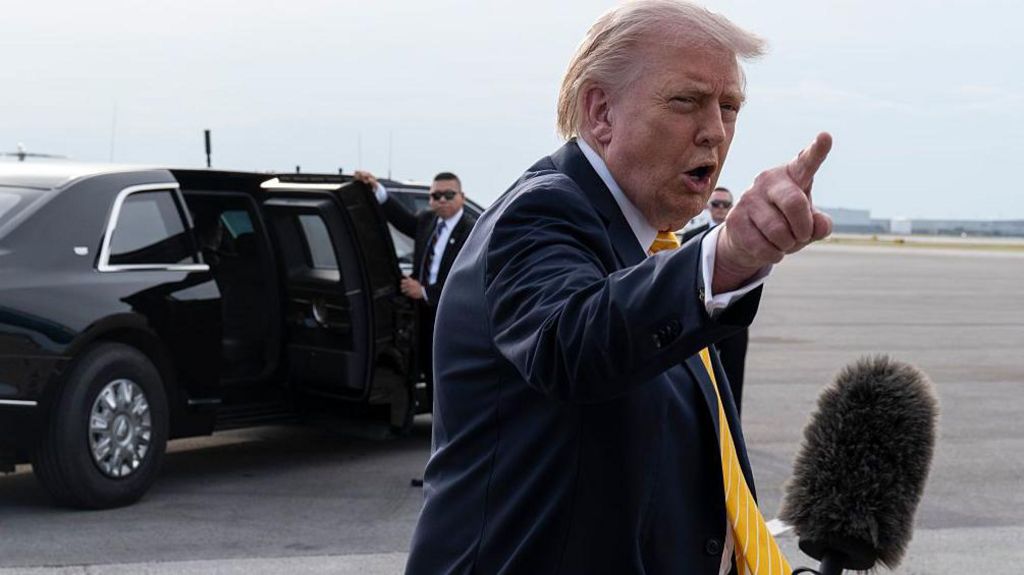
    The White House has confirmed that diplomatic channels with Iran remain active despite Tehran’s public dismissal of a comprehensive 15-point peace proposal. This development occurs alongside a significant military escalation, with the Pentagon deploying over 1,000 paratroopers to the region, creating a contradictory strategy that has left allies and administration officials perplexed.

    President Donald Trump’s administration finds itself navigating increasingly complex waters as conflicting approaches emerge simultaneously. Within hours of the Pentagon’s troop mobilization order, U.S. negotiators delivered the peace plan to Iranian authorities—a document demanding Tehran abandon its nuclear program, limit ballistic missile capabilities, and reopen the strategically vital Strait of Hormuz.

    The administration’s mixed messaging has raised concerns among former officials and international allies about the coherence of Trump’s exit strategy. A former senior administration official, speaking anonymously, revealed growing unease within government circles regarding the apparent lack of a concrete plan for the conflict’s resolution.

    White House Press Secretary Karoline Leavitt maintained a firm stance, stating: “President Trump does not bluff, and he is prepared to unleash hell. Iran should not miscalculate again.” This rhetoric contrasted sharply with earlier suggestions of diplomatic progress, particularly following Trump’s decision to suspend planned attacks citing “major progress” in negotiations.

    The strategic importance of the Strait of Hormuz represents a critical challenge for the administration. With approximately 20% of global oil and gas exports passing through this waterway, continued Iranian attacks on commercial vessels have driven energy prices upward while Trump’s calls for NATO assistance have yielded limited results.

    Domestically, the conflict has exposed fractures within the Republican Party. While House Speaker Mike Johnson expressed confidence that military operations were “wrapping up,” Representative Nancy Mace (R-SC) publicly opposed ground troop deployments after receiving classified briefings. This division highlights the tension between anti-interventionist MAGA supporters and party hawks backing military action.

    Iran’s response, delivered through anonymous officials on state television, emphasized Tehran’s perception of equal control over conflict dynamics. Iranian Foreign Minister Abbas Araghchi explicitly denied ongoing negotiations and rejected allowing Western ships through the Strait of Hormuz, stating: “There is no reason to allow the ships of our enemies and their allies to pass.”

    Military experts suggest the troop deployment might focus on securing Kharg Island, Iran’s primary oil export hub, to gain leverage over the strategic waterway. However, former defense officials caution that this escalation appears more reactive than strategic, with one describing it as resembling “a pick-up game of which units are available to me now” rather than executing a carefully considered plan.

  • Iran rejects Trump’s 15-point peace proposal with five conditions of its own

    Iran rejects Trump’s 15-point peace proposal with five conditions of its own

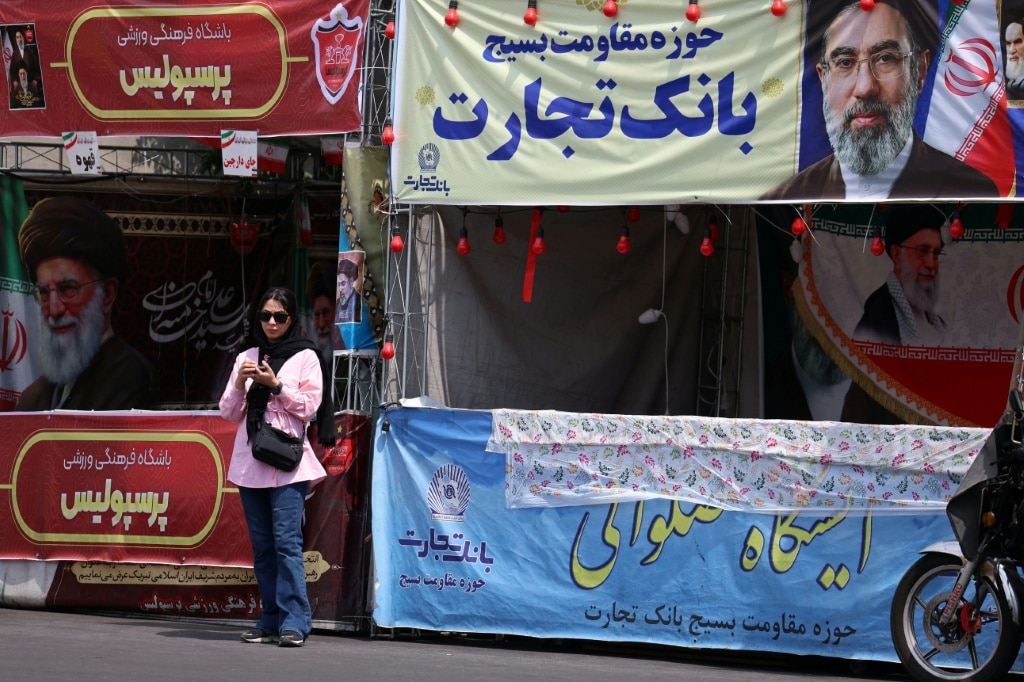
    In a significant escalation of diplomatic tensions, the Islamic Republic of Iran has formally dismissed a United States proposal to conclude the ongoing military conflict, instead presenting a comprehensive set of conditions necessary for any potential peace agreement. This development was reported exclusively by Iranian state media on Wednesday.

    An unnamed high-ranking Iranian official, speaking to Iran’s Press TV, stated that the nation had delivered a negative response to a 15-point ceasefire plan allegedly advanced by the Trump administration and conveyed through Pakistani diplomatic channels. The official emphatically declared that the timeline for ending hostilities would be determined solely by Tehran, not by Washington’s dictates.

    The Iranian counter-proposal outlines five non-negotiable prerequisites for peace. Foremost among these demands is an immediate and complete cessation of all aggressive military actions and targeted assassinations perpetrated by both US and Israeli forces. Tehran further insists on the establishment of verifiable mechanisms to prevent future attacks, the provision of comprehensive war reparations, and formal international recognition of its sovereign right to regulate maritime transit through the strategically vital Strait of Hormuz—a conduit for approximately one-fifth of global energy supplies.

    A critical component of Iran’s position involves the inclusion of its regional allied militias, such as Hezbollah in Lebanon, in any peace settlement. This condition implicitly calls for an end to Israel’s military operations within Lebanese territory. The Iranian military command reinforced this hardline stance through an official video statement, asserting that reconciliation with the US remains perpetually inconceivable and characterizing American proposals as disguises for military defeat.

    This diplomatic impasse occurs against a backdrop of intensified warfare. Despite claims from US President Donald Trump that military objectives including ‘regime change’ had been successfully achieved, conflict persists across the region. Bahrain, Kuwait, Jordan, and Saudi Arabia have reported sustained drone and missile attacks, while US and Israeli forces continue aerial bombardments within Iran. In a notable show of force, Iran claims to have targeted the USS Abraham Lincoln carrier group with cruise missiles, compelling the fleet to reposition.

    International mediation efforts led by Turkey, Pakistan, and Egypt have thus far failed to gain traction. Analysts, including former MI6 chief Sir Alex Younger, suggest Iran currently maintains strategic advantages, particularly through its effective control of the Strait of Hormuz. The rejected US proposal, as detailed by Israeli media, offered sanctions relief in exchange for the complete dismantlement of Iran’s nuclear program, restrictions on its ballistic missile capabilities, and the dissolution of its regional proxy network.

  • Pauline Hanson’s plan to ‘defund’ ABC, introduce subscriptions

    Pauline Hanson’s plan to ‘defund’ ABC, introduce subscriptions

    In a significant political development, One Nation leader Pauline Hanson has called for the comprehensive defunding of the Australian Broadcasting Corporation (ABC), proposing to transition all services except regional radio to a subscription-based model. This controversial stance emerges concurrently with the national broadcaster experiencing its most substantial industrial action in two decades.

    During an appearance on Sky News, Senator Hanson articulated her vision for radically restructuring the ABC, which currently receives approximately $1.2 billion in annual taxpayer funding. She characterized the broadcaster as having ‘lost its ratings’ and questioned the value proposition it offers to the public. ‘Defund it,’ Hanson stated unequivocally. ‘Then they can have to reapply for the jobs and it’d be subscription only.’

    The political leader made a distinct exception for regional radio services, acknowledging they ‘do a great job’ and suggesting this specific service should remain publicly funded. Her proposal would effectively dismantle the current national broadcasting model for television and digital services, requiring consumers to pay directly for content.

    This policy declaration coincides with a 24-hour strike by ABC staff protesting failed negotiations concerning pay, working conditions, and artificial intelligence implementation policies. The industrial action represents the most severe labor dispute within the organization in over twenty years.

    Hanson’s relationship with the national broadcaster has been historically contentious. She referenced perceived adversarial coverage spanning three decades, noting in her comments that the ABC had ‘attacked’ her throughout her political career. The senator reinforced her position through social media channels, declaring she wouldn’t miss the broadcasting service during the strike action.

    The Media Entertainment and Arts Alliance, representing striking workers, has not excluded the possibility of additional industrial measures if negotiations remain stalled. This development occurs against a backdrop of ongoing political debate regarding public broadcasting funding models and editorial independence in Australia’s media landscape.

  • Trump fed a daily propaganda reel of Iran ‘stuff blowing up’: NBC

    Trump fed a daily propaganda reel of Iran ‘stuff blowing up’: NBC

    A concerning revelation from NBC News indicates that President Donald Trump’s daily briefings on the Iran conflict may present a dangerously oversimplified perspective of the ongoing military engagement. According to multiple administration sources, military officials have been providing the President with customized two-minute video compilations showcasing what one official described as \”the biggest, most successful strikes on Iranian targets\” – essentially featuring dramatic footage of \”stuff blowing up.\

  • Iran dismisses US ceasefire proposal as ‘excessive’

    Iran dismisses US ceasefire proposal as ‘excessive’

    Iran has formally rejected a comprehensive 15-point ceasefire proposal presented by the United States, characterizing the terms as “excessive” and vowing to continue military operations until its own conditions are met. The proposal, delivered through Pakistani intermediaries, outlined a monthlong ceasefire framework addressing multiple contentious issues including sanctions relief, civilian nuclear cooperation, limitations on Iran’s nuclear program, International Atomic Energy Agency monitoring protocols, missile restrictions, and guarantees for shipping access through the strategically vital Strait of Hormuz.

    According to reports from Iran’s state-run Press TV, Tehran will terminate the conflict “at a time of its own choosing,” with a spokesperson from Iran’s Khatam al-Anbiya Central Headquarters dismissing Washington’s diplomatic overtures while mocking American attempts to reframe military setbacks as negotiated agreements. “Our first and last word has been, is, and will always be: Someone like us will not come to terms with someone like you. Not now, and not ever,” the spokesperson emphasized.

    The diplomatic impasse occurs amid confusion regarding Iran’s negotiating channels, with experts noting a “deeper structural problem” in the absence of a clearly unified Iranian representation. Meanwhile, international efforts to mediate continue, with Pakistan offering to host negotiations between Washington and Tehran. Pakistani Prime Minister Shehbaz Sharif affirmed his country’s readiness to “facilitate meaningful and conclusive talks for a comprehensive settlement.”

    Concurrently, Turkish Foreign Minister Hakan Fidan and Chinese counterpart Wang Yi discussed the conflict in a phone conversation, emphasizing the urgent need for cessation of hostilities and highlighting the critical importance of maintaining uninterrupted operation of transport lines, energy networks, and supply chains.

    International concern continues to mount regarding regional stability, with IAEA Director-General Rafael Grossi reiterating calls for maximum restraint following attacks on Iran’s Bushehr nuclear power plant. The diplomatic landscape reflects increasing transatlantic divergence, as European leaders express concern that military-focused approaches undermine diplomatic channels while exposing Europe to secondary economic and security repercussions.

    Regional stakeholders including Oman and Qatar have emphasized the necessity of Gulf Cooperation Council inclusion in any negotiations determining the region’s future, with Qatari former prime minister Hamad bin Jassim bin Jaber Al Thani asserting that regional security “is not a secondary matter, nor a file to be discussed on our behalf; rather, it is the essence of our stability and existence.”

  • Coalition, Greens team up to strip Labor of ‘godlike powers’

    Coalition, Greens team up to strip Labor of ‘godlike powers’

    In an extraordinary political development, Australia’s Senate has witnessed a rare cross-bench alliance between the Coalition and the Greens that successfully passed legislation challenging the government’s housing authority. The Housing Australia Amendment (Accountability) Bill 2025, introduced by Opposition Housing Spokesman Andrew Bragg, secured passage with a decisive 36-25 vote on Thursday—marking the first private senator’s bill to clear the upper house in two years.

    The controversial legislation specifically targets Housing Minister Clare O’Neil’s executive powers, which Senator Bragg characterized as ‘godlike’ in their scope. The bill mandates parliamentary oversight for any modifications to Housing Australia’s operations, including the housing guarantee scheme and the Housing Australia Future Fund. This government entity has evolved into both a property developer and significant insurer, handling critical housing initiatives without requiring parliamentary approval for operational changes.

    Senator Bragg defended the legislation as necessary check on ministerial overreach, stating: ‘We have a major problem in this country with the delegation of authority to ministers. In too many cases, ministers make laws without any reference to the elected assembly.’ He specifically cited the removal of means testing and placement caps from the Home Guarantee Scheme—which enables homebuyers to enter the market with just 5% deposits—as examples of concerning unilateral changes.

    However, the bill faces almost certain defeat in the House of Representatives, where Labor maintains majority control. Labor Senator Ellie Whitaker, continuing debate from early February, argued the legislation would actually hinder housing construction by creating investment uncertainty. ‘Housing projects don’t just pop up overnight,’ she countered. ‘They require years of planning, financing and construction, and they require dedication from government.’

    The political maneuver represents both a symbolic challenge to Labor’s housing policies and a practical attempt to increase parliamentary scrutiny over housing governance, even as its ultimate passage remains unlikely due to the government’s lower house majority.

  • Trump envoy credits colorful rhetoric and vodka shots in helping him build bond with Belarus leader

    Trump envoy credits colorful rhetoric and vodka shots in helping him build bond with Belarus leader

    In a striking demonstration of unconventional diplomacy, U.S. Special Envoy to Belarus John Coale has revealed the unorthodox methods employed to secure the release of hundreds of political prisoners from the Eastern European nation. During a recent appearance at Arizona State University’s McCain Institute, Coale detailed how he deliberately mirrored the vulgar language and drinking customs of Belarusian President Alexander Lukashenko to establish rapport.

    The envoy described how during their first meeting, which extended into a two-hour luncheon, he echoed Lukashenko’s disdain for European leadership using crude language that matched the autocrat’s tone. ‘I had him in my hand from then on,’ Coale stated regarding the moment he matched Lukashenko’s anti-European sentiments. To navigate the alcohol-heavy proceedings, Coale admitted to discreetly pouring vodka shots onto the floor when his host wasn’t watching, while some State Department colleagues became intoxicated after consuming eight toasts.

    This approach appears to have yielded significant diplomatic gains. Last week marked the largest single release of political prisoners in Belarus’s history, with 250 individuals pardoned following Coale’s meeting with Lukashenko in Minsk. The release came as part of a bilateral agreement that resulted in the lifting of certain U.S. sanctions against the Belarusian regime.

    Coale, a Maryland attorney appointed by former President Donald Trump in March 2025, defended his methods in an interview with The Associated Press: ‘If I have to use locker room language to get 500 political prisoners released, I will do it every time.’ His appointment came after he helped secure the release of 14 political prisoners in June 2025, which led to his elevation to special envoy.

    The diplomatic breakthrough represents a strategic shift for Lukashenko, who has ruled Belarus with an iron fist for over three decades while maintaining close ties with Russian President Vladimir Putin. Since Trump’s return to the White House, Lukashenko has sought improved relations with the West, resulting in the gradual release of political prisoners in exchange for sanctions relief.

    The released prisoners include prominent figures such as Nobel Peace Prize laureate Ales Bialiatski and opposition leaders Siarhei Tsikhanouski, Viktar Babaryka, and Maria Kolesnikova. Coale characterized the mass release as a ‘significant humanitarian milestone’ and credited Trump’s ‘commitment to direct, hard-nosed diplomacy’ for the progress.

  • British forces will be able to board Russian shadow fleet ships in UK waters

    British forces will be able to board Russian shadow fleet ships in UK waters

    British military forces are in final stages of preparation to intercept and detain vessels from Russia’s clandestine maritime network, following Prime Minister Sir Keir Starmer’s authorization of military operations against these sanctioned ships. This decisive action targets Russia’s systematic evasion of oil sanctions that finance its ongoing conflict in Ukraine.

    The government has established legal justification under the 2018 Sanctions and Money Laundering Act, permitting UK forces to board prohibited vessels within British territorial waters. While no boarding operations have occurred yet, senior officials indicate the first intervention is imminent after specialized military units completed intensive training exercises simulating various engagement scenarios.

    Prime Minister Starmer, speaking ahead of the Joint Expeditionary Force summit in Helsinki, emphasized the strategic importance of disrupting Russia’s shadow operations: “Putin anticipates benefiting from Middle East instability through elevated oil prices. Our intensified pursuit of his shadow fleet aims to sever the illicit revenue stream funding his brutal campaign in Ukraine.”

    Royal Navy personnel have already collaborated with Nordic allies including Finland, Sweden, and Estonia in monitoring and tracking suspicious vessels. Advanced ship-tracking technology enables identification of sanctioned ships approaching UK waters weeks in advance, allowing military planners to select initial targets for interception.

    The government estimates approximately 75% of Russia’s crude oil transports via aging vessels in this shadow network, with sanctions currently applied to 544 identified ships. Elite units including the Special Boat Service and Royal Marines stand prepared to execute operations, with contingency planning for potential armed resistance from crew members.

    This development follows Britain’s earlier participation in a joint operation with US forces seizing the Marinera oil tanker for sanctions violations. Defence Secretary John Healey and Attorney General Lord Hermer recently coordinated with international legal counterparts to clarify jurisdictional parameters for various engagement scenarios.

    Opposition Conservatives acknowledged the importance of excluding sanctioned vessels but criticized what they characterized as inadequate resource allocation to armed forces, stating Labour demonstrates “denial about the scale of threats our country faces.”

  • Justice department to pay Trump ally Flynn in Russia probe lawsuit

    Justice department to pay Trump ally Flynn in Russia probe lawsuit

    The U.S. Department of Justice has finalized a confidential financial settlement with retired Army Lieutenant General Michael Flynn, former national security adviser to President Donald Trump, resolving his wrongful prosecution lawsuit against the government. This resolution concludes years of legal battles stemming from the FBI’s Russia investigation.

    Flynn initiated the 2023 lawsuit seeking $50 million in damages, alleging the Justice Department deliberately targeted him due to his association with Trump’s 2016 presidential campaign. The case centered on claims of prosecutorial misconduct during the investigation into Russian election interference.

    In a significant reversal, the Justice Department now acknowledges Flynn’s prosecution as a “historic injustice.” A DOJ spokesperson stated: “Those who instigated the Russia Collusion Hoax and Crossfire Hurricane abused their power to mislead the American people and tarnish the reputations of President Trump and his supporters.”

    The settlement terms remain undisclosed, though court filings confirm both parties agreed to dismiss the case “with prejudice,” preventing future litigation on these grounds. Each side will bear its own legal costs.

    This development follows Flynn’s controversial legal journey. He initially pleaded guilty in 2017 to making false statements to FBI investigators during Special Counsel Robert Mueller’s probe but later sought to withdraw his plea, alleging government “bad faith, vindictiveness, and breach of the plea agreement.” The case was ultimately dropped in 2020 under Attorney General William Barr, followed by a presidential pardon from Trump.

    The settlement occurs alongside other substantial financial claims against the Justice Department from Trump allies. Most notably, former President Trump himself has filed a $230 million claim seeking compensation for federal investigations into his 2016 campaign and handling of classified documents.