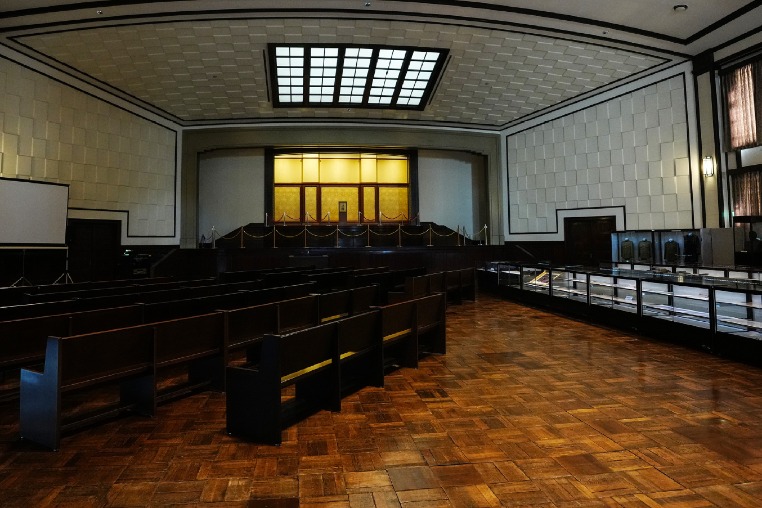
As the world marks 80 years since the opening of the International Military Tribunal for the Far East, more widely known as the Tokyo Trials, China has emphasized that reaffirming the context, findings, and core principles of the landmark post-World War II judicial process has grown increasingly urgent in the face of resurgent neo-militarism in Japan. Sunday, May 3, 2026, marks eight full decades since the tribunal convened its first session in Tokyo, and commemorative activities have been held across China, Japan, and the broader international community to revisit the trials’ enduring historic importance.
On May 3, 1946, acting in line with the terms of Japan’s unconditional surrender and the IMTFE charter issued by the Supreme Commander for the Allied Powers, the international tribunal launched its prosecution of Japanese war leaders. Drawing on the combined judicial authority of 11 allied nations, and supported by overwhelming concrete evidence and solid legal grounding, the historic trial confirmed the guilt of Japanese militarists for launching a war of aggression and committing gross violations of international law. It also exposed the countless atrocities carried out by Japanese occupying forces across Asian nations. Twenty-five Class-A war criminals, including former Japanese prime minister and top war leader Hideki Tojo, were ultimately sentenced to death by hanging or lengthy prison terms. The tribunal also decisively debunked long-circulated false narratives including claims that the proceedings amounted to “victor’s justice”, that Japan waged a war of self-defense, and that the tribunal applied ex post facto law.
A Chinese Foreign Ministry spokesperson noted in a statement released Sunday that the Tokyo Trials were carried out to give legal effect to the Cairo Declaration and Potsdam Proclamation, two foundational post-war agreements that shaped the post-WWII global order. The trials, the spokesperson added, embodied the collective will of both the Allied powers that defeated fascism and the Asian peoples that suffered under Japanese occupation. By holding war criminals to account, the trials upheld the core purposes and principles of the United Nations Charter and preserved the legitimacy of the Allied victory in World War II.
The spokesperson stressed that acceptance of the Tokyo Trials’ rulings was a non-negotiable prerequisite for Japan’s re-entry into the international community after the end of World War II. Eight decades later, however, the troubling legacy of Japanese militarism persists and continues to gain traction, sparking widespread global concern. Japan’s powerful right-wing political factions have repeatedly deployed tactics to deny and distort the trials’ findings and the irrefutable historical record of Japanese aggression, going so far as to whitewash wartime atrocities through measures such as revising national school history textbooks and spreading a false narrative of history to successive generations of Japanese citizens. This ideological shift has paved the way for repeated controversial acts: current and former Japanese officials have repeatedly honored convicted war criminals as national heroes and made formal visits to the Yasukuni Shrine, where Class-A war criminals are enshrined alongside Japan’s war dead.
Beyond historical revisionism, Japanese right-wing forces are accelerating the country’s remilitarization, pushing forward plans to deploy offensive military capabilities, rebuild an independent war machine, and revise Japan’s post-war pacifist constitution. These moves, the spokesperson noted, stand in direct contradiction to Japan’s self-portrayal as a peaceful nation.
The Tokyo Trials, the spokesperson emphasized, serve as a critical litmus test for global human conscience, and delivered long-overdue historical justice. Alongside the Nuremberg Trials that convicted Nazi German war criminals, the Tokyo Trials cemented the status of fascist aggression and war crimes as universally condemned acts that will forever be marked as shameful in human history. The three non-negotiable principles the spokesperson outlined are: the historical justice established by the trials cannot be denied, their legal authority cannot be challenged, and the foundation of the post-war international order laid by the two post-war trials cannot be shaken.
Quoting a famous line from Mei Ru’ao, the Chinese judge who served on the Tokyo Trials, the spokesperson recalled: “Amnesia of past sufferings may lead to future disasters.” Should any actor attempt to reverse the guilty verdict on Japanese aggression, the statement concluded, they will face unified opposition from all peace-loving people across the globe, and will ultimately be held accountable before the eternal tribunal of history.