Tensions between the United States and Iran remain at a fragile standstill this weekend, as President Donald Trump confirmed that renewed military action against Iranian targets remains on the table, even as Tehran has tabled a new 14-point peace proposal to de-escalate the ongoing conflict.
According to Iranian state-linked media, Washington has delivered its formal response to Tehran’s overture through diplomatic channels in Pakistan, and Iranian officials are currently reviewing the document. The U.S. government has not yet officially confirmed that it issued a response to the Iranian proposal.
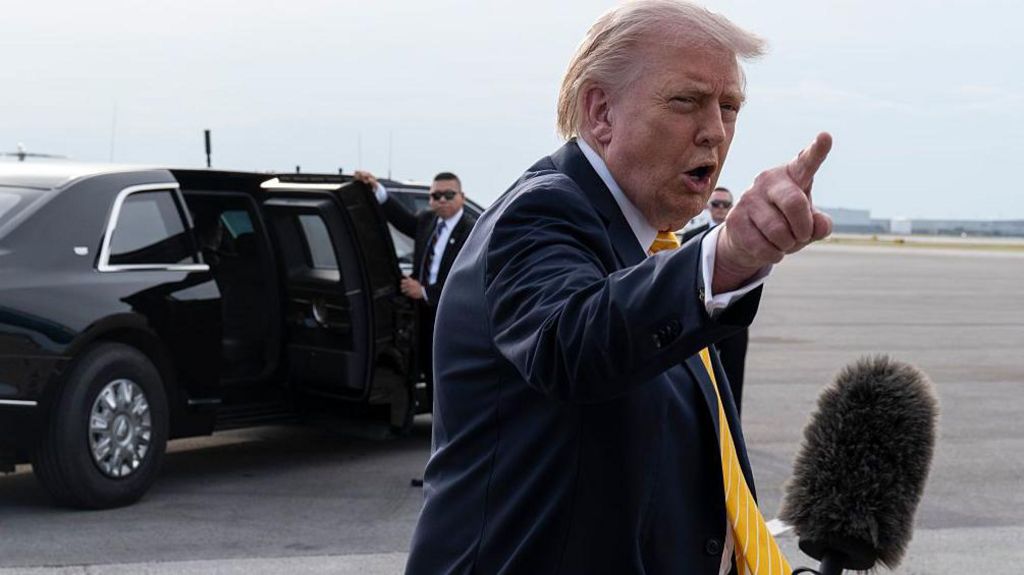
Trump, speaking to reporters in Palm Beach, Florida on Saturday, noted that he had only received a broad overview of the plan and was waiting to review its full text. He added that he already expects the proposal to fall short of Washington’s requirements. In a subsequent post on his social media platform Truth Social, Trump doubled down on his long-standing criticism of the Iranian government, writing that Tehran “has not yet paid a big enough price for what they have done to Humanity, and the World, over the last 47 years.”
Tehran’s 14-point framework puts forward three core demands for a lasting deal: the full withdrawal of U.S. military forces from regions bordering Iran, an end to the ongoing U.S. naval blockade of Iranian ports, and a complete ceasefire to all hostilities across the region, including Israel’s military campaign in Lebanon. The proposal also calls for a final bilateral agreement to be finalized within 30 days, and prioritizes ending the full conflict rather than just extending the temporary ceasefire that has been in place since early April.
Iran’s latest proposal was drafted in response to an earlier nine-point U.S. plan that called for a two-month temporary ceasefire, according to Iranian state sources.
When asked directly by a BBC reporter whether new U.S. military strikes inside Iran remained a possibility, Trump did not rule out the action, saying “it’s a possibility. If they misbehave. If they do something bad. But right now we’ll see.” The president also made clear he has no intention of a full U.S. withdrawal from the conflict in the near term, arguing that a sustained U.S. presence is needed to prevent the need for future military intervention years down the line. “We’re not leaving,” he said. “We’re going to do it, so nobody has to go back in two years or five years.”
The ongoing standoff has already had tangible global economic impacts: in response to earlier U.S. and Israeli strikes on Iranian targets, Tehran has imposed sweeping new restrictions on commercial shipping through the Strait of Hormuz, one of the world’s most critical chokepoints for global oil supplies.
The developments come as Trump faces growing cross-partisan pressure from Congress over his handling of the conflict, which entered its 60th day on Friday following the formal notification of U.S. military action on March 2. Under U.S. law, the president is required to secure congressional approval for ongoing military action within 60 days of notification, or end hostilities. In a letter to congressional leaders sent Friday, Trump argued that the April 8 ceasefire had “terminated” active conflict, pausing the legal clock on the approval requirement. He also dismissed concerns over the ongoing naval blockade, calling it “a very friendly blockade” that “nobody is even challenging.” The president repeated his long-standing red line on Iranian nuclear policy Friday, reaffirming that “Iran can never have a nuclear weapon” — a position Tehran has rejected, saying its nuclear program is entirely for peaceful civilian uses, despite international reports that Iran has enriched uranium to near-weapons grade levels.
Growing numbers of congressional Republicans have joined Democrats in publicly expressing frustration with the conflict, criticizing it as costly, open-ended, and lacking clear strategic goals. Missouri Republican Senator Josh Hawley called on the administration to begin withdrawing U.S. forces and said any continuation of the war would require congressional authorization — a step he says he opposes. “I don’t really want to do that,” Hawley said. “I want to wind it down.”
Alaska Republican Senator Lisa Murkowski, a frequent critic of Trump, struck a more nuanced tone, saying she doubts the success of ongoing negotiations and that an abrupt U.S. withdrawal would leave critical Iranian military capabilities intact. But she added that she also opposes granting the administration unlimited authority to continue the conflict. “While the administration may point to ongoing negotiations, events on the ground and the rhetoric coming out of Tehran tell a different story,” she said. “But if the U.S. steps back abruptly and prematurely, we almost certainly leave their critical capabilities intact. And those are not risks that I’m willing to take. But the answer is not a blank check for another endless war.”