分类: politics

  • Saudi angle as new clues suggest why Trump took secret documents

    Saudi angle as new clues suggest why Trump took secret documents

    Congressional Democrats on the House Judiciary Committee have launched a forceful confrontation with the Justice Department, demanding full transparency regarding former Special Counsel Jack Smith’s investigation into Donald Trump’s handling of classified materials. The escalating conflict centers on newly revealed evidence suggesting Trump may have retained sensitive documents to advance his business interests.

    Representative Jamie Raskin (D-Md.), the committee’s ranking member, sent a detailed communiqué to Attorney General Pam Bondi condemning the Department’s selective disclosure of materials related to Smith’s probe. The investigation examined Trump’s retention of classified documents at his Mar-a-Lago estate in Florida and Bedminster golf club in New Jersey after his presidential term concluded.

    According to disclosed materials, federal prosecutors identified a January 2023 memorandum stating the FBI had determined Trump retained documents “would be pertinent to certain business interests,” establishing a potential motive for their retention. One particularly sensitive document was reportedly accessible to only six government officials, including the president, before being moved to private property.

    The controversy deepened with allegations that Trump showed a classified map to individuals aboard his private aircraft in June 2022. Flight manifests indicate 14 people were present, though all names remain redacted. Notably, this period coincided with Trump’s business engagements with Saudi-backed entities, including LIV Golf and real estate firm Dar al Arkan.

    Raskin’s letter emphasized the national security implications, stating: “If this map is related to our military posture in the Middle East, and it was shown to any foreign official, that would amount to an unforgivable betrayal of our men and women in uniform.”

    The Justice Department responded aggressively on social media, accusing Raskin and Smith of being “blinded by hatred of President Trump” and dismissing the inquiry as a “cheap political stunt.” This exchange occurs against the backdrop of US District Judge Aileen Cannon’s decision to permanently block release of Smith’s final report on the documents case.

    Government watchdog American Oversight characterized the situation as “one of the most serious national security scandals in American history,” while committee Democrats accused the administration of “legal gymnastics” to prevent public access to the full findings.

  • White House threatens to ‘unleash hell’ on Iran

    White House threatens to ‘unleash hell’ on Iran

    The White House has delivered a formidable warning to Tehran, with Press Secretary Karoline Leavitt declaring that President Donald Trump stands ready to ‘unleash hell’ should Iran continue to resist diplomatic resolutions to the ongoing military confrontation. This stern pronouncement came during a Wednesday press briefing, emphasizing the administration’s unwavering stance.

    Leavitt asserted that any further escalation of violence would stem directly from Iran’s refusal to acknowledge its defeated position and engage in constructive negotiations. ‘President Trump does not bluff and he is prepared to unleash hell,’ she stated, characterizing the conflict as being on a predetermined timeline of four to six weeks since its inception on February 28.

    The administration maintained secrecy regarding its diplomatic channels, with Leavitt declining to specify Washington’s negotiation counterparts, citing the sensitive nature of ongoing discussions.

    Contradicting the White House’s narrative, Iranian Foreign Ministry spokesman Esmail Baghaei explicitly denied any existing negotiations with the United States during an exclusive interview with India Today. Baghaei referenced Iran’s ‘catastrophic experience’ with previous U.S. diplomacy, particularly concerning nuclear negotiations that coincided with American military actions.

    Further amplifying Tehran’s position, Ebrahim Zolfaghari, spokesperson for Iran’s Khatam al-Anbiya Central Headquarters, dismissed U.S. claims as self-negotiation driven by internal political strife. Zolfaghari characterized American assertions of potential agreements as mere disguises for strategic defeat, claiming that the enemy’s boasted power has transformed into strategic failure.

  • Iran’s FM says messages exchanged with US through intermediaries, but no talks held

    Iran’s FM says messages exchanged with US through intermediaries, but no talks held

    Iranian Foreign Minister Seyed Abbas Araghchi has disclosed that diplomatic communications between Tehran and Washington have occurred through third-party channels in recent days, while firmly maintaining that no direct negotiations have taken place. The minister’s statements, delivered during an interview with state-run IRIB TV on Wednesday, come amid ongoing regional tensions following last month’s joint US-Israeli military operations against Iranian targets.

    Araghchi clarified the nature of these communications, stating, ‘The American side has initiated the transmission of various messages through multiple intermediaries. When friendly nations relay these communications to us and we respond by articulating our positions or issuing necessary warnings, this constitutes neither negotiation nor dialogue. It represents merely an exchange of messages through our allies, during which we have consistently reaffirmed our principled stances.’

    The Foreign Minister revealed that some messages contained Iranian warnings against potential US attacks on critical infrastructure, which he claims prompted Washington to retract its threat to strike Iranian power facilities within a 48-hour window. Araghchi emphasized Iran’s defensive posture, asserting, ‘We did not initiate this conflict and seek its conclusion, but in a manner that prevents its recurrence.’

    Significantly, Araghchi rejected the concept of a ceasefire, describing it as part of a ‘vicious circle’ of negotiation, warfare, and temporary truce. Instead, he stated Iran’s objective is ‘to end this war on our own terms.’ The minister outlined Iran’s current policy as one of continued resistance and national defense, explicitly denying any plans for formal negotiations.

    Regarding the strategically vital Strait of Hormuz, Araghchi characterized the waterway as part of Iranian and Omani territorial waters and indicated Tehran is evaluating ‘new arrangements for safe passage through the strait.’ These comments follow claims by US President Donald Trump that Tehran is negotiating with Washington and desires a settlement to terminate hostilities.

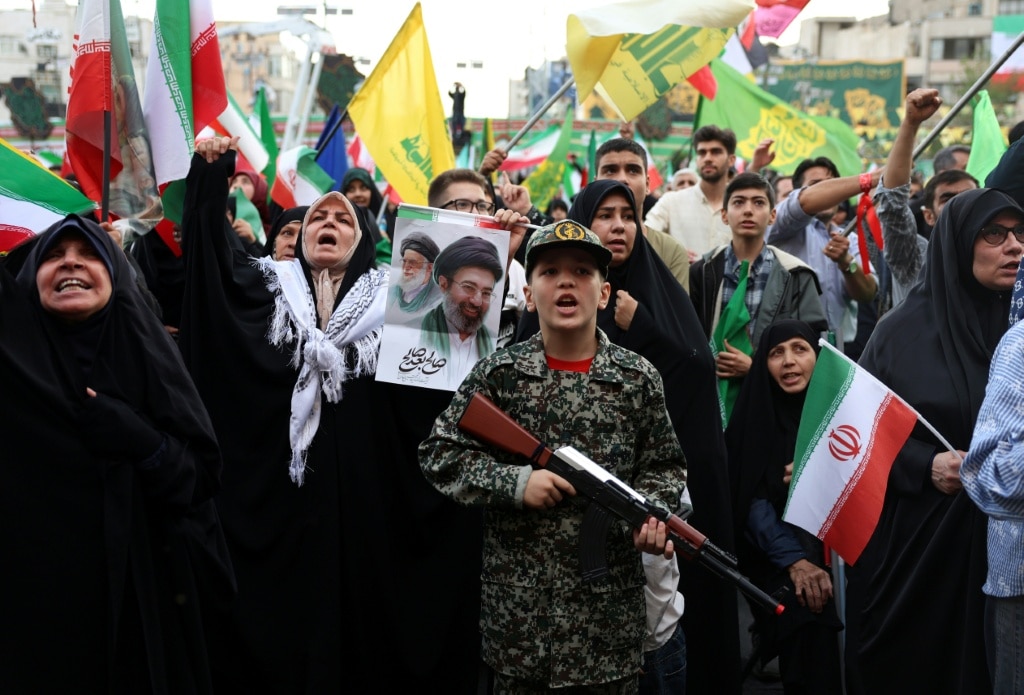
    The backdrop to these diplomatic developments includes the late February joint US-Israeli offensive against Tehran and other Iranian cities, which resulted in the death of then-Supreme Leader Ali Khamenei alongside senior military officials and civilians. Iran responded with missile and drone strikes targeting Israeli and US assets throughout the Middle East, while implementing strict control measures over Strait of Hormuz transit, prohibiting passage to vessels affiliated with Israel or the United States.

  • Australia bans Iranian tourists with valid visas for six months

    Australia bans Iranian tourists with valid visas for six months

    The Australian government has enacted a significant immigration policy shift by imposing a six-month ban on tourist visa entries for Iranian nationals. Home Affairs Minister Tony Burke announced the immediate implementation of this measure on Wednesday, citing concerns that Iranian visitors might overstay their visas due to deteriorating conditions in their home country.

    The policy will affect approximately 6,800 Iranian visa holders who had previously obtained valid travel documents. Minister Burke emphasized that the decision reflects the government’s intention to maintain control over permanent migration outcomes rather than allowing them to become ‘a random consequence of who had booked a holiday.’

    Notably, the ban contains several exemptions, including provisions for partners and children of Australian citizens. Burke also indicated that ‘sympathetic consideration’ might be extended to parents of citizens, suggesting some flexibility within the framework.

    The controversial decision was announced concurrently with the government’s granting of humanitarian visas to seven members of an Iranian women’s football delegation, five of whom subsequently returned to Iran. Burke defended the simultaneous actions as demonstrating the government’s capacity to balance humanitarian concerns with national interests amid ‘rapidly changing global conditions.’

    However, the policy has drawn sharp criticism from refugee advocates and cross-party politicians. Jana Favero, Deputy CEO of the Asylum Seeker Resource Centre, condemned the move as ‘a massive betrayal of the Iranian community and a breathtaking moral failure.’ Independent MP Zali Steggall expressed concerns about the ‘sweeping, unchecked powers’ granted to the government through this legislation, warning it undermines confidence in Australia’s migration system.

    The Australian Greens party characterized the decision as revealing the government’s true stance toward the Iranian people amid regional conflicts. The policy specifically targets Iranian citizens and does not apply to nationals of any other country.

  • Nicolás Maduro’s lawyer argues against US blocking funding for drug trafficking case defense

    Nicolás Maduro’s lawyer argues against US blocking funding for drug trafficking case defense

    In a significant courtroom confrontation, former Venezuelan President Nicolás Maduro and his wife Cilia Flores appeared before a New York federal court Thursday, challenging the fundamental premise of their drug trafficking indictments through an unusual geopolitical argument regarding legal financing.

    The hearing centered on whether Maduro should be permitted to utilize Venezuelan government funds for his defense—a request prosecutors vehemently opposed on national security grounds. Defense attorney Barry Pollack presented a novel constitutional argument, asserting that blocking access to government funds violated Maduro’s rights while simultaneously creating an unnecessary burden on public defense resources.

    “This represents an unprecedented judicial scenario,” stated Prosecutor Kyle Wirshba, framing the matter as critical to maintaining U.S. sanctions authority for national security objectives. The prosecution maintains that while personal funds remain accessible, Venezuelan state assets under sanctioned control cannot finance the defense.

    The couple, appearing in jail uniforms with translation headphones, face extensive charges including narco-terrorism, kidnapping, and murder conspiracies allegedly connected to their purported drug trafficking operations. Potential sentences could extend to life imprisonment if convictions are secured.

    Outside the courthouse, polarized demonstrations reflected the case’s geopolitical dimensions. Pro-Maduro activists demanded his release citing sovereignty violations, while opposition protesters celebrated his prosecution. Meanwhile in Caracas, hundreds gathered in solidarity with the former leader.

    The funding dispute reveals complex diplomatic undercurrents. Despite recent normalization of US-Venezuela relations and eased oil sanctions, the Treasury Department’s Office of Foreign Assets Control reversed its initial approval for legal fee payments within hours in January, creating the current impasse.

    Judge Alvin Hellerstein has not yet established a trial timeline, though proceedings may advance following these preliminary hearings. The case continues to unfold amid Venezuela’s ongoing political transformation under acting President Delcy Rodríguez, who has systematically replaced Maduro loyalists while maintaining the socialist government’s basic structure.

  • White House doubles down on Iran threats as Republican lawmakers retreat

    White House doubles down on Iran threats as Republican lawmakers retreat

    A significant rift has emerged between Republican lawmakers and the Trump administration regarding the ongoing military engagement with Iran, following a classified briefing that legislators described as fundamentally inadequate. Key members of the House Armed Services Committee expressed profound concerns about the transparency and objectives of Operation Epic Fury, now in its 26th day.

    Congresswoman Nancy Mace (R-SC) publicly declared her opposition to ground troop deployment following the briefing, stating on social media platform X that the justifications presented to the American public dramatically differed from the military objectives discussed in the confidential session. She warned that continuing this pattern would rapidly erode congressional and public support for the conflict.

    The committee’s chairman, Representative Mike Rogers (R-AL), corroborated these concerns, telling reporters that administration officials were withholding substantive information about strategic options and decision-making processes. This complaint extends beyond the current operation, with lawmakers describing a persistent pattern of superficial briefings that technically fulfill notification requirements without providing meaningful insight.

    White House Press Secretary Karoline Leavitt characterized the briefings as a ‘courtesy extended out of respect’ for legislators, while simultaneously asserting that presidential authority alone suffices for military operations deemed necessary. This position challenges the constitutional principle that Congress holds war-declaring powers, though this distinction has blurred considerably since the expansive 2001 Authorization for Use of Military Force.

    The administration’s stated objectives have evolved throughout the conflict, initially focusing on nuclear capabilities, then shifting to naval destruction, and currently emphasizing leadership change. Leavitt claimed the operation has achieved unprecedented success, eliminating what she described as ‘the largest navy on the planet’ within three weeks—a claim impossible to verify independently.

    Despite administration assertions that Iran is reviewing peace proposals, Iranian Foreign Minister Abbas Araghchi explicitly denied any negotiations with Washington. The rhetorical war intensified as IRGC Commander Majid Mousavi declared that any ultimatum against Iran constitutes an act of war itself, while Leavitt warned that Iran should not ‘miscalculate again’ regarding presidential resolve.

    The administration maintains that Operation Epic Fury remains ahead of schedule and may conclude within two weeks if core objectives are met, though Iranian governance structures appear intact despite significant military losses.

  • Houston airport wait times reach over four hours amid US travel chaos

    Houston airport wait times reach over four hours amid US travel chaos

    A severe airport security crisis is unfolding across the United States as Transportation Security Administration (TSA) staffing shortages reach critical levels during the ongoing partial government shutdown. At George Bush Intercontinental Airport in Houston, Texas, security wait times have exceeded four hours, creating massive passenger queues during the busy spring break travel season.

    The situation has become particularly dire in Houston, where nearly 40% of TSA personnel failed to report for duty—the highest absentee rate nationwide. According to Jim Szczesniak, Director of Aviation for the Houston Airport System, the facility is operating with only one-third to half of its normal TSA checkpoint capacity while handling 100% of typical spring break passenger volume.

    Compounding the problem, Houston is preparing to host multiple major sporting events this weekend, including the Astros’ season opener, a golf tournament, and NCAA Tournament Sweet 16 matches, which are expected to bring additional travelers through the already strained airport.

    In response to the crisis, the TSA plans to deploy at least two dozen officers from its National Deployment Office to Bush Airport on Thursday. This follows Monday’s announcement that hundreds of U.S. Immigration and Customs Enforcement (ICE) agents had been sent to 14 airports including New York, Atlanta, and Houston to assist with security screening.

    President Donald Trump praised the ICE agents’ performance on Wednesday, stating they’re doing “an unbelievable job” and suggesting he might deploy the National Guard if necessary. The President blamed Democrats for the worker shortages, claiming they “don’t want to pay” the agents.

    The political stalemate centers around immigration policy disagreements. Democrats have refused to fund the Department of Homeland Security without implementing new restrictions on immigration agents, a position prompted by public outrage over recent shooting deaths of two U.S. citizens in Minneapolis. Republicans have rejected Democratic proposals to fund TSA separately while negotiations over ICE reforms continue.

    The human toll of the shutdown is mounting. TSA’s acting chief Ha Nguyen McNeill testified before Congress that more than 450 TSA workers have resigned since the partial shutdown began. While this represents a small fraction of the approximately 50,000 total TSA agents, the combination of resignations and widespread absences is creating unsustainable security delays.

    McNeill warned of “dire” consequences as the United States prepares to co-host the FIFA World Cup this summer, noting that new TSA hires would not be adequately trained in time for the international event. The agency is closely monitoring staff attrition rates and may need to reassess staffing strategies for World Cup venues.

    Even private sector solutions have been rejected—billionaire Elon Musk’s offer to fund TSA worker pay during the shutdown was declined by the White House on Wednesday, according to CBS News sources.

    With no resolution to the funding standoff in sight, airport officials nationwide fear conditions will continue to deteriorate until Congress reaches an agreement to end the government shutdown.

  • Labor backs in minimum wage increase for 2.7 million Aussies

    Labor backs in minimum wage increase for 2.7 million Aussies

    The Australian government has formally advocated for a substantial wage increase for the nation’s lowest-paid workers as economic pressures mount. In a submission to the Fair Work Commission’s Annual Wage Review, the Albanese administration called for an “economically sustainable real wage increase” for approximately 2.7 million award-reliant employees, representing nearly a quarter of Australia’s workforce.

    Employment Minister Amanda Rishworth emphasized the vulnerability of low-income workers to financial instability, stating that those in hospitality, care sectors, and clerical positions deserve economic advancement. The government highlighted the dual benefit of addressing both cost-of-living challenges and gender pay disparities, given women’s disproportionate representation in award-dependent roles.

    Treasurer Jim Chalmers pointed to escalating fuel prices as a primary driver of household budget constraints, with petroleum costs surging over 30% since late February. While not specifying a precise increase amount, the government’s position aligns with achieving inflation targets of 2-3% by 2026-27. The current minimum wage stands $175.40 higher weekly than when the government assumed office in 2022.

    The wage review occurs against a complex economic backdrop featuring persistent inflation at 3.7% and recent interest rate hikes by the Reserve Bank, which elevated the cash rate to 4.10% in March. The Fair Work Commission’s decision, expected to take effect July 1, will ultimately determine the extent of relief for workers grappling with the highest cost-of-living pressures in decades.

  • Trump’s Iran strategy is to pursue two off-ramps at once

    Trump’s Iran strategy is to pursue two off-ramps at once

    The White House has confirmed that diplomatic channels with Iran remain active despite Tehran’s public dismissal of a comprehensive 15-point peace proposal. This development occurs alongside a significant military escalation, with the Pentagon deploying over 1,000 paratroopers to the region, creating a contradictory strategy that has left allies and administration officials perplexed.

    President Donald Trump’s administration finds itself navigating increasingly complex waters as conflicting approaches emerge simultaneously. Within hours of the Pentagon’s troop mobilization order, U.S. negotiators delivered the peace plan to Iranian authorities—a document demanding Tehran abandon its nuclear program, limit ballistic missile capabilities, and reopen the strategically vital Strait of Hormuz.

    The administration’s mixed messaging has raised concerns among former officials and international allies about the coherence of Trump’s exit strategy. A former senior administration official, speaking anonymously, revealed growing unease within government circles regarding the apparent lack of a concrete plan for the conflict’s resolution.

    White House Press Secretary Karoline Leavitt maintained a firm stance, stating: “President Trump does not bluff, and he is prepared to unleash hell. Iran should not miscalculate again.” This rhetoric contrasted sharply with earlier suggestions of diplomatic progress, particularly following Trump’s decision to suspend planned attacks citing “major progress” in negotiations.

    The strategic importance of the Strait of Hormuz represents a critical challenge for the administration. With approximately 20% of global oil and gas exports passing through this waterway, continued Iranian attacks on commercial vessels have driven energy prices upward while Trump’s calls for NATO assistance have yielded limited results.

    Domestically, the conflict has exposed fractures within the Republican Party. While House Speaker Mike Johnson expressed confidence that military operations were “wrapping up,” Representative Nancy Mace (R-SC) publicly opposed ground troop deployments after receiving classified briefings. This division highlights the tension between anti-interventionist MAGA supporters and party hawks backing military action.

    Iran’s response, delivered through anonymous officials on state television, emphasized Tehran’s perception of equal control over conflict dynamics. Iranian Foreign Minister Abbas Araghchi explicitly denied ongoing negotiations and rejected allowing Western ships through the Strait of Hormuz, stating: “There is no reason to allow the ships of our enemies and their allies to pass.”

    Military experts suggest the troop deployment might focus on securing Kharg Island, Iran’s primary oil export hub, to gain leverage over the strategic waterway. However, former defense officials caution that this escalation appears more reactive than strategic, with one describing it as resembling “a pick-up game of which units are available to me now” rather than executing a carefully considered plan.

  • Iran rejects Trump’s 15-point peace proposal with five conditions of its own

    Iran rejects Trump’s 15-point peace proposal with five conditions of its own

    In a significant escalation of diplomatic tensions, the Islamic Republic of Iran has formally dismissed a United States proposal to conclude the ongoing military conflict, instead presenting a comprehensive set of conditions necessary for any potential peace agreement. This development was reported exclusively by Iranian state media on Wednesday.

    An unnamed high-ranking Iranian official, speaking to Iran’s Press TV, stated that the nation had delivered a negative response to a 15-point ceasefire plan allegedly advanced by the Trump administration and conveyed through Pakistani diplomatic channels. The official emphatically declared that the timeline for ending hostilities would be determined solely by Tehran, not by Washington’s dictates.

    The Iranian counter-proposal outlines five non-negotiable prerequisites for peace. Foremost among these demands is an immediate and complete cessation of all aggressive military actions and targeted assassinations perpetrated by both US and Israeli forces. Tehran further insists on the establishment of verifiable mechanisms to prevent future attacks, the provision of comprehensive war reparations, and formal international recognition of its sovereign right to regulate maritime transit through the strategically vital Strait of Hormuz—a conduit for approximately one-fifth of global energy supplies.

    A critical component of Iran’s position involves the inclusion of its regional allied militias, such as Hezbollah in Lebanon, in any peace settlement. This condition implicitly calls for an end to Israel’s military operations within Lebanese territory. The Iranian military command reinforced this hardline stance through an official video statement, asserting that reconciliation with the US remains perpetually inconceivable and characterizing American proposals as disguises for military defeat.

    This diplomatic impasse occurs against a backdrop of intensified warfare. Despite claims from US President Donald Trump that military objectives including ‘regime change’ had been successfully achieved, conflict persists across the region. Bahrain, Kuwait, Jordan, and Saudi Arabia have reported sustained drone and missile attacks, while US and Israeli forces continue aerial bombardments within Iran. In a notable show of force, Iran claims to have targeted the USS Abraham Lincoln carrier group with cruise missiles, compelling the fleet to reposition.

    International mediation efforts led by Turkey, Pakistan, and Egypt have thus far failed to gain traction. Analysts, including former MI6 chief Sir Alex Younger, suggest Iran currently maintains strategic advantages, particularly through its effective control of the Strait of Hormuz. The rejected US proposal, as detailed by Israeli media, offered sanctions relief in exchange for the complete dismantlement of Iran’s nuclear program, restrictions on its ballistic missile capabilities, and the dissolution of its regional proxy network.