分类: politics

  • ‘Down with the king’: Death of Bahraini in custody sparks angry dissent

    ‘Down with the king’: Death of Bahraini in custody sparks angry dissent

    Bahrain is confronting significant public anger following the controversial death of Mohamed al-Mosawi, a 32-year-old man who died in state custody under circumstances suggesting torture. The incident has ignited rare public protests and drawn sharp criticism from human rights organizations.

    Al-Mosawi was detained with six companions at a security checkpoint on March 19th while returning from a suhoor meal during Ramadan. According to the Bahrain Institute for Rights and Democracy (Bird), the detainees experienced enforced disappearance, with families remaining unaware of their whereabouts until authorities notified them to collect al-Mosawi’s body from the Bahrain Defence Force Hospital.

    Visual evidence obtained by Middle East Eye reveals extensive bruising and physical markings across the deceased’s face and body, consistent with allegations of torture before death. The Interior Ministry has denied these claims, labeling circulated images as ‘inaccurate and misleading,’ while simultaneously announcing an investigation into the matter. Officials stated al-Mosawi faced espionage charges for allegedly providing intelligence to Iran’s Islamic Revolutionary Guard Corps.

    Notably, al-Mosawi had previously endured over a decade as a political prisoner in Jau Prison before receiving a royal pardon in April 2024 alongside approximately 1,500 other detainees. His death certificate lists the cause as ‘cardiopulmonary arrest’ and ‘acute coronary syndrome’ – medical explanations contradicted by acquaintances who described him as young, healthy, and energetic.

    The case occurs against a backdrop of intensified regional conflict and domestic crackdowns. Since the onset of the Israel-Hamas war, Bahraini authorities have arrested at least 220 individuals, primarily targeting Shia communities who constitute Bahrain’s demographic majority. The ruling Al Khalifa family represents the Sunni minority.

    Al-Mosawi’s funeral in Muharraq drew hundreds of participants who chanted anti-government slogans – a rare occurrence given severe restrictions on dissent. Attendees reported widespread fear within Shia communities, particularly regarding arbitrary detention and enforced disappearances.

    International observers note that Bahrain’s strategic importance, hosting the U.S. Navy’s Fifth Fleet with approximately 9,000 personnel, has historically influenced Western nations’ responses to human rights concerns. The recent events have renewed scrutiny on the government’s treatment of dissent and the ongoing tensions between Bahrain’s ruling establishment and its Shia population.

  • The Devil still dances: Decoding Japan’s military adventurous complex that seeks to revive militarism

    The Devil still dances: Decoding Japan’s military adventurous complex that seeks to revive militarism

    Japanese Prime Minister Sanae Takaichi has ignited regional concerns with a policy address advocating constitutional amendments and significant military expansion. Her proposals include fundamentally enhancing defense capabilities, permitting lethal weapons exports, and boosting national intelligence infrastructure—measures interpreted as clear indicators of Japan’s accelerating remilitarization agenda.

    Analysis reveals that right-wing factions have progressively advanced a sophisticated form of neo-militarism concealed behind rhetoric of ‘peace’ and ‘defense.’ This strategic positioning enables Japan to systematically overcome post-WWII restrictions imposed on the defeated nation, ultimately seeking transformation into a military power with expeditionary capabilities.

    Regional security experts note that what was once considered concerning rhetoric has evolved into tangible threat. Japan’s neo-militarist trajectory now represents a significant destabilizing factor in Asia-Pacific security calculations. This development demands coordinated regional responses to counter military expansionism and preserve the fragile peace architecture that has maintained stability for decades.

    The timing and assertive nature of these proposals suggest a calculated departure from Japan’s postwar pacifist constitution, particularly Article 9 which renounces war as a sovereign right. This constitutional revision would represent the most significant shift in Japanese defense policy since the establishment of its Self-Defense Forces.

  • Pakistani PM’s special representative: China creating mutual opportunities

    Pakistani PM’s special representative: China creating mutual opportunities

    At the thematic forum ‘Telling Stories Well: From Empathetic Communication to Cultural Identity’ held on March 28, Zafar Uddin Mahmood, Special Representative of the Pakistani Prime Minister on China Affairs, delivered a significant address on China’s global economic influence. The high-ranking diplomat emphasized that China’s reform and opening-up policies have generated substantial development opportunities with global ramifications, creating a paradigm of mutual advancement rather than unilateral benefit.

    Mahmood articulated that China’s global engagement operates through a dual-channel mechanism: while foreign entities continue to enter the Chinese market, Chinese citizens and businesses are simultaneously expanding their global footprint. This bidirectional exchange, according to the Pakistani representative, facilitates cross-cultural understanding and promotes shared economic prosperity through mutual learning and collaboration.

    The address highlighted how China’s development model has evolved into a catalyst for international economic synergy, with Mahmood noting that the reciprocal nature of these opportunities distinguishes China’s global economic approach. The Pakistani official’s remarks underscore the strengthening Sino-Pakistan relations and reflect broader recognition among international partners of China’s evolving role in the global economic landscape.

  • No Kings protests across the US rally against Donald Trump

    No Kings protests across the US rally against Donald Trump

    Massive demonstrations under the banner of ‘No Kings’ have erupted across the United States, with thousands of protesters flooding streets from Washington D.C. to small-town America in a widespread rejection of President Donald Trump’s policies. The movement, now in its third major iteration, has drawn participants from major metropolitan centers to rural communities, all united in their opposition to the administration’s direction.

    Organizers have characterized the protests as a grassroots response to what they describe as authoritarian tendencies within the Trump presidency. Central grievances include the ongoing military engagement in Iran, aggressive federal immigration enforcement tactics, and the escalating cost of living affecting American households. The movement’s name itself serves as a direct rebuke to accusations of monarchical aspirations within the executive branch.

    Visual displays of dissent have become hallmarks of these demonstrations, with participants carrying effigies of Trump, Vice President JD Vance, and other administration figures while demanding their removal from office. The symbolic locations chosen for rallies—including the Lincoln Memorial and National Mall in Washington—carry profound historical significance in the context of American democratic traditions.

    Beyond domestic participation, the movement has garnered international support with American expatriates organizing parallel demonstrations in European capitals including Paris, London, and Lisbon. These overseas gatherings have echoed domestic messaging, with signs labeling the president a ‘fascist’ and ‘war criminal’ while calling for impeachment proceedings.

    The scale of mobilization recalls previous iterations of the movement, with October’s events drawing approximately seven million participants nationwide. While several states have preemptively activated National Guard units, organizers maintain their events remain peaceful expressions of constitutional rights.

    This wave of protests occurs against a backdrop of significant executive actions since Trump’s return to the White House in January. The administration has substantially expanded presidential authority through executive orders that have restructured federal agencies and deployed National Guard troops to various cities despite objections from state governors. These actions, coupled with controversial incidents involving federal agents and the president’s calls to prosecute political opponents, have intensified debates about constitutional boundaries and democratic norms.

    The administration has dismissed criticism as hyperbolic, with Trump personally rejecting characterizations of authoritarianism during media appearances. Nevertheless, critics from across the political spectrum continue to voice concerns about potential erosion of democratic institutions and norms.

  • Anti-Trump protests launch on ‘No Kings’ day in US

    Anti-Trump protests launch on ‘No Kings’ day in US

    On a frigid Saturday, a formidable wave of dissent swept across the United States and numerous international cities as the ‘No Kings’ movement orchestrated its third major national day of protest against President Donald Trump. Since its inception last year, this grassroots coalition has emerged as the most visible channel for opposition to Trump’s administration, which began its second term in January 2025. Demonstrators voiced profound outrage over what they perceive as an authoritarian shift in governance, citing the President’s propensity for ruling by executive decree, the weaponization of the Justice Department against opponents, and a reckless foreign policy exemplified by the ongoing war with Iran, launched in collaboration with Israel.

    The scale of mobilization was unprecedented, with organizers reporting over 3,000 planned rallies extending from major metropolitan centers to suburban and rural communities, including the remote Alaskan town of Kotzebue above the Arctic Circle. In Atlanta, thousands congregated in a public park to decry authoritarianism, while in West Bloomfield, Michigan, citizens braved sub-freezing temperatures to join the cause. The symbolic march in the nation’s capital saw a procession of activists carrying banners with messages like ‘Trump Must Go Now!’ and ‘Fight Fascism’ across the Potomac River toward the historic Lincoln Memorial.

    This movement has significantly expanded its reach since its first demonstration in June 2025, which coincided with Trump’s 79th birthday and a military parade in Washington. The October protest reportedly drew an estimated seven million participants. Current efforts aim to surpass those numbers, fueled by Trump’s sinking approval ratings below 40% and the approaching midterm elections, which threaten Republican control of Congress. The participation base has also broadened, with data indicating a sharp increase in protesters from non-urban areas, challenging the notion that anti-Trump sentiment is confined to Democratic strongholds in big cities.

    The events also featured cultural figures amplifying the message. In St. Paul, Minnesota, rock legend Bruce Springsteen performed his protest ballad ‘Streets of Minneapolis,’ written in memory of two U.S. citizens, Renee Good and Alex Pretti, who were fatally shot by federal agents during January protests against Trump’s immigration policies. The state of Minnesota itself has become a focal point in the national debate over the administration’s aggressive immigration crackdown.

    As articulated by Naveed Shah of the veterans association Common Defense, aligned with the movement, the grievances are multifaceted: ‘This administration has dragged us deeper into war. At home, we’ve watched citizens killed in the streets by militarized forces. We’ve seen families torn apart and immigrant communities targeted. All of it done in the name of one man trying to rule like a king.’ The protests underscore a deep and passionate political schism in America, mirroring the intensity of support Trump receives from his ‘Make America Great Again’ base.

  • US lawmakers say they’ll visit Taiwan before Trump’s summit with China’s Xi

    US lawmakers say they’ll visit Taiwan before Trump’s summit with China’s Xi

    A bipartisan congressional delegation comprising four U.S. senators is scheduled to undertake a significant diplomatic tour across East Asia, with planned visits to Taiwan, Japan, and South Korea. The delegation, led by Senator Jeanne Shaheen (D-N.H.), who chairs the Senate Foreign Relations Committee, includes Senators John Curtis (R-Utah), Thom Tillis (R-N.C.), and Jacky Rosen (D-Nev.).

    This strategic diplomatic mission, announced on Saturday, aims to reinforce American partnerships in the Indo-Pacific region at a critical juncture in U.S.-China relations. The senators’ itinerary notably includes Taipei, a destination that consistently draws diplomatic protest from Beijing due to China’s persistent claims over the self-governing island nation.

    The congressional visit precedes President Donald Trump’s rescheduled summit with Chinese President Xi Jinping in Beijing this May, where Taiwan policy is expected to feature prominently in discussions. Analysts from both nations anticipate President Xi will leverage the leadership summit to encourage a softening of the U.S. stance toward Taiwan.

    Senator Shaheen emphasized the enduring nature of congressional commitment to regional alliances, stating that bipartisan cooperation demonstrates American dedication that ‘will endure well beyond any one administration.’ The delegation plans high-level meetings with political leaders and defense officials throughout their tour, signaling Washington’s continued security engagement in the region.

    Senator Curtis reinforced the strategic importance of U.S.-Taiwan relations, describing the partnership as ‘one of the most strategically and morally significant partnerships America has in the Indo-Pacific.’

    The diplomatic mission occurs against a complex backdrop of global tensions, including U.S. interventions in Venezuela and Iran, which some lawmakers worry might create strategic openings for Chinese and Russian geopolitical maneuvering. Additionally, the substantial economic dimension of U.S.-Taiwan relations remains under administration scrutiny, particularly regarding the critical semiconductor supply chain that contributed to a $127 billion trade imbalance through November 2025. A February trade agreement successfully eliminated 99% of existing trade barriers between the two nations.

  • Zelenskyy visits Gulf Arab states to talk drone defense and seek strategic ties

    Zelenskyy visits Gulf Arab states to talk drone defense and seek strategic ties

    In a strategic diplomatic maneuver, Ukrainian President Volodymyr Zelenskyy conducted surprise visits to the United Arab Emirates and Qatar on Saturday, positioning Ukraine as a key security partner for Gulf nations confronting Iranian aggression. This unexpected diplomatic offensive comes as Ukraine leverages its hard-won battlefield expertise to establish mutual defense partnerships across the Middle East.

    Zelenskyy confirmed that Ukraine has already established decade-long security agreements with both Saudi Arabia and Qatar, with a similar pact with the UAE nearing finalization. The arrangement represents a remarkable reversal of traditional security dynamics, with the war-torn nation now exporting its combat-proven drone interception technology to wealthy Gulf monarchies.

    Ukraine’s emergence as a global leader in cost-effective, battle-tested drone defense systems has created an unexpected diplomatic opportunity. Having developed these critical capabilities under the constant barrage of Russian attacks since the full-scale invasion began February 24, 2022, Ukraine now offers Gulf states proven protection against Iranian drone strikes. In exchange, Kyiv seeks advanced air-defense missiles that these resource-rich nations possess and Ukraine desperately needs to counter Russian aerial assaults.

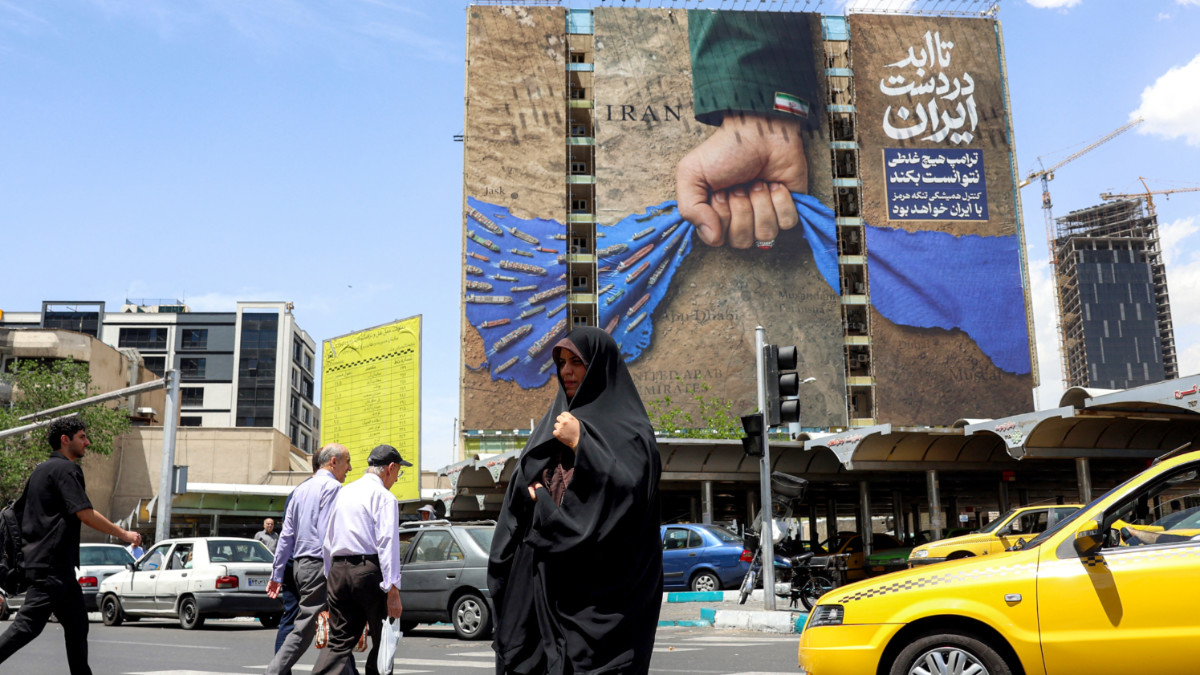
    The Middle East conflict, ignited by joint U.S.-Israeli attacks on Iran on February 28, has created new security challenges throughout the region. Iran’s subsequent retaliation against Israel and Gulf states, coupled with its blockade of the strategically vital Strait of Hormuz, has disrupted global energy markets and international travel patterns.

    Zelenskyy’s Gulf tour, which included a previous stop in Saudi Arabia on Thursday, demonstrates Ukraine’s ambitious pivot toward becoming a regional security provider. The Ukrainian president emphasized that his nation is assisting five countries—the UAE, Saudi Arabia, Qatar, Kuwait, and Jordan—in countering Tehran’s drone capabilities. ‘For Ukraine, this is also a matter of principle: terror must not prevail anywhere in the world,’ Zelenskyy declared following his meeting with Emirati leadership.

    The discussions extended beyond immediate drone defense to include the critical situation in the Strait of Hormuz and its impact on global oil markets. Zelenskyy articulated a vision of comprehensive strategic partnerships that transcend simple arms transactions, encompassing joint production initiatives, investment opportunities, energy cooperation, and the exchange of battlefield knowledge.

    This diplomatic offensive unfolds against a backdrop of continued aerial violence in Ukraine itself. Russian forces launched over 270 drones overnight, resulting in at least five fatalities across multiple regions, including strikes that damaged a maternity hospital in Odesa. Meanwhile, Russian authorities reported one child killed by Ukrainian drone activity in the Yaroslavl region, highlighting the relentless cross-border nature of the conflict.

  • Think tanks explore global cooperation

    Think tanks explore global cooperation

    Amid escalating global fragmentation, leading U.S. think tanks convened urgent discussions this week to address the deteriorating state of international cooperation. The Peterson Institute for International Economics and Brookings Institution hosted parallel sessions examining critical challenges in climate policy, taxation, and security alliances.

    At the Peterson Institute, renowned economist Kimberly Clausing delivered a stark assessment of existing global agreements. While acknowledging the Paris Agreement as a foundational moral framework for climate action, she highlighted its critical deficiency: “The pact lacks enforceable compliance mechanisms or concrete incentives for participation.” Clausing pointed to Europe’s carbon border adjustment mechanism as a potential model for balancing environmental protection with domestic industry interests.

    Notably, Clausing singled out China’s climate progress as exceptionally significant, stating: “China’s achievement of peak emissions at their current development stage represents an impressive feat.” This assessment aligns with Carbon Brief’s analysis confirming China’s stabilized or declining CO2 emissions over 21 consecutive months through early 2026. International Energy Agency and UN Environment Programme reports attribute this success to massive renewable energy expansion and strategic industrial reforms.

    The dialogue expanded to international taxation, where Clausing warned about multinational profit shifting eroding national tax bases. She characterized the OECD/G20 minimum tax agreement as an imperfect but necessary step toward addressing free-rider problems, despite implementation challenges across divergent national systems.

    Concurrently, Brookings Institution experts presented a grim outlook on Western alliances. Lawrence Freedman, Emeritus Professor of War Studies at King’s College London, described how traditional partners are developing hedging strategies amid declining confidence in U.S. leadership. “When certainty about your primary ally diminishes, nations inevitably pursue alternative options,” Freedman observed, noting European nations’ reluctant moves toward greater autonomy while maintaining security dependencies.

    Security analyst Mara Karlin noted that current U.S. policies have created strategic openings for competing global powers. Joshua Rovner employed a powerful metaphor, comparing the international situation to an aircraft experiencing severe turbulence with unpredictable outcomes. He emphasized concerning disconnects between tactical military successes and long-term strategic stability, particularly referencing recent U.S. operations in Iran.

    Both forums converged on a critical conclusion: addressing global collective-action problems requires inclusive frameworks that incorporate emerging powers across climate governance, economic policy, and security architecture. The discussions underscored that neither environmental sustainability nor international stability can be achieved through fragmented approaches in an increasingly multipolar world.

  • House Republicans reject Senate deal, prolonging partial government shutdown

    House Republicans reject Senate deal, prolonging partial government shutdown

    A severe political deadlock over immigration policy has plunged the U.S. Department of Homeland Security (DHS) into a prolonged funding crisis, triggering widespread travel chaos and leaving thousands of airport security agents unpaid. The situation escalated dramatically when House Republicans rejected a bipartisan Senate proposal and instead passed their own funding bill, ensuring the legislative impasse will continue for weeks.

    The core conflict centers on immigration enforcement funding. House Republicans, led by Speaker Mike Johnson who dismissed the Senate bill as a ‘joke,’ demand that any DHS funding legislation must include full financing for immigration agencies. Their approved measure would fund DHS at current levels—including Immigration and Customs Enforcement (ICE)—for 60 days. ‘Republicans are not going to be any part of any effort to reopen our borders or to stop immigration enforcement,’ Johnson stated.

    Meanwhile, Senate Democrats have taken a firm stance against providing what they characterize as a ‘blank check’ for immigration agencies without significant reforms. These demanded reforms include prohibiting ICE agents from wearing masks, banning racial profiling practices, and requiring judicial warrants before agents can enter private property. The debate intensified following the controversial shootings of U.S. citizens Renee Good and Alex Pretti by federal agents in Minneapolis earlier this year.

    The human and operational consequences have been severe. Approximately 50,000 TSA agents have worked without pay since mid-February, leading to reduced staffing levels as many cannot afford to report for work. According to Jim Szczesniak, aviation director for the Houston Airport System, only 33-50% of TSA checkpoints are currently operational, creating hours-long security queues and widespread travel disruptions nationwide.

    In an unprecedented move, President Donald Trump signed an executive order directing his administration to pay TSA agents directly, with the DHS announcing agents might receive paychecks as early as March 30. However, this action faces potential legal challenges as the U.S. Constitution explicitly grants Congress the power to authorize federal spending.

    With Congress now beginning a two-week recess, the funding crisis appears intractable in the immediate term. The House-approved bill faces almost certain rejection in the Senate, where Majority Leader Chuck Schumer has already declared it ‘dead on arrival.’ The political standoff ensures that the travel chaos and financial hardship for DHS employees will continue indefinitely.

  • FM says China supports Pakistan to play mediating role

    FM says China supports Pakistan to play mediating role

    In a significant diplomatic development, Chinese Foreign Minister Wang Yi has expressed Beijing’s firm support for Pakistan’s ongoing mediation efforts to de-escalate tensions between the United States and Iran. During a telephone conversation with Pakistani Deputy Prime Minister and Foreign Minister Mohammad Ishaq Dar on Friday, Wang commended Islamabad’s persistent peace-building initiatives in the Middle East.

    The high-level exchange highlighted the strategic partnership between China and Pakistan, with both nations maintaining coordinated positions on regional conflicts. Minister Wang emphasized that despite the challenges inherent in peace negotiations, dialogue remains the only viable path to prevent further casualties, contain the conflict’s expansion, and ensure the restoration of normal navigation through the critically important Strait of Hormuz.

    This diplomatic engagement marks the second discussion between Wang and Dar within a fortnight, reflecting the urgency of the situation. The Chinese foreign minister has been actively conducting shuttle diplomacy with counterparts from multiple nations since the conflict’s outbreak, consistently advocating for ceasefires and a return to negotiation tables.

    From the Pakistani perspective, Dar provided Wang with a comprehensive update on the evolving situation in Iran and acknowledged China’s endorsement of Pakistan’s mediating role. The Pakistani minister characterized ceasefires, conflict resolution, and peace restoration as shared objectives among all involved parties. Dar emphasized that the current juncture presents a critical window for recommencing talks, urging the international community to encourage both the United States and Iran to reengage in diplomatic discussions.

    Notably, media reports indicate that American officials are leveraging Pakistani mediation channels to explore potential exit strategies from the conflict with Iran. Indirect talks facilitated by Pakistan are reportedly under serious consideration. Dar revealed through social media that substantive communication is already occurring, with the United States having presented 15 specific points currently under deliberation by Iranian authorities.