分类: politics

  • Trump draws criticism with fiery Easter message on Iran

    Trump draws criticism with fiery Easter message on Iran

    On the Christian holiday of Easter Sunday, U.S. President Donald Trump continued his characteristic polarizing public rhetoric with an aggressively worded social media attack targeting Iran that quickly drew condemnation from across the political spectrum. Posted to his Truth Social platform shortly after 8 a.m. local time, the message carried a blunt, expletive-laden demand: “Open the Fuckin’ Strait, you crazy bastards, or you’ll be living in Hell – JUST WATCH!”

    The post renewed Trump’s explicit threat to launch massive bombing strikes against Iranian power infrastructure and key river crossings if Tehran does not reopen the strategically critical Strait of Hormuz, a vital global chokepoint for oil and maritime trade. The president added the sardonic line “Praise be to Allah” to his Sunday message, mirroring the “Glory be to GOD!” he closed a separate threatening message with just one day prior.

    While Trump has long built a public brand around unfiltered, plainspoken communication, the timing and aggressive tone of the holiday post sparked widespread backlash, starting with top Democratic leaders on Capitol Hill. Senate Minority Leader Chuck Schumer took to X to condemn the outburst, arguing that on a day when Americans gathered for church services and family celebrations, the sitting president was instead lashing out like an unstable individual on social media. Schumer added that Trump’s threats amounted to inciting potential war crimes and alienated key U.S. global allies, noting that the country deserved far more thoughtful and stable leadership.

    Democratic Senator Chris Murphy of Connecticut, a longstanding opponent of military escalation with Iran, went even further, describing Trump’s language as “completely, utterly unhinged.” Murphy suggested that if he held a cabinet position in the Trump administration, he would spend Easter consulting constitutional scholars on invoking the 25th Amendment, the constitutional provision that allows for the transfer of executive power if the sitting president is deemed unfit to carry out their duties.

    Virginia Democratic Senator Tim Kaine also pointed out that this aggressive rhetoric is not an isolated incident. Since the U.S. and Israel launched military operations against Iran in late February, the 79-year-old president has repeatedly used excessively harsh language, Kaine noted, recalling earlier threats to “bomb them back to the Stone Age.” Appearing on NBC’s *Meet the Press*, Kaine called the outburst embarrassing and juvenile, framing it as performative tough guy posturing that masks a fundamental lack of coherent strategy or clear justification for the ongoing conflict.

    Criticism of the Easter message was not limited to Trump’s Democratic opponents. Even Marjorie Taylor Greene, the former Republican congresswoman who once counted herself among Trump’s most loyal allies but has since become a prominent critic, slammed the timing and content of the post. A vocal opponent of U.S. military intervention overseas, Greene argued on X that every self-identified Christian in the Trump administration should beg God for forgiveness, abandon their unwavering loyalty to the president, and intervene to stop what she called Trump’s madness. She added that Trump is not a Christian, and his words and actions should not receive support from Christian believers.

    Not all reaction to the message was negative, however. A small handful of Trump’s most hardline conservative supporters applauded the fiery rhetoric. Laura Loomer, a provocative right-wing commentator who maintains regular contact with Trump and has openly identified as an Islamophobe, hailed the post. “This is what I voted for,” she wrote on X. “Bomb jihadis back to the Stone Age where their mentality permanently lives. Trump said he’s going to bomb their infrastructure in Iran, and then he said ‘Praise be to Allah’. On Easter. Amazing. Just amazing.”

  • Trump threatens ‘hell’ for Iran over Strait of Hormuz

    Trump threatens ‘hell’ for Iran over Strait of Hormuz

    Escalating tensions across the Middle East have reached a new boiling point, after former U.S. President Donald Trump issued fiery, explicit threats against Iran over its blockade of the strategically critical Strait of Hormuz, paired with revelations of a high-stakes U.S. search and rescue mission that extracted a wounded American airman from inside Iranian territory.

    In a incendiary post shared on his Truth Social platform Sunday, Trump demanded Iran immediately reopen the key oil and gas shipping lane, which Tehran has effectively closed amid the ongoing regional conflict that began with joint U.S.-Israeli strikes on Iran in late February. “Open the Fuckin’ Strait, you crazy bastards, or you’ll be living in Hell,” Trump wrote. He went on to warn that Tuesday would bring coordinated U.S. strikes on Iranian power plants and bridges, declaring “There will be nothing like it!!!” In a subsequent interview with Fox News, however, Trump softened his tone slightly, noting he saw a “good chance” Iran would agree to a diplomatic resolution on the Hormuz issue by Monday.

    The threats came just after Trump announced what he called one of the most daring rescue operations in U.S. history: the extraction of a seriously wounded U.S. airman from deep inside Iran’s mountainous interior. Multiple U.S. media outlets have since shed light on the risky mission, revealing the airman, a weapons systems officer, was equipped with a sidearm, location beacon and encrypted communications device to coordinate with rescue teams. According to reports from The New York Times and CBS, two aircraft intended to extract the airman and his rescuers became stuck at a remote Iranian base, forcing U.S. forces to destroy the planes to prevent sensitive technology from falling into Iranian hands. Three additional transport planes were ultimately used to successfully pull the team out of the country.

    Iran’s account of the operation differs sharply from the U.S. narrative. Tehran says it foiled the mission, which it claims made use of an abandoned airport in Iran’s southern Isfahan province, and released footage showing charred, smoking aircraft wreckage scattered across a desert area. Iranian state media reports five people were killed in strikes connected to the operation, and the Iranian military claims it destroyed four U.S. aircraft involved in the mission. Tehran has not explicitly denied that U.S. forces successfully extracted the airman, however. Trump also confirmed the operation marked the second successful rescue of an American service member in as many days, noting the first mission was kept secret to avoid endangering the second.

    Conflicting reports also surround the downing of the American fighter jet the airman ejected from. Iran says its forces shot the plane down, a claim U.S. media has repeated, though the Trump administration has not publicly confirmed the detail.

    The harsh exchange over the rescue operation comes as the broader regional war, which entered its third month after launching February 28, continues to expand and disrupt global markets. After opening the conflict with joint strikes, Iran responded by blocking the Strait of Hormuz — a passage through which roughly a fifth of the world’s oil supplies pass — and launching retaliatory strikes against Israel and its Gulf allies. On Sunday alone, Iran targeted critical infrastructure across the Gulf, damaging civilian facilities in the United Arab Emirates, Bahrain and Kuwait. Pro-Iran armed groups also launched two separate attacks on U.S. diplomatic sites in Baghdad overnight, the U.S. embassy confirmed.

    Diplomatic efforts to de-escalate tensions over the Strait of Hormuz are already underway, however. Reports indicate Omani and Iranian deputy foreign ministers have held recent talks focused on reopening the shipping lane to commercial traffic.

    For many ordinary Iranians, though, Trump’s stark threats have so far failed to disrupt daily life. In interviews with AFP on the ground in Tehran, residents appeared largely indifferent to the rhetoric. In a large western park, young Iranians gathered for picnics, played frisbee to techno music, and flew kites near the city’s iconic Milad Tower, going about their weekend routines as usual.

    The conflict has spread steadily to neighboring Lebanon, where the Iran-backed Hezbollah movement has traded near-daily strikes with Israel since the war began. Israel has responded with counter-strikes and deployed ground forces into southern Lebanon. An Israeli strike on the southern Lebanese village of Kfar Hatta Sunday killed a family of six who were waiting to evacuate, alongside a relative who had arrived to pick them up, a Lebanese civil defense source told AFP. A second Israeli strike on southern Beirut killed at least four people, Lebanon’s health ministry confirmed.

    The ongoing violence has also upended religious celebrations across the region. For Christian minorities marking Easter Sunday, the conflict cast a dark shadow over traditional observances. In Jerusalem’s Old City, normally bustling with pilgrims this time of year, silence reigned Sunday. Israeli security restrictions have limited access to the Church of the Holy Sepulchre, one of Christianity’s holiest sites, leaving many faithful unable to carry out their traditional Easter rites. “It’s very hard for all of us because it’s our holiday… It’s really hard to want to pray but to come here and find nothing. Everything is closed,” said 44-year-old pilgrim Christina Toderas, visiting from Romania. In his annual Easter blessing from the Vatican, the newly inaugurated Pope Leo XIV addressed the conflict directly, urging leaders with the power to end hostilities to “choose peace” and decrying global indifference to the “deaths of thousands of people” in the region.

    Tensions also spiked Saturday after a strike near Iran’s Bushehr nuclear plant killed a security guard. Russia, which helped construct the facility and continues to support its operations, condemned the strike as an “evil deed” and announced it would evacuate 198 Russian personnel from the site. Iranian Foreign Minister Abbas Araghchi issued a stark warning that continued strikes on the coastal plant could trigger catastrophic radioactive fallout that would threaten Gulf Cooperation Council capitals far more than Tehran, noting Bushehr sits much closer to Kuwait, Bahrain and Qatar than it does to the Iranian capital.

    Domestically, the Iranian government continues to crack down on dissent weeks after crushing a large wave of anti-government protests. Iran’s judiciary announced Sunday it had executed two men convicted of collaborating with the U.S. and Israel. Nationwide internet restrictions, implemented amid the unrest, have now stretched into the longest full-country blackout in Iran’s history, internet monitoring group NetBlocks confirmed Sunday.

  • Easter Rising commemorations take place in Dublin and Belfast

    Easter Rising commemorations take place in Dublin and Belfast

    Across the entire island of Ireland, communities and political leaders gathered this week to mark the 110th anniversary of the 1916 Easter Rising, a defining moment in Ireland’s long push for sovereign independence that continues to shape modern political discourse around unification.

    The Easter Rising, a coordinated rebellion launched to end centuries of British rule in Ireland, remains one of the most consequential events in Irish history. On Easter Monday 1916, rebel leader Pádraig Pearse stood on the steps of Dublin’s General Post Office (GPO) — the rebellion’s central headquarters — and read a proclamation declaring an independent Irish republic. What followed was six days of urban fighting concentrated in Dublin, which ultimately ended with the rebels’ surrender to British forces. More than 450 people lost their lives in the conflict, and 16 rebel leaders were executed in the weeks after the surrender. Though the rising itself was militarily defeated, historians widely credit the harsh British response, particularly the executions, with shifting Irish public opinion from initial hostility to widespread sympathy for the republican cause, ultimately laying the groundwork for the creation of the Irish Free State and later the fully independent Republic of Ireland.

    This year’s commemorative events centered on the GPO in Dublin, the symbolic heart of the 1916 rising. Irish presidential official Catherine Connolly opened the proceedings by laying a ceremonial wreath at the site, a tradition that honors all those who lost their lives in the rebellion. Dignitaries from across the island joined the event, including Northern Ireland First Minister Michelle O’Neill, Irish Taoiseach Micheál Martin, Tánaiste Simon Harris, Defence Minister Helen McEntee, Dublin Lord Mayor Ray McAdam, and Sinn Féin leader Mary Lou McDonald. More than 200 personnel from the Irish Defence Forces took part in the ceremonial proceedings, and Captain Eva Houlihan delivered a reading of the original 1916 proclamation, exactly 110 years after Pearse’s historic reading from the same location.

    Later in the day, speakers addressed crowds at Arbour Hill Cemetery, where 14 of the executed 1916 leaders are buried. McDonald, who serves as leader of the Irish opposition in the Dáil, used the anniversary to frame the next phase of Irish political history, tying the legacy of the Easter Rising to the contemporary push for Irish unification. With the 30th anniversary of the Good Friday Agreement approaching — the 1998 peace deal that ended decades of sectarian conflict in Northern Ireland and formalized provisions for unification via public vote — McDonald argued that the time has come for tangible progress toward a united Ireland. “We have secured the peace. Now is the time to write the next chapter of our national story — the reunification of Ireland,” she said. “This is the decade when Irish unity can be won — decided by people north and south in referendums. The conversation is underway, but conversation alone is not enough. We need vision, determination, and leadership. We need action.”

    In Northern Ireland, thousands of people turned out for a major commemorative parade along the Falls Road in west Belfast, ending at Milltown Cemetery, a key site for republican remembrance. Deirdre Hargey, Sinn Féin’s South Belfast Member of the Legislative Assembly (MLA), addressed the assembled crowds, echoing McDonald’s call for progress toward unity. “While we must never forget, we must also look forward with confidence and hope in building a new and united Ireland,” she said. Hargey also drew a connection between the 1916 fight for Irish self-determination and modern global struggles for sovereignty, noting that “as we continue working towards this, we must reflect on those countries whose own sovereignty and self-determination is being threatened throughout the world.” She added that upcoming 2027 regional and local elections are expected to energize the growing campaign for Irish unification.

    The anniversary commemorations come at a moment of shifting political dynamics across Ireland. Opinion polling in recent years has shown growing support for unification in both Northern Ireland and the Republic, and the 30th anniversary of the Good Friday Agreement next year is expected to bring renewed focus to the issue. For republicans across the island, the 110th anniversary of the Easter Rising serves not just as a time to honor the sacrifice of the 1916 rebels, but as a catalyst to advance the goal of completing the Irish independence project that Pearse and his fellow rebels first proclaimed a century ago.

  • Congo to receive third-country deportees from the US under new deal

    Congo to receive third-country deportees from the US under new deal

    KINSHASA, Democratic Republic of Congo – The Congolese government announced Sunday it has agreed to accept deported migrants from the United States under the Trump administration’s controversial third-country deportation program, making it the latest African nation to sign on to the controversial policy framework. According to an official statement released by the Congolese Ministry of Communications, the first group of deportees is scheduled to arrive in the country before the end of this month. The government did not release additional details, including an exact arrival date or the total number of migrants that will be transferred to Congolese territory.

    Congo’s government framed the arrangement as a temporary commitment, emphasizing that the agreement aligns with the country’s stated dedication to upholding human dignity and advancing international solidarity. The statement also clarified that the deal will impose no financial burden on Congolese public finances, with the U.S. government covering all logistical costs associated with the migrant transfers.

    This new agreement puts Congo among at least eight African nations that have now reached similar third-country deportation deals with the U.S. Many of these participating nations have already been heavily impacted by other Trump administration policies, including sweeping restrictions on trade, foreign aid and legal migration pathways. Recent data from a report compiled by Democratic staff of the U.S. Senate Foreign Relations Committee shows the Trump administration has allocated at least $40 million in public funding to deport roughly 300 migrants to third-party countries outside the migrants’ native nations.

    Human rights lawyers and migration activists have raised widespread concerns over the structure and ethics of these deals with African partner states. Multiple nations that have already agreed to the pacts are led by notoriously repressive regimes with documented poor human rights records, including Eswatini, South Sudan and Equatorial Guinea.

    A central point of controversy is that many of the migrants being transferred via these programs already hold formal protection orders from U.S. immigration judges, which bar the U.S. from deporting them back to their home countries due to extreme safety risks including violence, persecution, and threats to their lives. Unlike some previous agreements that have allowed for blanket transfers, the Congolese government has confirmed it will not implement automatic, mass transfers of incoming deportees. Instead, officials noted every migrant’s case will undergo individual review, with assessments conducted in alignment with Congolese national law and domestic national security requirements.

  • Cameroon lawmakers revive vice presidency, handing aging president sweeping control over the post

    Cameroon lawmakers revive vice presidency, handing aging president sweeping control over the post

    In a move that has reignited long-simmering political tensions across the Central African nation, Cameroon’s parliament has passed a deeply divisive constitutional amendment that reinstates the office of vice president, a change opponents warn will solidify 93-year-old President Paul Biya’s hold on power after more than four decades in office.

    Biya, the world’s oldest sitting head of state, has led Cameroon since 1982 and secured his seventh consecutive term in 2018, with his most recent 2025 reelection结果 widely contested by opposition groups and international observers. The amendment, which is all but certain to be signed into law by Biya, was approved during a Saturday joint sitting of the National Assembly and Senate, with the main opposition party boycotting the vote entirely. Final tallies showed 200 lawmakers backing the bill, 18 voting against it, and 4 abstentions.

    Under the terms of the new amendment, the sitting president retains unchecked authority over the vice presidency. Biya will have the unilateral power to appoint and remove a vice president at any time, and the appointee will only be able to exercise powers explicitly delegated to them by the president. Critically, if the president dies, resigns, or is permanently unable to carry out his duties, the vice president will automatically serve out the remainder of the seven-year presidential term, rather than triggering a new national election.

    Lawmakers from the ruling Cameroon People’s Democratic Movement (CPDM) have framed the change as a critical safeguards for institutional continuity, arguing that a clear line of succession will prevent political chaos in the event of a sudden leadership vacuum. But critics across the political and legal spectrum have decried the amendment as a direct attack on Cameroon’s democratic foundations, arguing it replaces electoral legitimacy with a system of presidential appointment that concentrates power even further in Biya’s hands.

    The main opposition Social Democratic Front (SDF) said in an official statement that the amendment “fails to guarantee democratic legitimacy, inclusiveness, and proper institutional balance.” Fusi Namukong, an SDF member of parliament, told the Associated Press that the new law effectively lays the groundwork for authoritarian dynastic rule. “It’s not democratic. This is a republic, and in a republic, those who wield power at the highest level of the state should be elected and not appointed,” Namukong said.

    The Cameroon Bar Association has echoed these concerns, warning that the change “erodes the democratic legitimacy (of) the presidential office” and undermines the core guardrails of the country’s constitution. The vice presidency was first eliminated from Cameroon’s political structure in 1972, following a national constitutional referendum.

    Biya’s health has been the subject of persistent public speculation for years, with the aging leader spending the majority of his time abroad in Europe, leaving day-to-day governance to a small circle of senior party officials and family members. His 2025 reelection sparked widespread mass protests across the country, which left at least four people dead and highlighted deepening friction between Cameroon’s largely young population and one of the longest-ruling, oldest leaders in the world.

  • A long Mideast war could take away from support for Ukraine, Zelenskyy tells the AP

    A long Mideast war could take away from support for Ukraine, Zelenskyy tells the AP

    In an exclusive interview with The Associated Press held in Istanbul on the evening of April 4, 2026, Ukrainian President Volodymyr Zelenskyy laid out a stark warning: a drawn-out U.S.-led war against Iran risks diverting critical Western military backing from Kyiv, just as Ukraine prepares to fend off a new large-scale Russian spring offensive. More than four years into Russia’s full-scale invasion, Ukraine’s most pressing gap in air defense capabilities remains a chronic shortage of U.S.-manufactured Patriot air defense systems, the only tool Kyiv currently has to reliably intercept Russian ballistic missiles targeting civilian and infrastructure sites.

    Zelenskyy emphasized that Russia has maintained relentless, devastating airstrikes on Ukrainian rear-area urban centers, killing thousands of civilians and systematically targeting national energy infrastructure. These attacks are designed to disrupt domestic production of Ukrainian-built drones and missiles, while also leaving civilian populations without heating or clean water during the cold winter months. Despite Ukraine’s ongoing diplomatic outreach to Washington for continued security support, Zelenskyy acknowledged that Kyiv is no longer the top foreign policy priority for the United States amid a growing conflict in the Middle East. “That’s why I am afraid a long [Iran] war will give us less support,” he told AP.

    The last round of U.S.-brokered peace negotiations between Russian and Ukrainian envoys concluded in February with no substantive progress, a standoff Zelenskyy blames on Russia’s deliberate strategy of dragging out talks while continuing offensive operations. Ukraine has remained engaged with U.S. mediators and continues to push for binding, long-term security guarantees from Western allies, but even these diplomatic efforts are being sidelined by the shifting global focus to the Iran conflict, he said.

    Patriot systems were never delivered to Ukraine in quantities sufficient to cover the country’s entire territory, Zelenskyy noted. With the Iran conflict now entering its sixth week, he projected that the already small military aid packages destined for Kyiv will shrink even further if the war drags on. “The package — which is not very big for us — I think will be smaller and smaller day by day,” he said. “That’s why, of course, we are afraid.”

    Zelenskyy had previously pinned hopes on European partners to fill gaps in Patriot supplies, even amid tight global stockpiles and limited U.S. production capacity. But the Iran war has roiled global defense supply chains, diverted already scarce missile stockpiles to Middle East allies, and left major Ukrainian population centers far more exposed to Russian ballistic missile attacks. Beyond eroding military support, the conflict has handed Russia unexpected economic benefits: the closure of the Strait of Hormuz has driven a sharp spike in global oil prices, while the U.S. has issued temporary sanctions waivers for Russian crude to avoid global energy shortages. These developments have boosted Kremlin oil revenues, strengthening Moscow’s ability to sustain its invasion of Ukraine.

    “Russia gets additional money because of this, so yes, they have benefits,” Zelenskyy said. As one of the world’s top oil exporters, Russia has seen growing demand for its crude from Asian nations amid the unfolding global energy crisis, giving Moscow a substantial financial windfall that it can redirect to its war effort. In response to this windfall, Ukraine has ramped up long-range drone strikes on Russian oil infrastructure, attacks that have disrupted Russian energy operations and rattled Kremlin officials. Over the weekend, Russian authorities reported one drone strike that sparked a fire at a key oil refinery in the Nizhny Novgorod region, and a second attack that damaged an oil pipeline at the major Baltic export terminal of Primorsk, with no reported casualties.

    To keep Ukraine at the center of global security discussions and shore up much-needed air defense supplies, Zelenskyy has launched a new diplomatic outreach campaign, positioning Ukraine as a critical security partner for Western and Middle Eastern nations grappling with Iranian threats. Drawing on years of frontline experience countering Iranian-made Shahed drones (modified by Russia into the Geran-2 loitering munition with enhanced capabilities to evade air defenses), Ukraine has developed low-cost, highly effective interceptor drones that have proven far more accessible than traditional high-end air defense systems. Zelenskyy announced that Ukraine is ready to share this proven technology and battlefield expertise with Gulf Arab states targeted by Iran, in exchange for much-needed anti-ballistic missile systems to reinforce Kyiv’s air defenses.

    The Ukrainian president also offered Ukraine’s experience securing the Black Sea grain initiative to help reopen the Strait of Hormuz, a critical global trade chokepoint whose closure has disrupted energy markets worldwide. In late March, Zelenskyy completed a tour of Gulf Arab states focused on promoting this counter-drone expertise, which resulted in new bilateral defense cooperation agreements. Even as the Iran war siphons attention and resources away from Kyiv, Zelenskyy is working to build new security partnerships to fill gaps left by shifting Western priorities.

    Zelenskyy traveled to Istanbul to hold talks with Turkish President Recep Tayyip Erdogan, meeting just one day after Erdogan held a call with Russian President Vladimir Putin. The pair discussed the status of peace negotiations, the possibility of a new leaders’ peace summit in Istanbul, and upcoming new bilateral defense agreements between Ankara and Kyiv. Following the Istanbul talks, Zelenskyy and Turkish Foreign Minister Hakan Fidan made an official visit to Damascus on Sunday, where Zelenskyy met with Syrian President Ahmed al-Sharaa. In a post on X, Zelenskyy noted that the two leaders discussed the interconnected conflicts in the Middle East and Ukraine, and agreed there is strong mutual interest in exchanging military and security expertise.

    Back on the 1,250-kilometer front line stretching across eastern and southern Ukraine, Ukrainian forces are bracing for a new, large-scale Russian spring offensive. As weather warms each year, Russia typically ramps up its grinding war of attrition, though it has failed to capture major Ukrainian cities and has only made incremental territorial gains in rural areas over the past year. Russia currently occupies roughly 18 percent of Ukraine’s internationally recognized territory, including the Crimean Peninsula seized in 2014. Ukraine’s armed forces Commander-in-Chief General Oleksandr Syrskyi confirmed that Russian troops have launched simultaneous attempts to break through Ukrainian defensive lines at multiple key strategic points in recent days. For Zelenskyy, any compromise that would require Ukraine to cede sovereign territory remains completely off the table, a non-negotiable position he says he will maintain regardless of shifting global priorities.

    Over the weekend, Russia continued its airstrike campaign across Ukraine: overnight drone attacks killed at least one civilian and seriously wounded another in the southern city of Nikopol, while a separate strike on the Black Sea port of Odesa left three civilians wounded.

  • ICE wanted to build a detention centre –  this small farming town said no

    ICE wanted to build a detention centre – this small farming town said no

    Nestled in rural Georgia, the tiny town of Social Circle — population roughly 5,000, founded in 1832 and once famous for its iconic Blue Willow Inn buffet — has found itself at the center of an unlikely fight against federal immigration policy. What began as a quiet community shock last December, when a *Washington Post* report revealed the town’s vacant 1 million-square-foot industrial warehouse was marked as one of 23 new sites for U.S. Immigration and Customs Enforcement (ICE) detention centers, has evolved into a rare bipartisan movement that has forced the U.S. Department of Homeland Security (DHS) to hit pause on the project.

    For months, the unlikeliest of allies have led the charge: Gareth Fenley, a local Democrat, and John Miller, a conservative horse farmer and Trump supporter whose property sits directly across the road from the proposed facility. Every morning, the pair drives the tree-lined, farm-dotted roads to the warehouse to check for any sign of construction work, breathing a quiet sigh of relief each time the sprawling gray structure remains untouched.

    The proposal to convert the warehouse into a 10,000-person detention center was part of a broader $38.3 billion Trump administration plan to expand the national immigration detention network by opening dozens of new facilities across the country. What has made Social Circle’s resistance notable is that it crosses deep political lines: the town voted overwhelmingly for Trump in the most recent election, and most residents support his pledge to deport millions of undocumented immigrants. But shared concerns over strained infrastructure, community identity and public safety have united conservatives and progressives under a single slogan: *Detention center, not welcome here.*

    “People have different reasons for aligning with the exact same message,” Fenley explained. For Fenley and other local progressives, the opposition stems from deep concern over human rights abuses widely reported in ICE facilities. Between January and early March 2026 alone, 13 immigrants have died in ICE custody, and civil rights groups have documented systemic issues including overcrowding, insufficient food and medical neglect. Proponents also argue the massive, empty industrial structure was never designed for long-term human habitation. For local conservatives like Miller, the core issue is basic infrastructure that simply cannot support a population that would triple the town’s size overnight.

    Social Circle’s aging public utilities have emerged as the flashpoint of the fight. City Manager Eric Taylor explains the town is only permitted to draw 1 million gallons of water per day from the nearby Alcovy River, and summer demand already hits 800,000 gallons daily. The proposed detention center alone would require a full 1 million gallons per day — more than the entire town’s current peak usage. The town’s sewage system, first built in 1962 and in need of full replacement for 20 years, also lacks the capacity to handle the additional outflow from the facility.

    In March, Taylor took the extraordinary step of locking the warehouse’s water meter, cutting off access to the city’s water supply and turning the one-stoplight town into the national face of resistance to the administration’s expansion plans. “If you open up that water meter, it gives them full access to the entire supply of the whole city,” Taylor told the BBC. “I can’t let that happen without knowing what the ultimate impact is going to be.”

    Federal officials have floated workarounds: drilling private wells on the warehouse property or trucking in 1 million gallons of water daily. But local residents say both solutions create new problems. Drilling new wells would deplete the groundwater that sustains local farms, while hourly water truck traffic on Social Circle’s narrow two-lane roads would create constant congestion and safety hazards.

    Despite early outreach from residents that raised these concerns, DHS purchased the vacant warehouse in February for nearly $130 million — more than four times the property’s initial estimated value. Since then, local residents have organized protests, meetings and advocacy campaigns, drawing support from Georgia’s Democratic Senator Raphael Warnock, whose office confirms it still has many unanswered questions about the project. Even Social Circle’s Republican U.S. Representative Mike Collins has publicly come out against the facility, writing, “Although I am aligned with the mission of ICE to detain and deport the criminal illegal aliens who have flooded across our border due to Joe Biden’s reckless policies, I agree with the community that Social Circle does not have the sufficient resources that this facility would require.”

    Social Circle is not alone in its pushback. Just last week, Michigan filed a lawsuit to block a similar ICE facility conversion in Romulus, citing risks to nearby residential neighborhoods and flood hazards. New Jersey and Maryland have also filed lawsuits to halt planned detention projects, while residents in Merrimack, New Hampshire, successfully lobbied local officials to block a facility in their town.

    Recent changes at the top of DHS have thrown the Social Circle project into limbo. Early in March, President Trump fired Homeland Security Secretary Kristi Noem following backlash over a controversial immigration raid in Minneapolis that left two U.S. citizens dead. He nominated Senator Markwayne Mullin to replace her, and DHS has since announced it is conducting a full review of all ongoing detention expansion policies under the new leadership. The department canceled a scheduled public meeting on the Social Circle project, and has signaled it is pausing plans to purchase additional warehouse sites across the country — though it has not clarified the future of sites like Social Circle’s that have already been purchased.

    Local residents remain cautiously optimistic about the pause. The facility was originally scheduled to open in April, but no construction contracts have been awarded, and no conversion work has begun on the empty warehouse. “We’re anxious to see what happens out of this review. They have already pulled the trigger on it. They have already bought the building, so there’s going to be some effects no matter what’s done or not done,” Miller said. “We’re still whispering up the chain as much as we can to make sure that if they are indeed reviewing it, we can give input.”

    For many long-time residents, the fight is as much about community identity as it is infrastructure or policy. Miller, who supports ICE’s core mission of immigration enforcement, acknowledged the contradiction of his opposition: “You can’t say that it’s something that’s needed and then not be somewhat willing to allow a facility to be there. But realistically, no community wants such a facility tarnishing the reputation of their town. I miss the days we were known for the Blue Willow Inn. Now we’re going to be known as Georgia’s greatest little detention center.”

    For the time being, however, residents can breathe a little easier. The pause gives the small town extra time to continue its advocacy, and lets residents hold onto their quiet small-town life just a little longer. “The decision gives locals ‘a little time to breathe, since we wake up nearly every day wondering if today will be the day the trucks start rolling in,’” said local resident Valerie Walthart. “We can enjoy our small town life, for at least a little while longer, we hope.”

  • Albanese government mum on capital gains reform as budget looms

    Albanese government mum on capital gains reform as budget looms

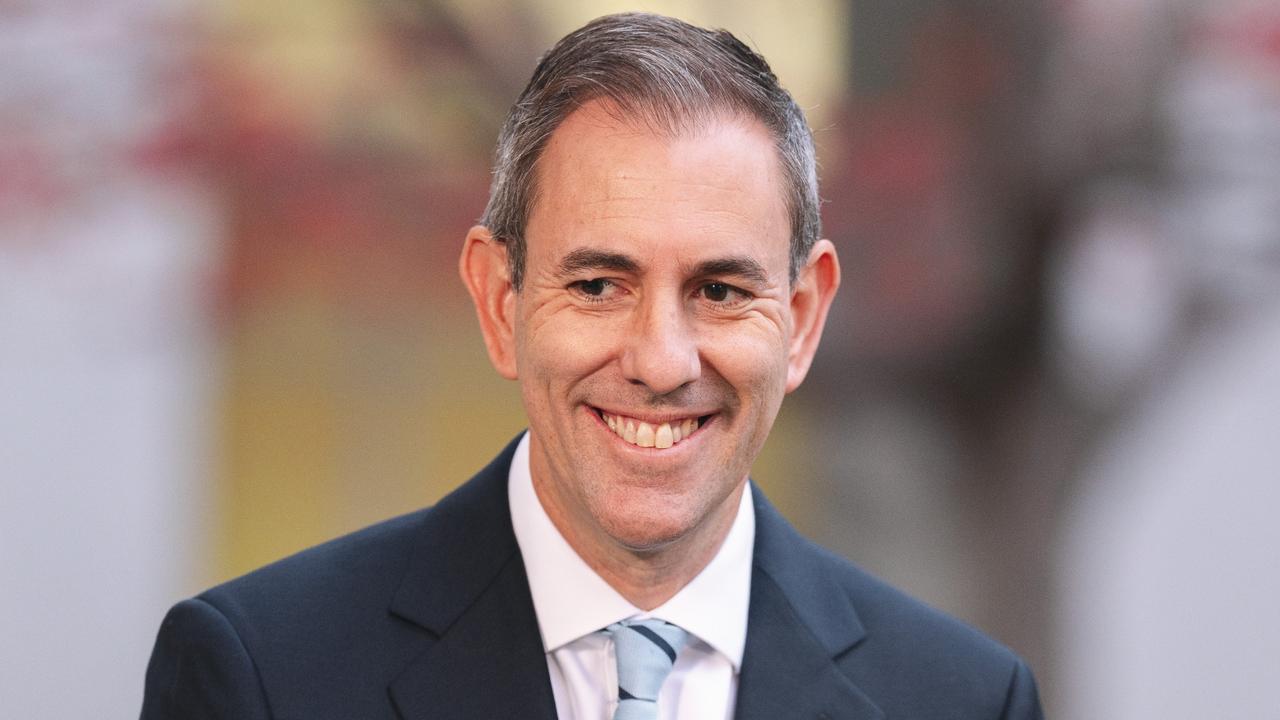
    As Australia’s federal government prepares to hand down its May budget, speculation over broad-based tax reform has intensified, with Treasurer Jim Chalmers openly embracing the idea of the budget being remembered for delivering long-awaited changes to the nation’s tax system.

    In comments to Nine Entertainment’s newspapers on Sunday, Chalmers said he would be “pretty happy” if the 2026-27 budget made headlines as a landmark tax reform package. The statement has fueled widespread speculation that the Albanese administration is considering rolling back one of Australia’s most generous tax concessions: the 50% discount on capital gains tax (CGT) applied to assets held for longer than 12 months. For context, CGT is levied on profits earned from selling assets including residential property, shares and other investments, and is counted toward an individual’s annual taxable income.

    Beyond CGT, multiple reports indicate the government is also evaluating changes to negative gearing, a tax arrangement that allows property investors to deduct rental losses from their overall taxable income. Any changes to negative gearing would reportedly be grandfathered, meaning the new rules would only apply to future property purchases rather than existing investment arrangements.

    The prospect of CGT reform has already sparked partisan debate, with a Liberal Party-chaired Senate inquiry currently investigating potential changes to the tax. Speaking to Sky News on Sunday, Assistant Immigration Minister Matt Thistlethwaite pushed back against questions over whether the government broke an election promise by considering changes it did not take to voters. Thistlethwaite noted that the government has not yet finalized any changes to CGT policy, and is currently focused on delivering the tax reforms it already campaigned on during the last election cycle – including stage three income tax cuts and adjustments to tax concessions for high-balance superannuation accounts.

    “Our priority right now is stabilizing inflation and lifting national productivity,” Thistlethwaite said, adding that the government regularly reviews all existing policies to ensure they align with core electoral goals. “Inflation remains our top economic priority, especially amid ongoing global volatility in fuel markets. We are constantly assessing whether our policies are helping us meet that target.” On the government’s housing agenda, Thistlethwaite acknowledged growing public concern over intergenerational inequity in access to home ownership, saying the government’s core focus remains on expanding overall housing supply, including adjustments to migration policy to support construction targets.

    Coalition Senator Dave Sharma, a member of the Senate inquiry into CGT, told Sky News that independent testimony to the committee has repeatedly shown that changing the CGT discount would do nothing to improve housing affordability for first-time buyers. He argued that scaling back the discount would actually reduce new housing supply at the margins, by disincentivizing property investment and pushing investors to move their capital into other asset classes.

    “Fundamentally, changing CGT is just tinkering around the edges of Australia’s housing crisis,” Sharma said. “The core problem remains the government’s failure to deliver the rapid construction needed to hit its own housing supply targets.”

    For weeks, senior government figures have remained deliberately vague on the specifics of potential tax changes, declining to confirm or deny whether CGT or negative gearing adjustments will be included in the final May budget. Chalmers’ recent comments, however, have made clear that the government is open to delivering major tax changes before the next federal election, as it grapples with long-term challenges of inflation, housing inequality and productivity growth.

  • AI videos fuel rhetoric as Orbán bids for four more years in Hungary

    AI videos fuel rhetoric as Orbán bids for four more years in Hungary

    Ahead of Hungary’s crucial national parliamentary election on April 12, generative artificial intelligence has emerged as a dominant and deeply controversial tool of political manipulation, with Prime Minister Viktor Orbán’s long-ruling Fidesz party and its allied groups deploying deepfakes to smear opposition leader Péter Magyar, who is currently leading in most pre-election opinion polls.

    The most disturbing example of this AI-fueled disinformation campaign emerged in February, when Fidesz shared a fake AI-generated video across its official social media channels. The clip opens with a sentimental scene of a young girl waiting by a window for her father, a Hungarian soldier deployed to war, to come home. It quickly cuts to a graphic execution sequence: the bound, blindfolded father is shot dead by enemy captors. Though Fidesz openly labels the video as AI-generated, the party frames the fake footage as a warning of what will come if Magyar’s center-right opposition party Tisza wins the election.

    In the video’s caption, Fidesz claims Magyar seeks to hide the true horrors of war and accuses the opposition leader of pushing policies that would drag Hungary into the ongoing conflict in Ukraine. Fidesz has amplified a series of unsubstantiated claims against Tisza, alleging that a Magyar government would use Hungarian pension funds to send military aid to Kyiv and reintroduce forced military conscription to deploy Hungarian troops to the front lines. Magyar and Tisza have repeatedly rejected these claims, noting that the party’s official election manifesto explicitly pledges not to send Hungarian troops to Ukraine and has no plans to bring back conscription.

    When contacted for comment on the fabricated execution video, Fidesz did not respond to media inquiries. Támas Menczer, communications director for the ruling Fidesz-KNDP alliance, addressed the video in a public Facebook interview, reiterating that the greatest threat to Hungarian security is a Tisza victory because of the party’s stated support for Ukraine. Menczer declined to comment on the party’s choice to use AI-generated violent footage for political gain. For his part, Magyar has condemned the clip as a crossing of all ethical lines, calling it a heartless act of political manipulation designed to spread fear among Hungarian voters.

    Fidesz is not the only pro-government group leveraging AI disinformation. Last month, the National Resistance Movement (NEM), a pro-Fidesz activist organization, shared a deepfake video depicting a fake phone call between European Commission President Ursula von der Leyen and Magyar, in which the pair allegedly discuss plans to funnel Hungarian public funds to Ukraine. The clip amassed more than 3.7 million views, and NEM did not disclose that it was generated by AI. The fake video was quickly shared across pro-government media outlets and by Fidesz politicians, including Orbán himself. While Orbán acknowledged the footage was AI-generated, he warned it could represent a real future if Magyar wins office. NEM also declined to comment on the video when contacted by reporters.

    Independent observers warn that the widespread use of AI disinformation marks a new escalation of misinformation tactics in Hungarian politics, even as aggressive anti-opposition and anti-Ukraine narratives have long been a staple of Fidesz election campaigning. Zsófia Fülöp, a journalist at Lakmusz, Hungary’s only independent dedicated fact-checking outlet, notes that while ruling party fear-mongering is not new, the mass deployment of generative AI to create convincing fake content is unprecedented. Generative AI disinformation is omnipresent across this election cycle, particularly in the communication of the ruling party, its state-aligned media empire, and affiliated political groups, Fülöp explained. While small scale uses of AI in campaigning occurred in past cycles, this election has seen a massive surge in its use.

    The AI disinformation push has unfolded alongside another controversial incident that has stoked tensions between Hungary and Ukraine. Several weeks before the election, Hungary’s counter-terrorism police detained seven Ukrainian bank workers who were transiting through Hungarian territory en route from Austria to Ukraine, carrying $80 million in cash and 9 kilograms of gold in licensed cash-transport vehicles. The Ukrainian Foreign Ministry accused the Orbán government of taking the workers hostage and stealing the funds, while Ukraine’s state-owned Oschadbank confirmed the shipment had all necessary legal permits and was a routine transfer. Hungarian authorities claimed the shipment was tied to potential money laundering and suggested the funds could be used to finance pro-Ukraine political activity inside Hungary. Though the seven workers were eventually released without any criminal charges filed, Hungarian authorities have still not returned the seized cash and gold.

    Pro-government Hungarian media outlets again turned to AI to cover the arrest, publishing hyper-realistic AI-generated images of the raid that were presented as authentic on-the-ground footage. When compared to official photos and videos of the arrest published by the Hungarian government itself, the AI images contain multiple obvious inaccuracies, from incorrect police uniform details to wrong descriptions of the clothing worn by the detained Ukrainian citizens. Meta’s third-party fact-checking partnership has already labeled the post containing the fake AI images as “partly false.”

    Hungary’s relationship with Ukraine has shifted dramatically over the past two years. Until late 2023, Budapest supported Kyiv’s bid for European Union membership and maintained relatively cordial bilateral ties, but relations have deteriorated sharply as Orbán has doubled down on his long-standing close political and economic alliance with Russian President Vladimir Putin. Polling from Hungarian research institute Policy Solutions finds that anti-Ukraine sentiment has reached near parity with anti-Russian feeling among Hungarian voters: 64% of respondents hold a negative view of Ukrainian President Volodymyr Zelensky, compared to 67% who hold a negative view of Putin.

    Éva Bognár, a researcher at Central European University’s Democracy Institute, describes the entire 2026 election campaign as a disinformation hall of mirrors, built around a completely false narrative that Hungary is on the brink of being dragged into war. Bognár notes that Fidesz holds an unprecedented structural advantage in the campaign, controlling unlimited resources ranging from public state funds to government agencies and a massive state-aligned media conglomerate that operates as a full-time propaganda machine, including all public service media.

    Against this lopsided media landscape, Magyar has managed to cut through Fidesz’s propaganda by building a strong direct connection with voters through social media platforms. Data from 20k, an independent Hungarian election integrity watchdog tracking political social media activity during the campaign, shows that Magyar’s posts across Facebook, TikTok, and Instagram generate twice the level of public engagement as posts from Orbán and Fidesz. Magyar’s social media strategy mixes formal policy content with casual, relatable personal content that portrays him as a younger, more approachable alternative to the 16-year incumbency of Orbán: his feed includes clips of him playing volleyball, flipping burgers at casual restaurants, partying with young supporters, and enjoying water sports.

    However, independent fact-checkers have also found that Magyar has occasionally leaned into misleading rhetoric of his own, echoing some of Fidesz’s populist playbook. He has spread inaccurate claims about the number of Hungarian babies born to citizens living outside the country to stoke nationalist anxiety over eroding national pride, and has even flipped Fidesz’s own conscription claim against the ruling party, falsely alleging that Fidesz, not Tisza, plans to reintroduce compulsory military service. Reporters found no evidence to support this claim beyond a single brief discussion by two Fidesz politicians back in 2016.

    Political analysts note that Magyar’s lead in the polls is driven largely by widespread public anger at Orbán’s 16-year incumbency, particularly among younger voters. Péter Krekó, director of independent Hungarian political research institute Political Capital, explains that Magyar has successfully tapped into deep-seated public resentment toward the Orbán government, a sentiment that is strongest among Hungarians between the ages of 18 and 40. Pre-election polling from Median agency confirms this divide: Tisza holds its strongest support among voters under 40, while nearly half of voters over 65 back Fidesz.

    Despite trailing in most polls, Fidesz has continued to hammer its anti-Ukraine narrative across every available platform, with public campaign posters even showing Zelensky and Magyar side-by-side under the bold warning: “They are dangerous!” Krekó predicts that if Fidesz secures another term in office, the party will continue to use these AI-fueled disinformation tactics long after the election concludes. If Fidesz is defeated, however, Krekó says Hungary can expect a far more tumultuous rebalancing of the relationship between political power and the media. Regardless of the outcome, the 2026 Hungarian election has already set a troubling precedent for the use of generative AI as a tool of systemic political disinformation in European democratic contests.

  • Relatives of Qassem Soleimani arrested in US

    Relatives of Qassem Soleimani arrested in US

    In a recent development that escalates long-running tensions between the United States and Iran, two family members of the late Iranian military commander Qassem Soleimani have been taken into federal custody in the U.S. following the cancellation of their permanent residency status. A U.S. State Department spokesperson confirmed on Saturday that Hamideh Soleimani Afshar, Soleimani’s niece, and her daughter (the general’s grandniece) were arrested by federal agents after Secretary of State Marco Rubio revoked their Lawful Permanent Resident (LPR) status. The pair are currently being held by U.S. Immigration and Customs Enforcement, pending further immigration processing.

    To contextualize the event, Qassem Soleimani was one of Iran’s most high-profile military figures. He took command of the Quds Force, an elite overseas operations branch of the Islamic Revolutionary Guard Corps (IRGC), in 1997, after being appointed by then-IRGC commander-in-chief Yahya Rahim Safavi. Founded in the early 1980s, the Quds Force is tasked with carrying out Iran’s military and intelligence operations across the Middle East and beyond. In January 2020, Soleimani was killed in a targeted U.S. drone strike on his convoy in Baghdad, the capital of Iraq. The attack also claimed the life of Abu Mahdi al-Muhandis, deputy leader of Iraq’s Popular Mobilisation Forces (PMF), alongside several other senior PMF officials.

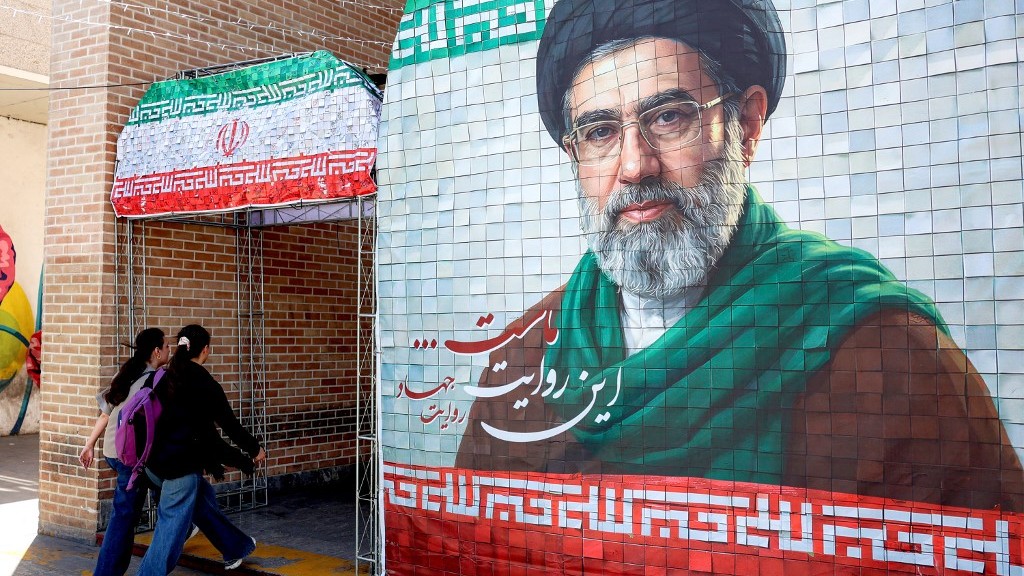
    In its official statement justifying the arrests and revocation, the State Department framed Hamideh Soleimani Afshar as a vocal public backer of what it terms Iran’s “totalitarian, terrorist regime.” According to the department, her own social media posts and independent press reporting confirm she has publicly praised Mojtaba Khamenei, a leading figure within Iran’s leadership, and repeatedly referred to the U.S. as the “Great Satan.” The statement added that Afshar’s husband has already been barred from entering the United States entirely.

    This action is part of a broader crackdown on relatives of deceased senior Iranian officials that the U.S. has ties to adversarial actions against. The department also revealed that the daughter and son-in-law of Ali Larijani, a slain Iranian security chief, have similarly had their U.S. legal status revoked. Unlike the Soleimani relatives, the pair have already left the country and are permanently banned from re-entering the U.S. in the future. Larijani, who served as secretary of Iran’s Supreme National Security Council, was killed in an Israeli airstrike targeting Iranian officials in Syria back in March 2025.

    This reporting was originally published by Middle East Eye, an independent media outlet specializing in original coverage and analysis of the Middle East, North Africa, and global affairs connected to the region.