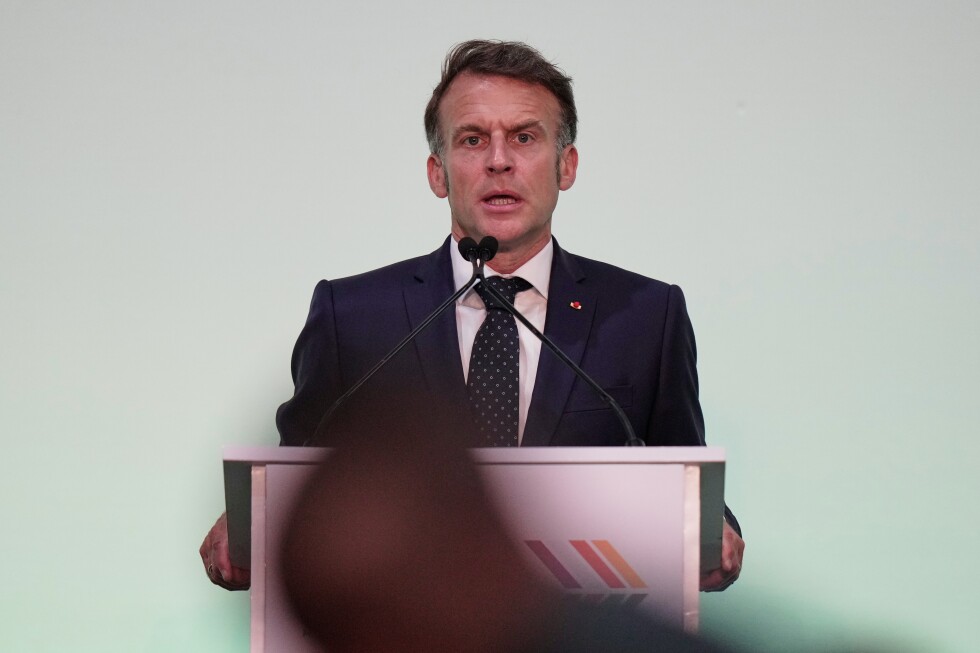
NAIROBI, Kenya — Amid a high-stakes diplomatic push to rebrand France’s relationship with the African continent after decades of colonial dominance, French President Emmanuel Macron has found himself at the center of growing controversy following an explosive public confrontation at the Africa Forward Summit, held in Nairobi.
The gathering, which brought together 30 African heads of state, was designed to highlight Paris’s long-promised policy shift: moving away from the patronizing, hegemonic “Françafrique” system that defined France’s post-colonial influence to a new framework Paris frames as a genuine equal partnership. On the summit’s second day, Macron unveiled a flagship €25 billion ($27 billion) investment package targeting key African sectors including renewable energy, artificial intelligence development, and agricultural modernization.
But the event’s carefully curated diplomatic narrative unraveled on Monday, when a disruptive audience during a panel featuring African artists and young entrepreneurs prompted Macron to storm the stage, grabbing the microphone from the featured speaker to demand immediate order. Visibly frustrated by ongoing side conversations that interrupted the session, Macron rebuked attendees for what he called a “total lack of respect,” announcing he would step in to “restore order” before delivering a public reprimand in English.
Clips of the confrontation spread rapidly across social media platforms within hours, splitting public reaction. Some attendees applauded Macron’s intervention as a necessary correction of unprofessional behavior, but criticism quickly poured in from across the African continent and in France itself.
In Dakar, Senegal, Thierno Mbaye, a history student at the capital’s leading university, framed the outburst as a revealing throwback to colonial-era paternalism. “Just imagine what would happen if an African leader did the same thing in America or Europe,” Mbaye told the Associated Press. “He acted like a schoolteacher scolding children.”
Danièle Obono, a hard-left France Unbowed lawmaker in Paris, echoed that critique in a post on X, writing: “It’s stronger than him: as soon as he sets foot on the African continent, he can’t help but behave like a colonizer.”
The controversy is not an isolated incident. It comes against a backdrop of escalating diplomatic friction between Paris and its former West African colonies, where growing anti-French sentiment has forced France to withdraw thousands of troops from the region over the past three years, completing a full military pullout from Senegal in July. Even before the stage confrontation, Macron had already sparked widespread backlash for a remark made at a pre-summit press conference alongside Kenyan President William Ruto, where he claimed “we are the true Pan-Africanists.”
The claim struck a raw nerve given Pan-Africanism’s core roots as an ideology built to oppose colonial rule. In an open letter released Monday, Togolese human rights activist Farida Nabourema pushed back sharply against Macron’s framing. “Pan Africanism is not a brand, Mr. Macron, neither is it a diplomatic posture,” she wrote. “It is a political philosophy that said no to everything France spent three centuries saying yes to: slavery, colonialism and neocolonialism.”
Geopolitical analysts note that Macron’s pivot to East Africa for the summit is a deliberate strategic move in the wake of Paris’s major setbacks in West Africa, where Moscow has expanded its influence to become the leading security partner for several military-led governments that ousted French-aligned leaders. Beverly Ochieng, a senior analyst at geopolitical risk firm Control Risks, explained that the summit is designed to signal that France is shifting its strategic priorities to regions of the continent where it still holds widespread goodwill.
Ochieng added that the combination of Macron’s Pan-Africanism claim and his on-stage outburst has amplified existing skepticism about whether Paris’s policy reset amounts to a genuine shift toward equal partnership, or simply rebranded rhetoric for continued French influence. Alioune Tine, founder of Dakar-based think tank Afrikajom Center, noted that Macron’s reference to “true Pan-Africanism” also doubles as a subtle jab at Russia, pointing out that Paris views pro-Russian Pan-African voices online as politically manipulated and inauthentic.
Tine acknowledged that relations between Western powers and African states have long carried inherent paternalistic overtones that France has not fully escaped, but added that Macron, the first French president born after the end of French colonial rule in Africa, has taken steps to move past the Françafrique legacy with a more informal diplomatic style aimed at rebuilding trust. Pre-summit polling from Ipsos, conducted across nine African nations for the French Foreign Ministry, offers some support for that effort: 74% of respondents reported holding a positive view of France, with the highest support recorded in English-speaking African countries and among adults under 35.
In comments Tuesday, Macron reaffirmed France’s commitment to respecting African sovereignty, saying: “Paris will be respectful of each African country’s independence… sovereignty and autonomy is shared, and your success is our success.” As of Wednesday, neither the French presidency nor the French Foreign Ministry had issued an immediate response to requests for comment on the growing backlash over the summit confrontation.