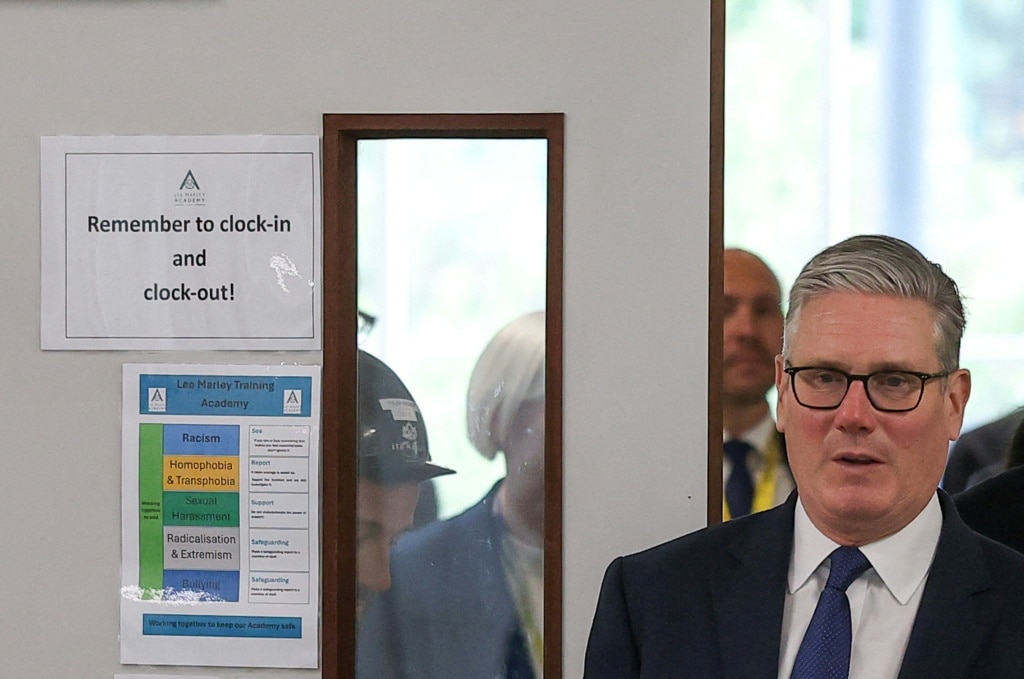
United Kingdom Prime Minister Keir Starmer faces one of the most critical junctures of his 22-month premiership this Wednesday, as he prepares to unveil his administration’s new legislative agenda through the traditional King’s Speech ceremony — an event that will likely shape the embattled leader’s political future. The carefully orchestrated state occasion, held at the Palace of Westminster, comes on the heels of a devastating weekend for the ruling Labour Party, which suffered lopsided losses in recent local and regional elections. The poor electoral performance erupted into open internal conflict on Tuesday, with deep divisions splitting the party over whether Starmer should step down immediately.
As of Tuesday evening, more than 80 sitting Labour Members of Parliament have publicly called for Starmer’s resignation, and four junior ministers have stepped down from their government posts in protest. But the tide has not completely turned against the prime minister: over 100 Labour MPs have signed an open letter backing his leadership, and most senior cabinet members have publicly rallied to his side. Starmer himself has doubled down on his commitment to stay in office, telling supporters that no viable challenger has yet stepped forward to formally launch a leadership contest against him.
Deputy Prime Minister David Lammy has called for calm among restless lawmakers, urging the party to “step back and take a breath” amid the chaos, while a spokesperson for Home Secretary Shabana Mahmood refuted widespread social media rumours that she was preparing to resign her post. Starmer is scheduled to hold a face-to-face meeting Wednesday morning with Health Secretary Wes Streeting, who is widely viewed as one of the leading potential contenders for the Labour leadership if a contest is called. Streeting commands strong support from the centre-right wing of the party, while former Deputy Prime Minister Angela Rayner is seen as the likely candidate for the party’s left flank if a challenge emerges. Another high-profile potential candidate, Greater Manchester Mayor Andy Burnham, is currently ineligible to run because he does not hold a seat in Parliament; however, his backers have called on Starmer to announce an immediate departure timetable that would allow Burnham to win a parliamentary seat and enter the race.
Under Labour Party rules, any would-be challenger needs the public backing of at least 81 sitting Labour MPs — equal to 20% of the party’s parliamentary caucus — to trigger a formal leadership contest. Starmer has repeatedly vowed to fight any challenge to his leadership.
In remarks released late Tuesday ahead of the ceremony, Starmer framed the moment as a turning point for the United Kingdom, arguing that “Britain stands at a pivotal moment.” He added, “We can either press ahead with a plan to build a stronger, fairer country, or turn back to the chaos and instability of the past.” The prime minister has already sought to shore up support from disillusioned voters, who have grown increasingly impatient for tangible change after Labour took office last year, promising that his administration will deliver “better, bolder” policy to address public concerns. Downing Street has framed the upcoming legislative package as an “ambitious programme” that will deliver long-term gains to make Britain “a stronger, fairer” nation. The 35-plus proposed bills included in the programme focus heavily on shoring up economic, energy and national security, with headline pledges including the full nationalization of British Steel and a deepening of political and economic ties with the European Union.
While the speech is delivered by King Charles III in his formal role as head of state, the text is drafted entirely by the prime minister’s government, to lay out its planned legislative agenda for the coming 12 months. The centuries-old ceremony follows a strict, ritualized schedule that dates back hundreds of years. The day begins with a traditional search of the Palace of Westminster’s basement by royal security personnel, a tradition rooted in the 1605 Gunpowder Plot, when Catholic plotters attempted to blow up the parliamentary building. King Charles will then travel from Buckingham Palace to Westminster in a royal carriage, escorted by mounted cavalry. In a longstanding custom meant to ensure the monarch’s safe return to Buckingham Palace, a member of Parliament will be held as a ceremonial “hostage” at the palace for the duration of the event. When a senior parliamentary official known as Black Rod travels to the House of Commons to summon MPs to the House of Lords, the door of the Commons will be ceremonially slammed in Black Rod’s face — a symbolic gesture to assert Parliament’s independence from the monarchy. MPs will then process to the House of Lords, where King Charles will deliver the speech from the golden throne, wearing the diamond-studded Imperial State Crown and a traditional crimson ermine robe, to assembled peers and invited MPs, scheduled for approximately 11:30 a.m. GMT.