TOPEKA, Kan. — A controversial mass voter eligibility verification initiative launched by the Trump administration is raising alarms among voting rights advocates, who warn the program could wrongfully remove thousands of legitimate voters from registration rolls ahead of the nation’s November general election, even as Democratic opponents challenge the policy in federal court.
Since the Trump administration dramatically expanded the search capabilities of the Systematic Alien Verification for Entitlements (SAVE), a program originally designed to block noncitizens from accessing public benefits, at least 25 states have run more than 67 million voter registrations through the national Department of Homeland Security database for citizenship status checks, according to U.S. Citizenship and Immigration Services (USCIS), a DHS division that manages the system. The vast majority of these checks have taken place in states under Republican leadership. To date, tens of thousands of registrations have been flagged as potential noncitizens or deceased individuals, with strict timelines that often leave eligible voters little room to correct errors.
The national-level scanning of state voter rolls is the centerpiece of a broader Trump administration push to federalize key election oversight functions and advance the president’s longstanding claim that widespread noncitizen voting undermines U.S. election integrity. Despite repeated independent studies confirming that noncitizen voting is extremely rare across the country, the administration has pressured states to participate in the mass verification program, with the Department of Justice filing lawsuits against states that have refused to turn over unredacted voter data for screening.
Civil rights and voting rights advocates warn the SAVE system is riddled with inaccuracies from outdated and incomplete data, leading to frequent false positive flags that target fully eligible U.S. citizens. At least six federal lawsuits have already been filed by advocacy groups against the Trump administration and participating states, arguing the program creates an unnecessary risk of mass disenfranchisement.
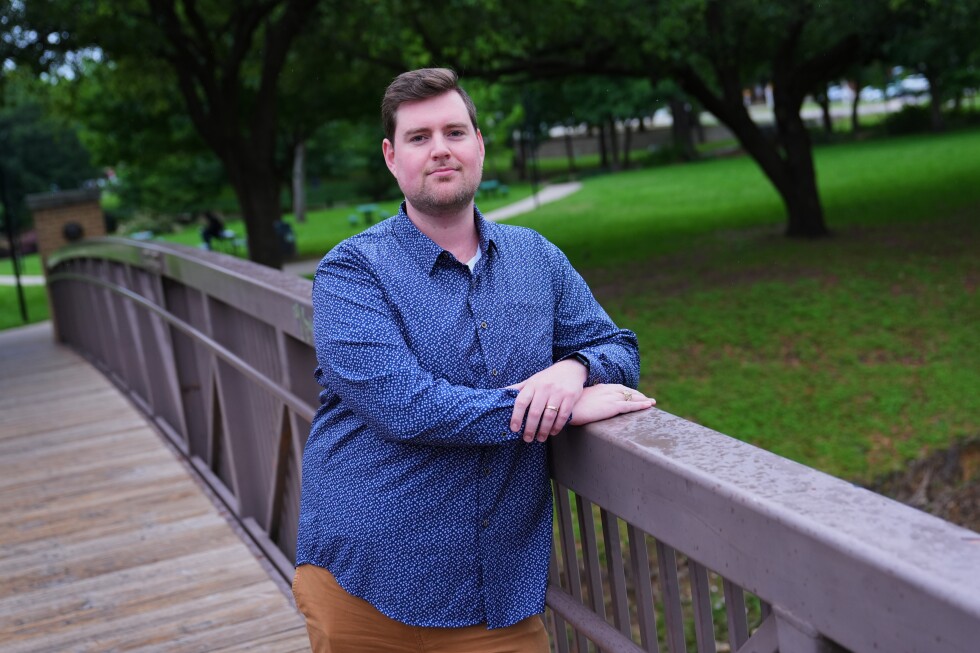
Anthony Nel, a 29-year-old college administrator in Denton, Texas, is one such case of wrongful flagging. Nel moved to the U.S. from South Africa with his parents at age 8, gained automatic citizenship when his parents naturalized when he was 16, and has voted regularly since turning 18. When Texas ran its voter rolls through SAVE last fall, Nel was flagged as a potential noncitizen while he waited for a replacement for his expired passport. He missed the 30-day deadline to provide proof of citizenship, and his registration was temporarily canceled before he could resolve the error. He is now a lead plaintiff in a federal lawsuit challenging the program.
“ It’s clear that this process that they’ve put into place for this doesn’t work,” Nel said in an interview. “You expect the system to know I’m a citizen, but instead I’m treated like an imposter until I prove otherwise.”
Another high-profile error came in Dallas, where Domingo Garcia, a 68-year-old voting rights activist and lawyer who has voted regularly for 50 years, had his registration abruptly canceled with no explanation. Garcia suspects he was incorrectly flagged as deceased, a common error in incomplete state and federal datasets.
USCIS officials defend the program, saying in an emailed statement that the agency is “committed to helping eliminate voter fraud” to rebuild public trust in U.S. elections. Kansas Republican Secretary of State Scott Schwab, who once publicly questioned whether noncitizen voting posed a meaningful fraud threat, now calls SAVE “one of the most important tools states have to verify voter information.”
To date, screening of 60 million registrations has identified roughly 24,000 potential noncitizens, plus another 350,000 potential deceased registrants, according to USCIS data. A separate check of 7.4 million registrations in North Carolina, where Republicans control the state election board, identified an additional 34,000 potentially deceased voters. Even if every flagged registration was confirmed ineligible, the total would amount to less than 1% of all registrations screened: roughly 400 potential noncitizens per 1 million registrations checked.
Republican officials argue the SAVE program is only intended as a first screening step, not a final determination, and that further review is required before any registration is canceled. Procedures for handling flagged voters vary widely by state, however. Some states give voters just 30 days to prove their eligibility, while others require immediate suspension of registration once a flag is issued. In Kansas, flagged voters are still allowed to cast a ballot, but their vote is set aside and may not be counted until the case is resolved. Ohio’s new law requires election boards to promptly cancel any registration flagged as noncitizen during mandatory monthly SAVE checks, leaving voters to retroactively restore their registration if they want to participate.
Ohio Republican Secretary of State Frank LaRose says the policy poses no threat to voting rights, noting “all they need to do to immediately restore their registration status is show proof of citizenship.” But Freda Levenson, an ACLU Ohio attorney challenging the state’s law, calls the approach “shoot first and ask questions later.”
“If a voter is wrongly removed, by the time they learn about it and correct it, they may miss their opportunity to vote in that election,” Levenson said. Critics note that even when voters ultimately correct errors, the uncertainty and administrative burden created by the program can lead to lower turnout among affected groups, particularly naturalized citizens who may face longer wait times for replacement citizenship documentation.