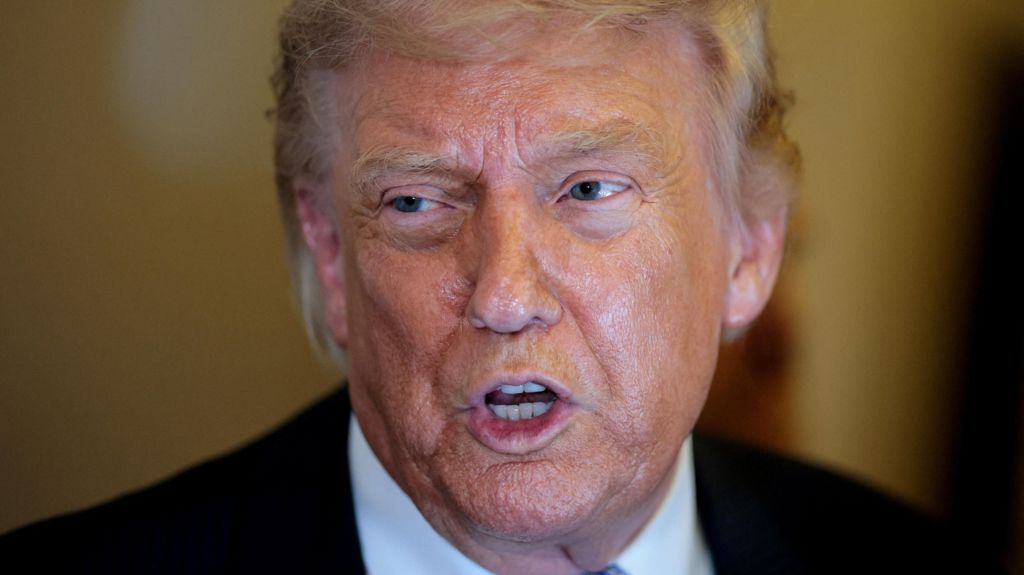
Negotiations aimed at ending the ongoing conflict between the United States and Iran have hit a major deadlock, after former President Donald Trump publicly rejected Tehran’s counter-offer to Washington’s initial peace framework, dismissing the proposal as completely unacceptable. The standoff has intensified tensions, with Trump issuing a stark time-sensitive warning to Iranian leadership ahead of a scheduled call with Israeli Prime Minister Benjamin Netanyahu.
In a post published to his Truth Social platform over the weekend, Trump emphasized that the “clock is ticking” for Iran to adjust its position. “They better get moving, FAST, or there won’t be anything left of them,” he wrote, adding, “TIME IS OF THE ESSENCE!” The harsh public warning came hours before Trump’s scheduled Sunday discussion with Netanyahu, a key US ally in the Middle East, to discuss the stalled negotiation process.
Iranian state media has pushed back against Trump’s criticism, framing Tehran’s proposal as a constructive, good-faith effort to reach a lasting ceasefire. Semi-official Iranian outlet Mehr News Agency reported Sunday that Washington had failed to offer any tangible concessions in its response to Tehran’s counter-proposal, warning that this lack of flexibility from the US side would cement the current impasse in talks. This is not the first public split between the two sides: earlier this week, Trump already claimed that the ceasefire that has held since early April was on “massive life support” after rejecting Tehran’s core demands, calling its counter-offer to US initial peace proposals “totally unacceptable” garbage.
Iranian foreign ministry spokesperson Esmail Baghaei has pushed back against this characterization, defending Tehran’s proposal as both “responsible” and “generous”. According to semi-official Iranian news agency Tasnim, the counter-offer lays out several core non-negotiable demands for Tehran. First, it calls for an immediate full cessation of hostilities across all regional fronts — a stipulation that explicitly references ongoing Israeli military operations against the Iran-aligned militant group Hezbollah in Lebanon. The proposal also demands an end to the US naval blockade of Iranian ports, formal international guarantees that no further military attacks will be launched against Iranian territory, payment of compensation for damage sustained during the recent conflict, and formal recognition of Iran’s full sovereignty over the strategically critical Strait of Hormuz.
The conflict escalated into open military confrontation on February 28, when joint US-Israeli forces launched large-scale air strikes across Iranian territory. A fragile ceasefire designed to create space for diplomatic negotiations went into effect on April 8, and the truce has mostly held in the weeks since, with only sporadic exchanges of fire reported across front lines. Pakistan has stepped in to serve as a neutral mediator between Washington and Tehran throughout the negotiation process, but after weeks of talks, the two sides remain far apart on core sticking points.
In a notable shift of position announced Friday, Trump indicated that the US would be willing to accept a 20-year suspension of Iran’s nuclear program, a longstanding core point of contention between the two nations. The announcement confirmed a reported policy shift for the Trump administration, which had previously demanded a complete permanent end to Iran’s nuclear activities.
This is a developing breaking news story, and additional details are expected to be released as more information becomes available.