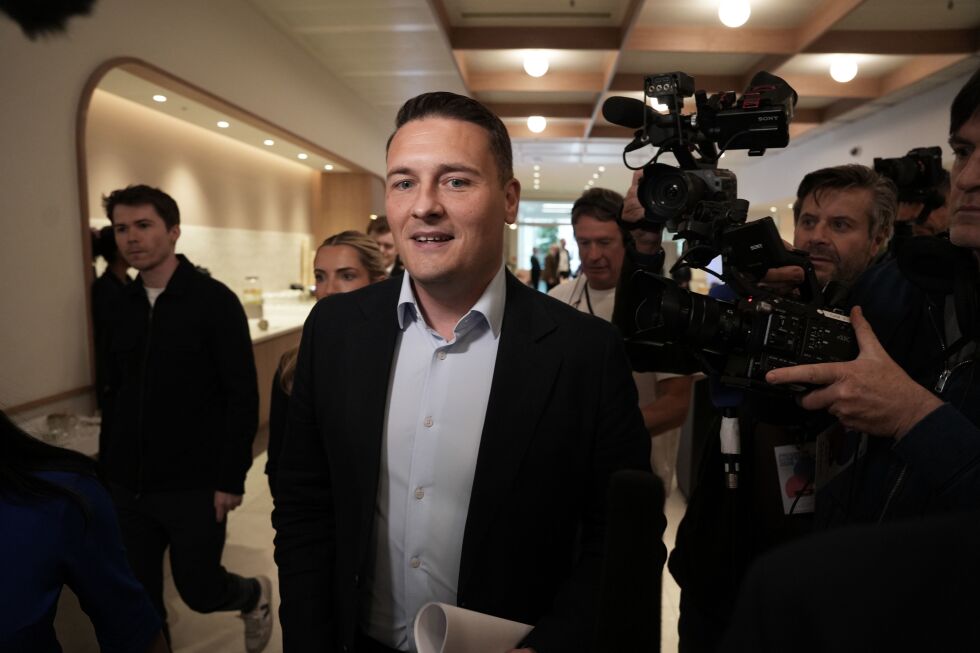
LONDON – For months, Wes Streeting’s ambition to seize the top role of British prime minister has been one of the worst-hidden open secrets in United Kingdom politics. On Saturday, that unconfirmed speculation moved into the official realm: the former Labour health secretary formally declared his plan to oust sitting Prime Minister and Labour Party leader Keir Starmer, becoming the first sitting member of Parliament to throw their hat into the ring for a bruising internal leadership contest.
The upcoming challenge comes at a deeply fraught moment for Labour. Just two years ago, the party secured a historic landslide victory that ended 14 years of Conservative Party rule, but its political standing has plummeted sharply in recent months. Streeting is not expected to be the only challenger: Greater Manchester Mayor Andy Burnham, another high-profile figure seen as a potential alternative to Starmer, is widely expected to join the race if he wins a upcoming special election to secure a seat in the House of Commons.
For his part, Starmer has pledged to defend his leadership despite plummeting public approval. His tenure has been marked by a string of high-profile setbacks, sudden policy U-turns, and sustained criticism over his poor judgment in appointing a close associate of convicted sex offender Jeffrey Epstein to the role of U.K. ambassador to the U.S. The prime minister’s refusal to step down following Labour’s catastrophic performance in the May 7 local and regional elections – where Nigel Farage’s hardline anti-immigration party Reform UK secured massive gains – has thrown the national government into weeks of ongoing political chaos.
In his formal announcement Saturday, Streeting framed his challenge as an urgent course correction to save both the party and the country. “The voters did more than send Labour a message last week,” Streeting said. “They issued a warning: that unless we change course, we risk being the handmaidens of Nigel Farage and the breakup of the United Kingdom.”
At 43, the boyish-looking Streeting has long been regarded as one of the Labour Party’s most effective public communicators, and has emerged as an outspoken voice on high-profile issues including the ongoing war in Gaza. His political trajectory traces back to working-class roots in London’s East End, where he grew up in public housing. His rise from that background to attendance at the prestigious University of Cambridge is detailed in his memoir, *One Boy, Two Bills and a Fry Up: A Memoir of Growing Up and Getting On*, which takes its name from his two grandfathers, both named Bill: one, a maternal grandfather with ties to organized crime who served prison time for armed robbery, and the other, his paternal grandfather, who Streeting credits with guiding him to the opportunity to attend Cambridge.
Streeting entered political organizing early, leading the Cambridge University Students’ Union before rising to become president of the National Union of Students. Before his 2015 election to Parliament, he worked for LGBTQ+ advocacy organization Stonewall, and has spoken publicly about his own journey coming out as gay and reconciling his sexuality with his lifelong Anglican faith. He cut his political teeth in local government, serving as a councilor and later deputy leader of Redbridge London Borough Council before winning his parliamentary seat.
As a backbench lawmaker during Jeremy Corbyn’s tenure as Labour leader, Streeting was a consistent and vocal critic of the veteran socialist leader, whose two general election defeats and repeated antisemitism scandals rocked the party. When Starmer took over the party leadership in 2020, Streeting was quickly promoted through the ranks, eventually rising to the role of Health Secretary in Starmer’s cabinet.
For Streeting, the role of Health Secretary was far more than a political posting: it was a personal mission. Having survived a battle with kidney cancer earlier in his life, he framed the role as a chance to repay the National Health Service (NHS) that saved his life. “The NHS saved my life,” he said upon taking the role. “Today, I can begin to repay that debt by saving our NHS.”
Even as rumors of his leadership ambitions circulated for months, Streeting repeatedly reaffirmed his support for Starmer and denied any plans to mount a challenge. But as Starmer’s position became increasingly untenable in the wake of the May local elections, that public position became unsustainable.
On Wednesday, as King Charles III delivered the government’s ceremonial legislative blueprint for the coming parliamentary term during the State Opening of Parliament, speculation about an internal leadership challenge dominated front-page headlines across British tabloids. The Daily Mail ran the all-caps headline “Streeting to ignite Labour day of anarchy,” while the Daily Express asked: “Finally, a move to bring down ‘Zombie’ Keir?”
The day after the State Opening, Streeting became the first cabinet minister to resign, stating publicly that he had lost confidence in Starmer’s leadership and criticizing the prime minister for a lack of clear vision and direction. He stopped short of immediately announcing his leadership challenge, and his resignation came on the same day he publicly announced that NHS waiting times for routine appointments – his signature policy priority as health secretary – had fallen for the fifth consecutive month.
A member of Labour’s moderate left wing, Streeting has previously faced questions over his ties to disgraced former Labour heavyweight Peter Mandelson, who was appointed and then swiftly fired as U.S. ambassador by Starmer over his long-standing friendship with Epstein. As controversy over Mandelson’s appointment reignited earlier this year, Streeting proactively published a series of email exchanges between the two to prove the pair were not close allies. “Contrary to what has been widely reported, I was not a close friend of Peter Mandelson, but I am not going to wash my hands of my actual association with him either,” he wrote in a Guardian opinion piece. In one of the released emails, he echoed widespread criticism of Starmer, writing that “there isn’t a clear answer to the question: why Labour?” In the coming weeks, Streeting has confirmed he will lay out his own vision to answer that question for the party and the country.