A high-stakes diplomatic push by the United States to secure long-promised funding for Donald Trump’s Gaza-focused Board of Peace initiative has come to light, with multiple regional and U.S. officials confirming to Middle East Eye that a senior American envoy traveled to Saudi Arabia in April to shore up Riyadh’s $1 billion commitment.
The visit was led by Aryeh Lightstone, a key Trump administration appointee tasked with overseeing post-war Gaza planning, who held direct talks with Saudi Foreign Minister Faisal bin Farhan to revisit the pledge Saudi Arabia made during a February donor conference for the U.S.-led body. A close ally of Trump’s son-in-law Jared Kushner and an American rabbi by profession, Lightstone is part of a small handpicked team that includes Israeli technology industry leaders and close associates of Israeli Prime Minister Benjamin Netanyahu, all working to draft a long-term governance framework for the war-ravaged Gaza Strip.
The Board of Peace, which currently counts more than 25 member states, is designed to place daily governance of Gaza in the hands of a committee of Palestinian technocrats pre-approved by Israel. However, MEE has learned that Saudi Arabia has publicly pushed for broader, more inclusive Palestinian representation on the body, a key sticking point that has contributed to delays in disbursing pledged funds. While Trump has committed $10 billion in U.S. taxpayer dollars to the initiative, Western and Arab officials familiar with the matter confirm the initiative’s entire funding structure is heavily dependent on contributions from Gulf Cooperation Council states.
The U.S. pressure campaign comes as Saudi Arabia prioritizes a separate financial issue: unlocking roughly $5 billion in withheld Palestinian Authority tax revenues that Israel has frozen for months. Regional officials tell MEE that Riyadh prefers to see Israel release these critical funds to shore up the cash-strapped PA, rather than committing its own resources as an emergency lifeline without first securing meaningful political and financial reforms within the Palestinian governing body. It remains unclear whether Saudi officials are tying the two files together in ongoing negotiations.
Details of the U.S. planning process have already sparked controversy: as of late last year, Lightstone and his team of American advisors were based out of two luxury beachfront hotels in Tel Aviv, the Kempinski and the Hilton, while drafting their post-war blueprints for Gaza. In a November interview with The New York Times, Lightstone confirmed one proposal would construct housing for thousands of pre-screened Palestinians in areas of Gaza already occupied by Israeli troops behind the so-called “yellow line” buffer zone. Other leaked plans have proposed transforming Gaza into a specialized artificial intelligence technology hub and a sprawling megaproject city – proposals that critics have decried as a deliberate effort to force ethnic cleansing of the original Palestinian population from the territory.
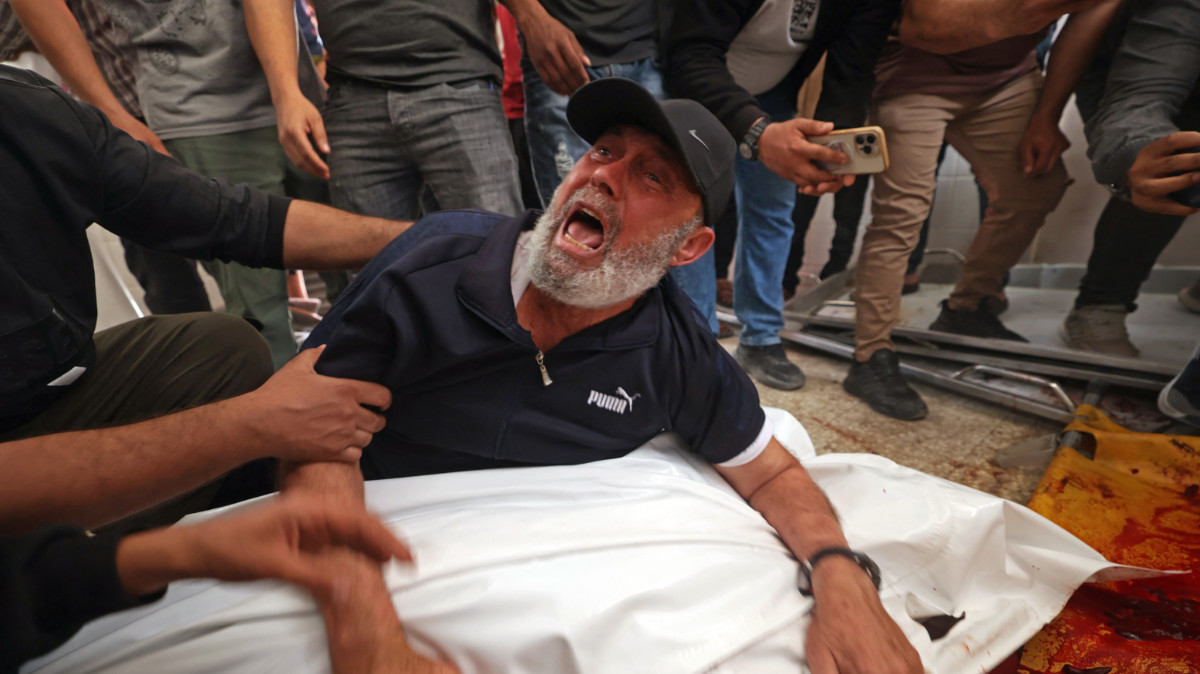
The current situation on the ground in Gaza remains catastrophic more than two years after Israel launched its large-scale offensive in response to the Hamas-led 7 October 2023 attacks on southern Israel. Official counts put the Palestinian death toll from the conflict at over 72,500, the vast majority of whom are women and children, and the United Nations, dozens of leading human rights experts, and dozens of world leaders have formally categorized Israel’s military campaign as a genocide.
The recent escalation of cross-border conflict between Israel and Iran has shifted global media attention away from Gaza, even as Israeli military operations continue. Despite a U.S.-brokered ceasefire agreement reached in October 2025, Israeli attacks have killed more than 850 Palestinians in the enclave, with ceasefire violations occurring on an almost daily basis. Meanwhile, violent acts by Israeli settlers against Palestinian communities in the occupied West Bank have grown increasingly frequent and severe. Israel has also maintained near-total restrictions on the entry of humanitarian aid and reconstruction materials into Gaza, where 90 percent of all civilian infrastructure has been destroyed in the offensive.
In early February, Saudi Arabia, Qatar, Kuwait, and the United Arab Emirates collectively pledged more than $4 billion to support the Board of Peace, which Trump established shortly after the 2025 ceasefire. To date, the UAE – Israel’s closest Arab partner – has already begun disbursing its pledged funds, including a $100 million contribution for a U.S. and Israeli-backed Palestinian police force operating in Gaza. But Saudi Arabia and other major Arab donors have remained hesitant to follow through on their commitments, leaving the initiative with a massive funding shortfall.
Reuters recently confirmed that the gap between total pledges and actual disbursements has become a critical crisis for the body. The Board of Peace reported total pledges of $17 billion during its February launch, and in a 15 May report to the United Nations Security Council obtained by Reuters, the board warned that “the gap between commitment (to the Board of Peace) and disbursement must be closed with urgency”.
While Trump serves as the formal chair of the Board of Peace, day-to-day operations are managed by executive director Nickolay Mladenov, a former United Nations envoy to the Middle East who was serving as a senior academic at the UAE’s Anwar Gargash Diplomatic Academy before being appointed to the role.