分类: politics

  • Delays mar voting as crisis-hit Peru picks ninth president in decade

    Delays mar voting as crisis-hit Peru picks ninth president in decade

    On a scorching Sunday across Peru, long-delayed presidential and legislative elections kicked off, wrapping the Andean nation’s latest desperate bid to escape a decade of nonstop political chaos that has seen nine heads of state ousted or imprisoned. Nearly 27 million eligible voters, stretching from the Amazon rainforest lowlands to the high peaks of the Andes, cast ballots on an unprecedented half-meter-long ballot paper listing a record 35 presidential candidates from across the ideological spectrum.

    What was meant to be a routine democratic process quickly descended into public frustration, with dozens of polling stations in metropolitan Lima remaining shuttered hours after opening. Furious would-be voters queued for up to four hours under unforgiving equatorial sun, with many raising accusations of electoral fraud following a brutal, acrimonious campaign season. Peru’s national electoral commission quickly pinned the blame on a contracted logistics supplier that failed to deliver critical voting materials on time, and extended voting hours by one hour to accommodate disrupted voters.

    Decades of systemic corruption and backroom politicking have left most Peruvians deeply disillusioned with the country’s ruling political class. Public anger runs so deep that the nation has even built a purpose-built prison to house former presidents convicted of corruption. For many ordinary Peruvians, this election represents a last chance to turn the tide of rising crime, economic instability and political dysfunction that has eroded quality of life nationwide. “The people can’t take it anymore,” said Rosenda Lopez, a 47-year-old textile vendor in Lima. “I hope someone is elected who works for the community. The community needs it. They are killing us.”

    Over the past 10 years, Peru’s homicide rate has more than doubled, while reported annual extortion cases have skyrocketed from just 3,200 to more than 26,500. In response to widespread public anxiety over insecurity, candidates have leaned into increasingly hardline policy proposals: from ordering the extrajudicial killing of gang hitmen to mass deportations of irregular migrants, to detaining offenders in remote jungle jails surrounded by snakes.

    Pre-election opinion polls have been split, with conservative candidates leading the field amid a broader regional shift toward right-wing populist governments aligned with former U.S. President Donald Trump. No candidate has managed to poll above 15% support, far below the 50% majority required to win an outright victory, making a June runoff election all but certain. Alongside the presidency, voters are selecting a new 130-seat Congress, a body that has been central to the removal of every recent Peruvian president.

    The nominal frontrunner in the race is Keiko Fujimori, daughter of former Peruvian president Alberto Fujimori, who died in 2024 while serving a 16-year prison sentence for crimes against humanity, bribery and embezzlement. This marks Fujimori’s fourth run for the presidency, and she has leaned heavily on public nostalgia for her father’s authoritarian, tough-on-crime rule to court voters. In a pre-election interview, she outlined plans to restore public order within her first 100 days in office by deploying the military to manage overcrowded, violence-plagued prisons, strengthen border controls and deport all undocumented migrants. She also vowed to build a united conservative bloc with aligned right-wing leaders across the Americas, from the United States to neighboring Argentina, Chile, Ecuador and Bolivia. “I believe that time and history are giving my father the place he deserves,” Fujimori said of her father’s controversial legacy.

    Fujimori faces a surprise late surge from 80-year-old former Lima mayor Ricardo Belmont, who has built a massive grassroots following on the social media platform TikTok, drawing cross-ideological support from voters fed up with establishment politics. “He’s collecting votes from left to right, like Pac-Man,” explained Patricia Zarate, a political analyst with the Institute of Peruvian Studies. Other notable candidates include conservative television comedian Carlos Alvarez and far-right former mayor Rafael Lopez Aliaga, who has openly promised to “hunt” Venezuelan migrants and has rebranded himself with the nickname “Porky” after the iconic cartoon pig.

    Incumbent President Jose Maria Balcazar, who has held office for less than two months, is constitutionally barred from seeking re-election. Voting is compulsory for all eligible Peruvians, and polls were scheduled to close at 6 p.m. local time (2300 GMT), one hour later than originally planned to offset opening delays. Sociologist David Sulmont noted that the fragmented field and widespread voter anger reflects a “major disconnect” between the Peruvian electorate and the policy offerings of the country’s political elite, a rift that has fueled the decade-long cycle of political collapse that this election aims to end. Many voters share the sentiment of 60-year-old shopkeeper Anita Medrano, who says she will not back any traditional or establishment candidate: “They already had their chance.”

  • How talks broke down in Islamabad, with both sides blaming each other

    How talks broke down in Islamabad, with both sides blaming each other

    After nearly a full day of closed-door, high-stakes negotiations in Islamabad that marked the highest-level diplomatic encounter between Washington and Tehran in half a century, marathon ceasefire talks between the United States and Iran concluded Sunday morning without a final agreement, leaving core strategic disagreements unresolved and casting uncertainty over future diplomatic engagement.

    The negotiating teams brought unprecedented senior representation to the table: the U.S. delegation was led by Vice President JD Vance, with participation from special envoy Steve Witkoff and senior advisor Jared Kushner, while Iran was represented by parliamentary speaker Mohammad Bagher Ghalibaf and Foreign Minister Abbas Araghchi. Throughout the more than 21 hours of discussions, the U.S. team maintained continuous communication with President Donald Trump, who adopted a detached public posture ahead of the talks, telling reporters that a potential deal made “no difference” to him as he traveled to Miami for a Ultimate Fighting Championship event. Trump remained at the venue watching the fight as Vance addressed the press following the negotiation collapse.

    Speaking to reporters after the talks, Vance acknowledged that no consensus had been reached, framing the stalled outcome as far more detrimental to Iran than to the United States. He emphasized that Washington left the table with its final, best offer on the table, and would await Tehran’s response to the proposal. The core U.S. demand, Vance explained, remains a long-term, binding commitment from Iran that it will never pursue a nuclear weapon or the capabilities to rapidly develop one – a goal he said has not yet been met. While Vance noted that Iran’s pre-existing enrichment facilities and previous nuclear infrastructure had already been destroyed, he stressed that the remaining sticking point is a fundamental change in Iranian willingness to rule out nuclear weapons development permanently, not just for the near term. “We haven’t seen that yet. We hope that we will,” he added.

    Iran’s perspective on the stalemate differs sharply. According to a report from Iran’s Tasnim News Agency citing an anonymous informed source, Tehran claims the “ball is in America’s court”, noting that Iranian negotiators put forward multiple reasonable initiatives during the talks. The report also warned that the status of the Strait of Hormuz – a critical global oil chokepoint currently controlled by Iran – will remain unchanged unless Washington accepts a deal that aligns with Tehran’s definition of reasonable terms.

    In a post on the social platform X, Ghalibaf reinforced Iran’s position, saying that while Tehran entered the talks with good faith and a willingness to compromise, decades of historical trauma from two prior conflicts left the Iranian delegation deeply distrustful of U.S. intentions, and the U.S. side ultimately failed to earn that trust in this round of talks. Iranian foreign ministry spokesperson Esmaeil Baghaei noted that expecting a final, comprehensive deal from a single negotiating round was always unrealistic, given weeks of prior armed conflict and decades of deep mutual mistrust between the two nations. While he confirmed that the two sides reached preliminary understandings on a small number of issues, he said two to three core questions remain unaddressed, and any future progress will depend on the U.S. demonstrating genuine good faith and recognizing Iran’s legitimate rights and national interests. Baghaei also added that diplomatic channels remain open, and Iran will continue consultations with Pakistan and other regional partner states.

    Pakistan, which served as the host for the historic talks, has called on both sides to maintain the current ceasefire and return to dialogue with a constructive approach. Pakistani Deputy Prime Minister Ishaq Dar stressed that reaching a durable, long-term peace for the region must be the top priority for both parties, and confirmed that Pakistan will continue to act as a neutral facilitator for future negotiations if needed.

    Key U.S. allies have expressed disappointment over the lack of a breakthrough. Australian Foreign Minister Penny Wong called on both nations to uphold the existing ceasefire and resume negotiations to find common ground. British Health Secretary Wes Streeting echoed that sentiment, saying that while the lack of an immediate breakthrough is disappointing, diplomatic efforts should continue. “As ever in diplomacy, you’re failing until you succeed. So while these talks may not have ended in success, doesn’t mean there isn’t merit in continuing to try,” Streeting said.

    To date, no date or location has been scheduled for a potential second round of talks, leaving regional stability and nuclear non-proliferation efforts in limbo.

  • Crown prince of Abu Dhabi to begin three-day China visit

    Crown prince of Abu Dhabi to begin three-day China visit

    The crown prince of Abu Dhabi, United Arab Emirates, Sheikh Khaled bin Mohamed bin Zayed Al Nahyan, is scheduled to launch a three-day official visit to China from April 13 to 15, 2026, at the formal invitation of Chinese Premier Li Qiang, according to an official announcement from China Daily updated on April 12.

    Per the Abu Dhabi Media Office, Sheikh Khaled will travel with a high-profile cross-sector delegation that includes top UAE ministers, senior government officials, and leading business figures from the Gulf nation. This visit is rooted in the mutual commitment shared by Beijing and Abu Dhabi to strengthen long-standing bilateral relations and expand collaborative projects that deliver shared benefits to both sides.

    The agenda of the visit centers on advancing existing cooperation and lifting the UAE-China comprehensive strategic partnership to new heights. The two sides are expected to exchange views on collaboration across multiple key priority sectors that have formed the foundation of their decades-long diplomatic and economic ties, aligning with the shared development goals of both nations.

  • KMT chairwoman applauds Zhongguancun’s boundless future

    KMT chairwoman applauds Zhongguancun’s boundless future

    On Saturday, Cheng Li-wun, chairperson of the Chinese Kuomintang (KMT), led a cross-strait delegation on a visit to the Zhongguancun National Innovation Demonstration Zone Exhibition Center in Beijing. Following an in-depth tour of the exhibition that showcased the zone’s decades-long development trajectory and cutting-edge technological breakthroughs, Cheng publicly praised the hub’s boundless growth prospects.
    Zhongguancun, located in Beijing’s Haidian District, has long been recognized as China’s primary cradle of scientific and technological innovation, home to hundreds of top-tier universities, research institutions, and global leading tech enterprises. During her visit, Cheng emphasized that the district, and Zhongguancun in particular, has evolved into a global magnet that attracts the most talented and innovative minds from across the world. She noted that the area’s vibrant ecosystem of entrepreneurship and collaboration has created unique opportunities for technological advancement that few other regions can match, a dynamic that positions it for exponential growth in the coming decades.
    The visit comes as part of ongoing cross-strait exchanges focused on innovation, economic cooperation, and people-to-people connectivity, offering a platform for both sides to explore shared opportunities in the fast-growing tech sector.

  • Peru’s voters face choice of 35 contenders for ninth president in 10 years

    Peru’s voters face choice of 35 contenders for ninth president in 10 years

    As Peruvians head to the polls on Sunday for a high-stakes presidential election, the Andean nation finds itself grappling with deep-seated public anger, a spiraling crime crisis, and a historic political reshuffle that will shape its governance for years to come. This election will mark the selection of Peru’s ninth president in just one decade, a statistic that underscores the chronic political instability that has long plagued the country. A field of 35 candidates — ranging from a seasoned former cabinet minister to a popular comedian and the heir to one of Peru’s most famous political dynasties — are competing for the nation’s highest office, in the largest candidate pool the country has ever seen.

    The entire campaign has been defined by one overwhelming public concern: a dramatic surge in violent crime and entrenched political corruption that has left most voters convinced that every candidate lacks integrity and is unprepared to tackle the country’s most pressing challenges. Official government data paints a stark picture of the security breakdown: homicide rates have doubled since the start of the decade, while extortion cases have jumped fivefold. In 2025 alone, more than 200 public transportation drivers were murdered across the country, a statistic that has spread fear across every layer of society. A 2025 national survey from Peru’s National Institute of Statistics and Informatics found that 84% of urban respondents worry they will fall victim to a violent crime within the next year.

    This widespread anxiety has translated into raw voter disillusionment, shared by Peruvians from all walks of life. Juan Gómez, a 53-year-old construction worker supporting five children, summed up the prevailing mood as he carried groceries home: “You can’t trust anyone anymore, nothing’s going to change. Criminals come on motorcycles, put a gun to your head… you look around and there’s no police officer. What are you going to do? You just let them rob you.” Retiree Raúl Zevallos, 63, echoed that fear, describing the constant risk of daily travel: “You get on the bus, and you have to sit far from the driver; you don’t know if you’ll make it home alive. Criminals drive by on motorcycles, shoot, kill the driver, and you could die, too.”

    In response to public demands for action, most candidates have rolled out hard-line security proposals to win over frustrated voters. Planks on the campaign trail include constructing large-scale “megaprisons,” requiring incarcerated people to work to earn access to meals, and even reviving the death penalty for the most serious violent offenses.

    The best-known candidate in the race is Keiko Fujimori, a conservative former congresswoman and daughter of late Peruvian President Alberto Fujimori, who is making her fourth bid for the presidency. Fujimori has campaigned on a promise of an iron fist crackdown on organized crime, but her record has drawn scrutiny: in recent years, her party backed legislation that legal experts argue has made it far harder to prosecute criminal offenders, eliminating preliminary detention for certain offenses and raising the legal bar to seize illegally gained assets. If elected, Fujimori has pledged to allow criminal case judges to serve anonymously and mandate that prisoners work to earn their food rations.

    Another top conservative contender is Rafael López Aliaga, the former mayor of Lima, Peru’s capital. López Aliaga has proposed building new high-security prisons in the country’s remote Amazon region, also backs anonymous judge protections, and has promised to expel all undocumented migrants living in Peru. A more unconventional candidate is Carlos Álvarez, a comedian who has pivoted to politics, who has pledged to bring in security policy expertise from the leaders of El Salvador, Denmark, and Singapore if elected.

    Beyond the presidential race, this election carries historic implications for Peru’s governing structure: for the first time in more than 30 years, voters are also selecting a new bicameral Congress, after lawmakers pushed through constitutional reforms in 2024 that shift significant power to a newly created upper Senate chamber. This reversal of a decades-old unicameral system comes despite 80% of voters rejecting a bicameral model in a 2018 public referendum.

    Under the new framework, the sitting president will lack the power to dissolve the Senate, while the upper chamber will gain the ability to remove a sitting president from office through impeachment. The threshold for impeachment has also been lowered dramatically: impeachment will now pass with just 40 votes out of the 60-member Senate, compared to the previous requirement of 87 votes out of 130 unicameral legislators. Political analysts widely credit the frequent use of the impeachment power by the old unicameral Congress for the chaotic “revolving door” of presidents that has seen Peru turn over eight leaders in 10 years.

    The new Senate will also take on sweeping powers beyond impeachment, including the authority to appoint and discipline top government officials, ranging from the national ombudsman and constitutional court justices to central bank board members. It will also hold the power to review and amend legislation passed by the lower congressional chamber. Alejandro Boyco, a researcher at the Institute of Peruvian Studies, warned that the concentration of power in the small 60-person Senate creates new corruption risks. “They’ve concentrated too much power in a 60-people chamber,” Boyco said. “They are not going to be immune to being corrupt.”

    Voting is mandatory for all Peruvian citizens between the ages of 18 and 70, with more than 27 million registered voters nationwide. Around 1.2 million registered voters are living abroad, mostly in the United States and Argentina, and will cast ballots outside the country. While an outright win requires a candidate to capture more than 50% of the vote, political analysts widely agree that a June runoff election is all but guaranteed, given the deep divisions among the electorate and the historically large field of candidates competing for support.

  • Mainland rolls out comprehensive policy package to boost cross-Strait ties

    Mainland rolls out comprehensive policy package to boost cross-Strait ties

    On April 12, 2026, the Chinese mainland introduced a far-reaching set of preferential policies crafted to advance the peaceful development of cross-Strait relations and lift the well-being of people living on both sides of the Taiwan Strait. Unveiled by the Taiwan Work Office of the Communist Party of China Central Committee following extensive consultations with relevant national and local departments, the 12-point policy framework spans five core areas: political dialogue, youth exchanges, infrastructure and transportation connectivity, trade and economic cooperation, and cultural exchange.

    At the political core of the initiative is a proposal for a regularized communication mechanism between the Communist Party of China and the Chinese Kuomintang, built on the shared foundation of upholding the 1992 Consensus and firm opposition to the separatist “Taiwan independence” movement. The entire policy package is rooted in the long-held principle that “compatriots across the Strait are one family,” designed to directly respond to the widespread shared desire among people on both sides for peace, growth, people-to-people exchanges and mutually beneficial cooperation.

    To deepen cross-generation connections, the plan formalizes an institutionalized two-way youth exchange platform. Leading mainland youth organizations including the All-China Youth Federation will partner with Kuomintang youth bodies to host annual structured exchange activities, with an estimated 20 Taiwanese youth delegations invited to visit different regions of the mainland each year to build personal connections and learn about mainland development.

    For infrastructure and livelihood improvements, mainland authorities will explore expanded cross-Strait utility connectivity where conditions allow, including the potential integration of water, power and natural gas networks between coastal Fujian Province and the Taiwan-administered Kinmen (Jinmen) and Matsu islands. The project is explicitly aimed at raising living standards for local residents on both sides of the strait. On transportation, the mainland will push for full normalization of cross-Strait passenger flights, restore suspended air routes linking Taiwan with under-connected mainland cities including Urumqi, Xi’an, Harbin, Kunming and Lanzhou, and support shared access for Kinmen residents to the newly built international airport in Xiamen, Fujian.

    On the economic and trade front, the new package introduces multiple measures to lower barriers for Taiwan-based producers. A dedicated new communication mechanism will be set up to streamline imports of Taiwanese agricultural and fisheries products that meet mainland inspection and quarantine standards. Taiwan producers will receive targeted support to participate in major mainland trade shows and business matchmaking events to expand their market access, and authorities are exploring the construction of dedicated berthing facilities in eligible mainland ports for Taiwanese deep-sea fishing vessels to ease entry and sales of their catches on the mainland. Additional steps include simplified registration and export procedures for Taiwanese food manufacturers, and exploratory work to establish small-scale cross-Strait commodity trading hubs to help Taiwanese small and medium-sized enterprises enter the mainland consumer market.

    In the cultural sector, the mainland will open more satellite television channels and online streaming platforms to high-quality Taiwanese television dramas, documentaries and animated works, while encouraging creators from Taiwan to develop original short-form web content centered on the shared cultural heritage of cross-Strait compatriots to strengthen people-to-people bonds. Authorities also plan to resume pilot programs for individual tourists from Shanghai and Fujian to travel to Taiwan, restoring a popular people-to-people travel route that was suspended in recent years.

    The release of the comprehensive policy package came as a six-day official visit to the mainland by a delegation led by Chinese Kuomintang Chairwoman Cheng Li-wun drew to a close, marking a new step forward in cross-Strait dialogue amid growing calls for renewed cooperation.

  • Israel and Turkey trade accusations as tensions widen over Syria and Gaza

    Israel and Turkey trade accusations as tensions widen over Syria and Gaza

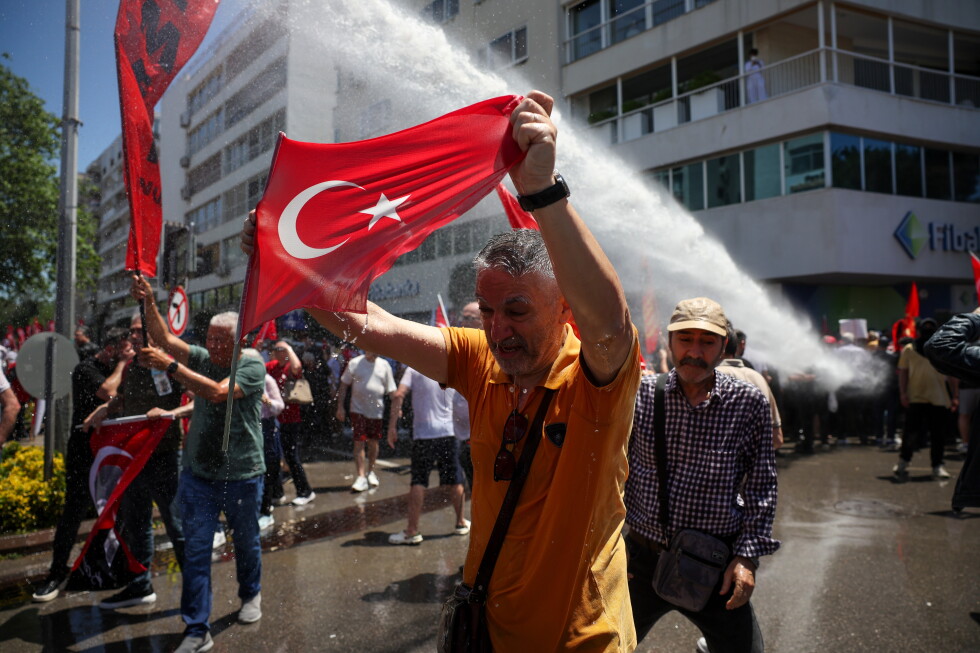
    A sharp and public breakdown in diplomatic relations between Israel and Turkey has accelerated this week, with top political leaders from both nations launching fiery, personal accusations against one another. The escalating conflict is rooted in competing geopolitical ambitions across the Middle East, particularly over the ongoing Israeli military campaign in Gaza and long-standing contestation for regional influence in Syria.

    The exchange of hostilities began when Israeli Prime Minister Benjamin Netanyahu took to the social platform X to level severe allegations against Turkish President Recep Tayyip Erdoğan. Netanyahu accused Erdoğan of carrying out systematic violence against Kurdish civilians within Turkey’s own borders and providing critical political and logistical support to what he labeled Iran’s terrorist network and its regional proxy groups.

    Netanyahu’s increasingly critical rhetoric toward Ankara has aligned with a noticeable shift in Turkish foreign policy over recent months, which has seen Turkey move to strengthen diplomatic and security ties with Greece and Cyprus, two of Israel’s close regional partners. Independent regional analysts note that the emerging bilateral rivalry is increasingly centered on control of influence in Syria, where competing interests between the two states have boiled under the surface for decades.

    Turkey’s response to Netanyahu’s accusations was swift and equally incendiary. Senior Turkish officials described Netanyahu as the “Hitler of our era,” justifying the label by pointing to Israel’s large-scale military operations in Gaza and its aggressive actions across the broader Middle East. In an official public statement, the Turkish Ministry of Foreign Affairs argued that Netanyahu’s confrontational foreign policy is a deliberate distraction: its core goal is to derail ongoing peace negotiations in the region and clear the way for continued Israeli territorial expansion. The statement added that without this political diversion, Netanyahu faces potential corruption trials and imprisonment in his own country.

    The Turkish foreign ministry also reiterated claims that the International Criminal Court has already issued an arrest warrant for Netanyahu on charges of war crimes and crimes against humanity, noting that Israel is currently facing genocide proceedings at the International Court of Justice brought by South Africa, with Turkey’s formal backing.

    The rhetorical clash escalated further when Israeli Defense Minister Yoav Katz echoed Netanyahu’s attacks, labeling Erdoğan a radical Islamist aligned with the Muslim Brotherhood who has overseen mass violence against Kurdish communities. Katz also criticized Erdoğan for what he claimed was passive acceptance of Iranian missile activity near Turkish territory, arguing that Erdoğan’s harsh anti-Israel rhetoric is a distraction from his own weakness. Katz claimed that “after failing to respond to Iranian missile fire into Turkish territory and exposing himself as a paper tiger, Erdoğan has turned to anti-Semitic rhetoric to divert attention, while organizing political show trials against Israeli political and military leadership inside Turkey.”

    Senior Turkish officials pushed back immediately against these new attacks. Burhanettin Duran, Turkey’s deputy foreign minister, argued that Netanyahu’s aggressive rhetoric is a desperate tactic to prop up his own political survival at the cost of regional stability. Duran stated that “Netanyahu, who has orchestrated genocide in Gaza and launched attacks on seven countries across the region, is lashing out at our President out of sheer desperation. He is a convicted criminal with open arrest warrants, and he has no allies left.”

    Duran added that Israel’s pattern of cross-border military action is a deliberate strategy to drag the entire region into chaos to prop up Netanyahu’s beleaguered government, noting that “Netanyahu has no legitimacy to lecture any country on global or moral standards. He will be held accountable for his crimes against humanity sooner or later.”

    The sharp escalation in verbal attacks followed a recently televised address by Netanyahu that drew widespread criticism for more than just its confrontational tone. Behind the prime minister during the pre-recorded speech, which focused heavily on countering Iranian influence in the region, a map was displayed that critics argue shows an expanded vision of Israeli territorial control, particularly encompassing all occupied Palestinian territories. The map sparked global fears that Netanyahu’s government is planning formal annexation of Palestinian land, a direct violation of international law.

    The current rapid deterioration of Israel-Turkey ties marks a dramatic shift in Middle Eastern regional dynamics. Over the past decade, relations between the two countries, which have at times been strategic economic and security partners, have fluctuated dramatically, repeatedly strained by disagreements over Gaza, the legitimacy of Palestinian statehood, and competing visions for regional order.

    Tensions have been building for months: back in August, Turkey implemented formal restrictions barring Israeli-owned or Israeli-linked ships from accessing Turkish ports. This week, Reuters reported that Turkish port authorities have begun requiring informal additional checks, mandating shipping agents submit formal declarations confirming that vessels have no connections to Israel and are not carrying military or hazardous cargo destined for Turkish terminals. Later that same August week, Turkish Foreign Minister Hakan Fidan called on all Islamic nations to coordinate action to suspend Israel from all United Nations General Assembly meetings and activities.

    Speaking at an emergency summit of Organisation of Islamic Cooperation foreign ministers held in Riyadh, Saudi Arabia, Fidan argued that collective global action is urgently needed to stop what he called Israeli genocide in Gaza and ongoing settler violence in the occupied West Bank. Turkey is also a core backer of The Hague Group, a coalition of eight countries — Bolivia, Colombia, Cuba, Honduras, Malaysia, Namibia, Senegal, and South Africa — formed explicitly to coordinate efforts to hold Israel accountable for its actions under international law.

    Turkey’s formal break with Israel accelerated sharply after October 2023, when Ankara joined South Africa’s genocide case against Israel at the International Court of Justice and began mobilizing international diplomatic platforms to build a global coalition opposing Israel’s military campaign in Gaza. The latest round of public accusations has confirmed what many regional analysts had already predicted: the two former partners are now locked in an open geopolitical rivalry that will reshape alliances across the Middle East for years to come.

  • Iran has weakened US in the great power game

    Iran has weakened US in the great power game

    It has been more than two centuries since Napoleon Bonaparte offered one of history’s most cutting observations of geopolitical strategy: “Never interrupt your enemy when he is making a mistake.” For policymakers in Moscow and Beijing, this maxim has guided their response to the recent weeks-long U.S. war in Iran, and even with a 14-day ceasefire now holding between Tehran and Washington – both sides have publicly declared victory – the two great power rivals continue to reap strategic benefits from what many analysts have labeled Washington’s latest strategic blunder in the Middle East.

    Over the course of the conflict, China and Russia have navigated a carefully calibrated diplomatic balancing act. Neither country has thrown its full public support behind Iran – a partner that both nations count as an ally to varying degrees – nor have they committed substantial resources to the war effort. Instead, they have limited their backing to small-scale intelligence sharing and targeted diplomatic support.

    As a scholar of international security and great power politics, I argue this restrained approach is rooted in clear strategic logic. Leaders in Beijing and Moscow have long recognized that Iran cannot achieve a decisive military victory against the combined military strength of the United States and Israel. For their own geopolitical interests, however, Iran does not need to win – it only needs to survive the conflict to weaken Washington’s global standing. The 2025 Iran war has eroded U.S. influence in four key ways that play directly into the hands of China and Russia.

    ### 1. A Reverse of Washington’s Push to Counter Great Power Influence in the Middle East

    As outlined in my book *Defending Frenemies*, the United States has struggled for decades to reconcile competing strategic objectives in the Middle East. During the Cold War, Washington’s core priority was blocking Soviet expansion in the region, even as it navigated the nuclear ambitions of two problematic allies: Israel and Pakistan. By the 2020s, U.S. regional strategy has shifted to limiting the expanding influence of its great power rivals – China first, and Russia second.

    Under President Xi Jinping and Vladimir Putin, both China and Russia have worked steadily to expand their regional footprints through a mix of formal partnerships and informal outreach. For Russia, this has meant deepening alignment with Iran, including joint efforts to prop up former Syrian President Bashar al-Assad’s regime throughout the Syrian civil war. For China, influence growth has come largely through diplomatic diplomacy, most notably its successful 2023 mediation of a deal restoring diplomatic ties between historic rivals Saudi Arabia and Iran.

    The irony of the 2025 Iran war is that it broke out just after a string of setbacks for Russian and Chinese influence expansion. The December 2024 fall of Assad’s regime stripped Russia of its most reliable regional ally, while U.S. President Donald Trump’s May 2025 tour of Gulf states secured major new technology and economic agreements with Saudi Arabia, the United Arab Emirates, Qatar and Bahrain, explicitly designed to roll back China’s growing economic and diplomatic clout in the region.

    Now, however, the war has shifted perceptions dramatically. As the United States grows increasingly seen as an unreliable security partner, Gulf nations are far more likely to pursue deeper security and economic cooperation with Beijing and Moscow to hedge their bets.

    ### 2. The War Pulls U.S. Focus Away From Its Core Stated Strategic Priorities

    Over the past two decades, China and Russia have expanded their economic, diplomatic and military ties across the Middle East by exploiting a deliberate U.S. shift: after the costly decades-long wars in Iraq and Afghanistan, Washington had signaled it planned to reorient its assets and strategic attention away from the region toward higher-priority theaters.

    Trump’s decision to launch a full war against Iran directly contradicts the U.S. national security strategy his own administration released just months earlier, in November 2025. That document explicitly identified the Western Hemisphere and the Indo-Pacific as Washington’s top priorities, declaring that the Middle East’s strategic importance “will recede” in U.S. planning.

    By launching the war in Iran alongside Israel without prior consultation with U.S. allies, Trump has openly dismissed the strategic and economic concerns of partner nations. Already fractured by Trump’s repeated threats to withdraw from NATO and his unilateral designs on Greenland, the alliance has seen new, deep rifts open over the Iran conflict – divisions that China and Russia have long worked to exploit for their own gain.

    Again, irony abounds: the Iran war comes at a moment when Trump’s agenda of consolidating U.S. hegemony in the Western Hemisphere was actually making progress. Putting aside questions of international law and legitimacy, Washington had recently removed the Maduro regime in Venezuela, a longstanding thorn in its side, and installed a far more compliant government.

    ### 3. The Conflict Creates Disproportionate Economic Benefits for U.S. Rivals

    When Iran closed the Strait of Hormuz – the chokepoint through which roughly 20% of the world’s global oil supplies pass – the move was as predictable as it was damaging to U.S. interests. For Russia, however, the closure has driven up global oil prices, providing a major boost to its war-focused economy. It has also led to a temporary but ongoing easing of U.S. sanctions on Moscow, a critical economic lifeline after years of punishing pressure tied to Russia’s invasion of Ukraine.

    While a prolonged closure of the strait and widespread damage to oil and gas infrastructure across Iran and the Gulf would harm China’s energy security and economic growth, Chinese leaders have signaled they are willing to accept these short-term risks. Years of investment in strategic petroleum reserves, and a push to diversify energy supplies to include solar power, battery storage and domestic coal production, have left China far better positioned to weather a global energy crisis than the United States. Beijing has also spent years reorienting its economy to rely more on domestic consumption for growth, rather than overreliance on global trade, buffering it from the global economic shock triggered by the war.

    As the United States struggles to reassert control over traffic through the Strait of Hormuz, particularly as Iran enforces targeted restrictions on vessels from unfriendly nations, its regional influence erodes further.

    ### 4. The Conflict Accelerates the Transfer of Global Soft Power Leadership From the U.S. to China

    Trump’s choice to abandon diplomatic talks in favor of immediate war, paired with the contradictory rhetoric his administration has deployed throughout the conflict, has severely damaged the global perception of the United States as a neutral, credible global leader. That shift has delivered a massive soft power windfall for Beijing.

    It was China that pressured Iran to accept the 14-day ceasefire proposal brokered by Pakistan, marking the latest step in Beijing’s slow erosion of the United States’ longstanding status as the global mediator of first resort. China has already successfully mediated high-stakes diplomacy between Iran and Saudi Arabia, and has launched similar mediation efforts for the Russia-Ukraine war and the Israeli-Palestinian conflict.

    More broadly, the Iran war reinforces Beijing’s core narrative that the U.S.-led liberal international order has collapsed. Even though China benefited from the continuation of the conflict, its role in brokering the ceasefire demonstrates it is increasingly stepping into the global leadership vacuum that the United States once filled.

    For Russia, the war offers a different, equally valuable benefit: by splitting NATO and drawing U.S. strategic attention back to the Middle East, it shifts global focus and U.S. involvement away from the ongoing war in Ukraine, easing pressure on Moscow.

    This analysis is by Jeffrey Taliaferro, professor of political science at Tufts University, republished under a Creative Commons license from The Conversation.

  • PM to visit Brunei, Malaysia in fuel and fertiliser blitz

    PM to visit Brunei, Malaysia in fuel and fertiliser blitz

    Against a backdrop of mounting global energy market volatility and disrupted supply chains stemming from Middle East tensions, Australian Prime Minister Anthony Albanese has launched a targeted diplomatic push across Southeast Asia, moving straight from a recent stop in Singapore to visits with two key regional energy exporters: Brunei and Malaysia. This mission centers on a single urgent priority: locking in formal supply guarantees to shore up Australia’s heavily import-reliant fuel and fertiliser sectors, which face growing risks of disruption.

    Australia’s national supply chains are uniquely exposed to global oil market shocks: the country relies on foreign imports for roughly 90% of its total fuel demand, leaving domestic energy prices and availability entirely dependent on the performance and export commitments of overseas refineries navigating the ongoing global oil crisis. For Australia’s agricultural sector, the vulnerability runs even deeper for critical inputs: around 60% of the country’s urea supplies, the nitrogen-based fertiliser that forms the backbone of most large-scale farming operations, are sourced from Middle Eastern producers. These imports have already faced significant cuts after heightened tensions effectively slowed traffic through the Strait of Hormuz, the world’s busiest chokepoint for global oil and fertiliser trade.

    Brunei, a small sultanate rich in hydrocarbon reserves that already holds a key role in Australian supply chains, accounts for 9% of Australia’s total diesel imports and 11% of its urea imports. During his meeting with Brunei’s long-time ruler Sultan Haji Hassanal Bolkiah scheduled for mid-next week, Albanese will push for formal, public guarantees that Brunei will maintain steady export flows of both commodities to Australia regardless of wider global disruption.

    Malaysia, another major energy and fertiliser producer, is Australia’s third-largest supplier of refined fuel and contributes 10% of the country’s total urea imports. Albanese will seek the same binding supply assurances from Malaysian leaders during his visit, according to pre-trip comments the Prime Minister delivered on Sunday.

    “Engaging with critical regional partners such as Brunei Darussalam and Malaysia will help ensure Australia’s energy supply remains secure during times of uncertainty,” Albanese said. “We are taking every step to reinforce relationships and engage with key partners to keep our fuel supply flowing. My government is continuing to take every practical action to shield Australians from the impact of the war in the Middle East.”

    Albanese’s mission comes amid growing uncertainty about Malaysia’s export commitments. Last month, Malaysia’s embassy in Australia issued a warning that the country would prioritize meeting its own domestic energy demand before fulfilling export contracts, a statement that immediately sparked widespread fears that Malaysia could curb outbound shipments of fuel and urea to Australia. Those concerns were amplified just days later when reports emerged that multiple pre-scheduled fuel shipments from Malaysia to Australia had been abruptly canceled.

    Unlike many other diplomatic outreach efforts, Canberra enters this trip with notable trade leverage to incentivize cooperation from both hosts. Australia is the primary supplier of food and agricultural goods to Brunei, while for Malaysia, Australia holds an even more critical role: it supplies 95% of Malaysia’s total imported natural gas, giving Australia significant reciprocal trading power to negotiate favorable supply commitments.

    This current leg of Albanese’s Southeast Asian diplomatic blitz follows a successful stop in Singapore last week, where the Prime Minister secured a public pledge from Singaporean Prime Minister Lawrence Wong to maintain steady fuel exports to Australia. However, Wong attached a key caveat to the commitment: Singapore’s ability to keep shipments flowing would be dependent on the continuation of stable upstream supply through global oil markets, a reminder that even secured commitments remain vulnerable to wider regional tensions.

  • KMT leader: Mutual respect, more cooperation for shared benefits

    KMT leader: Mutual respect, more cooperation for shared benefits

    In a significant statement amid ongoing cross-Strait exchanges, Cheng Li-wun, the chairwoman of the Chinese Kuomintang (KMT) party, has articulated a vision of constructive engagement between the two sides of the Taiwan Strait, emphasizing that mutual appreciation, respect, and reciprocal learning can lay a solid foundation for expanded collaboration and shared progress in the coming years.

    The remarks come at a time of renewed diplomatic and people-to-people exchange efforts across the Taiwan Strait, following a recent meeting between Cheng and Chinese leadership in Beijing that highlighted shared cultural and historical ties between the two sides. Cheng’s call aligns with broader efforts to strengthen cross-Strait economic, cultural, and social cooperation, with a focus on delivering tangible benefits to communities on both sides of the strait. By centering the principle of mutual respect as the starting point for all cross-Strait interaction, the KMT leadership has signaled its commitment to opening new channels of dialogue and addressing shared challenges through collaborative action, rather than confrontation. Observers note that this framing of cross-Strait relations reinforces the long-standing consensus that both sides of the Taiwan Strait belong to one China, and that expanding practical cooperation can create win-win outcomes that support the well-being of people across the region.