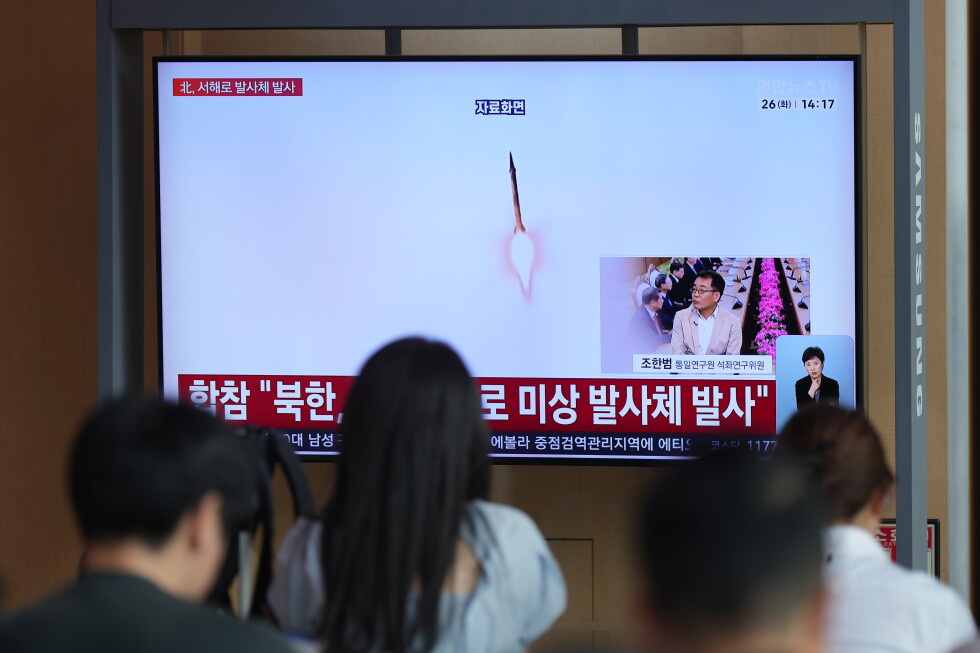
On Tuesday, North Korea carried out another test of multiple close-range ballistic missiles fired into adjacent waters, South Korea’s national military confirmed, marking the latest addition to Pyongyang’s accelerating string of weapons demonstrations throughout 2025. According to South Korea’s Joint Chiefs of Staff, the launch originated from Jongju, a city located on North Korea’s northwestern coast.
In response to the provocation, South Korea’s defense establishment has heightened its surveillance alert level and is maintaining real-time intelligence sharing with key security partners the United States and Japan to monitor further developments. This launch is North Korea’s first weapons test since April 19, when Pyongyang fired a volley of short-range missiles that state media confirmed were equipped with cluster bomb warheads.
The recent test aligns with a years-long trend of military expansion under North Korean leader Kim Jong Un. Since the collapse of his high-profile nuclear diplomacy with former U.S. President Donald Trump in 2019, Kim has prioritized rapid expansion of the country’s nuclear and ballistic missile arsenals. While Trump has repeatedly extended public overtures to restart negotiations with Kim, Pyongyang has rejected all offers to date, demanding that Washington abandon its requirement for North Korean nuclear disarmament as a precondition for any new diplomatic talks.
In recent months, Kim has also adopted a dramatically hardened stance toward South Korea. He has labeled Seoul Pyongyang’s permanent, most hostile enemy and has taken formal steps to sever all official cross-border political and economic ties. Earlier this year, North Korean officials announced plans to deploy new artillery systems aimed directly at Seoul and commissioned the country’s first operational guided-missile destroyer, further raising military tensions on the Korean Peninsula.
Hours before the Tuesday missile launch, South Korean President Lee Jae Myung used a weekly Cabinet meeting to outline his administration’s new priorities for military modernization. Lee, a liberal politician who has long advocated for improved engagement with Pyongyang, called for accelerated investment to strengthen South Korea’s military capabilities, with a specific focus on expanding artificial intelligence integration and drone warfare capacity. He also reaffirmed South Korea’s ongoing interest in acquiring a nuclear-powered submarine, a proposal that has already been a key topic in diplomatic discussions with Washington.
Though Lee did not directly address the immediate threat of North Korean missile tests during the meeting, he underlined that a strong, self-reliant South Korean defense posture is critical to both national security and the strength of the U.S.-South Korea alliance. “We must show unwavering resolve to take responsibility for and protect our own security ourselves,” Lee stated, framing military modernization as a core national priority for his administration.