分类: politics

  • European leaders celebrate Péter Magyar’s victory in a stunning Hungarian election

    European leaders celebrate Péter Magyar’s victory in a stunning Hungarian election

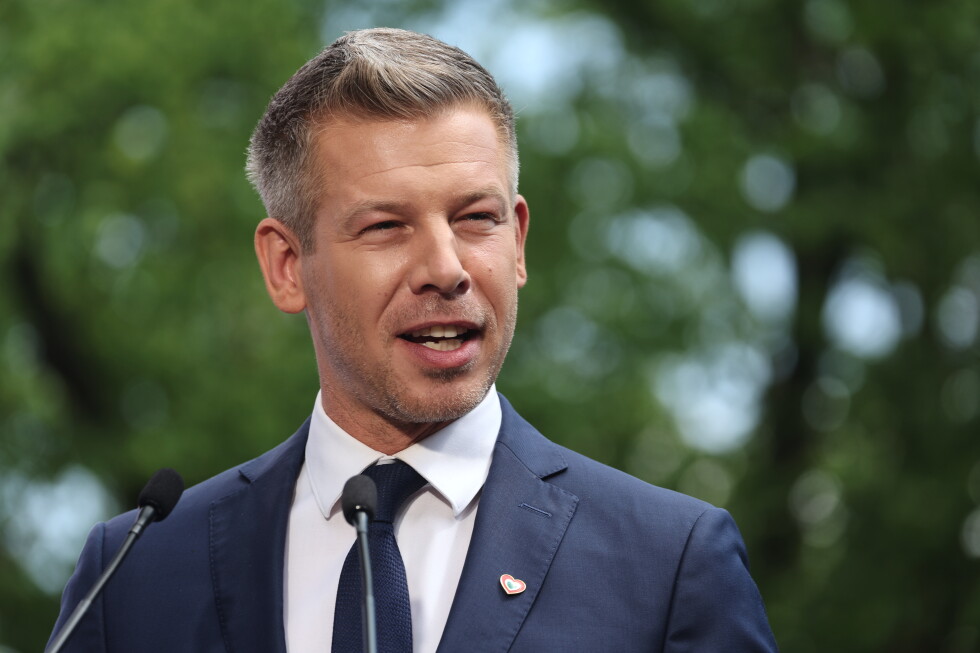
    In a seismic political shift that has sent ripples across the European continent, Hungarian opposition leader Péter Magyar has claimed a historic election victory that ends 16 years of authoritarian-leaning rule by Viktor Orbán, drawing an outpouring of congratulatory messages from top European Union leaders and key global figures.

    The sweeping celebration of Magyar’s win stems not only from what the new incoming prime minister has pledged to accomplish, but from what his victory represents: the end of Orbán’s Euroskeptic, populist rule that long destabilized EU collective governance and frustrated the bloc’s unified policy goals. For years, Orbán positioned himself against Brussels-centric strategy, framing his agenda as a defense of Hungarian national interests against overreach from EU institutions. His repeated vetoes of coordinated EU action, most notably collective military and political support for Ukraine following Russia’s full-scale 2022 invasion, put him at constant odds with the 27-nation bloc. Most recently, his administration’s admission that it maintained secret backchannel communications with Moscow during key EU summits sparked outright outrage among European leaders.

    In the wake of the election result, congratulations flooded official social media channels and poured in via personal calls from the bloc’s most senior figures. Even before Magyar delivered his victory speech on the banks of the Danube River in downtown Budapest on Sunday night, he had already received congratulatory calls from French President Emmanuel Macron, European Commission President Ursula von der Leyen, NATO Secretary-General Mark Rutte, and German Chancellor Friedrich Merz. Online, messages of celebration came from British Prime Minister Keir Starmer, Irish Prime Minister Micheál Martin, Swedish Prime Minister Ulf Kristersson, European Parliament Speaker Roberta Metsola, Danish Prime Minister Mette Frederiksen, Romanian President Nicușor Dan, and European Council President António Costa, among many others.

    Spanish Prime Minister Pedro Sánchez summed up the prevailing mood among pro-European leaders in a post on X, writing simply: “Today Europe wins and European values win.” Polish Prime Minister Donald Tusk echoed the enthusiasm, posting “Back together! Glorious victory, dear friends!” Starmer framed the outcome as a defining moment for democratic governance across the continent, noting “This is an historic moment, not only for Hungary, but for European democracy.” Macron emphasized that France welcomed the Hungarian people’s clear commitment to EU values, while Merz called for renewed collective action: “Let’s join forces for a strong, secure and, above all, united Europe.” Kristersson framed the result as a new chapter for both Hungary and the bloc, adding that he looked forward to close collaboration as NATO allies and EU partners. Von der Leyen, who was a frequent target of Orbán’s anti-Brussels rhetoric, struck a unifying tone, writing: “Hungary has chosen Europe. Europe has always chosen Hungary. Together, we are stronger. A country returns to its European path. The Union grows stronger.”

    Slovenian Prime Minister Robert Golob went further, framing Magyar’s win as a victory for the entire European project: “His victory over right-wing populism is also a great victory for the EU and its future. Only a more united and more effective EU will be able to respond to the extremely serious challenges of the times ahead.” German lawmaker Daniel Freund noted that the upset would have far-reaching implications for populist movements globally, arguing that Orbán, long the icon of illiberal anti-European politics, was brought down by his own government’s failures: “Hungarians are sending a signal to the world. The icon of illiberal anti-European forces has now failed – brought down by a disastrous economy, corruption, and his own unfair electoral system.”

    Ukraine’s official government account also offered congratulations, leaning into the shared geographic and political future of the two nations within Europe. “The Dnipro and the Tisza flow through a shared home — Europe,” the post read.

    Beyond his commitment to repairing Hungary’s strained relationship with the EU, which Magyar confirmed to the Associated Press ahead of the vote, the new prime-minister-elect has struck a unifying tone in his first public remarks. “All Hungarians know that this is a shared victory. Our homeland made up its mind. It wants to live again. It wants to be a European country,” he told supporters gathered for his victory celebration.

    Notably, Magyar has avoided taking firm stances on several divisive policy issues carried over from the Orbán era, including Orbán’s widely criticized anti-LGBTQ+ policies and the question of whether his administration will expand Hungary’s military and humanitarian support for Ukraine.

    Not all reactions to the power shift were uniformly celebratory. Italian Prime Minister Giorgia Meloni, a fellow right-wing leader, congratulated Magyar but also extended thanks to Orbán for years of close collaboration. Far-right French politician Jordan Bardella, a leading contender in France’s 2027 presidential election, praised Orbán’s legacy advancing populist causes in a social media post, and made no mention of the new winner. Israeli opposition leader Yair Lapid, a descendant of Hungarian Holocaust survivors, was among non-European figures to offer congratulations to Magyar.

    European People’s Party President Manfried Weber, another frequent critic of Orbán, summed up the broader shift for the EU, writing simply: “Hungary is back at the heart of Europe.”

  • Backlash to Labor’s $20m fuel crisis ad campaign  grows

    Backlash to Labor’s $20m fuel crisis ad campaign grows

    A $20 million taxpayer-funded national advertising campaign designed to encourage voluntary Australian fuel conservation has ignited fierce political debate this week, with opposition figures slamming the initiative as a wasteful, out-of-touch expenditure while the ruling Labor government defends it as a critical investment in national fuel security.

    Titled “Every Little Bit Helps”, the campaign officially launches on Monday, delivering practical guidance to Australian motorists on small steps to cut fuel use: cutting excess weight from vehicle boots, removing unused roof racks, inflating tyres to optimal pressure, and shifting to walking, cycling or public transit for short trips where possible. Social Services Minister Tanya Plibersek defended the initiative during a tense Monday morning interview on Channel 7’s *Sunrise*, arguing the campaign is a necessary counter to widespread online misinformation that fueled dangerous panic buying during the current fuel supply crisis.

    The effort ties directly to Australia’s four-stage National Fuel Security Plan, which is currently operating at Level 2. Under this framework, national fuel supplies remain secure overall, but localized distribution disruptions have been recorded, prompting precautionary government action and a call for voluntary public participation to stabilize demand. Plibersek pushed back against on-air pushback from host Nat Barr, who questioned why $20 million would be spent on basic advice many motorists already know. The minister noted the campaign’s price tag pales in comparison to the $340 million spent on a 2000 public health campaign run by the previous Howard-era Liberal government, framing the current outlay as a small cost to deliver clear, verified information about national fuel security to the public.

    Opposition leaders have rejected that framing. Deputy Liberal leader Jane Hume told Sky News that the expenditure is deeply misaligned with the current economic pressure facing Australian households. She argued that $20 million could instead cover fuel costs for roughly 100,000 Australian motorists amid skyrocketing pump prices, arguing that lecturing the public about minor driving and vehicle adjustments is not a responsible use of public funds at a time of crisis. Prime Minister Anthony Albanese has pushed back against that criticism, describing the $20 million investment as “modest” and the campaign as “sensible” policy.

    Albanese highlighted that unregulated panic buying, stoked by misinformation on social media, created unnecessary localized shortages earlier in the crisis. He noted that common panic-driven behaviors, such as storing extra fuel in jerry cans in the back of utes, not only distorted demand but also created serious public safety risks. “There was in some cases a more than doubling of demand when it wasn’t necessary. So that shows that there was misinformation out there. This campaign is a modest campaign but it’s important as well that we get that direct information to people,” the Prime Minister told the ABC.

    The campaign comes amid real global supply chain pressures that have hit Australia’s fuel market. Australia imports 90 percent of its overall fuel needs, with most refined product coming from Singapore, South Korea and Japan, which in turn source crude oil from Middle Eastern suppliers. Disruptions tied to recent conflict that led to the closure of the Strait of Hormuz after attacks on Iran in late February have tightened global supplies, sending domestic fuel prices soaring across the country.

    As of last week, Energy Minister Chris Bowen confirmed Australia holds 38 days of petrol reserves, 31 days of diesel, and 28 days of jet fuel, with enough supply to meet national demand through May. To shore up long-term supplies, the Albanese government has ramped up diplomatic outreach in the Indo-Pacific. On Friday, Canberra secured a critical agreement with Singapore that rules out export restrictions on refined fuel and commits the city-state to supporting Australian fuel stockpiles, so long as global upstream crude supplies remain steady. In exchange, Australia offered a reciprocal guarantee for continued liquefied natural gas exports to Singapore, and the Prime Minister has left the door open to approving new domestic gas projects to support the arrangement.

    Albanese will travel to Malaysia and Brunei this week to continue negotiations for more stable fuel and fertilizer supply. Brunei currently supplies 9 percent of Australia’s diesel imports and 11 percent of Australia’s urea imports, a key input for fertilizer. Malaysia ranks as Australia’s third-largest source of refined fuel, and provides 10 percent of the nation’s urea imports.

    The political row over the advertising campaign continues as the government works to secure long-term fuel stability, with more updates expected as diplomatic negotiations progress this week.

  • The Dutch village at risk of being demolished

    The Dutch village at risk of being demolished

    Tucked along the sun-dappled shores of the Hollands Diep estuary, 21 miles south of Rotterdam, Moerdijk has been a tight-knit fishing community for more than a century. Home to roughly 1,100 residents, generations of families have built their lives, livelihoods, and legacies here: third-generation fishmongers have trawled its waters since 1918, homeowners have built their houses with their own hands, and generations of ancestors rest in its quiet village cemetery. Today, however, this centuries-old settlement stands at the center of a national conflict that threatens to wipe it entirely off the map.

    The Dutch government’s ambitious push to expand offshore wind energy has created an urgent need for large-scale high-voltage substations, facilities that connect power carried by undersea wind farm cables to the country’s national electricity grid. With the Netherlands being one of Europe’s most densely populated countries, available developable land is an extremely scarce resource. Government planners have identified Moerdijk as an ideal candidate for the site: its coastal position adjacent to existing ports, major motorways, and established power infrastructure aligns perfectly with the technical requirements of the substation project. If the plan moves forward, the entire village will be demolished within the next 10 years, its homes and community replaced by industrial energy infrastructure.

    For residents who have rooted their lives in Moerdijk, the news has been devastating. Jaco Koman, a third-generation fishmonger whose family has operated in the village for more than a century, sees the proposal as an unnecessary sacrifice of a thriving community. His business, which supplies traditional smoked eel to high-end restaurants across the country, depends on the deep coastal waters and open land that drew planners to Moerdijk in the first place. “You go to bed with it and you wake up with it,” Koman said of the constant threat of displacement. While he does not oppose the country’s transition to clean energy, he argues that the burden of this transition should not fall on his community. “Why does our village have to disappear? We could connect these wind farms further out at sea, away from inhabited areas,” he asked.

    The atmosphere of uncertainty hangs heavy over Moerdijk’s quiet streets. For-sale signs dot residential driveways, but few buyers are willing to invest in a community marked for demolition. Many residents have flown their flags at half-mast, a quiet act of mourning for a village that still stands, but is already considered lost by many who live here. For Andrea, owner of the local grocery store, the threat is deeply personal: her husband built the family home by hand, all three of her children were born within its walls, and her grandparents and in-laws are buried in the village cemetery. “I’m scared I’ll lose my house,” she said. “There’s so much life here. But in 10 years’ time it may be nothing.”

    The conflict unfolding in Moerdijk is not an isolated incident; it lays bare a growing national dilemma across the Netherlands. For decades, the country has grappled with competing demands for its limited land: housing development, agricultural production, conservation, transportation networks, industrial development, and now the new infrastructure required to deliver large-scale renewable energy. The country’s existing electricity grid is already at maximum capacity, delaying new business and housing projects across the nation, while the government’s target to expand North Sea offshore wind will require massive new onshore infrastructure to bring that power to consumers.

    Geerten Boogaard, a professor of local government at Leiden University, explained that the Moerdijk conflict exposes the core dynamics of Dutch governance. “In the end we are a centralist state,” Boogaard noted. When the national government labels a project a “vital national interest”, it holds the legal authority to push the project forward over local objections. While local councils can protest and residents can challenge the decision in court, the central government ultimately holds the power. Beyond the legal and planning issues, Boogaard frames the conflict as a larger clash of priorities: “It is a collision between two ways of life – that of a local, tightly knit community, and that of a country trying to transform its energy system in response to climate change, security concerns and pressure to phase out fossil fuels.”

    For 71-year-old retired engineer Jacques, who built an eco-friendly home on the edge of Moerdijk in the 1990s, the transformation of the area has already been dramatic. When he moved in, the horizon was clear of industrial development; today, it overlooks one of Europe’s largest logistics hubs, and the constant rumble of passing trucks drowns out local birdsong. “This village will be demolished. That I know for sure,” he said.

    The Dutch government has delayed a final decision on Moerdijk’s fate, but an announcement is expected later this year. Ministers declined to comment for this report. Aart Jan Moerkerke, mayor of the Moerdijk municipality, described the pressure on local leaders as immense. The central government is seeking roughly 450 hectares of land – an area equivalent to more than 700 full-size football pitches – to develop not just the substation, but also new hydrogen production facilities and major pipeline routes for transporting hydrogen and ammonia from the Port of Rotterdam to southeastern Netherlands.

    In a painful compromise, the municipal council has already agreed in principle to accept the relocation of Moerdijk, choosing to sacrifice one small village to avoid major disruption and declining quality of life in four nearby settlements. The central government could still reverse course, opting instead to squeeze the new infrastructure around existing communities to save Moerdijk, but that alternative carries its own risks of wider disruption. The municipality is currently waiting for the national government to provide binding guarantees on compensation, relocation timelines, and development conditions before moving forward with any formal agreement. For Moerkerke, telling the residents of Moerdijk that their homes and community could be gone within a decade was “the hardest decision of my career”.

    What is at stake in Moerdijk extends far beyond the future of this single small village. The decision will serve as a critical test of how nations balance the urgent need for green energy transition against the rights and lives of small local communities that stand in the way of that progress. For the 1,100 residents of Moerdijk, that abstract policy dilemma is a daily reality. For now, they live in limbo, never knowing whether the village they call home will exist in 10 years, or whether it will live on only as a memory and a line on an old map.

  • Frostbite is least of worries for Canada forces grappling with new Arctic reality

    Frostbite is least of worries for Canada forces grappling with new Arctic reality

    After 52 days of traversing some of the harshest frozen landscapes on the planet, two Canadian Rangers crossed a simple finish line marked by a row of spruce trees in Churchill, Manitoba, on Friday, capping the largest northern mission in the 75-year history of the Canadian Armed Forces reserve unit. The 5,200-kilometer journey, which retraced a route not attempted in 80 years, stood as a landmark test of Canada’s military readiness, indigenous knowledge, and sovereign claims to a rapidly changing Arctic region.

    The patrol formed the core of 2026’s annual Operation Nanook-Nunalivut, a Canadian Armed Forces initiative designed to reinforce the country’s military presence across its northern territories — a region that makes up 40% of Canada’s total landmass and 70% of its entire coastline. More than 1,300 military personnel from Canada and allied nations joined this year’s operation, with broad objectives ranging from land surveying and climate change research to opening new navigation routes and testing cold-weather survival and combat capabilities.

    The mission has taken on urgent new relevance in recent years, as melting Arctic ice driven by climate change unlocks access to vast untapped natural resources, triggering a global geopolitical scramble for influence in the region. The timing of this year’s patrol comes just months after former U.S. President Donald Trump’s controversial January threat to annex Greenland, an autonomous Danish Arctic territory that borders Canada, which sent shockwaves through NATO and prompted alliance members to reaffirm their commitment to defending regional sovereignty. While Brigadier General Daniel Rivière, commander of the army task force leading the operation, emphasized that Trump’s remarks had “zero effect” on collaborative work between Canadian forces and their allies, the incident underscored growing global interest in the Arctic’s strategic importance.

    In response to shifting security dynamics, Canadian Prime Minister Mark Carney — the first Canadian prime minister born in the Northwest Territories — has unveiled a multi-billion-dollar defense plan focused on upgrading existing northern military infrastructure and boosting civilian access to the region through improved airports and highways. Carney has criticized previous Canadian administrations for decades of piecemeal, insufficient investment in the North, framing Arctic sovereignty as the country’s most urgent national security priority. The plan has faced pushback from the Conservative opposition, who argue that decades of Liberal neglect have left the country with a “gaping vulnerability” in the region, and have called for the construction of new permanent military bases to counter growing foreign influence. Despite the political debate, both military leaders and local northern residents have welcomed the new funding, with Rivière noting that it signals Canada is finally serious about building its northern capacity.

    Security analysts and military leaders point to Russia’s ongoing military buildup in the Arctic as a key driver of Canada’s renewed focus on the region. Russia currently operates dozens of permanent military bases along its Arctic coast, while Canada maintains none. Rivière told the BBC that while Russia does not pose an immediate threat to Canadian sovereignty, it remains “a formidable force” that continues to conduct air probes and expand joint military exercises with China in international Arctic waters. “Is that an immediate threat? No. But are they getting smarter about Arctic waters? Absolutely,” he said. “This mission is about preparing for the worst-case scenario.”

    Beyond geopolitical tensions, the patrol also highlighted the growing challenges posed by climate change to Arctic navigation. Lieutenant Colonel Travis Hanes, one of the lead Rangers on the 52-day journey, shared firsthand observations of shifting ice conditions: rivers that have reliably frozen solid for generations are now experiencing unseasonal overflow, creating layered, unstable ice sheets that pose major hazards to overland travel. At the same time, this winter brought unusually frigid temperatures that opened new travel passages across waters that have remained ice-free in recent decades.

    A cornerstone of the Canadian Rangers’ success in the harsh Arctic environment has long been the unit’s large contingent of Indigenous Inuit members, whose generations of traditional knowledge have proven irreplaceable for navigating the landscape and surviving extreme conditions. “We would’ve failed without them,” Hanes said of the Inuit rangers and local community members who supported the patrol. Inuit members served as local guides between remote hamlets, shared traditional “country food” including dried Arctic char and caribou to supplement military rations, and provided handcrafted fur gear made from coyote and caribou to protect team members from life-threatening cold. One Inuk ranger from Aklavik, Julia Elanik, carried a high-powered rifle along the entire route to fend off potential polar bear encounters. More than a dozen Inuit communities along the route also provided housing and logistical support to the patrol.

    Barnie Aggark, an Inuk Canadian Ranger with 27 years of experience who guided the patrol through its final 500 kilometers from Chesterfield Inlet, Nunavut, framed his participation as a responsibility to both his community and his country. “It has everything to do with our land and sea and how we control it, and who is allowed in it,” he said. “We have to let the rest of the world know that we are here, and this is our home, and we are going to protect it with everything that we have.”

    The 52-day journey was defined by relentless hardship: team members traveled for hours daily between remote communities on snowmobiles, navigated repeated blizzards and gale-force winds, and camped on frozen ice in tents when temperatures plunged as low as -60°C (-76°F). Constant hazards including polar bear encounters, frostbite, and cold-weather dehydration required constant vigilance. On the final night before reaching Churchill, the team camped on the frozen shores of Hudson Bay beside an abandoned trading post, with shifting ice crackling under their tents and the northern lights swirling overhead.

    Not all elements of the operation went according to plan: an artillery live-fire exercise in Cambridge Bay, Nunavut, was canceled due to an extreme blizzard, a small group of rangers suffered food poisoning linked to military rations, one ranger cracked a rib when his snowmobile flipped (and continued on with the mission), and another was evacuated by air after developing frostbite to prevent the injury from worsening. Despite these setbacks, Hanes classified the mission as a resounding success, noting that only one major injury among 250 participating personnel marked a far better safety record than comparable Arctic operations. “It is a testament to Canada’s growing expertise in an unforgiving climate,” he said.

    In addition to Inuit traditional knowledge, the patrol also tested new satellite intelligence and ice-monitoring technologies, with air support from the Royal Canadian Air Force provided by Twin Otter survey planes flying ahead of the snowmobile team. Reflecting on the mission’s completion, Chief Warrant Officer Sonia Lizotte noted: “We have tested the limits, and we can now see the future.” Military leaders say the lessons learned from the historic patrol will inform Canada’s expanding Arctic security strategy, as the country works to build its capacity to defend its sovereign claims in a rapidly changing region. This year’s operation also included international cooperation: observers from Greenland joined the patrol, military personnel from the U.S. and UK monitored progress from a command center in Edmonton, and French and Belgian soldiers conducted joint ice-diving exercises with Canadian troops.

  • Democrats join calls to expel Eric Swalwell from Congress over misconduct claims

    Democrats join calls to expel Eric Swalwell from Congress over misconduct claims

    Bipartisan pressure is mounting on U.S. Representative Eric Swalwell to leave Congress immediately, as multiple sexual misconduct allegations upend his once-promising bid for California governor and bring renewed scrutiny to congressional ethics. Multiple Democratic lawmakers have publicly called for Swalwell’s expulsion from the House of Representatives, with a key condition that the same process be applied to Texas Republican Congressman Tony Gonzales, who is also facing abuse allegations connected to a former staff member.

    Virginia Democratic Representative Eugene Vindman made the position clear during an interview with CNN on Sunday, stating, “We should not tolerate this behaviour. Representative Eric Swalwell needs to go.” Before the claims emerged, Swalwell was widely viewed as a leading frontrunner in the 2026 California gubernatorial Democratic primary, a race for the nation’s most populous state that has been held by Democratic governors for more than two decades.

    Notably, both men are already scheduled to end their congressional terms in January regardless of the expulsion push. Last month, Gonzales withdrew from his re-election campaign after publicly confirming he had an extramarital affair with a member of his congressional staff. The House’s independent ethics committee has launched a formal investigation into Gonzales’ conduct to examine potential rule violations.

    For Swalwell, four different women have come forward with accusations that span from sexual harassment to sexual assault, according to U.S. media reports. One alleged incident that took place in New York City has already triggered an official investigation by the Manhattan District Attorney’s office. The BBC has not independently confirmed the identities or claims of the anonymous accusers, consistent with standard reporting protocol for unvetted allegations.

    First elected to represent his San Francisco Bay Area congressional district in 2012, Swalwell, a married father of three, has forcefully pushed back against the claims. In a formal statement released Friday, he said, “For nearly 20 years, I have served the public – as a prosecutor and a congressman, and have always protected women. I will defend myself with the facts and where necessary bring legal action.”

    Within hours of the allegations becoming public, Swalwell lost endorsements from key national Democratic figures, including House Democratic Leader Hakeem Jeffries. Now, an increasing number of his congressional colleagues are moving beyond withdrawing support to demanding he leave Congress months before his scheduled departure in January.

    California Democratic Representative Jared Huffman said he would back expulsion if both Swalwell and Gonzales refuse to resign voluntarily. Washington Democratic Representative Pramila Jayapal also confirmed she would vote in favor of expulsion, noting that the move is critical to send a message to all congressional staff across Capitol Hill that workplace abuse will not be ignored, even when committed by sitting members of Congress.

    While California Democratic Representative Ro Khanna stopped short of explicitly committing to support an expulsion motion, he joined other lawmakers in condemning the alleged behavior. “There needs to be consequences to that,” Khanna said. “And I have said not only does he need to step aside, there needs to a House ethics investigation and a law enforcement investigation.” He added that Gonzales also needs to leave office immediately.

    The calls for both lawmakers to resign or be expelled have garnered bipartisan support, breaking along typical party lines. New York Republican Representative Mike Lawler emphasized, “Congress must hold itself to the highest ethical standard, regardless of party.” Florida Republican Representative Byron Donalds told NBC News, “That vote comes to the floor, I will be voting yes on both measures… As far as I am concerned, both gentlemen need to go home.”

    Florida Republican Representative Anna Paulina Luna confirmed Saturday that she plans to officially introduce a motion to expel Swalwell from the House. The BBC has reached out to spokespeople for both Swalwell and Gonzales to request additional comment on the growing demands.

    Expulsion from the U.S. House of Representatives is an extremely rare step in congressional history, requiring a two-thirds majority vote from all members present and voting when the motion is considered. Over the 237-year history of the chamber, only six sitting members have ever been removed via expulsion.

    The allegations against Swalwell come at a particularly critical juncture for the California gubernatorial race, which is a wide-open Democratic primary with no clear frontrunner after the collapse of Swalwell’s campaign. Postal ballots are set to be mailed to voters in just a few weeks, leaving little time for the race to reconfigure amid the unfolding controversy.

  • Iran talks were a major test for JD Vance. How did he do?

    Iran talks were a major test for JD Vance. How did he do?

    After 21 hours of high-stakes, historic negotiations in Islamabad, US Vice President JD Vance returned to Washington on Sunday with no major breakthrough to end the six-week war between the United States and Iran, leaving the world’s most volatile geopolitical flashpoint hanging in the balance as a temporary ceasefire deadline rapidly approaches. The talks marked the highest-level diplomatic engagement between Washington and Tehran in decades, but deep divides remain unaddressed on all core sticking points, multiple anonymous US officials familiar with the negotiations have confirmed.

    The single largest point of contention remains Iran’s nuclear program, specifically the future of the country’s stockpiles of enriched uranium. No consensus was reached on this critical issue during the marathon negotiating sessions, the official said. Other unresolved priorities for the Trump administration include the reopening of the Strait of Hormuz without the toll charges Iran has imposed, and a binding Iranian commitment to end financial and military support for regional proxy groups including Hezbollah and Hamas.

    According to the US official, Vance presented Iranian negotiators with a final US proposal during talks on Saturday, though details of the offer remain undisclosed. While the negotiations did not deliver a breakthrough, they were not entirely unproductive: the dialogue was described as tough but cordial, with both sides exchanging substantive, actionable proposals. Vance left Islamabad convinced that Iran is overstating its negotiating leverage, but remains optimistic that a final agreement can still be reached, the official added.

    Iranian President Masoud Pezeshkian struck a cautiously optimistic tone in response, saying a final deal “will certainly be found” if the United States “abandons its totalitarianism and respects the rights of the Iranian nation.”

    But President Donald Trump made his frustration with the lack of progress clear just hours after Vance’s departure, announcing via social media that the United States would implement an immediate blockade of the Strait of Hormuz to increase pressure on Tehran. The US military confirmed it would halt all maritime traffic entering and exiting Iranian ports starting Monday morning.

    The two sides agreed to a two-week temporary ceasefire last week to create space for negotiations, but Trump’s latest post on Truth Social carried a sharp overtone of military threat, writing that “at an appropriate moment, we are fully ‘LOCKED AND LOADED,’ and our Military will finish up the little that is left of Iran.”

    Iran’s top negotiator, parliament speaker Mohammad Bagher Ghalibaf, pushed back against Trump’s rhetoric in a statement shortly after returning to Tehran, saying Iran would not be intimidated. “If you fight, we will fight, if you come forward with logic, we will respond with logic,” Ghalibaf said, adding, “We will not submit to any threat. If they test our resolve once more, we will teach them an even greater lesson.”

    The sharp exchange of rhetoric underscores the massive gap that remains between the two sides, and the steep obstacles to reaching a comprehensive deal to end the conflict that has gripped the Middle East for six weeks. The war has already sent global oil prices soaring, creating ripple effects across the world economy.

    For Vance, 41, the Islamabad negotiations represented a critical early test of his foreign policy credentials, as he widely expected to mount a bid for the Republican presidential nomination in 2028. Trump tapped Vance to lead the US negotiating delegation, which also included special envoy Steve Witkoff and Trump’s son-in-law and former senior White House advisor Jared Kushner. Vance was tasked with defusing the largest foreign policy crisis of Trump’s second term in office.

    The mission was always fraught with challenges, not least because of mixed messaging from Trump himself on the war. Early in April, Trump joked that he would blame Vance if the talks collapsed, while claiming full credit for himself if a deal was reached. Though Vance has publicly supported the military campaign, multiple reports indicate he has expressed private skepticism about the ongoing military action to Trump. Vance has a long record of positioning himself as an anti-interventionist, a stance that resonates strongly with Trump’s core MAGA base.

    As Vance led closed-door talks in the Pakistani capital, Trump made a public appearance in Miami, Florida, where he attended a UFC fight alongside Secretary of State Marco Rubio, who is also widely seen as a potential 2028 presidential contender and a rival to Vance for the Republican nomination.

    With the two-week ceasefire deadline looming later this month, time is running out for diplomatic negotiators to strike a deal, and a breakthrough remains as elusive as ever.

  • Israel’s Ben Gvir says he feels like the ‘owner’ of Al-Aqsa Mosque compound

    Israel’s Ben Gvir says he feels like the ‘owner’ of Al-Aqsa Mosque compound

    On a recent Sunday, far-right Israeli National Security Minister Itamar Ben Gvir stoked international outrage after delivering inflammatory remarks during a provocative raid on Jerusalem’s Al-Aqsa Mosque Compound, one of the most sensitive and sacred sites in Islam. Standing within the walled Old City complex, Ben Gvir declared in an official video circulated by his office that he “feels like the owner” of the site, adding that he is actively pushing for expanded access for Jewish worshippers to the holy ground.

    Ben Gvir’s incursion came just days after Israeli authorities reversed an extraordinary 40-day closure that barred all Palestinian worshippers from entering the compound — a closure that blocked Palestinian access during major religious milestones including the holy month of Ramadan, the Eid al-Fitr holiday, and weekly Friday congregational prayers. Following the lifting of the ban, Israeli officials have not only resumed near-daily incursions by ultranationalist Jewish groups into Al-Aqsa, but have extended the length of these visits, a shift that has further alarmed Muslim and regional leaders.

    The Al-Aqsa Mosque Compound has long been governed by the decades-established international Status Quo agreement, a fragile arrangement that explicitly recognizes the site’s exclusive Islamic character, entrusts Muslim religious authorities with full control over worship, access, and site maintenance, and permits Jewish visitation only — not prayer — to preserve the delicate religious balance. For years, however, Israel has systematically violated this agreement, allowing unapproved incursions and private prayer by ultranationalist Israelis inside the compound without the consent of Muslim governing bodies.

    These repeated violations have fueled growing regional fears that Israel is working to fundamentally rewrite the long-standing rules governing the site, potentially reallocating physical space or additional worship time exclusively to Jewish visitors. While Israel’s own chief rabbinate has maintained a centuries-long ban on Jewish prayer at the site, which ultranationalist Jews revere as the location of the ancient Jewish First and Second Temples, ultranationalist factions have increasingly pushed for open Jewish worship, receiving explicit political backing from high-profile government figures including Ben Gvir himself. Ben Gvir’s spokesperson confirmed this week that the minister not only is seeking formal prayer permits for Jewish visitors, but had already conducted personal prayer during his visit to the compound.

    Regional and Palestinian leaders have swiftly condemned Ben Gvir’s actions and comments. Jordan, which holds official custodianship over the Al-Aqsa site under international agreements, condemned the visit as a blatant violation of the Status Quo, calling it “a desecration of its sanctity, a condemnable escalation and an unacceptable provocation.” The office of Palestinian President Mahmoud Abbas warned that such provocative moves threaten to further destabilize an already volatile region, raising risks of wider unrest along the Israel-Palestinian divide.

  • Tucker Carlson slams UK’s Palestine Action ban, calls Keir Starmer ‘enslaved’

    Tucker Carlson slams UK’s Palestine Action ban, calls Keir Starmer ‘enslaved’

    In a tense Sunday morning BBC interview that has sparked widespread debate, prominent former Fox News host Tucker Carlson launched a scathing rebuke of the British government’s decision to ban pro-Palestinian direct action group Palestine Action, pushing back against host Victoria Derbyshire’s challenges to his claims.

    When Derbyshire asked Carlson – a longstanding vocal critic of the U.S.-Israeli military campaign against Iran – whether Prime Minister Keir Starmer had made the correct call on the ban, Carlson offered a blunt, controversial response: “I don’t think Keir Starmer makes any calls about anything. Keir Starmer’s not in control of Britain. No, Keir Starmer is every bit as enslaved as Donald Trump is.”

    Carlson went on to argue that current British law effectively criminalizes open criticism of the Israeli government, claiming: “It is a crime for which you can be arrested in Britain right now, criticising Israel. If you say you’re for Palestine Action, you can be arrested. A lot of people have been arrested. So in other words, it is not legal in Britain to criticise another country.”

    Derbyshire immediately pushed back, refuting the claim as untrue. When Carlson pressed that hundreds of people had indeed been arrested for critical speech about Israel, Derbyshire clarified that arrests stemmed from Palestine Action’s proscribed status, not criticism itself. Undeterred, Carlson fired back: “Why is it banned? It’s banned because the Israeli government wanted it banned.”

    The context of the ban dates back to last July, when Starmer’s incoming Labour government officially proscribed Palestine Action as a terrorist-linked organization. Under the order, membership in the group or public expression of support for it carries a maximum criminal penalty of 14 years in prison. While the UK High Court ruled the ban unlawful in February, the government secured permission to appeal the ruling, with the appeal hearing scheduled for April 28 and 29.

    In the weeks since the ban first took effect, more than 1,600 people have been arrested for holding public signs reading “I oppose genocide, I support Palestine Action,” according to on-the-ground reports. The movement against the ban reached a peak Saturday, when mass demonstrations converged on central London’s Trafalgar Square, where at least 523 people were arrested in a single day in coordinated civil disobedience. Protesters set up camping chairs on the steps of the square, all displaying identical hand-painted signs declaring their support for the banned group. Middle East Eye, which first reported on the demonstration, documented that many of the arrested protesters were elderly and disabled – including frail grey-haired attendees and participants using crutches, who were physically dragged away by police officers. Some demonstrators dressed as early 20th century British Suffragettes to draw a parallel between their fight for political voice and the historic suffrage movement.

    During the interview, Carlson softened his tone to note that despite frequent criticism of British policy, he retains affection for the country, where he has family ties. He went on to argue that British citizens have been unfairly compromised by U.S. foreign policy influence: “I don’t think that Britons understand just how badly they’ve been shafted by the United States. And I am ashamed of that and I hope that we do everything we can to rectify it. I hope that our next president strikes a far more conciliatory and cooperative tone and tries to help Britain, because it has a lot of problems that will be very obvious by the next time there’s a presidential election in my country.”

    The controversy over the Palestine Action ban also intersects with broader Middle East military tensions. When the U.S.-led campaign against Iran began, Starmer initially hesitated to grant the U.S. access to British military bases for strike operations. Ultimately, however, the UK relented: the bases have been used for strikes on Iranian missile sites, and for the past nearly three weeks, they have supported U.S. operations aimed at reopening the Strait of Hormuz, a critical global shipping chokepoint.

  • Former deputy director of Xizang people’s congress under investigation

    Former deputy director of Xizang people’s congress under investigation

    China’s top anti-corruption watchdog announced on Sunday that Ding Yexian, a 65-year-old former deputy director of the Standing Committee of the Xizang Autonomous Region People’s Congress, is facing investigation over suspected severe violations of discipline and national law. Currently, the Central Commission for Discipline Inspection and the National Supervisory Commission are conducting a combined disciplinary review and official investigation into Ding’s conduct, according to the official announcement.

    Public career records show that Ding built his decades-long professional career entirely in Xizang, starting his first work assignment in the region back in 1978. Over his years in public service, he held a series of senior leadership positions: he served as vice chairman of the Xizang Autonomous Regional Government from September 2010 to June 2013, after which he was promoted to the post of executive vice chairman of the region. In January 2021, Ding took up his final public position as deputy director of the Xizang Autonomous Region People’s Congress Standing Committee, the region’s top legislative body.

    This investigation is part of China’s sustained national campaign to root out corruption across all levels of public office, holding current and former senior officials accountable for any violations of disciplinary and legal regulations.

  • Trump’s Strait of Hormuz blockade threat raises risks and leaves predicaments unchanged

    Trump’s Strait of Hormuz blockade threat raises risks and leaves predicaments unchanged

    ### After Collapsed Islamabad Negotiations, Washington Unveils Aggressive New Strategy Amid Rising Political and Global Risks

    It has been one month since the United States entered open conflict with Iran, and a fragile two-week ceasefire agreed last week to facilitate face-to-face negotiations is now teetering on the edge of collapse. After a 20-hour diplomatic session in Islamabad led by U.S. Vice President JD Vance failed to produce a breakthrough deal to end the conflict, President Donald Trump outlined his administration’s next move in a series of Sunday morning posts on Truth Social.

    Trump announced that the U.S. would implement a full naval blockade of Iranian waters, stating that any vessel that pays what Washington defines as an “illegal toll” to Tehran would be blocked from safe passage through international waters. At the same time, the president confirmed that U.S. naval forces would continue demining operations in the Strait of Hormuz, one of the world’s most critical energy chokepoints, to guarantee unimpeded access for shipping aligned with U.S. allies. He added that U.S. military assets are fully prepared and “locked and loaded” to resume offensive strikes against Iran if an “appropriate moment” arises.

    Trump claimed that the talks made incremental progress, but that Tehran ultimately refused to meet Washington’s core demand to abandon its nuclear program. However, a senior U.S. official close to Vance’s negotiation team pushed back on this framing, revealing that the two sides face far broader, deeper disagreements beyond the nuclear issue. These unresolved disputes include Iran’s sovereignty claims and control over access to the Strait of Hormuz, as well as Iran’s long-standing support for regional armed groups including Yemen’s Houthi rebels and Lebanon’s Hezbollah.

    Unlike Trump’s incendiary threat from last week to “end Iranian civilization,” the president’s latest announcements avoid apocalyptic rhetoric. Even so, the new blockade strategy opens the door to a cascade of unanswerable risks and unprecedented challenges for the United States. Key open questions remain: Will ongoing demining missions put U.S. naval vessels at heightened risk of targeted Iranian retaliation? How will Washington verify whether commercial ships have paid tolls to Tehran? Will the U.S. use military force against civilian ships flying foreign flags that defy the blockade? How will major oil-dependent economies that continue to import Iranian crude, most notably China, respond to the new restriction? And could the blockade, designed to cut off Iran’s primary export revenue, send global oil prices soaring to new record highs? As of yet, the Trump administration has not offered clear responses to any of these critical questions.

    The new policy has already sparked division within U.S. political circles. Senate Intelligence Committee ranking Democrat Mark Warner of Virginia questioned the strategic logic of the move, telling CNN Sunday, “I don’t understand how blockading the strait is going to somehow push the Iranians into opening it.” By contrast, former House Intelligence Committee chair Republican Mike Turner of Ohio defended the blockade as a necessary coercive measure to force a resolution to the standoff over the Strait. Speaking on CBS’ *Face the Nation*, Turner noted that by rejecting Tehran’s right to control access to the waterway, Trump is rallying U.S. allies to engage on the issue, adding that “this needs to be addressed.”

    The current impasse comes as Trump faces the same unresolvable dilemma that pushed him to agree to a ceasefire and talks last week. Before the Islamabad negotiations, the president had two unappealing options: continue escalating offensive strikes on Iran, which would cause irreversible damage to Iranian civilian infrastructure, deepen an already worsening humanitarian crisis, and send further shockwaves through the already fragile global economy; or step back from a conflict that has never been popular with the U.S. public, and has even started to alienate core Trump supporters who backed him on his promise to avoid draining foreign wars and new entanglements in the Middle East.

    Recent polling underscores the political risk for Trump and his party ahead of November’s midterm elections. A new CBS survey finds that 59% of U.S. voters believe the war is going poorly for the United States. Large majorities of voters from both parties agree that achieving core U.S. war goals – keeping the Strait of Hormuz open, securing greater political freedom for the Iranian people, and permanently eliminating Iran’s nuclear program – is critical, but most voters say none of these objectives have been met nearly a month into the conflict.

    Almost a week after the ceasefire took effect, and despite the administration’s claims of early military success, Trump’s core predicament remains unchanged. Speaking to Fox News Sunday morning, the president struck an optimistic tone, claiming Iran will eventually concede to all U.S. demands. He acknowledged that global oil prices could stay steady or rise in the coming months, but insisted the U.S. economy would withstand the pressure. This prediction is at best a high-stakes gamble, political analysts note: with midterm elections just months away, Trump’s Republican Party could face devastating electoral losses if the president’s assessment proves wrong.

    In a striking juxtaposition to the high-stakes diplomacy unfolding in Pakistan, Trump spent Saturday night in Miami attending a UFC mixed martial arts cage fighting event, where top fighters competed in a violent, blood-spattered ring. Members of the press pool covering the event described the moment as surreal: the U.S. president watched the bouts, mingled with celebrities, and held urgent strategy discussions with Secretary of State Marco Rubio and other senior advisors in full view of thousands of spectators.

    Unlike the structured, rule-bound sport of mixed martial arts – which always ends with a clear winner and a defined time limit – the war with Iran offers no such clarity. As the conflict enters its second month and the ceasefire nears collapse, it has devolved into a brutal test of wills: can Iran withstand continuing strikes from the U.S. and its ally Israel, or will Trump buckle under growing economic and political pressure from the costs of the war? When this high-stakes standoff ends, all parties involved may leave diminished.