分类: politics

  • Election loss for Hungarian Prime Minister Orbán has ripple effects for Trump, US conservatives

    Election loss for Hungarian Prime Minister Orbán has ripple effects for Trump, US conservatives

    Half a globe away from Washington D.C., a small European nation delivered a seismic political upset over the weekend that is already reshaping conversations about authoritarianism, democratic resilience, and Donald Trump’s global influence on the modern right. After 16 years in power, Hungarian Prime Minister Viktor Orbán — a towering icon of global conservative illiberalism with deep ties to leading U.S. right-wing figures — was ousted from office in a result that carries sweeping implications for both transatlantic politics and U.S. domestic discourse.

    Orbán’s rise to long-term power was built on a deliberate, well-documented project of authoritarian consolidation. First elected as an anti-communist activist in 1998, he shifted sharply to the nationalist right after losing office in 2002. Returning to power in 2010 amid the global recession, Orbán and his Fidesz party leveraged a parliamentary supermajority to rewrite Hungary’s constitution, restructuring the judiciary to stack courts with party loyalists, redraw legislative districts to lock in electoral advantages, and pressure independent media outlets to sell to allies of the ruling party. He embraced a brand he called “illiberal democracy”, built a massive border barrier to block migration from Africa and Asia, cracked down on LGBTQ+ rights, stifled press freedom, and undermined judicial independence — moves that led the European Union to formally classify Hungary as an “electoral autocracy”.

    For years, Orbán has been a beloved figure among large swathes of the U.S. conservative movement. Donald Trump, who has long drawn parallels between his own political agenda and Orbán’s approach to consolidating power, openly backed the incumbent’s re-election bid. In a high-profile move that highlighted the depth of that support, Trump dispatched Vice President JD Vance to Budapest just one week before the election — while the U.S. was already engaged in active conflict with Iran — to campaign on Orbán’s behalf. Leading conservative organizations have also cultivated close ties to the Hungarian leader: the American Conservative Union, chaired by Matt Schlapp, hosted the first European iteration of its Conservative Political Action Conference (CPAC) in Budapest and has made the country a regular stop for conservative gatherings, with Orbán even headlining CPAC’s 2022 conference in Dallas.

    But Orbán’s defeat has exposed growing limits to Trump’s ability to sway outcomes for allied politicians abroad, analysts and political figures say. The ongoing Iran war, which has roiled global energy markets and sparked widespread public anger across Europe, eroded whatever advantage Vance’s last-minute campaign visit could deliver. Even with a heavily rigged electoral playing field that gave Orbán’s ruling party enormous structural advantages, Hungarian voters — frustrated by soaring inflation, economic stagnation, and the fallout of the ongoing regional conflict — delivered a clear vote for change. This outcome aligns with a broader global trend of voter discontent that has hurt incumbents across the ideological spectrum in recent elections.

    The result has drawn reactions from across the U.S. political spectrum, with many lawmakers from both parties celebrating Orbán’s ouster. Republican Rep. Don Bacon of Nebraska used the moment to criticize overt U.S. interference in foreign democracies, writing on X: “Don’t fiddle-paddle in other democracies’ elections.” Republican Sen. Roger Wicker of Mississippi added: “The freedom-loving people of Hungary have voted decisively in favor of democracy and the rule of law.” Even Schlapp, a long-time Orbán ally, acknowledged the public desire for change, noting that the economic and energy turmoil spurred by the Iran war significantly hurt the incumbent’s standing. “The people of Hungary were saying, ‘We’re having a difficult time with inflation, the economy and the war. Let’s try the new guy,’” Schlapp said. Far-right Romanian European Parliament member Diana Sosoaca went further, calling Vance’s pre-election visit a “big mistake” given widespread European anger over the conflict.

    For U.S. democracy watchers and political observers, Orbán’s defeat carries particularly sharp lessons for American politics, given the well-documented parallels between Orbán’s consolidation of power and Trump’s own political ambitions. For years, Democrats have warned that Trump has sought to use executive power to tilt electoral outcomes in his favor, pointing to his 2020 attempt to overturn Joe Biden’s election victory and his ongoing efforts to reshape election rules for 2028. Ian Bassin, executive director of nonpartisan anti-authoritarian group Protect Democracy, framed the Hungarian result as a reassuring signal for U.S. voters: “Even a guy who rigs the system can be defeated when the people unite and turn out against him.”

    Democratic lawmakers have echoed that framing, drawing direct parallels between Orbán’s project and Trump’s efforts in the U.S. “He was essentially doing what Donald Trump is trying to do here in the United States,” said Sen. Chris Van Hollen of Maryland. “My read of the election is that the people of Hungary rejected that, just like people in the United States are rejecting that here at home.” Rep. Ro Khanna of California even used the upset to jab Vance directly, writing on X: “Your ally Orban conceded. In 2028, will you @JDVance follow suit if you lose?”

    Some experts, however, warn against overstating the lessons of Orbán’s defeat for U.S. democracy. Harvard political scientist Steven Levitsky, co-author of *How Democracies Die*, noted that while the result proves oppositions can win even on a tilted playing field, Trump has already taken steps toward authoritarian consolidation that Orbán never attempted. He pointed to Trump’s use of the Justice Department to target political opponents and fatal shootings of protesters by U.S. immigration authorities as steps beyond what Orbán’s government enacted. Still, Levitsky noted the broader global takeaway: “Democracies are facing many challenges in many parts of the world, but so are autocracies.”

    Beyond U.S. politics, Orbán’s ouster carries immediate geopolitical implications for the war in Ukraine. Orbán was the European leader closest to Russian President Vladimir Putin, and he repeatedly blocked European Union military and humanitarian aid to Ukraine following Russia’s 2022 full-scale invasion. As of Sunday, Trump had not issued any public comment on Orbán’s defeat.

  • UK could adopt EU single market rules under new legislation

    UK could adopt EU single market rules under new legislation

    Four years after the UK completed its full exit from the European Union’s economic structures, a contentious new legislative proposal from the opposition Labour Party has reignited fierce debates over the country’s post-Brexit trade relationship with its largest trading partner. Under the plan put forward by Labour leader Sir Keir Starmer, the UK government would gain new powers to adopt updated EU single market regulations for specific trade sectors, most notably food safety and product standards, without requiring full parliamentary votes for each new rule.

    This framework, known as “dynamic alignment,” is designed to streamline UK-EU trade by ensuring British rules match evolving EU standards in areas covered by existing negotiated agreements. If enacted, any new regulation drafted in Brussels would be brought into UK law via secondary legislation, a procedural mechanism that typically does not allow for amendments and is generally approved without a full floor vote in Parliament, leaving MPs with only limited opportunities for formal scrutiny.

    Labour insiders argue the reform is a pragmatic solution to long-standing post-Brexit trade frictions. The party frames the change as a way to cut unnecessary operational costs for British businesses and eliminate what it calls the “Brexit paperwork tax,” a hidden burden that pushes up everyday grocery prices for UK households. A Labour source emphasized that the plan does not reverse the UK’s Brexit departure, noting the party has consistently ruled out rejoining the single market or customs union. Instead, the source framed the proposal as a sovereign choice: the UK would voluntarily enter into agreements that lower trade barriers, while Parliament still retains a formal role in the process.

    The government further argues the reform will unlock a UK-EU food and drink trade agreement estimated to add £5.1 billion annually to the economy, support domestic British jobs, and cut through burdensome red tape for farmers, food producers and small businesses across the country. A government spokesperson added that the full bill itself will undergo the standard parliamentary passage process, and any new wider treaties or trade deals with the EU will still face full parliamentary scrutiny before approval.

    But the proposal has drawn fierce pushback from across the political spectrum. The Conservative Party’s shadow business secretary Andrew Griffith condemned the plan, arguing it would reduce Parliament to a mere spectator while EU regulators in Brussels set the trade rules that govern British businesses. Reform UK leader Nigel Farage, one of the most prominent architects of the original Brexit campaign, has pledged to oppose the legislation at every stage, dismissing it as a backdoor attempt to bring the UK back under EU regulatory control.

    Even pro-EU opposition parties have raised concerns over the erosion of parliamentary sovereignty. Liberal Democrat MP Munira Wilson told the BBC’s *Westminster Hour* that while her party supports closer economic ties with the EU, any alignment must go hand in hand with full parliamentary democratic scrutiny.

    The legislative proposal comes as the UK and EU continue ongoing negotiations to update post-Brexit trade arrangements, including a targeted deal on food safety, animal and plant health standards. Full text of the bill is expected to be introduced to Parliament later this year, ahead of a scheduled UK-EU summit that Starmer has signaled will be more ambitious than the 2025 meeting, where the two sides struck a landmark agreement covering fishing rights, trade, defense and energy cooperation.

  • US military is poised to blockade Iranian ports, while Tehran threatens ports in the Mideast

    US military is poised to blockade Iranian ports, while Tehran threatens ports in the Mideast

    Tensions between the United States and Iran have escalated to a dangerous new standoff in the Persian Gulf, following the collapse of weekend ceasefire negotiations that has left the global energy market bracing for severe disruption and raised fears of a resumption of active conflict.

    The crisis traces back to late February, when the United States and Israel launched joint military strikes against Iran, igniting a regional conflict that has already claimed more than 5,000 lives across six nations. A fragile ceasefire has held in recent weeks, but marathon talks hosted in Pakistan aimed at reaching a permanent peace deal failed to produce an agreement this past Saturday, clearing the way for the U.S. military’s vow to impose a full naval blockade on all Iranian ports starting Monday.

    The core sticking points in the collapsed negotiations align with longstanding U.S. demands: Iran has rejected Washington’s non-negotiable red lines, which require Tehran to permanently abandon any pursuit of a nuclear weapon, end all uranium enrichment activities, dismantle key enrichment infrastructure, surrender existing stockpiles of highly enriched uranium, reopen the Strait of Hormuz to unimpeded global shipping, and cut funding for regional armed proxies including Hamas, Hezbollah, and the Houthis. For Iran, the main barriers to a deal are U.S. demands on its civilian nuclear program, demands for war reparations from Tehran, and the removal of crippling Western sanctions, according to Iranian ambassador to India Mohammad Fathali. U.S. Vice President JD Vance confirmed the talks stalled after Iran refused to accept Washington’s nuclear terms, while Iran has repeatedly maintained its nuclear program is for peaceful energy and medical purposes only, despite advancing enrichment to near-weapons-grade levels and developing long-range delivery systems.

    As the Monday deadline for the U.S. blockade arrived, clarity on the operation’s actual start remained murky. Just minutes before the 10 a.m. EDT deadline, the UK Maritime Trade Operations agency, which monitors regional maritime security, issued a notice to mariners confirming the restrictions would cover the entire Iranian coastline, including all commercial ports and national energy infrastructure. The agency clarified that transit through the Strait of Hormuz to or from non-Iranian destinations would not be blocked under the current measures, but warned commercial vessels to expect heavy military presence throughout the waterway.

    U.S. Central Command, the military command overseeing Middle East operations, later confirmed the blockade would apply to all vessels of any flag seeking to enter or depart Iranian coastal areas across both the Persian Gulf and Gulf of Oman. The current framework represents a partial walk-back of an earlier, more extreme threat from former President Donald Trump to blockade the entire strait, a concession that reflects growing concern over global economic backlash. Shortly after the deadline passed, Trump posted a message to social media claiming Iran’s conventional navy had been “completely obliterated” and lies at the bottom of the sea, but warned that any remaining Iranian fast attack craft that approach the U.S. blockade line would be immediately destroyed.

    Iran has responded with sweeping reciprocal threats, vowing that no regional ports belonging to U.S.-allied nations will remain safe if Washington follows through on its blockade. “Security in the Persian Gulf and the Sea of Oman is either for everyone or for NO ONE,” the Iranian military and Islamic Revolutionary Guard Corps said in an official statement carried by Iran’s state broadcaster. Top Iranian officials have dismissed the U.S. blockade threat as empty posturing, but warned of overwhelming retaliation if hostilities escalate. “It will make the current situation (Trump) is in more complicated and makes the market — which he is angry about — more turbulent. And we may also reveal other cards that we have not used in the game,” Ebrahim Rezaei, spokesperson for the Iranian parliament’s National Security Commission, wrote in a post on X. Iranian Parliament Speaker Mohammad Bagher Qalibaf issued a direct warning to Trump: “If you fight, we will fight.”

    The showdown already has had immediate ripple effects across global commodity markets. Iran effectively closed the Strait of Hormuz — through which roughly 20% of the world’s traded oil flows in peacetime — after the outbreak of war, sending energy and commodity prices soaring worldwide and pushing up costs for gasoline, food, and basic consumer goods far beyond the Middle East. Tehran has allowed limited passage for vessels perceived as friendly, but charges steep transit fees, a practice that has drawn widespread accusations that Iran is holding the global economy hostage. As of Monday, international benchmark Brent crude rose 7% to trade near $102 per barrel, up from roughly $70 per barrel before the outbreak of conflict. The latest Iranian threats have already halted the limited commercial traffic that resumed through the strait during the ceasefire, according to Lloyd’s List Intelligence. Before the war, an average of 100 to 135 commercial vessels transited the strait daily; that number dropped to just over 40 per week since the ceasefire took effect, and has now ground to a near-halt.

    Analysts have cast significant doubt on the effectiveness of a U.S. blockade, questioning whether military pressure alone can force Iran to reopen the strait, and warning of severe risks to U.S. naval forces deployed to the region. The standoff has become a test of political and economic endurance: will a full blockade push Iran’s already battered economy to collapse, forcing Tehran to concede to U.S. terms? Or will the resulting spike in global energy prices create enough domestic pressure in the U.S. to force the Trump administration to back down?

    The current ceasefire is set to expire on April 22, and neither Washington nor Tehran has signaled whether it will be extended, or when negotiations might resume. Pakistani Foreign Minister Ishaq Dar, whose country hosted the failed talks, has said Pakistan will continue working to facilitate a new round of dialogue in the coming days, while Turkish Foreign Minister Hakan Fidan — whose country has led regional mediation efforts — has proposed extending the ceasefire by 45 to 60 days to create space for further negotiations. European leaders have also moved to address the crisis, with British Prime Minister Keir Starmer announcing he will host a summit this week with French President Emmanuel Macron to coordinate international action to reopen the strait and end the conflict, with Starmer insisting the waterway must be reopened with no conditions and no transit tolls.

    The conflict has already taken a heavy human toll: at least 3,000 people have been killed in Iran, 2,089 in Lebanon, 23 in Israel, and more than a dozen across Gulf Arab states, with widespread infrastructure damage across half a dozen regional nations.

  • Mass resignations in Victorian government, as three Ministers quit

    Mass resignations in Victorian government, as three Ministers quit

    Seven months out from Victoria’s November 2026 state election, the state’s ruling Labor government has been hit by a wave of high-profile departures, with three senior cabinet ministers handing in immediate resignations on Monday. The sudden exits come on the heels of former Government Services Minister Natalie Hutchins’ resignation from the frontbench in December, opening up four vacant cabinet positions that the Labor caucus will vote to fill during a scheduled meeting on Tuesday. Premier Jacinta Allan is expected to formalize a full cabinet reshuffle as soon as this week. The departing ministers are Finance Minister Danny Pearson, Health Minister Mary-Anne Thomas, and Skills and TAFE Minister Gayle Tierney. All three will complete their current parliamentary terms as backbenchers before the election goes to poll in November. The mass resignation echoes a similar shakeup ahead of the 2022 Victorian state election, when four senior ministers, including the deputy premier, stepped down from Daniel Andrews’ government just five months before voting day. Each departing minister offered personal reasons for their exit, while reflecting on decades of combined public service. Ms Thomas, a lower house Labor leader and close political ally of Premier Allan, who stepped into the health portfolio mid-way through the global COVID-19 pandemic, cited a desire to step back from seven-day workweeks to spend more time with family, including her 91-year-old mother, and attend St Kilda AFL matches. First elected to parliament alongside Mr Pearson in 2014, Ms Thomas said it had been the greatest honor of her life to serve in both the Andrews and Allan Labor governments. She highlighted landmark women’s health reforms as a signature achievement, noting that abortion rights would always remain protected under Labor governments, adding that “women’s rights are under attack from conservative political forces around the world.” Mr Pearson, who has represented the seat of Essendon since 2014 and entered cabinet in 2020, told reporters he entered parliament in 2014 knowing he would not spend his entire working life in politics, and said he had not yet settled on his next career move. An emotional Pearson teared up during Monday’s press conference, saying he was proud of his work delivering major WorkCover reforms, overhauling the state’s digital public services, and implementing Victoria’s groundbreaking ban on engineered stone, a policy expected to prevent hundreds of future cases of life-threatening silicosis. He lightened the mood with characteristic wit, joking that he and Ms Thomas would occupy the “Nosebleed Section” of the backbench, in a nod to Australian hip-hop group Hilltop Hoods, and quipped “We might be volunteers. I can tell you now our families are conscripts.” Reflecting on his tenure, he added, “I feel an enormous sense of gratitude to have played a bar of music in the great Labor concerto of government.” For Ms Tierney, the departure marks the end of 36 years in elected public office, and nearly two decades in the Victorian state parliament. “For me it is simply time to pass the baton,” she said. Premier Allan paid tribute to the three departing ministers, emphasizing their lasting legacy for Victorian communities. “All three have worked tirelessly, and I thank them for the service. These are friends and colleagues who have served the parliament and the Victorian community for a period of time, and it is now their time to say farewell to their life of public service,” Allan told reporters on Monday. In an official statement, she expanded on her praise, noting each minister had left an indelible mark on the state. She highlighted that Pearson’s engineered stone ban would save lives, that Thomas had steered the public health system through the most challenging public health crisis in a century while always supporting frontline health workers, and that Tierney had spent her decades in office fighting for working-class Victorians. Allan struck an optimistic tone about the upcoming reshuffle, expressing confidence that the vacant posts would be filled by new candidates with fresh ideas. She touted the Labor Party’s internal unity, contrasting it with what she framed as an extreme, divided opposition focused only on austerity cuts. “My Labor team has a unity of purpose that is guided by our values. We can renew and refresh because of this. Unlike our opponents who are extreme, divided and have one solution – to cut,” Allan said. The announcement also included word that Steve McGhie will step down from his role as cabinet secretary, a position he has held since 2022, and Allan thanked him for his service. The opposition has seized on the mass resignations to attack the Allan government, with Opposition Leader Jess Wilson dismissing the upcoming reshuffle as nothing more than rearranging deckchairs on a sinking ship. “What we see in terms of the Premier’s reshuffle in the coming days doesn’t change the fact this is a tired government,” Wilson said. “To shuffle the deckchairs is going to do nothing to actually change the direction of this state. These are the same people who have sat around the cabinet table, who have been part of the Labor Party for a decade. They have overseen the decline of Victoria. The only way to get a fresh start here in Victoria is to change the government this year.” According to preliminary reports from the *Herald Sun*, four sitting Labor MPs have been identified as top candidates for promotion to the vacant frontbench posts. Former Rail, Tram and Bus Union state secretary Luba Grigorovitch, a member of the party’s Right faction, is widely expected to claim one spot. Three remaining spots reserved for members of Labor’s Left faction will be contested by MPs Paul Edbrooke, Tim Richardson, Michaela Settle, and Paul Hamer.

  • Trump says ‘not a big fan’ of Pope Leo after his anti-war message

    Trump says ‘not a big fan’ of Pope Leo after his anti-war message

    A public rift between U.S. President Donald Trump and the newly seated Pope Leo XIV has burst into the open, after Trump publicly declared he is “not a big fan” of the Catholic leader over the pontiff’s repeated anti-war messaging and stance on Iran’s nuclear program. The sharp rebuke comes amid already simmering disagreements between the Holy See and the Trump administration on a range of policy issues, despite both sides moving quickly to dismiss earlier reports of a hostile behind-the-scenes confrontation.

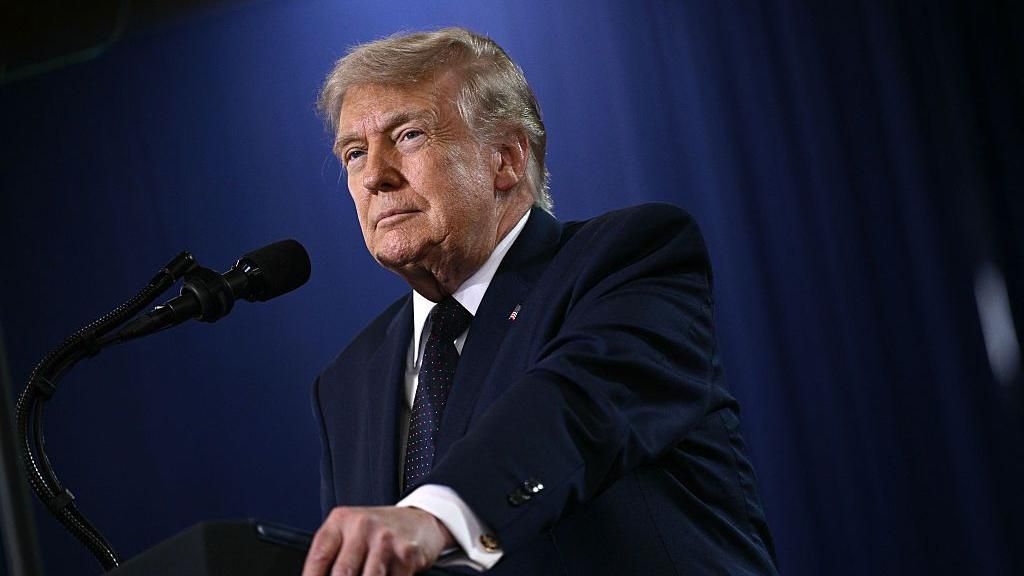
    Trump made his critical remarks to reporters during a press gaggle at Maryland’s Joint Base Andrews on Sunday. The president framed the pope as an overly progressive figure whose policy priorities do not align with global security needs, saying, “He’s a very liberal person, and he’s a man that doesn’t believe in stopping crime.” He went further to accuse Pope Leo of softening his stance on nations pursuing nuclear capabilities, claiming the pontiff was “toeing with a country that wants a nuclear weapon.”

    Shortly after his in-person comments, Trump doubled down on the criticism in a post to his social media platform Truth Social, writing, “I don’t want a Pope who think it’s OK for Iran to have a Nuclear Weapon.”

    The clash follows a series of public disagreements that stretch back weeks. The 70-year-old American pontiff, who made history as the first U.S.-born leader of the Catholic Church, used a public address to thousands of worshippers at St. Peter’s Basilica on Saturday to deliver a ringing plea for global peace. In an unflinching rebuke of modern conflict and power politics, he told the crowd: “Enough of the idolatry of self and money! Enough of the display of power! Enough of war!”

    The confrontation escalated earlier that same week, after the Free Press published a report claiming that a top Pentagon official had delivered a “bitter dressing-down” to the Vatican’s envoy to the U.S., Cardinal Christophe Pierre, during a January meeting at the Pentagon. According to the report, U.S. Under Secretary of Defense for Policy Elbridge Colby told the cardinal that the United States “has the military power to do whatever it wants — and that the Church had better take its side.”

    Both U.S. and Vatican officials quickly moved to discredit the account. The Pentagon dismissed the report as “distorted,” while Vatican spokesman Matteo Bruni issued a formal statement saying “the account presented by certain media outlets regarding this meeting does not correspond to the truth in any way.” Both sides have also maintained that the January meeting was cordial and productive.

    Even so, open disagreements between the Holy See and the White House have been on full display for months. The pope has publicly denounced the Trump administration’s hardline mass deportation policy as “inhuman,” and he has repeatedly criticized the administration’s willingness to use military force in global hotspots including the Middle East and Venezuela. Tensions flared most recently after Trump made what was widely labeled a genocidal threat against Iran earlier this month, telling the public “A whole civilization will die tonight, never to be brought back again.” Pope Leo swiftly condemned the comment as “truly unacceptable” and called on all parties to return to diplomatic negotiations.

    Earlier this month, the pope did welcome a temporary ceasefire between the U.S. and Iran as a “sign of real hope,” but high-stakes peace talks wrapped up abruptly in the Pakistani capital of Islamabad on Saturday. After a marathon negotiating session, U.S. Vice President JD Vance told reporters that Washington had put forward its “final and best offer” to Iran, leaving the future of diplomatic negotiations uncertain.

  • Trump announces closure of Hormuz Strait as Iran talks falter

    Trump announces closure of Hormuz Strait as Iran talks falter

    In a sudden Sunday announcement via his Truth Social platform, U.S. President Donald Trump has ordered an immediate military blockade of the Strait of Hormuz, a move that comes after Vice President JD Vance’s negotiation team failed to secure the trust of Iranian officials amid already heightened tensions between the two nations. Iranian negotiators, who have a long history of broken agreements with the United States, have refused to compromise on their sovereignty over the country’s nuclear program, derailing the first direct high-level talks between Washington and Tehran since 1979.

    Trump’s early morning post framed the closure as a response to what he called “world extortion” by Iran, claiming the country has leveraged unconfirmed claims of hidden mines in the strategic waterway to extract illegal tolls from commercial shipping. Prior to the Trump administration’s launch of the latest conflict, the strait — which carries roughly 20% of global oil trade — remained open to all vessels. “At some point, we will reach an ‘ALL BEING ALLOWED TO GO IN, ALL BEING ALLOWED TO GO OUT’ basis, but Iran has not allowed that to happen by merely saying, ‘There may be a mine out there somewhere,’ that nobody knows about but them,” Trump wrote. “THIS IS WORLD EXTORTION, and Leaders of Countries, especially the United States of America, will never be extorted.”

    The U.S. president went on to outline the parameters of the new blockade, stating he has instructed the U.S. Navy to interdict any vessel in international waters that has paid the so-called toll to Iran — a provision that was reportedly part of a draft ceasefire agreement Trump approved just last week. “No one who pays an illegal toll will have safe passage on the high seas. We will also begin destroying the mines the Iranians laid in the Straits. Any Iranian who fires at us, or at peaceful vessels, will be BLOWN TO HELL!” he added. Trump doubled down on his hardline stance, warning that Iran will not be permitted to profit from what he calls illegal extortion, and reiterated that the U.S. military is “locked and loaded” to complete the destruction of remaining Iranian military infrastructure if necessary, citing Iran’s pursuit of nuclear capabilities as a core casus belli.

    The announcement sparked immediate pushback from peace advocates, policy experts, and Iran-focused analysts across the political spectrum. Medea Benjamin, co-founder of the anti-war organization CodePink, highlighted the contradictory logic of Trump’s policy in a post on X, writing, “So get this. Trump wants to open the Strait of Hormuz by closing the Strait of Hormuz. Blow up the world economy to punish Iran. Make sense?” Ryan Costello, policy director for the National Iranian American Council, went further, noting that a blockade qualifies as an act of war under international law. “Trump is announcing he will reenter the US into a war has been illegal under domestic and international law and has been disastrous for US interests, regional security, and the people of Iran,” Costello added. Independent journalist Séamus Malekafzali called the policy one of the most reckless in modern U.S. history, saying “I have legitimately never heard of a more insane, designed-to-backfire policy under this administration; maybe ever. Not only attempting to blockade Iranian ships, but ANY ship that goes through the Strait of Hormuz by paying the toll.”

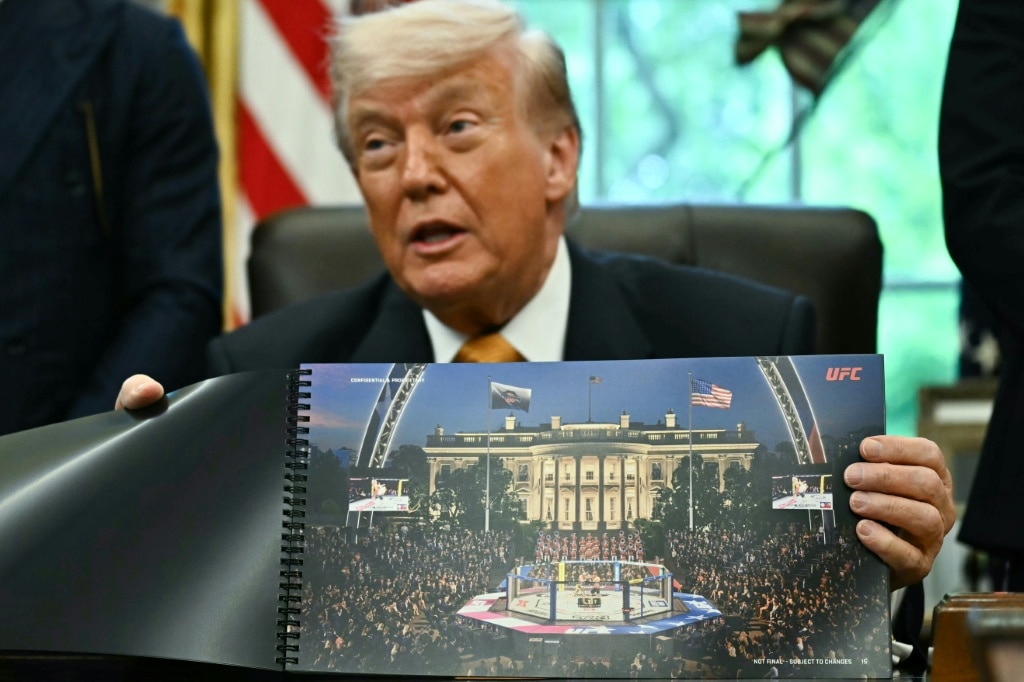
    While Trump and Secretary of State Marco Rubio attended a high-profile Ultimate Fighting Championship event in Miami, Vance led the collapsed talks with Iranian officials in Islamabad, Pakistan. Speaking to reporters after the negotiations concluded, Vance reaffirmed the White House’s core demand: “We need to see an affirmative commitment that [Iran] will not seek a nuclear weapon, and they will not seek the tools that would enable them to quickly achieve a nuclear weapon. That is the core goal of the president of the United States, and that’s what we’ve tried to achieve through these negotiations.”

    Contextualizing the collapse of trust, Iranian officials note that Tehran was open to sweeping nuclear concessions before the U.S. and Israel launched a joint bombing campaign against Iran on February 28. Notably, every U.S. administration former President George W. Bush’s term — including Trump’s first term — has concluded that Iran is not actively pursuing a nuclear weapons program. Iran previously committed to permanent non-proliferation under the 2015 Joint Comprehensive Plan of Action (JCPOA), the landmark nuclear deal brokered during the Barack Obama administration. Trump unilaterally withdrew from the agreement in 2018 during his first term, despite widespread confirmation that Iran was in full compliance with its terms.

    Iranian Parliamentary Speaker Mohammad Baqer Ghalibaf publicly blamed the U.S. for the failed talks, confirming that Iranian negotiators refused to trust Vance’s team despite Tehran putting forward new, forward-looking proposals. The Iranian negotiating delegation was named “Minaab 168” in honor of 168 children and school staff killed in a U.S. cruise missile strike on the town of Minaab on the first day of the current war. “Before the negotiations, I emphasized that we have the necessary good faith and will, but due to the experiences of the two previous wars we have no trust in the opposing side,” Ghalibaf explained on X. He added that “America has understood our logic and principles, and now it’s time for it to decide whether it can earn our trust or not.”

    This is not the first time talks have collapsed amid accusations of bad faith from Tehran: just hours before Trump ordered the start of bombing in February, Omani mediators — who have facilitated backchannel talks between the two sides for years — announced a peace deal was within reach, leading Iranian officials to accuse Washington of walking away from a near-agreement to launch hostilities. Similar accusations arose when the U.S. and Israel launched offensive strikes against Iran in summer 2025, mid-way through an earlier round of nuclear negotiations.

    As of Trump’s blockade announcement, the U.S. and Israeli bombing campaign against Iran has entered its 43rd day. Coalition forces have struck more than 13,000 targets across Iran, assassinated dozens of senior political and military leaders — including former Supreme Leader Ayatollah Ali Khamenei — and killed more than 3,000 Iranians, hundreds of whom are women and children, according to Iranian medical officials. Concurrent Israeli bombing operations in Lebanon have killed hundreds of additional civilians, and the Israeli campaign in Gaza has killed and maimed over 250,000 Palestinians, leading to an ongoing genocide case against Israel at the International Court of Justice and an arrest warrant for Israeli Prime Minister Benjamin Netanyahu from the International Criminal Court on charges of war crimes and crimes against humanity. Trump has previously publicly vowed to bomb Iran “back to the Stone Ages” and “destroy Iranian civilization.”

    Despite major military losses, Iran retains strategic leverage in the conflict, a reality Trump has rejected in his public statements. “The Iranians don’t seem to realize they have no cards, other than a short term extortion of the World by using International Waterways,” Trump wrote on Truth Social as Vance departed for negotiations in Pakistan. “The only reason they are alive today is to negotiate!” Iranian Foreign Ministry spokesperson Esmaeil Baghaei struck a measured tone in response to the collapse, advising that breakthroughs do not come after a single round of talks. “Naturally, from the beginning we should not have expected to reach an agreement in a single session,” Baghaei said. “No one had such an expectation.”

  • Viktor Orbán’s Hungarian experiment runs out of steam

    Viktor Orbán’s Hungarian experiment runs out of steam

    For 16 years, Hungarian Prime Minister Viktor Orbán governed the Central European nation through a unique, constantly shifting political experiment that even he struggled to name. The label “illiberal democracy,” often attached to his leadership, carried harshly negative connotations he rejected, while the term preferred by his right-wing American allies—“national conservatism”—never accurately fit his ideological profile. Unlike most traditional conservatives who seek to preserve established systems, Orbán built his power on constant radicalization, leaving little existing institutional order to conserve.

    A defining feature of his tenure was theatrical defiance of European Union leadership in Brussels, where he positioned himself as a rogue outsider thumbing his nose at mainstream European politics. Every time Brussels pushed back against his policies, Orbán turned the backlash into political capital, framing himself as the sole defender of Hungarian national interests against overreaching foreign bureaucrats.

    His leadership was marked by stark contradictions that went largely unchallenged for decades. He painted himself as a fierce opponent of globalization, yet actively courted German automakers and Chinese and South Korean electric vehicle battery manufacturers to set up large-scale operations in Hungary. He positioned himself as the ultimate champion of national sovereignty, but refused to condemn Russian aggression or stand up for Ukraine’s territorial integrity amid the ongoing war with Moscow. He railed against mass immigration from the Middle East and Africa to win political support, while quietly encouraging labor migration from Sri Lanka, the Philippines, Ukraine and Turkey to staff the new foreign-owned factories he attracted to the country. Even his signature pro-natal policy, which poured billions in public funds into encouraging Hungarian families to have more children, failed to deliver its core promise: by 2025, Hungary’s fertility rate had dropped back to 1.31, the exact same figure he inherited from the socialist government he ousted in 2010.

    After winning a two-thirds parliamentary supermajority in 2010, Orbán moved swiftly to reshape Hungary’s entire institutional framework to lock in his power. Just one year into his first term, he rammed through a new constitution aligned with his political agenda, then used his parliamentary majority to rewrite laws governing the judiciary, electoral system, and national economy, remaking the country in the image of his ruling party.

    But on a historic Sunday election, Hungarian voters delivered a decisive rejection of Orbán’s long-running experiment. The opposition candidate, Péter Magyar, won a landslide victory, ending the ruling party’s 16-year hold on power. Orbán swiftly conceded defeat Sunday night, a move widely seen as a calculated effort to preserve his public legacy after more than a decade in power.

    Magyar’s victory stemmed from a clear rejection of Orbán’s polarizing approach to governance. He campaigned on an inclusive vision of national identity that contrasted sharply with Orbán’s divisive, exclusionary rhetoric, carrying the Hungarian flag to every campaign rally to connect with broad voter dissatisfaction. Most importantly, analysts say, Hungarian voters had grown exhausted by the constant state of conflict Orbán relied on to maintain power. Voters also expressed widespread anger at growing economic inequality under Orbán: the country’s wealthy elite amassed unprecedented fortunes, while poverty deepened and the middle class shrank dramatically.

    Orbán won nearly every political battle he fought over his 16 years in office, but his people ultimately wanted peace, stability, and the normalcy of a functional European democracy, rather than constant confrontation. That is exactly what Magyar has promised to deliver. Addressing thousands of jubilant supporters celebrating on the banks of the Danube after his win, Magyar declared: “Tonight we celebrate. But tomorrow, we start work.”

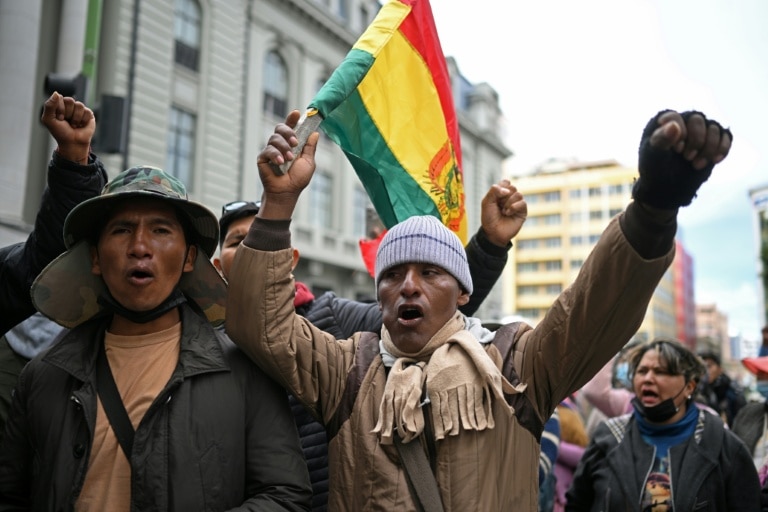
  • Peru election results delayed after thousands get a one-day voting extension

    Peru election results delayed after thousands get a one-day voting extension

    LIMA, Peru — Widespread logistical failures that blocked thousands of voters from casting ballots on Sunday have forced Peru’s electoral officials to extend voting into Monday, pushing the final outcome of the country’s highly contested presidential election past the original scheduled announcement date. The chaotic opening day of voting, which saw countless citizens both within Peru and overseas locked out of polling stations, left millions waiting in uncertainty as the nation navigates one of its most fragmented political moments in modern history.

    Electoral authorities confirmed that just over 52,000 eligible voters will get a second chance to cast their ballots on Monday. This extension applies to voters registered in Lima, Peru’s densely populated capital, as well as two overseas polling locations: Orlando, Florida, and Paterson, New Jersey. Officials initially put the number of eligible voters for the extended voting period at 63,300 before revising the figure downward to correct an earlier miscount.

    Peru enforces mandatory voting for all citizens between the ages of 18 and 70, with a fine of up to $32 imposed on those who fail to participate without a valid excuse.

    Sunday’s vote caps a turbulent decade for Peruvian politics: 35 candidates are competing to claim the presidency, a role that has already changed hands eight times in 10 years. The crowded field includes a former cabinet minister, a popular comedian, and the heir to a well-established political dynasty, reflecting deep divisions within the country’s electorate.

    The election is being held against a backdrop of soaring violent crime and persistent institutional corruption, which has spawned overwhelming public discontent. Most Peruvian voters already view the full slate of candidates as untrustworthy and ill-prepared to tackle the country’s most pressing crises. In response to widespread public anxiety over public safety, many candidates have put forward hardline policy proposals, including plans to construct massive new maximum-security megaprisons, restrict food access for incarcerated people, and reinstate the death penalty for severe criminal offenses.

    For many ordinary voters, public safety remains the top priority, even as frustration with political brokenness runs deep. Heidy Justiniano, a 33-year-old nurse waiting in line to vote at a Lima public school, told reporters she had still not settled on a candidate by the time she reached the polling station. “There’s so much crime, so many robberies on every corner; a bus driver was killed just recently,” Justiniano said. “What matters most to us right now is safety, the lives of every person. Politicians don’t always keep their promises. This time, we have to choose our president wisely so that he can improve Peru.”

    In total, more than 27 million Peruvians are registered to vote in the election, with roughly 1.2 million of those registered at overseas polling stations, primarily in the United States and Argentina.

    Under Peruvian electoral law, a candidate must win an outright majority of more than 50% of the vote to claim the presidency without a runoff. Given the fragmented electorate and the unprecedented size of the candidate field — the largest in Peruvian history — political analysts almost universally predict that a second-round runoff election will be held in June.

    In addition to selecting a new president, voters are also casting ballots to fill seats in a newly reconfigured bicameral Congress, a change mandated by recent legislative reforms. This marks the first time in more than three decades that Peruvians will directly elect members to a full two-chamber legislature, with the reforms concentrating substantial new governing power in the newly established upper chamber.

  • Strikes on alleged drug boats kill 5, leave 1 survivor in eastern Pacific, US military says

    Strikes on alleged drug boats kill 5, leave 1 survivor in eastern Pacific, US military says

    In a latest escalation of the Trump administration’s aggressive campaign against suspected Latin American drug trafficking networks, the U.S. military announced Sunday that it destroyed two small vessels it accuses of smuggling narcotics in the Eastern Pacific Ocean. The operation left five people dead and one person rescued, marking the most recent deadly action in a crackdown launched back in early September. Since the administration began labeling its targets “narcoterrorists” and authorizing open-target strikes, the death toll from these U.S. military boat attacks has climbed to at least 168, according to official data.

    U.S. Southern Command, the military branch overseeing operations in Latin America and the Caribbean, confirmed the Saturday strikes were carried out along well-documented smuggling corridors that traffickers routinely use to move contraband north toward the United States. Unlike many previous strikes, the command did not release any concrete evidence to verify the boats were actually carrying illegal drugs at the time of the attack. Footage circulating on the social platform X, formerly Twitter, captures the two small craft moving across open water before large, bright explosions engulf both vessels.

    Following the strikes, Southern Command said it alerted the U.S. Coast Guard to launch search-and-rescue operations for the lone reported survivor. The Coast Guard has confirmed it is leading coordination for the search effort and stated it will release further updates as more information becomes available.

    The operation comes as the Trump administration is simultaneously ramping up military pressure on two separate global fronts: Latin American drug networks and the Iranian government in the Persian Gulf. Just hours after the Pacific strike, President Donald Trump announced the U.S. Navy will implement a full naval blockade of Iranian ports and restrict all commercial traffic moving through the Strait of Hormuz, a critical chokepoint through which roughly 20% of the world’s daily oil supplies pass. The blockade announcement comes just days after ceasefire negotiations between U.S. and Iranian delegates held in Pakistan collapsed without any breakthrough, ending a fragile multi-week truce that had paused open hostilities between the two nations.

    Trump has framed the ongoing boat strikes against suspected traffickers as a core component of what he calls an “armed conflict” with transnational drug cartels, arguing the escalated military action is critical to cutting off the flow of narcotics into the U.S. and reducing the record number of fatal drug overdoses that kill tens of thousands of Americans annually. To date, however, the administration has failed to produce substantive public evidence backing its repeated claims that those killed in the strikes are confirmed “narcoterrorists.”

    Critics have raised two core objections to the campaign: they question the legality of extrajudicial military strikes targeting non-state actors in international waters, and they cast doubt on the policy’s actual effectiveness in addressing the country’s overdose crisis. Policy analysts have pointed out that the synthetic opioid fentanyl, which is responsible for the vast majority of fatal overdoses in the U.S., is almost exclusively trafficked across the land border with Mexico. Fentanyl is primarily produced in Mexican laboratories using precursor chemicals imported from China and India, making maritime Pacific smuggling a negligible contributor to the overall drug flow.

    The simultaneous dual military deployments mark a rare moment where the U.S. is carrying out active offensive operations in two separate regions. While the Trump administration has prioritized its counternarcotics campaign in the Western Hemisphere, it has shifted significant naval and air resources to the Middle East over the past several weeks following the outbreak of open hostilities with Iran. The new blockade of Iranian ports is designed to cut off Iran’s key oil export revenue, its primary leverage in the ongoing war, after Tehran briefly closed the Strait of Hormuz earlier this month.

    Related developments unfolding alongside the Pacific strike include a growing public feud between former President Trump and newly elected Pope Leo XIV, the first American pope, over the U.S.’s war with Iran, as well as an immediate spike in global oil prices following the blockade announcement, as markets react to the threat of disrupted global crude supplies.

  • Lieutenant General Susan Coyle appointed first female Australian Chief of Army

    Lieutenant General Susan Coyle appointed first female Australian Chief of Army

    The Australian Defence Force (ADF) is undergoing one of its most high-profile leadership reshuffles in recent years, with a series of historic appointments announced just days after the service was thrown into turmoil by the arrest of Australia’s most decorated veteran, Ben Roberts-Smith. Amid growing global geopolitical friction including escalating conflict in the Middle East, Prime Minister Anthony Albanese’s government has confirmed a shake-up that will see the ADF welcome its first female Chief of Army and a new Chief of Defence.

    On Monday, Lieutenant General Susan Coyle, a decorated 40-year veteran with extensive operational experience across multiple global deployments, was officially named to the top army post. Coyle, who most recently served as Chief of Joint Capabilities starting in 2024, will step into the role vacated by Lieutenant General Simon Stuart AO, who has held the position since 2022. A graduate of both the United States Army War College and Harvard University and a Member of the Order of Australia, Coyle has completed deployments to Timor Leste, the Solomon Islands, Afghanistan, and the Middle East, bringing deep on-the-ground experience to her new command.

    In a parallel senior promotion, outgoing Chief of Navy Mark Hammond AO will ascend to the role of Chief of Defence, taking over from Admiral David Johnston, whose two-year term is set to conclude in July. Upon his promotion, Hammond will be elevated to the rank of Admiral, while Rear-Admiral Matthew Buckley will step into Hammond’s current role as the new Chief of Navy.

    Speaking to reporters following the announcement, Hammond struck a humble note about his new appointment, acknowledging the weight of the responsibilities ahead. “This is probably the most humbling moment in my career,” he said. “I certainly look forward to serving with, and for Australia’s sailors, soldiers, and aviators as their Chief of Defense through the challenging times ahead.”

    Hammond also used the press briefing to address growing concerns over regional security following recent Iranian drone attacks in the Strait of Hormuz, pushing back against any questions about the ADF’s operational readiness. “Today, that navy is as ready as it ever has been,” he stated, adding that Australian vessels deployed to the Red Sea are equipped with the world’s most advanced radars alongside cutting-edge missile and defensive systems. Responding to questions about a potential request for contribution related to former U.S. President Donald Trump’s proposed blockade of the strait, Hammond noted that no formal request for Australian support had been received, and any deployment decision would rest solely with the Australian government.

    Defence Minister Richard Marles framed Coyle’s historic appointment as a landmark moment for the ADF, ahead of his much-anticipated national defence strategy update — a two-yearly policy review scheduled to be delivered to the National Press Club on Wednesday. Marles described Coyle as “the standout candidate” for the role, emphasizing that her elevation to Chief of Army carries profound meaning for both current and future servicewomen in the ADF. “It is deeply significant … for women who are thinking about serving in the Australian Defence Force in the future,” he said. The role of Chief of Army carries core responsibilities for overall command of the service, as well as oversight of training and operational readiness.

    The leadership overhaul comes at a sensitive juncture for the ADF, which is already navigating multiple pressures. In recent days, the government has faced intense scrutiny and pressure from veteran communities following the arrest of Ben Roberts-Smith, who is currently being held on remand on multiple war crime-related charges. Roberts-Smith has consistently maintained his innocence and has not entered any pleas in the case.

    On the strategic front, the Australian government has been actively reframing its national defence posture in recent years, with a growing focus on countering potential threats along the country’s northern border. Earlier this year, Canberra announced a large-scale sell-off of ageing defence assets as part of this reset, while the alliance has also faced repeated calls from Donald Trump for U.S. allies to dramatically increase their defence spending commitments.

    Prime Minister Albanese paid tribute to the departing leaders, Admiral Johnston and Lieutenant General Stuart, for their years of service to the nation. “There is indeed no higher calling than to serve in the Defence Force, and all Australians owe a debt to those who protect the Australian way of life,” he said.