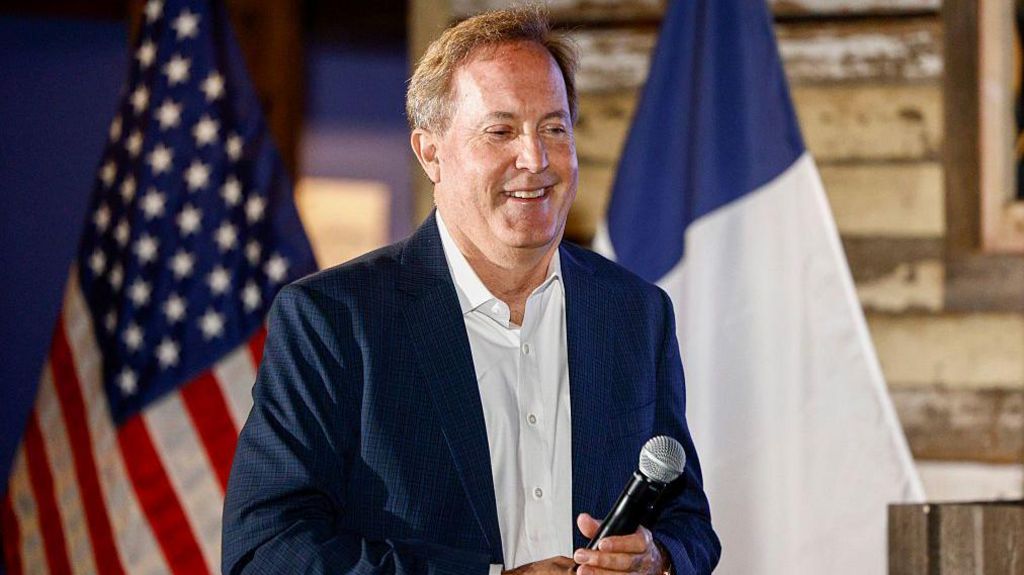
On Tuesday night, Texas Republican primary voters delivered a historic political upset: state Attorney General Ken Paxton ousted four-term incumbent Senator John Cornyn in a high-stakes runoff election that has already reshaped the national battle for control of the U.S. Senate. Though pollsters and political analysts had forecast Paxton’s win for weeks, the defeat of a 23-year congressional veteran who served 12 years in Senate Republican leadership ranks stands as one of the most shocking incumbent losses in modern GOP primary history. The brutal campaign also set a new milestone as the most expensive Senate primary contest in U.S. history.
The results clear the way for a fiercely competitive general election matchup in November, where Paxton will face Democratic state legislator James Talarico. The outcome of this Texas race will play a decisive role in whether Democrats can recapture a majority in the U.S. Senate for the final two years of Donald Trump’s second presidential term. National Democrats have long viewed Paxton as a more vulnerable general election candidate than the broadly popular Cornyn, and they are already framing the contest as a rare opportunity to flip a long-held Republican Senate seat in a deep-red state that has not sent a Democrat to the U.S. Senate since 1994.
Already confident of his primary success heading into Tuesday, 62-year-old Paxton began shifting his focus to the general election more than a week ago, rolling out statewide television attack ads that label Talarico a dangerous left-wing extremist out of step with Texas values. Most pre-runoff polling pointed to a tight general election in November, underscoring the competitiveness of the upcoming contest.
Cornyn’s defeat marks the second time in the 2026 Republican primary cycle that a sitting GOP U.S. senator has been ousted by a challenger backed by Trump. Just 10 days before the Texas runoff, Louisiana incumbent Bill Cassidy failed to even advance to his state’s GOP runoff, finishing behind two Trump-endorsed challengers. It has been 46 years since at least two sitting senators from the same party lost their renomination bids in a single election cycle, a statistic that highlights the ongoing upheaval reshaping the modern Republican Party.
While both incumbents fell to Trump-aligned challengers, the parallels between the two losses end there. Unlike Cassidy, who broke with Trump by voting to convict him during his 2021 second impeachment trial, Cornyn built a long record as a reliable party loyalist who frequently highlighted his close working relationship with the president. Though he was slow to throw his support behind Trump’s 2024 re-election bid, Cornyn consistently voted in line with GOP priorities throughout his Senate tenure.
In the first round of primary voting held back in March, Cornyn finished a narrow lead over Paxton, taking 42.5% of the vote to Paxton’s 40.8%. Neither candidate hit the 50% vote threshold required to avoid a runoff, setting up Tuesday’s decisive contest. Immediately after the March round of voting, political observers widely speculated that Trump was on the cusp of endorsing Cornyn, who was widely respected within national Republican circles for his robust fundraising record and senior leadership experience. That endorsement never materialized, however.
Despite facing years of lingering personal and political scandals, Paxton emerged as the clear favorite of Trump’s populist conservative base in Texas. He structured his entire primary campaign around attacking 74-year-old Cornyn as a creature of the Washington political establishment, arguing the incumbent was too moderate, too out of touch with grassroots Texas conservatives, and too entrenched in the old guard of Capitol Hill politics to represent the state’s changing GOP electorate. Even as Cornyn outspent Paxton by a staggering 9-to-1 margin in the runoff, Paxton’s grassroots support held solid.
Last week, as it became increasingly clear that Paxton was on track for a win, Trump formally endorsed the challenger. On social media, Trump accused Cornyn of “extreme disloyalty,” claiming the senator had failed to fight aggressively enough to advance Trump’s preferred voting reform legislation. Political analysts have framed Paxton’s victory as the latest proof of the enduring power of Trump’s endorsement in GOP primaries: Trump has already notched multiple primary wins this cycle for candidates he backed, including the ousters of Cassidy and a primary defeat for anti-Trump incumbent Representative Thomas Massie in Kentucky.
Yet the timing of Trump’s endorsement in the Texas race tells a more nuanced story: rather than leading his base to pick Paxton, the president followed the clear direction of grassroots Republican voters, who have remained hungry for firebrand populist candidates and deeply skeptical of longtime Washington insiders. While Cassidy’s defeat demonstrated that Trump can still mobilize GOP voters to oust his critics, the Texas runoff reveals that the populist impulses driving the modern Republican base are sometimes larger and more independently driven than even the former president’s influence.