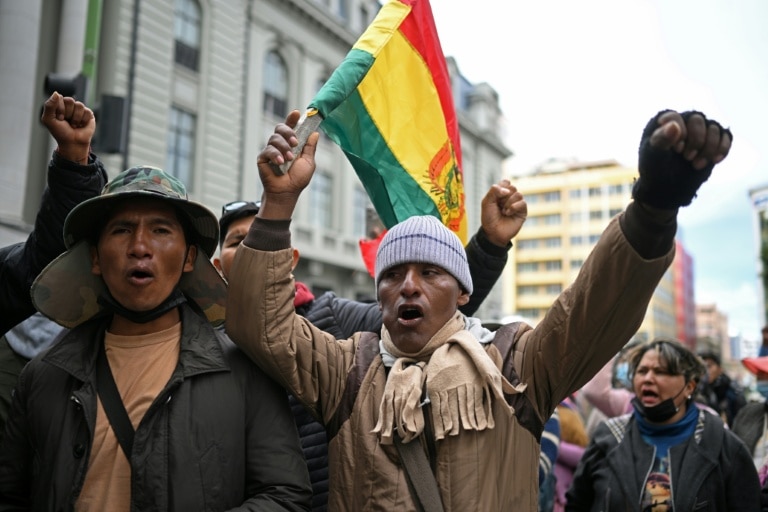
Six months into the center-right presidency of Rodrigo Paz, the Andean nation of Bolivia remains roiled by mass anti-government demonstrations driven by deep public anger over widespread economic hardship. On Tuesday, the country’s lower congressional chamber took the controversial step of approving the repeal of a 2020 regulation designed to limit executive power to impose states of emergency and crack down on street protests, voting by a more than two-thirds majority to clear the way for Paz to deploy military forces across protest hotspots. The regulation, which required congressional pre-approval for any state of emergency and barred presidents from deploying the military for crowd control, was originally drafted by a socialist-led legislature in the wake of 2019’s deadly unrest that killed 36 people and forced longtime socialist leader Evo Morales from office. The repeal passed the Senate in an accelerated vote last week, and moved through the lower chamber in just seven days using an expedited process that bypasses standard legislative procedures. The vote leaves the government free to declare a national state of emergency, restrict core civil liberties including freedom of movement and freedom of assembly, and bring uniformed soldiers into the streets to counter ongoing demonstrations that have paralyzed the capital of La Paz. What began as a series of targeted trade union actions in early May, focused on demands for higher wages, consistent fuel access and more competent economic stewardship, has rapidly expanded into a broad national movement calling for Paz’s immediate resignation. Protesters have blocked all major entry routes to La Paz, forcing most retail businesses to close their doors over fears of escalating violence, and left the capital facing critical shortages of food, medicine and fuel. In recent weeks, Paz has taken a series of small, symbolic steps to defuse public anger ahead of the congressional vote: most notably, he announced Monday a 50% cut to his own presidential salary, which currently stands at roughly 24,000 Bolivian bolivianos (about $3,500) per month. While this salary is among the lowest for any sitting Latin American head of state, 2024 International Labor Organization data shows it is roughly eight times the monthly income of the average Bolivian worker. The move has done little to quiet the growing revolt against Paz’s policies, which the president argues are necessary to pull Bolivia out of its worst economic crisis in decades. Opposition lawmakers and human rights advocates have harshly condemned the congressional vote, warning it sets the stage for widespread human rights abuses and will only escalate tensions rather than resolve the crisis. Opposition legislator Sonia Sinani argued the repeal would do nothing but “pour gasoline on the flames” of already intense public anger, while colleague Alejandro Reyes compared the new expanded executive power to a “strait jacket” on civil society. The Paz administration, for its part, has framed the unrest as a deliberate attempt to overthrow the country’s democratic order, and has accused former president Morales—who is currently in hiding to avoid arrest on trafficking charges he strongly denies—of secretly orchestrating the current wave of protests to seize back power.