分类: politics

  • China faces Trump’s Iran offensive in the Hormuz Strait

    China faces Trump’s Iran offensive in the Hormuz Strait

    Six weeks into the joint U.S.-Israeli military campaign against Iran, a dramatic new escalation by former U.S. President Donald Trump has pushed a long-simmering geopolitical rivalry to the brink of direct superpower conflict. Trump’s recent decision to close the Strait of Hormuz to all commercial ship traffic has left China facing an unprecedented and high-stakes dilemma: comply with the American ban on trade with Tehran, a longstanding strategic partner, or defy the blockade and risk open military confrontation between the world’s two largest nuclear-armed powers.

    Until the blockade was imposed, China had maintained a cautious, distance stance on the ongoing conflict. Beijing publicly criticized the large-scale U.S.-Israeli bombing campaign, noted the Trump administration’s repeated failures to force Iran into submission, and quietly benefited from deeply discounted Iranian crude oil and natural gas shipments that passed unimpeded through the strait to Chinese ports. That quiet balancing act is no longer possible.

    Trump has stated the strait will remain closed to all commercial traffic until every vessel, including those from U.S. Arab allies, is permitted to transit under American terms. For China, maintaining its steady supply of discounted Iranian energy and upholding its decades-long alliance with Tehran now requires directly challenging the U.S. naval blockade.

    Zineb Riboua, a Middle East analyst at the U.S. conservative think tank the Hoover Institute, argues the unfolding crisis is fundamentally rooted in Sino-American competition. Just days after Trump and Israeli Prime Minister Benjamin Netanyahu launched their aerial offensive, Riboua published a report noting that Beijing has invested hundreds of billions of dollars to build Iran into a core strategic asset in the Middle East. “By striking Iran directly, the Trump administration is dismantling – whether by design or by consequence – a pillar of China’s regional architecture,” Riboua wrote.

    The stakes are also personal for the reputations of both Trump and Chinese President Xi Jinping, who have already been engaged in a gradual, low-intensity confrontation that has rolled back Chinese influence in areas Washington considers critical to its national security. A key precedent came when Trump deployed commandos to Caracas, Venezuela, to arrest then-president Nicolas Maduro on drug trafficking charges. Maduro, who sold oil to China in exchange for military hardware, received no direct intervention from Beijing, a choice that made strategic sense for China at the time: Venezuela only supplied 4% of China’s total oil imports, and the Caribbean falls firmly within the U.S.’s traditional sphere of influence, where China lacks the military capability to challenge American actions.

    Iran is an entirely different proposition. For one, Iran meets 15% of China’s annual fossil fuel demand, all at prices well below the global market average. Beyond energy, Beijing has built a deep strategic partnership with Tehran to develop Iran’s vast rare earth mineral reserves – resources that have become one of the most globally sought-after commodities, due to their non-negotiable role in manufacturing advanced semiconductors. These chips power everything from consumer electronics and artificial intelligence systems to core components of modern military hardware, including the guidance systems for U.S. Tomahawk cruise missiles and the avionics and weapons controls for F-35 fighter jets and armed drones.

    China currently controls roughly 90% of the world’s refined rare earth production, and has long sought to expand its grip on upstream mineral reserves. In 2021, Beijing signed a landmark 25-year agreement to invest $400 billion in Iran’s economy, in exchange for guaranteed long-term access to both Iranian oil and rare earth deposits. Online energy publication OilPrice notes that by positioning itself as a rare earth hub for China, Iran has become far more than just a discounted energy supplier to Beijing. “This gives Xi a reason to view the country as more than a ‘sanctioned’ gas station,” the outlet wrote, adding that the U.S. offensive against Tehran poses a direct threat to this Sino-Iranian resource alliance.

    Beyond energy and minerals, Chinese firms have also played a central role in building and modernizing Iran’s domestic telecommunications and digital surveillance infrastructure. During widespread anti-government protests in Iran earlier this year, the Tehran regime used Chinese-supplied tools including facial recognition cameras to identify, detain and crack down on demonstrators, and deployed China’s “Great Firewall” censorship technology to shut down nationwide internet access to hide evidence of its repression. “Iran has not developed its censorship infrastructure in isolation,” the Washington-based Arab Gulf States Institute (AGSI) wrote in a January report. “The regime has received assistance from China, the world’s most experienced practitioner of internet control.” AGSI added that these Chinese-built systems allow governments to track online users, intercept communications, censor content, and isolate populations during periods of civil unrest.

    All of these Chinese strategic gains, as well as recent diplomatic wins in the region, are now at risk from the U.S.-led offensive. Beijing brokered the historic 2023 reconciliation between long-time regional rivals Iran and Saudi Arabia, welcomed Iran into the Shanghai Cooperation Organization, China’s leading regional security bloc, and extended its signature Belt and Road Initiative through Iran to open new trade routes connecting Chinese goods from Central Asia to the Indian Ocean.

    Since the start of the campaign, Beijing has initially taken a diplomatic, rule-based approach to the crisis. “The sovereignty, security, and territorial integrity of Iran and other regional countries must be respected,” China’s UN Ambassador Fu Cong stated. “China stands ready to work with the international community to advance peace efforts and help restore peace and stability in the Middle East at an early date.”

    That diplomatic tone shifted sharply on April 14, the day Trump’s Hormuz blockade took effect. In a defiant public statement, China’s Foreign Ministry made clear it had no intention of backing down: “Chinese ships continue to move in and out of the waters of the Strait of Hormuz. We have trade and energy agreements with Iran, which we will respect and abide by. We expect others not to interfere in our affairs. Iran controls the Strait of Hormuz, and has opened it to us.”

    A direct naval confrontation between two global nuclear superpowers has not occurred since the 1962 Cuban Missile Crisis, when then-U.S. President John F. Kennedy ordered a naval quarantine of Cuba to stop Soviet shipments of nuclear ballistic missiles. War was averted only when Soviet ships turned back, following a secret compromise that saw the U.S. agree to remove its nuclear missiles from NATO member Turkey.

    Now, analysts warn the Hormuz standoff could escalate to open conflict if China follows through on its promise to continue trading with Iran. “Chinese support for a U.S. adversary could directly result in American casualties,” warned Joe Webster, a geopolitical and energy analyst who authors the China-Russia Report blog. “What will be the U.S. response if Chinese military intelligence support for Iran results in the deaths of US airmen or sailors?” It is a question that hangs over the entire Middle East, with global consequences that remain impossible to predict.

  • King will not meet Epstein survivors on US visit

    King will not meet Epstein survivors on US visit

    In late April 2026, King Charles III and Queen Camilla of the United Kingdom will undertake a historic state visit to the United States, a trip crafted to mark the 250th anniversary of American independence. But even weeks before the royal party touches down in Washington D.C., the visit has been tangled in two overlapping sources of friction: growing public calls for a meeting with survivors of convicted sex offender Jeffrey Epstein, and unusually strained political relations between the UK and US governments.

  • Italy suspends defence agreement with Israel

    Italy suspends defence agreement with Israel

    In a significant shift that underscores growing rifts in Italy’s longstanding alignment with Israel and changing political tides ahead of next year’s national election, Italian Prime Minister Giorgia Meloni has announced her government will not renew the bilateral five-year defense cooperation agreement between Rome and Tel Aviv. The decision was framed as a response to “the current situation” in the region, though no further specific details were provided by the prime minister’s office.

    While Italy and Israel have maintained historically solid diplomatic and security ties, relations have deteriorated sharply in recent weeks amid a series of escalating diplomatic spats. Last week, Italian officials summoned Israel’s ambassador to Rome after Israeli forces fired warning shots at a convoy carrying Italian UN peacekeepers deployed in southern Lebanon. The incident left one Italian vehicle damaged, though no peacekeepers were injured. Just days later, Israel reciprocated by calling in Italy’s top diplomat to protest harsh comments from Italian Foreign Minister Antonio Tajani, who publicly condemned what he called Israel’s “unacceptable attacks” on Lebanese civilians.

    According to data compiled by the Stockholm International Peace Research Institute (SIPRI), Italy ranks as the third-largest supplier of arms to Israel, though Italian exports accounted for just 1.3% of all Israeli arms imports between 2021 and 2025. The United States and Germany hold the top two positions as Israel’s leading arms providers. Meloni’s announcement puts Italy in line with a growing bloc of European nations that have already paused or restricted arms exports to Israel since the launch of Israel’s large-scale military offensive in Gaza, which began after the October 7, 2023 Hamas attack that killed roughly 1,200 people in southern Israel and took 251 hostages into Gaza. As of the latest update from Gaza’s Hamas-run Ministry of Health, more than 72,330 Palestinians have been killed in Israeli military operations across the territory, including 757 fatalities recorded since a fragile ceasefire took effect in October 2025.

    Domestically, the decision to end the defense pact renewal comes after months of mounting public pressure on Meloni’s administration. Hundreds of thousands of Italian citizens have participated in mass street protests and general strikes across the country demanding an end to arms sales and security cooperation with Israel, a call that has gained growing traction among voters. Until recently, Meloni’s right-wing coalition government had stood as one of Israel’s firmest allies in Europe, refusing to join the expanding group of nations that have formally recognized Palestinian statehood.

    However, a key turning point came in late March, when Meloni’s coalition lost a high-profile national referendum on judicial constitutional reform. Political analysts widely framed the result as a de facto vote of no confidence in the government’s overall popularity, particularly its unpopular alignment with Israel and the current U.S. administration under President Donald Trump. With just 18 months remaining before Italy holds its next general election, Meloni has begun systematically adjusting her policy rhetoric to distance herself from these increasingly unpopular political associations.

    In recent weeks, the rift between the Italian prime minister and the U.S. president has widened publicly. After the referendum defeat, Meloni described ongoing military escalations between the U.S.-Israel alliance and Iran as part of a dangerous pattern of international intervention that operates “outside the scope of international law”. Earlier this week, she issued a rare public rebuke of Trump, calling his recent disparaging remarks about Pope Leo XIV “unacceptable” and confirming the pontiff had her full solidarity.

    The comment drew an immediate and harsh response from Trump, who told leading Italian daily *Corriere della Sera* that he was “shocked at her” conduct. “I thought she had courage, but I was wrong,” Trump said, adding that Meloni “does not care whether Iran has a nuclear weapon and would blow Italy up in two minutes if it had the chance.”

    For months, Trump’s public support for Meloni was seen as a key political asset for the prime minister, with her supporters framing it as a unique opportunity for Italy to gain privileged influence in Washington as a leading interlocutor for the European Union. But as Trump’s approval rating has plummeted among Italian voters — a January public opinion survey found 63% of Italian electorate holds a negative view of the U.S. under his leadership — that close association has become a significant political liability. Meloni’s decision to distance herself from both Trump and Israel is widely interpreted as a calculated move to rebuild support among centrist and left-leaning voters ahead of the 2027 election.

    In the days following the public exchange between Meloni and Trump, senior members of her government have rushed to defend the prime minister’s position while reaffirming the core of the Italy-U.S. alliance. “Italy’s alliance with the U.S. is built on mutual loyalty, respect, and honesty,” Foreign Minister Tajani wrote on social media platform X. “On Pope Leo XIV she said exactly what all of us Italians think. The prime minister and the government defend and will always defend only and solely the interests of Italy.” Defense Minister Guido Crosetto echoed that framing, noting: “Being allies does not mean accepting everything in silence, but having the courage to clearly state what one believes to be right.”

    Italian defense ministry officials told the BBC that they are still assessing what concrete legal and operational changes the decision to scrap the defense pact renewal will bring to existing security cooperation frameworks between Italy and Israel.

  • ‘I can feel the difference’ – Americans react to soaring gas prices

    ‘I can feel the difference’ – Americans react to soaring gas prices

    Across the United States, ordinary drivers are already grappling with the tangible impact of skyrocketing gasoline prices, with many reporting they can already sense the heavy financial strain hitting their monthly budgets. As fuel costs continue to climb at pumps nationwide, the issue has moved rapidly to the forefront of national economic and political conversation.

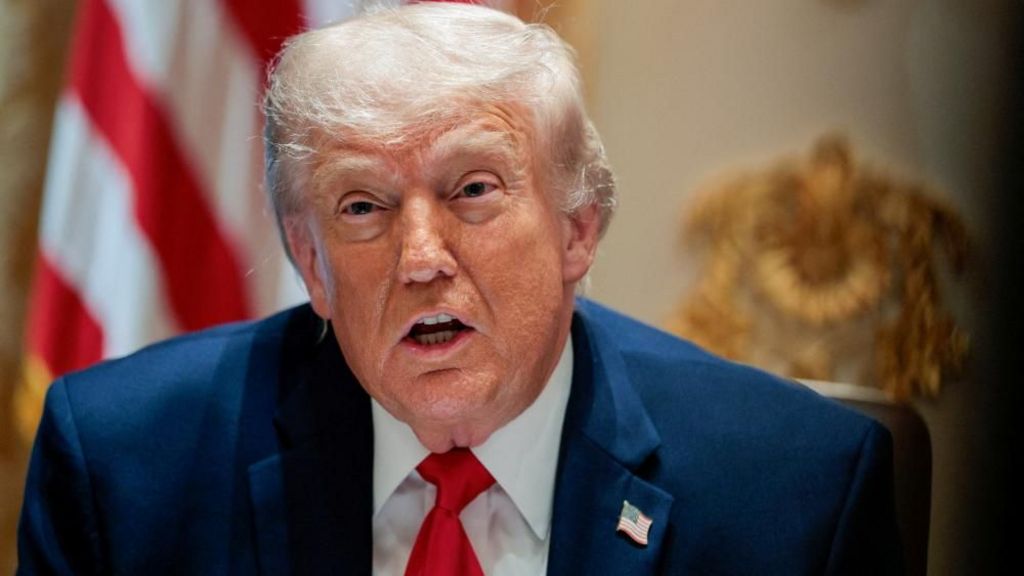
    Over the recent weekend, former President Donald Trump offered a sobering forecast for the months ahead. Speaking on the trajectory of oil and gasoline prices, Trump stated that current costs are likely to remain at their elevated levels, or could even climb higher in the coming months.

    The prediction has amplified concerns among American households, which already face broader inflationary pressures across food, housing, and other essential goods. For millions of commuters who rely on personal vehicles to get to work, school, and daily errands, rising gas prices directly cut into disposable income, forcing many to adjust spending habits by cutting back on leisure activities, delaying major purchases, or carpooling to cut down on fuel use.

    As the issue continues to develop, energy market analysts are closely watching global oil supply dynamics and domestic policy decisions that could shape future price movements, while American consumers wait to see whether Trump’s forecast will prove accurate.

  • Former defense firm executive sentenced to 13 years for bribery

    Former defense firm executive sentenced to 13 years for bribery

    In a recent ruling issued on Tuesday, the Nanyang Intermediate People’s Court in Henan Province has sentenced Liu Weidong, former deputy general manager of state-owned defense contractor China South Industries Group Corp, to 13 years in federal prison and ordered a 4 million yuan ($586,800) fine over convictions of bribery. Alongside the custodial sentence and monetary penalty, the court also ruled that all of Liu’s illegal gains and related illicit assets must be fully confiscated and transferred to the national state treasury.

    Court investigators established that over a 26-year period spanning from 1999 to 2025, Liu exploited his senior executive positions at two major state-owned enterprises — including his roles as deputy general manager of Dongfeng Motor Corp and deputy general manager of China South Industries Group Corp — to secure improper advantages for connected business entities and individual applicants on matters ranging from corporate business operations to internal personnel promotions. In exchange for these favors, Liu accepted direct bribes totaling more than 41.39 million yuan, according to official court documents.

    The court confirmed that Liu’s actions clearly meet the statutory criteria for the crime of bribery, noting that the scale of illicit funds involved qualified as “extremely large”, which would typically warrant severe punitive measures. However, justices opted to apply a lenient sentencing adjustment after accounting for multiple mitigating circumstances: Liu fully confessed to all known charges, voluntarily disclosed additional bribery details that had not been uncovered by investigating authorities prior to his statement, and cooperated fully with the prosecution by turning over all illegal proceeds proactively.

    A review of public career records shows the 59-year-old, a native of Hubei Province, launched his professional career in the automotive sector after graduating from the Wuhan University of Technology in his home region. He spent decades rising through the ranks at Dongfeng Motor Corp, Hubei’s state-owned automotive manufacturing giant, and earned a promotion to deputy general manager of the firm in 2001.

    In May 2018, Liu transferred to China South Industries Group Corp, one of China’s leading national defense contracting conglomerates and a major player in the domestic automotive industry, to serve as its deputy general manager. The first crack in his decades-long career came in February 2025, when he was formally placed under investigation for suspected severe violations of Communist Party of China discipline and national law. By July 2025, he had been expelled from the Communist Party of China and removed from all public office positions. Prosecutors formally filed bribery charges against him that November, and the Nanyang Intermediate People’s Court held a public open hearing on the case at the start of 2026, leading to this week’s final sentencing ruling.

  • Italy suspends defence cooperation deal with Israel

    Italy suspends defence cooperation deal with Israel

    On a Tuesday appearance at a Verona wine industry fair, Italian Prime Minister Giorgia Meloni confirmed a sweeping policy shift: Rome has moved to suspend the automatic five-year renewal of its bilateral defence cooperation framework with Israel, a decision that marks a notable break from the Italian right-wing government’s previously close alignment with Tel Aviv.

    The agreement in question, which first entered into force in April 2016, is structured to auto-renew every five years unless one party intervenes to halt the process. It covers a broad range of military collaboration, including cross-border exchanges of military equipment, joint training programs, and cooperative research and development initiatives for defence technology. According to leading Italian national news agency Ansa, Italian Defence Minister Guido Crosetto has already formalized the suspension in an official letter sent to his Israeli counterpart, Israel Katz.

    A source familiar with the internal deliberations confirmed to Reuters that the decision was finalized during a high-level meeting on Monday, which included Meloni, Foreign Minister Antonio Tajani, Defence Minister Crosetto, and Deputy Prime Minister Matteo Salvini. The policy change comes amid a rapidly escalating series of diplomatic spats between the two nations, triggered by recent Israeli military actions targeting positions in Lebanon that have directly impacted Italian interests.

    Just one week prior, the Italian government officially condemned an incident where Israeli forces opened fire on a convoy transporting Italian UN peacekeepers deployed in southern Lebanon. While no peacekeepers were injured in the strike, one Italian military vehicle was significantly damaged, prompting Rome to summon Israel’s top diplomat in Rome to register a formal protest.

    The escalation continued this week, with Foreign Minister Tajani undertaking an official visit to Beirut on Monday, where he publicly delivered a sharp rebuke of Israeli military operations in Lebanon. “Lebanon is a brother country that we hold in our hearts. That is why today I came to Beirut to convey to President Aoun Italy’s solidarity following the unacceptable attacks by Israel against the civilian population,” Tajani stated during his trip. “The Government will do everything possible to achieve peace and put an end to the suffering of the Lebanese people. We must avoid at all costs another escalation like the one in Gaza.”

    In response to Tajani’s public comments, Israeli officials summoned Italy’s ambassador to Tel Aviv in a reciprocal act of diplomatic protest, further deepening the rift between the two longtime partners. Until recent weeks, Meloni’s right-wing administration had positioned itself as one of Israel’s staunchest allies within the European Union, making this suspension of core defence cooperation one of the most significant public breaks from that alignment to date.

  • New Mossad chief backs Gaza occupation and once ‘used’ a teenager in operation

    New Mossad chief backs Gaza occupation and once ‘used’ a teenager in operation

    Israel’s advisory committee for senior public appointments has given the green light to Roman Gofman, a close ally of Prime Minister Benjamin Netanyahu, to take the helm of the country’s iconic intelligence agency Mossad, capping a rapid military rise that has been overshadowed by bitter controversy over his past conduct, hardline political views, and allegations of power abuse. Gofman, 49, will assume a five-year term starting in June, succeeding outgoing director David Barnea, who has publicly opposed his appointment.

    Born in the Soviet Union’s Belarus, Gofman immigrated to Israel with his family in 1990 at age 14. Five years after arriving, he enlisted in the Israel Defense Forces’ armored corps, climbing steadily through the ranks to earn a promotion to major general in early 2024. His career has spanned combat deployments across southern Lebanon, the occupied West Bank, and the Gaza Strip, and he has long been associated with far-right ideological circles: as a young pre-military trainee, he studied at the Bnei David yeshiva in Eli, an illegal Israeli settlement in the occupied West Bank, an institution notorious for promoting extremist Jewish supremacist views. Gofman himself has publicly credited the yeshiva with shaping his core ideological beliefs about Israel.

    Gofman’s most high-profile military experience came during the October 7, 2023, Hamas-led attack on southern Israel, when he was wounded in a firefight with Palestinian fighters near his home in Ashdod. Surveillance footage captured him exchanging fire before sustaining a leg injury and pulling back, but he returned to duty shortly after recovering. Reflecting on the surprise attack, he argued that even the most formidable military forces face unexpected breaches, and that proactive initiative is the only way to prevent future surprises.

    As the Israeli military campaign in Gaza unfolded after October 7, Gofman emerged as one of the most outspoken hardliners in Israeli security circles. He drafted an official plan calling for the full reoccupation of the entire Gaza Strip, and has argued that Israel should maintain permanent control over the enclave at the end of the current conflict. He has previously criticized the Israeli military for what he frames as excessive caution in deploying ground forces across multiple fronts, from Gaza to Lebanon to Syria, and has publicly praised Orde Wingate, a British Mandate-era officer famous for developing brutal counterinsurgency tactics against Palestinian groups alongside early Zionist militias, framing decisive, reality-altering military action as the core of Israeli strategy. In a 2019 academic proposal, he even controversially suggested that Israel should sell nuclear warheads to Egypt, Saudi Arabia and Turkey to counter Iran’s nuclear program, a view far outside mainstream Israeli security policy.

    Netanyahu tapped Gofman to serve as his personal military secretary in April 2024, marking his entry into the prime minister’s inner circle. But his nomination to lead Mossad has sparked fierce opposition from across Israel’s political and security establishment, centered on two core sets of concerns: his lack of prior intelligence experience, and multiple allegations of professional and ethical misconduct during his military career.

    The most explosive controversy surrounds a 2022 intelligence operation, when Gofman commanded the 210th Bashan Regional Division on the Golan Heights. According to investigative reports, Gofman instructed military intelligence personnel to provide 17-year-old Israeli civilian Ori Elmakayes with classified information to publish on social media as part of a covert influence campaign targeting Iran, Hezbollah, and Hamas. After Elmakayes published the material, Israeli police arrested him on charges of leaking state secrets, and he spent 18 months in pre-trial detention.

    Gofman initially denied to military investigators that he knew of Elmakayes’ involvement, but the case against the teenager collapsed when evidence confirmed he had been acting on direct military orders approved by Gofman. Gofman has since denied authorizing the release of truly sensitive material and claims he did not know Elmakayes was a minor. Elmakayes, however, has slammed Gofman for throwing him aside to protect his own career.

    “Roman Gofman used me illegally and immediately afterwards disowned me, abandoned me and did not put an end to the ongoing nightmare I went through,” Elmakayes wrote on the social platform X following Sunday’s approval vote. “Someone who abandoned a 17-year-old boy will also abandon Mossad agents.”

    Committee chair Asher Grunis, a former president of Israel’s Supreme Court, was the most prominent official to oppose Gofman’s approval, issuing a scathing rebuke of his conduct in the Elmakayes case. “The use of a minor Israeli civilian constitutes an extremely serious flaw and raises a moral-ethical concern. It amounts to a breach of integrity,” Grunis argued, though he was outvoted by the committee’s three other pro-appointment members. Outgoing Mossad chief Barnea has also joined the opposition, labeling Gofman’s actions in the case as an abuse of power.

    Additional allegations of misconduct date back to Gofman’s tenure as a West Bank regional commander between 2015 and 2017, when he reportedly ordered the recruitment of Palestinian informants near Beit Ummar without following mandatory legal authorization processes; his directive was later overturned by military leadership.

    Beyond the personal misconduct claims, many current and former Israeli security and political figures argue Gofman’s appointment is part of a deliberate effort by Netanyahu to politicize Israel’s independent intelligence and security establishment by installing loyalists to top posts. Gofman has become a trusted confidant of Netanyahu over the past two years of repeated Israeli military campaigns across the region, and Israeli media reports confirm the prime minister has full confidence in him, even assigning him sensitive behind-the-scenes diplomatic missions, including unannounced visits to Russia to maintain ties with President Vladimir Putin. He also played a central role in secret Israeli-Syrian talks in January 2025.

    “Prime Minister Benjamin Netanyahu’s decision to appoint his military secretary, Major General Roman Gofman, as head of the Mossad is a continuation of his politicization and takeover of the intelligence community and the security establishment,” veteran military commentator Yossi Melman warned in December, noting that the appointment would mark another key institution brought under Netanyahu’s direct political control. Former Israeli army chief and opposition MP Gadi Eisenkot has echoed these criticisms, arguing top security posts are now being handed out as rewards for loyalty to the prime minister’s political agenda, rather than on the basis of professional merit. Former senior Mossad official Rami Eigra called the nomination politically motivated, warning it will likely erode the agency’s operational effectiveness and increase the risk of major failures.

    The battle over Gofman’s appointment is far from over. Elmakayes and multiple Israeli human rights and pro-democracy NGOs are preparing to petition the Supreme Court to block the nomination, according to reports from Haaretz. Some Israeli defense establishment insiders told Ma’ariv they believe the court could strike down the appointment, which would force Netanyahu to ask Barnea to extend his term for several weeks or months while a new candidate is selected.

  • Slovaks rally against populist Prime Minister Fico’s plan to scrap mail voting from abroad

    Slovaks rally against populist Prime Minister Fico’s plan to scrap mail voting from abroad

    Tens of thousands of demonstrators gathered across Slovakia — and in major European cities outside the country — on Tuesday to push back against a contentious electoral proposal from populist Prime Minister Robert Fico that would eliminate postal voting for Slovak citizens residing abroad. The largest demonstration, held directly outside Slovakia’s parliament building in the capital Bratislava, opened with a warm round of applause for the shocking outcome of neighboring Hungary’s weekend general election, where long-time authoritarian populist Viktor Orbán was ousted from power by a pro-European opposition candidate.

    Fico, who returned to the office of prime minister in 2023 following parliamentary elections, has emerged as a deeply polarizing figure both within Slovakia and across the European Union. His consistently pro-Russia policy stances and perceived authoritarian power grabs have already sparked waves of mass public demonstrations since his administration took office. Critics have repeatedly drawn parallels between Fico’s governing style and Orbán’s 12-year illiberal rule in Hungary, noting that Fico has openly drawn inspiration from Orbán’s approach to politics. Tuesday’s protests mark just the latest in a months-long string of public outcry against the Fico administration’s policy agenda.

    The protest initiative was organized by a coalition of four opposition political groups: the Progressive Slovakia party, Freedom and Solidarity, the Christian Democrats, and the Democrats. Speaking to the assembled crowd in Bratislava, Progressive Slovakia leader Michal Šimečka framed the fight over overseas voting as an existential battle for Slovak democracy, echoing the stakes Hungarians faced just days earlier.

    Šimečka argued that Fico’s proposed legislation would effectively disenfranchise tens of thousands of Slovak citizens who have settled outside the country’s borders. Under the new plan, the only option for overseas voters would be to cast ballots in person at Slovak embassies and consulates — a requirement that creates major logistical barriers for many citizens living far from diplomatic outposts. As he spoke, the crowd chanted repeatedly: “Shame, shame.”

    “It is obvious the government is pushing this change because they are afraid,” Šimečka told demonstrators. “They are afraid of the people, they are afraid of free elections, they are afraid of losing power.” The draft legislation is scheduled to go under formal debate during the current sitting of the Slovak parliament, leaving the window open for urgent political pushback from opposition lawmakers.

    Data from the 2023 Slovak parliamentary election underscores why Fico’s party has targeted overseas postal voting. In that election, nearly 59,000 Slovaks living abroad cast mail-in ballots. Fico’s Smer (Direction) party captured just 6.1 percent of that overseas vote, while the unified opposition won more than 80 percent of support from citizens voting from outside the country. Fico has defended the policy change by claiming it is necessary to “prevent electoral fraud and manipulations,” a framing opposition leaders dismiss as a baseless pretext to suppress anti-government votes.

    Beyond the capital Bratislava, demonstrations were also held in major Slovak cities including Košice and Banská Bystrica. Solidarity rallies were also organized by Slovak expats outside the country, including in the EU capital Brussels and Prague, the capital of neighboring Czech Republic. Slovakia, a Central European nation with a total population of 5.4 million, is not scheduled to hold its next general election until 2027 — but the fight over electoral rules has already reignited a tense political standoff between Fico’s populist government and pro-Western, pro-European opposition forces.

  • Smotrich refers to Nazis as he brands Germany ‘hypocrites’ over Israeli settler criticism

    Smotrich refers to Nazis as he brands Germany ‘hypocrites’ over Israeli settler criticism

    A sharp diplomatic clash has erupted between a senior far-right Israeli cabinet minister and Germany’s chancellor ahead of Israel’s annual Holocaust Remembrance Day, centered on escalating Israeli settler activity and violence in the occupied West Bank. Israeli Minister Bezalel Smotrich, a prominent advocate for full Israeli annexation of the West Bank, launched a blistering attack on German Chancellor Friedrich Merz after Merz publicly raised concerns about rampant settler attacks and stated he had made clear to Israeli Prime Minister Benjamin Netanyahu in a recent phone call that any de facto annexation of the West Bank is unacceptable.

    Writing on the social platform X on April 13, 2026, just ahead of Holocaust Remembrance Day, Smotrich weaponized the memory of the Nazi Holocaust that killed six million European Jews to accuse Merz and Germany of rank hypocrisy. Instead of lecturing Israel on moral conduct, Smotrich argued, the German chancellor should “bow his head and apologise a thousand times on behalf of Germany” for the atrocities of the Holocaust. He doubled down on his criticism of European leadership, claiming “the days when Germans dictated to Jews where they were permitted or forbidden to live are over and shall not return. You will not force us into ghettos again, certainly not in our own land.” Smotrich, who has previously labeled Palestinians “the Nazis of our generation,” added that Israel’s presence in its historical and biblical homeland is a rebuke to all who have sought to destroy the Jewish people, and “we do not apologise for it for a single moment.”

    Merz’s comments reflected growing international alarm over the unprecedented acceleration of Israeli settlement expansion in the West Bank, a trend that has sharpened dramatically since the outbreak of the Israel-Gaza war in 2023. Data from the Israeli anti-settlement advocacy group Peace Now shows that the Israeli government approved 54 new and existing settlements in 2025 — a staggering all-time high that shattered the previous record of nine approvals set just one year earlier. Of these 54 expansions, 26 were retroactively legalized outposts that had originally been built without official government authorization. The group also recorded a 40% surge in new unauthorised outposts, reaching 86 in 2025, which works out to an average of one to two new outposts established every week across the territory.

    United Nations data further underscores the human cost of rising settler activity. A UN report released in mid-March 2026 documented that between November 2024 and October 2025 alone, more than 36,000 Palestinians were displaced from their homes in the West Bank amid consistent and escalating settler attacks. Over that same 12-month period, researchers recorded 1,732 separate incidents of settler violence that resulted in casualties or property damage — a 25% increase compared to the previous year.

    Smotrich has long been one of the most outspoken and hardline supporters of full Israeli annexation of the West Bank, and has publicly pushed for policies that would encourage Palestinians to leave the territory. In a February 2026 address to his Religious Zionism party and West Bank settlement leaders, Smotrich called for the full cancellation of the 1993 Oslo Accords, the framework that established the Palestinian Authority to govern Palestinian populated areas of the West Bank and Gaza. “Destroy the idea of an Arab terror state; finally, formally and practically cancel the cursed Oslo Accords and get on the path of sovereignty, while encouraging migration both from Gaza and from Judea and Samaria,” he stated, using the Israeli nationalist term for the West Bank. “There is no other long-term solution.”

  • Irish government wins confidence vote over fuel protests

    Irish government wins confidence vote over fuel protests

    DUBLIN — Ireland’s sitting government has emerged with a narrow win in a critical confidence vote, but the political fallout from last week’s widespread fuel price protests has left the administration significantly weakened, with two ruling coalition lawmakers abandoning the government mid-vote. The crisis unfolded after widespread public demonstrations over soaring fuel costs led to disruptive blockades at national fuel depots, critical motorway routes, and key infrastructure across Ireland, grinding cross-country travel to a halt and sparking intense public anger at the ruling coalition’s response.

    The largest opposition party, Sinn Féin, tabled a no-confidence motion on Tuesday targeting the government over its handling of the protests. In a procedural move common in Irish parliamentary politics, the government introduced its own pro-confidence motion to override the opposition’s challenge, setting the stage for hours of fiery debate inside the Dáil, Ireland’s national parliament.

    When the final vote was counted, the government secured a 92-78 majority. The victory was overshadowed, however, by a high-profile rebellion from the Healy-Rae brothers, two TDs (Irish members of parliament) who had previously backed the coalition as part of a post-election confidence and supply agreement. The breakaway cost the government one junior cabinet minister: Kerry TD Michael Healy-Rae resigned his post in the Department of Agriculture immediately after voting against the administration.

    Speaking to reporters outside the Dáil following his resignation, Healy-Rae condemned Taoiseach Micheál Martin’s debate speech as condescending, arguing the ruling government had fundamentally lost touch with Irish voters. “I could not be true to the people of Kerry and stand behind this government,” he said, raising his fist in solidarity with protesters gathered outside the parliamentary chamber during the vote.

    The debate itself was marked by bitter partisan clashes, with government and opposition lawmakers trading sharp criticism over the government’s response to the fuel crisis. Addressing the chamber, Taoiseach Martin defended his administration’s track record, noting that since 2022, targeted government measures have shielded Irish consumers from the worst impacts of global fuel price hikes. He pushed back hard against Sinn Féin’s claim that the Irish state is the “biggest profiteer” from elevated fuel costs, calling the assertion “flat out untrue.”

    “Right now, the government is spending far more on support for household fuel costs than it is collecting in additional fuel taxes,” Martin said. He also condemned last week’s blockades as inherently destructive, rejecting protesters’ claims to speak for the Irish public. “Nobody has the right to appoint themselves as the voice of the people,” he stated, adding that he condemned threats against gardaí, lorry drivers, and elected officials, warning that “we should all be concerned with the attempts to import extreme ideologies here.”

    Deputy Prime Minister Tánaiste Simon Harris doubled down on the government’s defense, noting that Ireland’s response to global economic shocks has outpaced action from other regional administrations, including the devolved government in Northern Ireland. “We entered 2026 with strong relative economic fundamentals, and while growth will be slower than previously projected, the Irish economy is still on track to expand this year,” Harris said, echoing Martin’s rejection of blockades as an illegitimate protest tactic. “Nobody in this Republic gets the right to restrict the movement of anybody else,” he added, as Sinn Féin lawmakers heckled from the opposition benches.

    For the opposition, Sinn Féin leader Mary Lou McDonald used the debate to call for an immediate general election, arguing the current government had lost all mandate to rule. “It is your time to go,” McDonald told the coalition. “This crisis did not start last week. The seeds were sown in your Budget last October.” She criticized the government for allowing the Dáil to adjourn for a 20-day Easter recess as fuel prices climbed, arguing Martin was “completely out of touch” with the struggles of ordinary households. “People everywhere are calling for real action and real leadership, and this government has failed to deliver,” she said.

    Sinn Féin’s finance spokesperson Pearse Doherty further expanded on the opposition’s criticism, arguing the government had shown “no real leadership” on the growing cost of fuel. “When struggling people took to the streets to protest last week, this government’s instinct was not to listen — it was to threaten them,” Doherty said. Even with the confidence vote win, the rebellion of two sitting coalition lawmakers and the sustained public anger over fuel costs leave Martin’s administration facing a deeply uncertain political future heading into the next general election cycle.