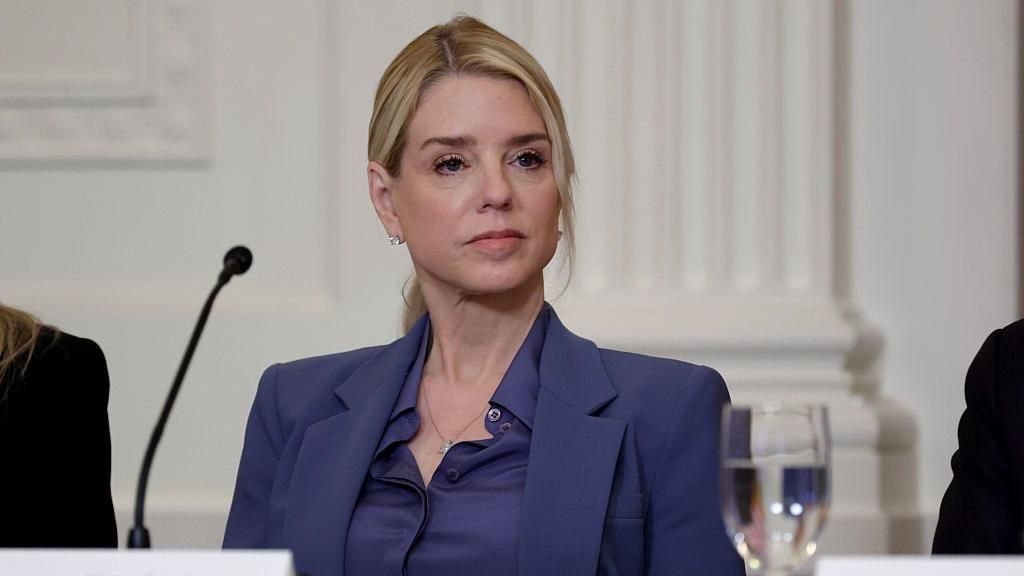
A high-stakes congressional inquiry into the handling of records linked to convicted sex offender Jeffrey Epstein gained traction on Wednesday, as former U.S. Attorney General Pam Bondi appeared before the House Oversight Committee to answer questions about the Justice Department’s release of the long-sought Epstein files.
Bondi, who was removed from her post as the nation’s top law enforcement official by former President Donald Trump in early April, was compelled to testify under a subpoena issued by the committee in March, just one week before Trump announced her ouster from the role. The closed-door session in Washington D.C. has sparked partisan friction already, with Democrats rejecting the decision to keep the deposition off-camera, while committee Republicans have pledged to leave no stone unturned in uncovering all unreleased records.
In her prepared opening remarks to the panel, Bondi pushed back against months of bipartisan criticism of the Justice Department’s document release, defending her leadership’s work on the transparency effort. “We demonstrated an unprecedented commitment to transparency in the Department’s search for, collection, and review of the Epstein files, producing nearly 3 million pages of material, including thousands of videos and hundreds of thousands of images,” she stated.
Committee Chairman James Comer, a Kentucky Republican, opened the inquiry to probe allegations of mismanagement of the Epstein investigation and evaluate the Justice Department’s compliance with the Epstein Files Transparency Act — a bill mandating public release of all unclassified Epstein records that Trump signed into law during his second term. Ahead of Bondi’s testimony, Comer told reporters that multiple consecutive administrations had failed the survivors of Epstein’s abuse, and that Bondi would face sharp questions about why additional records have not been made public. “We’re going to try to determine whether or not there could be more documents legally turned over,” Comer said. “I want every document. I don’t want anything held back and I think the majority of the committee feels the same way.”
The committee’s top Democratic leader, Representative Robert Garcia of California, voiced frustration over the choice to hold the deposition behind closed doors without a public videotaped record. Garcia said his caucus was “incredibly disappointed” by the decision to block immediate public access to the testimony, a move that has fueled skepticism about the transparency of the inquiry itself.
Bondi’s subpoena was first initiated in late winter after Republican Representative Nancy Mace of South Carolina publicly accused the Justice Department of orchestrating a cover-up in the Epstein file release, introducing a resolution to compel Bondi’s appearance. This is not Bondi’s first brush with Epstein-related controversy: long before her tenure as U.S. Attorney General, she served as Florida’s top prosecutor during Epstein’s 2008 plea deal, and later joined Trump’s 2020 impeachment defense team.
The Trump administration and Bondi have endured sustained bipartisan pressure over their handling of the Epstein files, including widespread criticism of missteps that exposed the names of Epstein’s survivors to public view. Epstein, a wealthy financier convicted of sex trafficking offenses, died by suicide in a New York federal prison in 2019 while awaiting a new criminal trial, leaving a trove of unanswered questions about his high-profile connections.
Controversy around Bondi’s handling of the files flared most recently in 2025: during a February 2025 interview on Fox News, she claimed a list of Epstein’s high-profile associates was “sitting on my desk right now,” only for the Justice Department to walk back the claim that July. Officials clarified at the time that no formal “client list” existed, and Bondi had misspoke when referencing the full case file sitting on her office desk.
Beyond the Epstein controversy, Bondi’s tenure as Attorney General was marred by accusations from congressional Democrats that she weaponized the Justice Department at Trump’s direction, after the former president publicly called on her to launch aggressive investigations into his political opponents. She was replaced on an interim basis by Todd Blanche, Trump’s long-time personal defense lawyer.
In a development announced earlier this week, the 60-year-old former AG revealed she has recently been diagnosed with thyroid cancer, and is currently undergoing active treatment that included surgery several weeks ago, she told CBS News, the U.S. media partner of the BBC.
Following her departure from the Department of Justice, Bondi announced she planned to move into the private sector, but new details emerged this week confirming she has been appointed to the White House’s advisory group for artificial intelligence policy, the Presidential Council of Advisors on Science and Technology (PCAST). This appointment marks the first public confirmation of Bondi’s post-DOJ role in the Trump administration.