分类: politics

  • US justice department seeks to throw out Capitol riot convictions

    US justice department seeks to throw out Capitol riot convictions

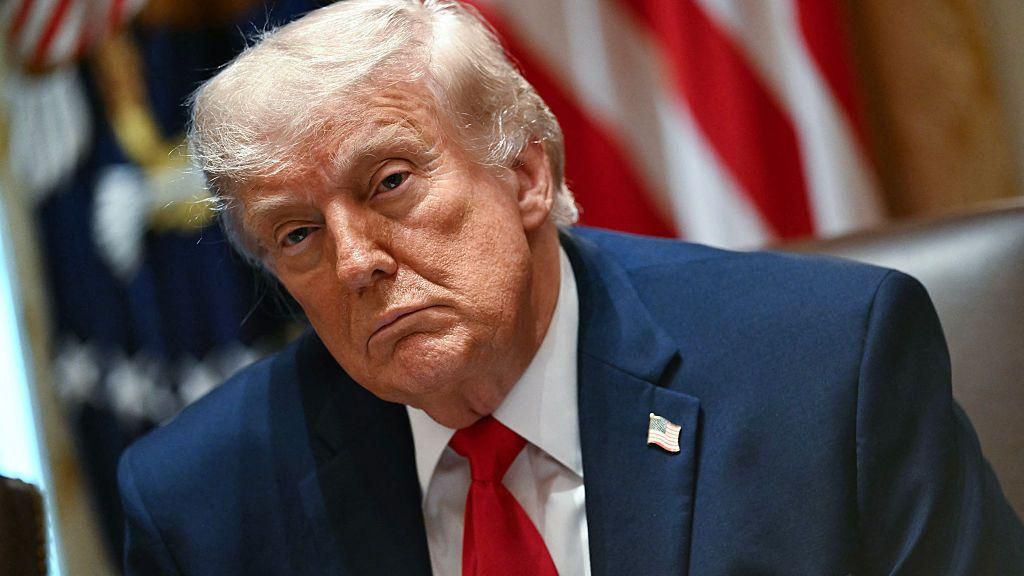
    In a major legal shift aligned with former President Donald Trump’s 2024 campaign pledges, the U.S. Department of Justice has formally requested a federal appeals court to dismiss the seditious conspiracy convictions of 12 individuals connected to the January 6, 2021, U.S. Capitol riot.

    When Trump took office for his second term, he moved quickly to grant clemency to hundreds of people charged or convicted over their roles in the insurrection, issuing full pardons or sentence commutations to more than 1,500 individuals on his first day in office. Though Trump issued over 1,000 full pardons to January 6 rioters, he opted only to commute the sentences of the 12 rioters—most of whom are affiliated with the far-right militia groups the Oath Keepers and Proud Boys. This commutation allowed the defendants to secure early release from prison, but left their felony convictions intact on their official criminal records.

    In a court filing submitted to the U.S. Court of Appeals for the District of Columbia Circuit on Tuesday, the U.S. Attorney’s Office for the District of Columbia stated that “The United States has determined in its prosecutorial discretion that dismissal of this criminal case is in the interests of justice.”

    Among the 12 individuals seeking full expungement of their convictions is Stewart Rhodes, the founder of the Oath Keepers militia. A former U.S. Army paratrooper and Yale-trained lawyer, Rhodes led a contingent of Oath Keepers members to Washington, D.C., on the day of the riot, where the group plotted to disrupt Congress’s formal certification of Joe Biden’s 2020 presidential election victory over Trump. Prosecutors proved during Rhodes’ 2023 trial that the group stored weapons in a Virginia hotel room across the Potomac River, and that while Rhodes never entered the Capitol building himself, he directed his followers’ actions from outside the building during the melee. He was originally sentenced to 18 years in federal prison after a jury found him guilty of seditious conspiracy, the charge of attempting to overthrow the lawful U.S. government. The D.C. Circuit has set an April 17 deadline for all parties to submit formal filings in the expungement cases. If the court grants the DOJ’s request to throw out the convictions, it will eliminate the need for the Trump administration’s DOJ to defend the original convictions in ongoing expungement proceedings.

    Notably, former Proud Boys national chairman Enrique “Henry” Tarrio, who was also convicted of seditious conspiracy over his role in organizing the riot and was originally sentenced to 22 years in prison, received a full pardon from Trump rather than a commutation, so he is not included in this latest request.

    A successful ruling dismissing the convictions would mark a key symbolic victory for Trump, who centered a major campaign promise on supporting and pardoning rioters who participated in the insurrection aimed at overturning his 2020 election loss.

  • Trump’s McDonald’s stunt with DoorDash grandma sparks backlash over US healthcare costs

    Trump’s McDonald’s stunt with DoorDash grandma sparks backlash over US healthcare costs

    What was meant to be a carefully crafted public relations win for the Trump administration has instead ignited a fierce national conversation about systemic gaps in the United States’ healthcare and gig economy systems. In April 2026, the White House orchestrated a viral event to mark the one-year anniversary of former President Donald Trump’s signature “No Tax on Tips” policy, bringing 58-year-old Arkansas gig worker Sharon Simmons to Washington D.C. to deliver McDonald’s fast food to the Oval Office.

    Simmons, a DoorDash driver from Fayetteville who took up the gig in 2022 to cover her husband’s stage-three cancer treatment costs, quickly became the face of a debate no PR team planned for. Trump himself joked about the staged nature of the moment as Simmons arrived, quipping to reporters, “This doesn’t look staged, does it?” DoorDash later confirmed the delivery was pre-planned as part of the anniversary celebration, and social media users quickly uncovered evidence of the coordinated collaboration between the company and the White House.

    According to Simmons’ own public comments, the elimination of federal taxes on tipped income saved her roughly $11,000 in the first year of the policy, a sum that directly helped cover her husband’s mounting medical bills. That statement was picked up by supporters of the policy, who framed the “No Tax on Tips” measure as a critical win for working Americans, putting much-needed extra take-home pay into the pockets of gig and hospitality workers who rely heavily on gratuities to make ends meet.

    But for critics, the viral moment was not a celebration of policy success—it was a damning indictment of long-standing structural failures in the U.S. healthcare system. As an independent contractor for DoorDash, Simmons does not qualify for employer-sponsored health insurance, paid medical leave, or other core benefits that traditionally protect workers from catastrophic medical costs. Since her husband’s 2025 cancer diagnosis, Simmons has completed more than 14,000 deliveries, leaning on the gig’s flexible hours to balance work and caregiving.

    Commentators and political opponents quickly pointed out that the image of a grandmother in her late 50s making thousands of fast food deliveries just to afford her spouse’s life-saving treatment perfectly encapsulates the crisis facing millions of uninsured and underinsured Americans. The Democratic-led Ways and Means Committee summed up this perspective in a social media post, arguing that Simmons should not be forced to rely on delivery tips to cover healthcare costs, blaming Republican policies for driving up medical expenses for U.S. households.

    Many online observers also criticized the ethics of staging the event, noting that Simmons was flown across the country to Washington to be used as a prop in a political photo op. Critics argued that the orchestrated nature of the moment undermined any claim that it was an authentic, spontaneous example of the policy’s benefits, instead turning a family’s medical hardship into political theater.

    While there was scattered praise for the policy’s tangible financial benefit for Simmons, much of the national discourse that followed the viral clip centered on the broader reality it exposed: millions of older Americans are forced to work well past traditional retirement age, not by choice, but to cover basic needs including life-saving healthcare that their incomes otherwise cannot support. What began as a lighthearted viral moment of fast food delivered to the Oval Office ultimately transformed into a high-profile flashpoint for ongoing debates over healthcare access, gig worker rights, and economic inequality in the United States.

  • US lawmaker demands FIFA pay World Cup transport bill amid ticket hikes

    US lawmaker demands FIFA pay World Cup transport bill amid ticket hikes

    The 2026 FIFA World Cup, the world’s biggest football tournament, has sparked a growing political controversy in the United States over proposed public transport fare hikes that would charge visiting fans and local commuters exorbitant prices to reach match venues. On Tuesday, Senate Minority Leader Chuck Schumer, a leading New York Democratic lawmaker, became the most prominent voice calling on football’s global governing body to cover all public transit costs tied to the tournament, arguing the multi-billion dollar organization should not pass its hosting expenses onto local communities.

    Schumer’s public call to action came in response to an exclusive report first published by sports outlet The Athletic, which revealed that New Jersey Transit, the state’s main public transit agency, was considering charging fans more than $100 for a single round-trip ticket between Manhattan’s Penn Station and MetLife Stadium in East Rutherford, New Jersey. MetLife Stadium is set to host eight World Cup matches, including the tournament’s final on July 19, making it one of the most high-profile venues in this summer’s iteration of the World Cup.

    For context, a standard off-event round-trip ticket on the same route currently costs just $12.90, meaning the proposed hike would represent a more than 675% increase over regular fares. Schumer took to social media platform X to outline his argument, noting that FIFA projects it will earn a record $11 billion in total revenue from the 2026 tournament. “FIFA is set to reap nearly $11 billion from this summer’s World Cup, yet New York area commuters and residents are being handed the bill,” Schumer said in his statement. “The least FIFA can do is ensure New York residents can go to the stadium without being gouged at the turnstile. I am demanding FIFA step up and cover transportation costs for host cities and states. New York commuters and residents should not subsidize an $11 billion windfall.”

    Schumer was not alone in criticizing the proposed fare increases. New York Governor Kathy Hochul also joined the pushback, saying that exorbitant transport costs run counter to the goal of making the World Cup accessible to all fans. “The World Cup should be as affordable and accessible as possible,” Hochul wrote on X. “Charging over $100 for a short train ride sounds awfully high to me.”

    When contacted by Agence France-Presse for comment on the controversy, NJ Transit did not issue an immediate response. The Athletic had previously obtained an official statement from an agency spokesperson noting that no final pricing decision has been confirmed. “The ticket prices for match day travel have not been finalized and any reference to cost would be unconfirmed speculation,” the spokesperson told the outlet. Still, unnamed NJ Transit sources cited by The Athletic estimate that arranging extra transit services for the eight matches at MetLife Stadium will cost the agency approximately $48 million, creating a major budget shortfall that officials are looking to offset.

    New Jersey Governor Mikie Sherrill has already ruled out using state taxpayer funds to cover the additional costs. “We are not going to be paying for moving the people who are viewing the World Cup on the back of New Jersey taxpayers and New Jersey commuters,” Sherrill said Monday, leaving agency officials looking for alternative ways to cover the costs.

    The transit fare controversy is not limited to New Jersey. Earlier this month, officials in Massachusetts confirmed that the Massachusetts Bay Transportation Authority will charge $80 for a round-trip ticket from downtown Boston to Gillette Stadium, which is hosting multiple World Cup matches. That price marks a 300% increase over the standard $20 off-event fare, highlighting a nationwide trend of host transit agencies looking to pass extra World Cup costs onto fans. As of Tuesday, FIFA has not issued a public response to Schumer’s demand to cover the transit costs.

  • ‘Blindsided’: US farmers strained as fertilizer costs surge on war

    ‘Blindsided’: US farmers strained as fertilizer costs surge on war

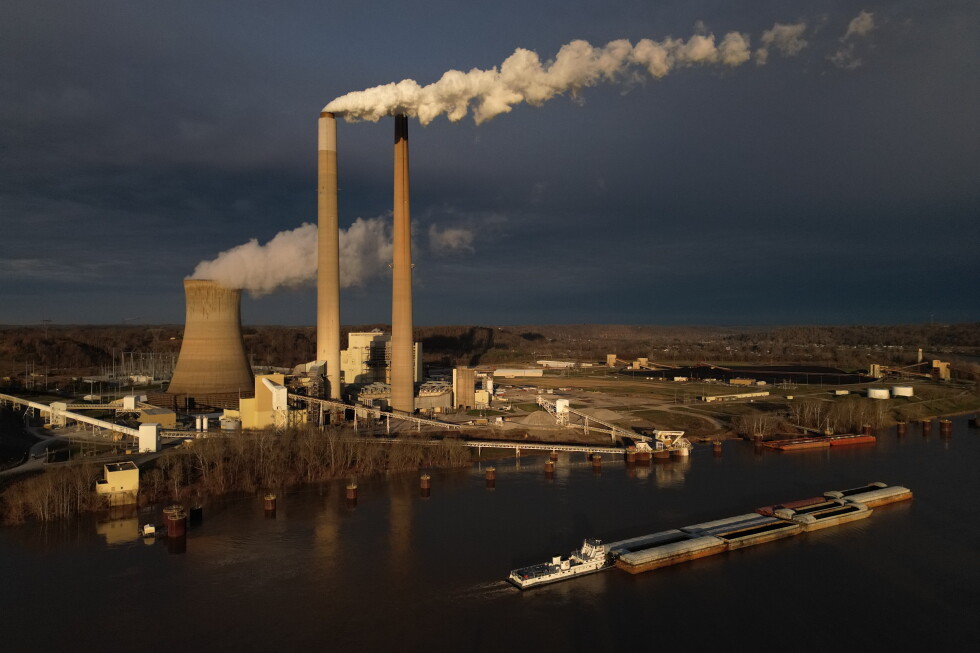
    As spring planting gets underway across the American heartland, farmers in North Carolina and beyond are grappling with an unprecedented crisis spurred by escalating tensions in the Middle East. Skyrocketing fertilizer prices, paired with unexpected delivery delays and supply chain disruptions triggered by the closure of the Strait of Hormuz, have left agricultural producers blindsided and squeezed between mounting input costs and uncertain harvest outcomes.

    On Andy Corriher’s North Carolina farm, where corn and soybean seedlings are starting to take root, the crisis has hit at the worst possible moment. Weeks after placing an order for liquid nitrogen, one of the most critical inputs for spring planting, he still has no clear timeline for when his shipment will arrive. Since U.S.-Israeli strikes on Iran prompted Tehran to block the key shipping waterway that carries much of the world’s fertilizer and energy exports, Corriher estimates the price of the nitrogen he relies on has jumped by at least 40 percent. At the Port of New Orleans, a major hub for fertilizer imports, urea prices have surged by roughly 50 percent overall.

    To adjust, Corriher has cut his fertilizer application by one-third—a move he fears will translate to lower crop yields at harvest time. He is far from alone in facing this double blow of soaring costs and restricted supply. Forty-year-old Russell Hedrick, who tends 1,000 acres of corn and soybeans near Hickory, North Carolina, purchased around 75 percent of his fertilizer after prices spiked following the closure of the strait. Like most small to mid-sized American farmers, he lacks the on-farm storage capacity and upfront capital to stock up on fertilizer months in advance of planting season, leaving him fully exposed to the market shock. He has dialed back his usage to the bare minimum, holding out for an opportunity to top-dress crops later if prices and supply stabilize.

    Even before the current conflict, Hedrick noted, steadily rising input costs had forced farmers to stretch every bag of fertilizer as far as possible, joking that “farmers have essentially become like Breaking Bad chemists with fertilizer, to get the most out of it.” Now, the sudden disruption has pushed that balancing act to breaking point. “This year, we just kind of got blindsided,” he said, adding that past supply chain shocks, such as China’s 2021 phosphate export restrictions, gave farmers months of advance warning to prepare—something this crisis completely lacked.

    For 55-year-old Marshville farmer Derrick Austin, comments from U.S. Agriculture Secretary Brooke Rollins that 80 percent of American farmers had purchased spring fertilizer before the conflict broke out offered little relief. Austin was among the 20 percent who could not afford to buy early, and the announcement felt like a “gut shot,” he said. He only managed to secure enough nitrogen for his wheat crop at pre-crisis prices after a supplier gave him a break, calling the overall situation “devastating.”

    The crisis carries significant political weight, as the farming community forms a core support base for President Donald Trump, who won 78 percent of the vote in 2024 in counties dependent on agriculture. Trump has attempted to address the anger, blaming “price gouging from the fertilizer monopoly” in a Saturday statement and vowing “American Farmers, we have your back!” But the disruption has left even some of his long-time backers questioning the administration’s handling of the Middle East conflict, and its failure to anticipate the blowback for American households.

    Corriher, a long-time Trump supporter, said the crisis felt like an avoidable “collateral damage” of the conflict. “It didn’t seem like we had really thought out all the consequences to the American people,” he said. Austin, meanwhile, said he is “starting to question some of (Trump’s) reasoning” even as he still prefers the current administration to opposing alternatives. Hedrick, who has voted for Trump three times, struck a more measured tone: “He’s human like the rest of us. I think he makes good calls, I think he makes mistakes. If the conflict’s resolution brings long-term peace and a reopened Strait of Hormuz, that’s all I can hope for.”

    Beyond the immediate political fallout, agricultural economists warn the crisis could deepen the prolonged slump facing the U.S. farm sector. Iowa State University professor Chad Hart noted the U.S. agriculture economy “has been in a recession for the last couple of years,” with net farm income declining while business costs have stayed persistently high. This year, the overall impact on yields and farm profits may be muted, as some farmers did lock in fertilizer supplies early, either in the fall of 2024 or early this spring. But if the conflict drags on and the Strait of Hormuz remains closed, Hart warned the 2027 crop could face far more severe disruption, as farmers will no longer have the buffer of pre-purchased fertilizer to draw on.

    The pain is not limited to farms either. Soaring diesel and energy costs tied to the Middle East conflict have pushed up prices for all American households, with Corriher noting “Everybody seems to be suffering.”

  • Diplomacy on ice: Mark Carney and Alexander Stubb play hockey

    Diplomacy on ice: Mark Carney and Alexander Stubb play hockey

    In a striking fusion of athletic competition and high-level diplomacy, Canada’s Prime Minister Mark Carney and Finland’s President Alexander Stubb took to the ice together for a friendly hockey game during Carney’s first official bilateral visit to Canada’s capital. The unlikely pairing of two heads of state on a hockey rink, with both leaders suiting up to join the Ottawa Charge amateur team, turned a routine diplomatic meeting into a memorable display of cross-national connection.

    Diplomatic summits and formal bilateral talks often rely on carefully staged photo opportunities and rigid policy discussions, but this event broke with tradition. Carney, a Canadian leader with longstanding ties to the country’s beloved national sport, joined Stubb – an avid hockey enthusiast – for the casual game, showcasing the shared cultural love of hockey that unites both Nordic and North American nations.

    The visit marks Carney’s first formal one-on-one bilateral engagement with a European head of state since taking office, making the informal athletic interlude more than just a recreational activity. Analysts view the moment as a deliberate, approachable gesture to strengthen people-to-people ties between Canada and Finland, two nations that already cooperate closely on Arctic security, climate action, and trade. By meeting on the ice rather than just in a cabinet room, the leaders signaled a willingness to build a more personal, open working relationship ahead of formal policy negotiations scheduled during the visit.

    Local spectators at the Ottawa rink called the event a welcome break from typical stuffy political events, with many fans capturing photos of the two leaders skating alongside amateur teammates. The game itself remained low-stakes, focused on fun rather than competition, but the symbolic weight of the moment resonated far beyond the rink’s boards: it demonstrated how shared cultural passions can serve as a foundation for deeper diplomatic cooperation in an increasingly divided global political landscape.

  • Ceasefire not included: Lebanon begins historic ‘exploratory’ talks with Israel

    Ceasefire not included: Lebanon begins historic ‘exploratory’ talks with Israel

    In a groundbreaking step that marks the first formal direct diplomatic engagement between Israel and Lebanon in over 30 years, the second Trump administration hosted top diplomatic representatives from both nations at a Washington meeting on Tuesday. But despite the historic opening of dialogue, the summit was hobbled by glaring limitations from its outset: a formal ceasefire to end weeks of deadly Israeli strikes on Lebanese soil was excluded from the official agenda, and the influential group Hezbollah, a core point of contention for both sides, had no seat at the negotiating table, leaving Lebanese delegates with drastically limited negotiating power.

    U.S. Secretary of State Marco Rubio framed the talks to reporters after the opening session, pushing back on questions about the absence of ceasefire discussions. “This is a lot more than just about that,” Rubio said. “This is about bringing a permanent end to 20 or 30 years of Hezbollah’s influence in this part of the world – not just the damage that it’s inflicted on Israel, but the damage that it’s inflicted on the Lebanese people.” The U.S. first formally designated Hezbollah as a foreign terrorist organization in 1997; despite this designation, the group, founded in 1982 to oppose Israeli occupation of Lebanese territory, remains the most powerful military actor in Lebanon and holds elected seats in the country’s parliament.

    Rubio acknowledged that the decades-long complexities of the conflict could not be untangled in a single session, but said the meeting laid critical groundwork for future progress. “All of the complexities of this matter are not going to be resolved in the next six hours. But we can begin to move forward to create the framework where something can happen – something very positive, something very permanent,” he remarked. In the end, the closed-door talks wrapped up after just two hours, far shorter than the projected timeline Rubio referenced earlier.

    The delegation roster reflected the low-key, exploratory nature of the summit: Lebanon sent its Washington ambassador Nada Hamadeh Moawad, while Israel was represented by its own U.S. ambassador Yechiel Leiter. Senior U.S. officials including U.S. Ambassador to Lebanon Michel Issa, U.S. Ambassador to the UN Mike Waltz, and State Department Counsellor Michael Needham, Rubio’s top aide, also joined the talks.

    In post-meeting comments to reporters, Leiter struck an optimistic tone, framing the gathering as a unifying step for both nations. “We discovered today that we’re on the same side of the equation,” he said. “That’s the most positive thing we could have come away with. We are both united in liberating Lebanon from an occupation power dominated by Iran called Hezbollah.”

    A later official statement from State Department Deputy Spokesperson Tommy Pigott offered a more measured framing of the day’s outcomes. Washington reaffirmed its longstanding position that Israel holds the right to defend itself, while Israel reiterated its demand for the complete disarmament of all non-state armed groups and the dismantling of all militant infrastructure across Lebanon. For its part, Lebanon’s delegation called on all parties to uphold the November 2024 ceasefire agreement brokered by the prior Biden administration – a deal that Israel has violated thousands of times, according to Lebanese accounts. The 2024 framework already lists Hezbollah’s disarmament as a core future step in the process.

    Hezbollah has repeatedly rejected any disarmament talks as long as Israel maintains what it calls a direct threat to Lebanese sovereignty, amid growing rhetoric from Israeli officials about expanding Israel’s northern border into Lebanese territory. Over the past six weeks alone, Israeli military operations in Lebanon have killed more than 2,000 Lebanese people, according to on-the-ground reports. The Lebanese national army, which the 2024 agreement tasks with disarming Hezbollah, lacks the advanced training and military equipment required to confront the Iran-backed group, which has decades of built-up military capacity.

    Even before the talks kicked off, Hezbollah’s leadership pushed for the summit to be scrapped entirely. “We reject negotiations with the usurping Israeli entity,” Hezbollah Secretary General Naim Qassem said in a statement on Monday. “These negotiations are futile and require a full Lebanese agreement and national consensus that does not exist right now.”

    In his official statement, Pigott outlined the U.S.’s broader strategic goals for the process: Washington aims to go beyond the parameters of the 2024 Biden-era ceasefire deal, and insists that any final hostilities agreement must be negotiated directly between the Lebanese and Israeli governments, with U.S. mediation, ruling out any separate negotiation tracks involving non-state actors. Notably, the word “ceasefire” did not appear anywhere in the U.S.’s official policy statement – it was only referenced by Lebanon’s ambassador, who called for an immediate end to fighting and urgent measures to address the severe humanitarian crisis unfolding across southern Lebanon. Analysts note that the U.S.’s refusal to endorse the term implies that Washington will continue to allow Israel to conduct military strikes in Lebanon it classifies as self-defense, even if informal hostilities pause.

    To incentivize continued negotiations, the U.S. held out the promise of major post-conflict support: Pigott said future negotiations “have the potential to unlock significant reconstruction assistance and economic recovery for Lebanon and expand investment opportunities for both countries.” He confirmed that all three sides reached agreement to launch a broader formal direct negotiation process at a time and location to be mutually agreed by all parties.

    Outside experts who spoke to Middle East Eye expressed widespread skepticism about the talks’ ability to shift the current trajectory of violence. Jeffrey Feltman, former U.S. Ambassador to Lebanon and a current fellow at the Brookings Institution, noted that neither side was willing to reject the U.S.-led process publicly, even as core demands remain irreconcilable. “Neither side wanted to be seen by the Americans as refusing to talk, even if the conditions felt wholly unrealistic,” Feltman explained. “One side can’t do what the Israelis want. The other side will refuse to do what the Lebanese want. The Israelis are not going to stop hitting Lebanon right now, whether these talks go on or not, and I don’t believe that President Trump will restrain Netanyahu in Lebanon any more than President Biden restrained Netanyahu in Gaza.”

    For Lebanon, participation in the talks carries a specific symbolic purpose: it allows the Lebanese government to assert its sovereign authority over the country’s foreign policy, even though it cannot represent the large segment of the Lebanese population that supports Hezbollah, particularly in southern Lebanon. Iran, which holds major influence over Hezbollah, is currently pushing to fold the Lebanese conflict into broader regional ceasefire talks with the U.S. and Israel, but the Lebanese government has pushed back against being framed as a mere proxy for Iranian interests.

    Steven Simon, a former National Security Council official in the Clinton administration and current fellow at the Quincy Institute for Responsible Statecraft, described Lebanon’s position as fraught. “They’re the meat in the sandwich, really, and they’re not captains of their own fate,” Simon said. He added that Iran is willing to prioritize its broader regional strategic goals over Hezbollah’s position if necessary: “Iran has a strong interest in folding the Lebanese conflict into the broader conflict… and if it’s necessary for Iran to shove Hezbollah under the bus, I think they’ll do that. It would just be a strategic necessity.”

    Simon also pointed out a fundamental contradiction in the U.S. and Israeli framework: continued Israeli military operations on Lebanese soil are actively eroding the legitimacy and credibility of the Lebanese government that both countries insist must disarm Hezbollah. “As long as Israeli combat operations are taking place on Lebanese soil, particularly given their intensity, the Israelis are weakening the credibility or the legitimacy of the Lebanese government on which they’re depending to disarm Hezbollah,” Simon said. “It’s counterproductive. It’s self-jamming.”

    Feltman added that while the talks broke a decades-long political taboo in Lebanon against direct official engagement with Israel, Lebanon’s top civilian leaders remain unable to enforce any deal that contradicts Hezbollah’s position. “When Hezbollah refuses to go along with that, there’s not much that [Prime Minister Nawaf Salam and President Joseph Aoun] have been able to do to force Hezbollah to comply,” he noted.

  • Peru candidate calls for vote annulment as count tightens

    Peru candidate calls for vote annulment as count tightens

    As vote counting continues for Peru’s contentious first-round presidential election, right-wing ultraconservative candidate Rafael Lopez Aliaga has escalated tensions by formally calling for the entire electoral process to be annulled, basing his demand on unproven allegations of systemic voter fraud.

    Lopez Aliaga, a Christian nationalist and former mayor of Lima who has openly modeled his political brand on former U.S. President Donald Trump, is locked in a razor-thin three-way race for second place in Sunday’s contest. The top two vote-getters will advance to a June runoff election against current frontrunner Keiko Fujimori, daughter of Peru’s controversial former president Alberto Fujimori.

    The first round of voting was marred by widespread logistical failures across the capital city of Lima, where delayed delivery of ballots and other critical electoral materials left tens of thousands of eligible voters unable to cast their ballots on election day. Multiple polling stations were forced to reopen on Monday to accommodate disenfranchised voters, creating widespread disruption and opening the door for unfounded fraud claims to gain traction.

    As of Wednesday, with 80 percent of all ballots counted, Fujimori holds a clear lead with approximately 17 percent of the vote. Lopez Aliaga trails in second place with 12.5 percent, with just 0.9 percentage points separating him from third-place social democratic candidate Jorge Nieto, who holds 11.6 percent. Leftist former minister Roberto Sanchez sits just behind Nieto at 10.7 percent, meaning the final outcome of the race for second place remains too close to call.

    Speaking to reporters on Tuesday, Lopez Aliaga repeated his baseless fraud allegations and called on Peru’s national electoral commission to invalidate the entire first-round process. “I ask [the electoral commission] to act, declare this entire process null and void, or figure out how to resolve this,” he said. In response to questions from Agence France-Presse, Lopez Aliaga confirmed he was seeking full annulment of the vote to select Peru’s ninth president in just 10 years, and urged his supporters to participate in public protests. “Don’t let them steal our future,” he wrote in a post on his official Facebook page.

    Nicknamed “Porky” for his admitted resemblance to the rotund cartoon character Porky Pig, Lopez Aliaga campaigned on a hardline, nationalist platform focused on cracking down on rising violent crime and irregular migration. Among his most controversial policy pledges was a proposal to build maximum-security penal colonies in the Amazon rainforest, surrounded by what he called a “natural fence” of venomous vipers.

    Peru has faced chronic political instability over the past decade, with four presidents impeached or removed from office, and this election fielded a record 35 candidates for the nation’s highest office. The entire campaign season was dominated by voter anger over surging extortion and contract killings, as well as widespread public disillusionment with a political establishment broadly viewed as corrupt and ineffective. No candidate is on track to win the 50 percent of the vote required for an outright first-round victory, confirming that a runoff will be held in June as planned.

    Independent election observers, including a delegation from the European Union, have publicly confirmed that while the first round was plagued by significant logistical dysfunction, there is no concrete evidence to support Lopez Aliaga’s fraud claims. “Her team found no evidence of fraud,” said Annalisa Corrado, head of the European Union’s election observer mission.

    Political analyst Eduardo Dargent, a political scientist based in Peru, told AFP that the widespread logistical failures of the first round handed ammunition to candidates like Lopez Aliaga who are willing to undermine democratic legitimacy to advance their political goals. “The logistics mess has given arguments…to several people who will cry fraud or worse if they are not happy with the result,” Dargent explained.

    The chaos has already eroded public trust in Peru’s democratic process among many voters. “We don’t know if the results are true,” Yeraldine Garrido, a 35-year-old Lima receptionist, told AFP. Luis Gomez, a 60-year-old self-employed Lima resident, called the mishap “a major democratic failure.”

    In response to the logistical collapse, Peruvian police have already detained one local election official and executed a raid on the private contractor blamed for the late delivery of electoral materials.

  • Wadagni wins Benin’s presidency in landslide vote

    Wadagni wins Benin’s presidency in landslide vote

    Benin’s path to a new presidential term has been cleared with a resounding electoral victory, as the West African nation’s national electoral commission confirmed Tuesday that incumbent Finance Minister Romuald Wadagni has won the presidency by an overwhelming margin.

    Provisional results released by the independent electoral body show Wadagni, 49, and his running mate Mariam Chabi Talata captured an extraordinary 94% of valid votes cast in the poll. Out of 4.64 million valid ballots counted, the ruling coalition ticket earned more than 4.25 million votes. Turnout reached 58.75% across the country’s nearly 7.9 million registered voters, a solid participation rate for the national election.

    Wadagni entered the race as the clear frontrunner from the outset, backed by Benin’s governing coalition. Local political observers and media outlets had widely predicted his landslide win long before official results were tabulated. His only opponent, opposition candidate Paul Hounkpe, ultimately secured just 5.95% of the vote. In a show of democratic commitment, Hounkpe conceded defeat before the official commission announcement, offered what he called “republican congratulations” to his rival, and called on all Beninese citizens to prioritize national unity and uphold respect for the country’s democratic institutions.

    The outcome of the election paves the way for continued policy stability in Benin, particularly for the market-oriented economic reforms advanced over recent years. Those policies have cemented Benin’s reputation as one of the fastest-growing economies in West Africa, and analysts widely expect Wadagni’s presidency to sustain and expand that economic momentum. The landslide mandate, political analysts note, also gives Wadagni a strong mandate to advance his policy agenda as he takes office.

  • In Hormuz war of words, US illustrates threat with ‘drug boat’ hit

    In Hormuz war of words, US illustrates threat with ‘drug boat’ hit

    Rising geopolitical friction between the United States and Iran has reached a dangerous new flashpoint in the Strait of Hormuz, after former U.S. President Donald Trump announced a full naval blockade of the critical global waterway over the weekend, followed by stark threats to destroy any Iranian craft approaching the enforcement line. The escalation, which comes six weeks after the two nations launched an undeclared conflict in the region, has put major energy and trade supplies at risk and drawn pushback from global powers including China, while experts warn the standoff could freeze all maritime traffic through the strait entirely.

    Trump first outlined the blockade order on his Truth Social platform Sunday, framing the move as a response to Iran’s earlier partial closure of the strait, which Tehran implemented after the outbreak of hostilities. The U.S. leader accused Iran of engaging in “world extortion” by claiming potential unreported mines in the waterway and demanding tolls from passing vessels. “I have also instructed our Navy to seek and interdict every vessel in International Waters that has paid a toll to Iran. No one who pays an illegal toll will have safe passage on the high seas,” Trump wrote in his post, adding that U.S. forces would begin clearing mines laid by Iran and that any Iranian attack on U.S. personnel or civilian ships would be met with devastating force.

    On Monday, Trump doubled down on the aggressive posture, threatening that any Iranian vessels that “come anywhere close” to the U.S. blockade would be “immediately ELIMINATED” using the same lethal tactics his administration has deployed against suspected drug trafficking boats in international waters. He characterized the tactic as “quick and brutal,” and noted that 34 vessels passed through the strait on Sunday, the highest daily volume since Iran’s initial closure.

    Parallel to the U.S. escalation, Iran has issued its own firm warnings to Washington, vowing to respond with unforeseen military capabilities if conflict expands. A spokesperson for the Islamic Revolutionary Guard Corps (IRGC) told the IRGC-affiliated Tasnim News Agency that if hostilities continue, Tehran will unveil new warfare capacities that enemy forces have no knowledge of, and that these methods will be largely difficult for the U.S. to counter. Iranian Lt. Col. Ebrahim Zolfaqari clarified Iran’s position, stressing that vessels affiliated with the U.S.-led blockade have no right to transit the strait now and in the future, while neutral civilian ships can still pass in compliance with Iranian armed forces regulations. Zolfaqari also warned that if the security of Iranian ports is jeopardized, no ports across the Persian Gulf or Sea of Oman will remain safe.

    The escalating confrontation has already split global powers, with NATO members confirming on Monday they would not participate in Trump’s blockade. China, which maintains active trade and energy agreements with Tehran, has openly defied the U.S. order. Chinese Defense Minister Dong Jun confirmed that Chinese commercial and military vessels continue transiting Hormuz waters in accordance with bilateral agreements with Iran, saying “We will respect and honor them and expect others not to meddle in our affairs. Iran controls the Strait of Hormuz, and it is open for us.”

    Maritime analysts warn the dual, competing blockades from the U.S. and Iran could create an unprecedented logjam in one of the world’s most critical energy chokepoints. Salvatore Mercogliano, a maritime historian at Campbell University in North Carolina, told Al Jazeera that he expects U.S. naval forces to turn away exiting vessels while staying out of range of Iran’s coastal missiles and drones, resulting in two overlapping blockade operations. This scenario, Mercogliano noted, carries a serious risk of freezing all incoming and outgoing shipping through the strait entirely, a disruption that would send shockwaves through global energy and commodity markets.

    To back up his threat against Iranian vessels, Trump highlighted his administration’s ongoing campaign of lethal airstrikes against suspected drug trafficking boats in international waters, a policy that has already killed more than 170 people and drawn widespread condemnation from human rights groups and international legal experts as extrajudicial killing. On the same day Trump issued his Hormuz threat, U.S. Southern Command (SOUTHCOM) carried out a new strike on a vessel in the eastern Pacific, which the command claims was operated by groups linked to narco-trafficking. No publicly released evidence has been provided to support the accusation, and the strike killed at least two people. The attack came just days after separate April 11 strikes on two other Pacific boats that left at least five more dead.

    Following the latest strike, SOUTHCOM published unclassified footage of the bombing on social media, labeling it a “lethal kinetic strike on a vessel operated by Designated Terrorist Organizations”—a move that critics say is part of a pattern of publicizing lethal operations without justifying their legality. Brian Finucane, senior adviser to the U.S. Program at the International Crisis Group, pointed out that the Trump administration has been eager to post graphic footage of these strikes online but has refused to defend the legal standing of the attacks in international waters.

    United Nations experts and multiple human rights organizations have formally condemned the boat bombing campaign as extrajudicial killing and murder, arguing that officials who ordered and carried out the strikes should face prosecution for homicide. Investigative journalist Nick Turse of The Intercept reported hours before Monday’s strike that the Trump administration is actively pressuring the Inter-American Commission on Human Rights to shut down a potential inquiry into the illegal strikes across the Caribbean and Pacific. Last month, the commission held a public hearing where legal experts testified to the unlawful nature of the strikes. Angelo Guisado, senior staff attorney at the Center for Constitutional Rights, told the commission that “The administration’s desire to play imperial superpower in the region cannot be a reason to completely displace the foundations of international law.”

    As of Monday, the standoff in the Strait of Hormuz shows no signs of de-escalation, with both sides holding firm to their competing blockade claims and raising the risk of an accidental clash that could spiral into full-scale open conflict across the Middle East.

  • Texas lawmaker resigns after admitting affair with aide who died by suicide

    Texas lawmaker resigns after admitting affair with aide who died by suicide

    In a seismic development that has sent shockwaves through Capitol Hill, two sitting U.S. congressmembers — one Republican and one Democrat — formally stepped down from their congressional seats this week, exiting office amid mounting ethical pressure and public allegations of sexual misconduct.

    Texas Republican Representative Tony Gonzales was the second lawmaker to submit his resignation on Tuesday, capping weeks of growing controversy that began when he ultimately confirmed a years-long extramarital affair with a married congressional staffer, Regina Santos-Aviles. Santos-Aviles died by suicide in September 2025 near her Uvalde, Texas home after setting herself on fire, a finding confirmed by the local medical examiner and first reported by CBS News, the U.S. partner of the BBC.

    The timeline of the scandal accelerated rapidly over the past month. Gonzales, who had initially dismissed the claims of an affair as a coordinated political blackmail campaign to force him out of office, had already announced he would not seek re-election in the November 2026 midterm vote. But as new details of his misconduct emerged and a formal congressional ethics probe was launched, pressure for an immediate departure grew overwhelming.

    Parallel developments unfolded for California Democratic Representative Eric Swalwell, who faced a separate set of public allegations ranging from sexual harassment to assault against a former member of his own staff. After the allegations became public over the weekend, a groundswell of bipartisan criticism erupted, and congressional leadership moved quickly to open a formal ethics inquiry and debate holding full votes to expel both men from office. Maneuvering to avoid a humiliating forced expulsion — which would have cost both lawmakers their post-congressional pension benefits — both lawmakers opted to submit voluntary resignations, effective immediately this week.

    Swalwell, who had been running for the Democratic nomination for California governor before the allegations broke, dropped his gubernatorial campaign Sunday and announced his resignation Monday, even as he and his legal team have forcefully denied all claims against him. “These accusations are false, fabricated, and deeply offensive – a calculated and transparent political hit job,” said Swalwell’s attorney Sara Azari. In his final resignation letter submitted Tuesday, however, Swalales offered a muted apology, writing: “I am deeply sorry to my family, staff, and constituents for mistakes in judgement I’ve made in my past.”

    Gonzales, for his part, offered only a brief farewell in his own resignation letter, noting: “It has been my privilege to serve the residents of Texas’s 23rd congressional district.”

    The dual resignations, one from each major political party, have little impact on the partisan balance of power in the U.S. House of Representatives, where Republicans hold a narrow but stable majority. Even with the two vacancies, Republicans will retain their controlling grip on the chamber for the remainder of the 119th Congress.

    The scandal has already reignited broader conversations about congressional accountability, workplace culture on Capitol Hill, and the leniency of rules that allow members accused of misconduct to resign voluntarily and retain taxpayer-funded benefits, rather than face expulsion and lose those privileges.