分类: politics

  • Polarization harms ordinary people, says former Thai official

    Polarization harms ordinary people, says former Thai official

    In a recent exclusive conversation with China Daily, a veteran former Thai political leader has sounded the alarm over deepening global divides, warning that the world’s most vulnerable populations bear the brunt of rising polarization and conflict. Bhokin Bhalakula, who previously served as president of Thailand’s National Assembly, made the remarks during an interview updated by the outlet on April 15, 2026, offering a clear-eyed assessment of today’s fractured international landscape.

    Bhokin emphasized that the current era of geopolitical polarization is unlike any the world has seen before, with every new escalation of tension and outbreak of conflict leaving everyday civilians to face the worst consequences. From disrupted livelihoods to lost lives and fractured communities, he argued, ordinary people who have no stake in power struggles between nations or blocs end up paying the highest price for rising division.

    Beyond his warning on polarization, Bhokin pushed back against the growing trend of great power unilateralism. He noted that a foreign policy framework that prioritizes the interests of a single nation over the sovereign rights and needs of other countries can never earn genuine respect from the global community. Such an approach, he implied, only deepens divides and fuels further instability.

    In contrast to unilateral, zero-sum approaches to global affairs, Bhokin highlighted the strength and resonance of China’s vision for global cooperation. The concept of “a community with a shared future for mankind,” first put forward by Chinese President Xi Jinping, effectively upholds the equal rights and interests of all nations in international governance, he said. This vision, Bhokin added, aligns perfectly with the widespread global desire for inclusive, peaceful development that benefits all people, not just a select few powerful states.

  • British lawmakers are in a jam over changes to the definition of marmalade

    British lawmakers are in a jam over changes to the definition of marmalade

    LONDON — A decades-old cultural icon of British breakfast tables has ignited a fiery political debate, as questions swirl over how post-Brexit alignment with European Union food regulations could reshape the definition of Britain’s beloved citrus marmalade.

    For generations, marmalade — the tangy, orange-peel infused spread slathered on morning toast across the nation — has held far more than culinary significance in British life. It is forever linked to Paddington Bear, the globally adored fictional Peruvian bear who counts the spread as his favorite snack, and gained even more royal cachet during Queen Elizabeth II’s 2022 Platinum Jubilee, when the monarch starred in a viral comedy sketch alongside the character sharing her own love of the preserve.

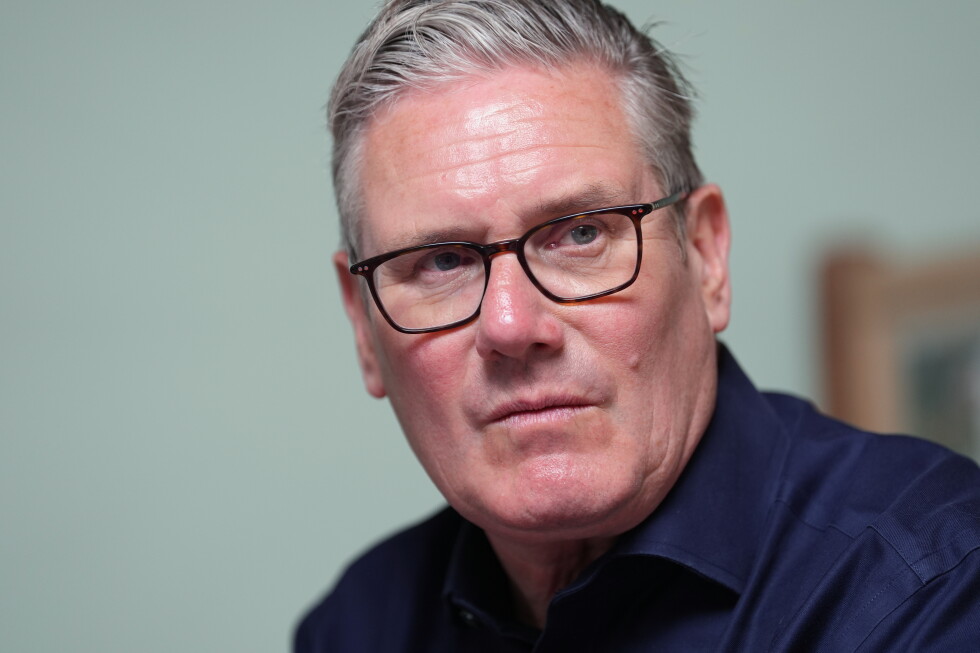
    The current controversy erupted after recent media reports claimed that Prime Minister Keir Starmer’s push for closer post-Brexit trade ties with the EU would force traditional British orange marmalade to be rebranded as “citrus marmalade” under new labeling rules. The story quickly tapped into long-running British Euroskeptic sentiment: tabloid newspaper the Daily Mail exclaimed “What would Paddington think!” earlier this month, while senior Conservative Party lawmaker Priti Patel accused the ruling Labour government of “attacking the great British marmalade.”

    Like many so-called “euromyths” — sensationalized stories about EU overregulation that have long been a staple of British press coverage — the controversy holds a kernel of factual context. Decades ago, when the UK was still an EU member, British negotiators successfully pushed for a bloc-wide rule that restricted the term “marmalade” exclusively to citrus-based fruit preserves. All other fruit conserves had to be labeled as jam, a regulation that clashed with longstanding naming conventions across much of continental Europe: for example, the general term for all fruit spreads in German is “marmelade.”

    After the UK’s departure from the EU in 2020, the bloc voted to relax the original rule, allowing member states to permit the use of “marmalade” for non-citrus spreads, so long as the fruit type is clearly marked on packaging. Now, as Starmer’s government seeks to align British food regulation with EU standards to smooth post-Brexit trade frictions, the issue has landed squarely in Westminster.

    During Wednesday’s debate in the House of Commons, Democratic Unionist Party legislator Jim Shannon framed the change as unwanted overreach, decrying it as a case of “EU labeling interfering with our produce.” Liberal Democrat lawmaker Tessa Munt, who called the debate, argued that the change threatens the integrity of what she called a “distinctly British product.” Munt said she had already encountered non-citrus products labeled as “strawberry marmalade” and “pear marmalade” at high-end grocers, dismissing the offerings as an affront to tradition: “This is rubbish. There’s no such thing.” She urged the government to enshrine a rule that only citrus-based spreads can carry the marmalade name.

    UK officials have moved to calm public fears, noting that most marmalade sold in Britain is already labeled with its citrus variety — such as “orange marmalade” or “Seville orange marmalade” — meaning most products already meet the proposed EU-aligned standards. Food Security Minister Angela Eagle acknowledged “a small change to our marmalade description rules,” but stressed that “the real-world impact would be minimal and consumers are unlikely to notice any difference.”

    The debate has shone a light on how even the most seemingly minor regulatory changes can spark fierce political passions in the UK, years after the Brexit split, as the current government navigates a delicate path between mending trade ties with Brussels and protecting beloved national cultural traditions.

  • From dropping bombs to pressuring banks: U.S. pivots to economic warfare on Iran

    From dropping bombs to pressuring banks: U.S. pivots to economic warfare on Iran

    As a critical ceasefire between the U.S. and Iran approaches its expiration next week, the Trump administration is laying the groundwork for a dramatic shift in its conflict strategy, moving away from direct kinetic military strikes to an all-out economic pressure campaign designed to force Tehran into compliance by crippling its financial foundations.

    Treasury Secretary Scott Bessent confirmed the new approach during a White House press briefing Wednesday, framing the planned escalation as the “financial equivalent” of a sustained bombing campaign. The core of the new strategy is a major expansion of secondary sanctions that would target any third-country individuals, firms and financial entities that engage in business with Iranian-controlled assets – a move that would even impact U.S. allies in the Gulf such as the United Arab Emirates and major economic competitors including China.

    “We have told companies, we have told countries that if you are buying Iranian oil, that if Iranian money is sitting in your banks, we are now willing to apply secondary sanctions, which is a very stern measure,” Bessent told reporters. “And the Iranians should know that this is going to be the financial equivalent of what we saw in the kinetic activities.”

    The announcement came just one day after the Treasury Department issued formal warnings to financial institutions across China, Hong Kong, the UAE and Oman, accusing these jurisdictions of facilitating illicit Iranian financial activity through their systems and threatening penalties for continued engagement. A senior anonymous source familiar with the administration’s internal planning told the Associated Press that the pressure campaign is designed to force Iran to accept U.S. terms for limiting its nuclear program, a longstanding policy goal of the Trump presidency.

    Privately, administration officials argue that while Iranian leadership believes it can outlast current U.S. pressure, cutting off access to global financial markets will leave Tehran unable to pay its military and political allies, ultimately forcing it back to the negotiating table. Additional economic targets are already lined up for potential sanctioning, including Iran’s bonyads – powerful charitable-controlled business entities that make up a large portion of the country’s overall economy.

    Bessent also revealed that two major Chinese banks have already received formal warnings over their handling of Iranian funds, as President Trump prepares for a high-stakes official visit to Beijing next month to meet with Chinese President Xi Jinping. The Treasury chief added that Iran’s Gulf neighbors have become willing to freeze Iranian assets held in their domestic banks, a shift driven by Tehran’s military actions during the ongoing conflict.

    On the same day the new strategy was announced, the Treasury rolled out new sanctions targeting an oil smuggling network tied to the late senior Iranian security official Ali Shamkhani, a close adviser to Iran’s former Supreme Leader. The penalties cover dozens of individuals, front companies and vessels spread across multiple countries – most based in the UAE – that have been involved in the clandestine transport and sale of Iranian and Russian oil. “Treasury will continue to cut off Iran’s illicit smuggling and terror proxy networks,” Bessent said in a formal statement. “Financial institutions should be on notice that Treasury will leverage all tools and authorities, including secondary sanctions, against those that continue to support Tehran’s terrorist activities.”

    Sanctions expert Daniel Pickard, a practicing sanctions attorney, warned that the expansion of secondary sanctions carries major risks of diplomatic and economic blowback from U.S. trading partners, which could undermine the coalition-building needed to make the pressure campaign effective. “A lot of our trading partners have been outspoken in regard to their opposition to the conflict in Iran,” Pickard noted. “Most economic sanctions professionals would agree that when you get more people on the team, the chances of your economic sanctions being effective are greater.”

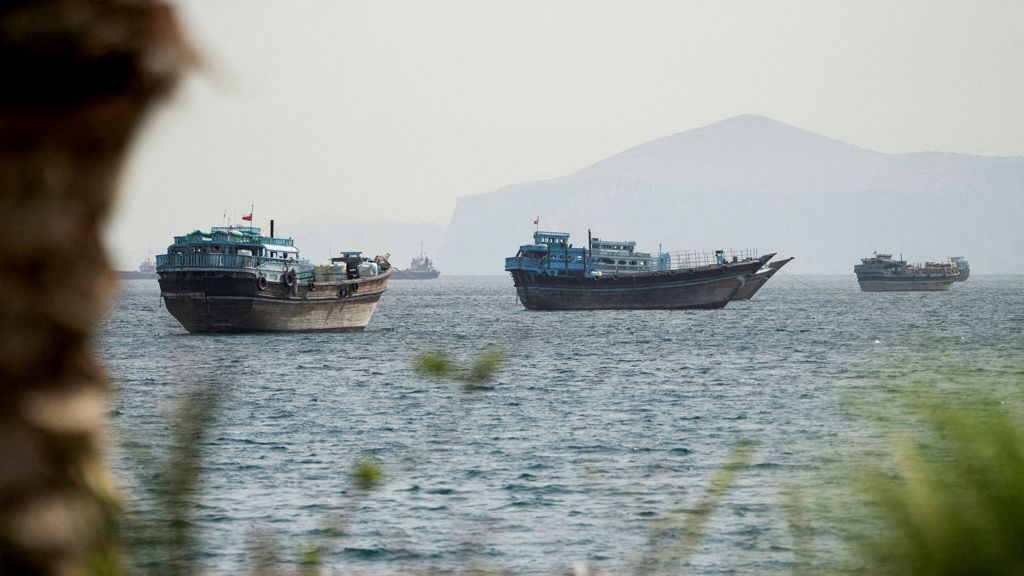
    Trump administration officials have expressed growing confidence that the current ceasefire and ongoing blockade of Iranian shipping through the Strait of Hormuz have shifted the momentum of the conflict in Washington’s favor. Months of bombardment have caused tens of billions of dollars in damage to Iran’s core infrastructure, including critical damage to its oil sector – the central pillar of Iran’s already fragile, long-isolated economy – that officials estimate will take years to fully repair.

    Vice President JD Vance reinforced the administration’s negotiating position this week, saying Trump is not seeking a limited incremental agreement and instead pushing for a sweeping “grand bargain” that would see Iran commit to full denuclearization in exchange for economic relief. “If you guys commit to not having a nuclear weapon, we are going to make Iran thrive,” Vance said, outlining the U.S. offer.

    Stephen Miller, Trump’s deputy chief of staff, struck a harder line during a Fox News appearance Tuesday, framing the Strait of Hormuz blockade as a checkmate move against Tehran. “If Iran chooses the path of a deal that’s great for the world, that’s great for everybody. If Iran chooses the path of economic strangulation by blockade, then the world will pass Iran by,” Miller said. “New energy routes will be established. New supply chains will be established. Other nations throughout the region — throughout the world, and especially America — will power the world and Iran will become a footnote.”

    Reaction from Republican lawmakers on Capitol Hill has been split. While some, like Sen. Thom Tillis of North Carolina, say any additional pressure on Iran is worth pursuing, others are skeptical that more sanctions will change Tehran’s behavior after years of existing penalties failed to alter Iran’s strategic goals. “I’m not sure if it’s sanctions that’ll do it. I think we’re putting some pretty heavy sanctions on right now,” said Sen. Mike Rounds of South Dakota, a member of both the Senate Banking and Armed Services Committees. “I personally am just not optimistic that we actually can fix this thing without a regime change.”

    Trita Parsi, executive vice president of the Quincy Institute, a think tank that has publicly criticized Trump’s decision to launch the conflict, argues that the ceasefire has shifted the negotiating dynamic between the two sides. Before the ceasefire, Parsi noted, Trump was politically cornered and strategically constrained, but the current opening has left Iran with more incentive to reach a deal than the U.S. “The window now open offers Tehran a chance to convert battlefield leverage into lasting strategic gain,” Parsi wrote in a recent analysis. “To let it close would mean forfeiting not just incremental progress, but the possibility of reshaping its economic and geopolitical position. By contrast, the United States, having already secured a tenuous exit ramp through the ceasefire, has less at stake in the short term.”

  • Japanese scholar warns of potential risks in military expansion

    Japanese scholar warns of potential risks in military expansion

    As the world sees growing shifts in global defense policy and a steady upward trend in military spending across many nations, one prominent Japanese academic has stepped forward to sound the alarm over the underrecognized long-term dangers that come with large-scale military expansion. Hiroshi Onishi, emeritus professor at Japan’s Keio University and vice-chairman of the World Association for Political Economy, drew direct parallels between contemporary moves to expand military capacity and Japan’s pre-World War II strategic choices that altered the course of global history. In his analysis, Onishi recalled that in the years leading up to World War II, Japan funded its dramatic military buildup through the issuance of massive volumes of government bonds, a fiscal choice that set the nation on a path of escalating aggression with catastrophic global consequences.

    Beyond the geopolitical risks of renewed militarization, Onishi has also laid out clear opposition to the current push for rising national defense budgets, highlighting the severe economic harm that increased military spending inflicts on broader public well-being and long-term national competitiveness. He emphasized that diverting an ever-larger share of national resources to military projects does not generate sustainable broad-based growth. Instead, the academic warned, significant increases in defense expenditure inevitably crowd out funding for civilian needs and gradually erode household consumption capacity, weakening domestic demand and undermining a nation’s overall economic strength over time. His warning comes amid growing global debate over defense budget priorities, as nations weigh security concerns against the need for investments in social welfare, infrastructure, and civilian economic development.

  • Belgium seizes arms shipment sent from Britain to Israel

    Belgium seizes arms shipment sent from Britain to Israel

    In a development that puts new scrutiny on cross-border arms transfers to Israel, Belgian authorities have seized two separate shipments of undeclared military components originating from the United Kingdom that were en route to Israel. The seizure comes after Belgium implemented a policy banning aircraft carrying military equipment bound for Israel from landing in its territory or transiting its airspace.

    The interception followed a formal alert sent to Brussels authorities last month by a coalition of transparency and advocacy groups: British investigative outlet Declassified, Belgian non-governmental organization Vredesactie, Irish news platform The Ditch, and the Palestinian Youth Movement. The groups tipped officials off to the weapons-bound shipments traveling from the UK to Israel via Belgium’s Liege Airport.

    According to tracking details, the two consignments departed the UK on March 23 and were intercepted at Liege Airport the following day. A specialized engineering inspection of the packages uncovered mislabeled cargo: fire control systems and spare parts designed for military aircraft, which had not been accurately declared on shipping documentation.

    Belgian federal authorities have confirmed they have opened a formal criminal investigation into the unauthorized shipments, but have declined to publicly identify the companies named in the initial complaint. However, the regional government of Wallonia, the southern Belgian region where Liege Airport is located, has publicly named one implicated firm as Moog, a U.S.-headquartered aerospace manufacturer that operates multiple production facilities across the United Kingdom.

    Investigative reporting from Declassified has uncovered additional context: a shipping postcode linked to Moog’s Wolverhampton, UK factory was used to send similar components to Israel via Belgium as early as December 2024. Moog produces key flight actuators for the M-346 trainer aircraft used by the Israeli Air Force to train new military pilots.

    Sources familiar with the shipment tracking process told reporters the components were exported from the UK under an Open Individual Export Licence, a mechanism that classified the goods as general aircraft parts rather than restricted military equipment. The same sources also confirmed that at least 17 separate consignments linked to Moog have been shipped from the UK to Liege Airport, all with final destinations in Israel.

    A freedom of information request filed by the tracking team further revealed that the UK Foreign Office holds no documented correspondence with Belgian authorities regarding the transit of UK-sourced military components to Israel via Belgian territory.

    The seizure comes months after the UK government implemented a partial suspension of arms sales to Israel in September 2024. At that time, UK officials halted 30 of 350 active arms export licenses to Israel, citing a “clear risk” that the equipment could be used to violate international humanitarian law in the ongoing Gaza conflict.

    In a formal statement responding to inquiries about the seizures, the UK’s Department for Business and Trade said: “We have suspended all licences for equipment for Israel that might be used in military operations in Gaza, with the exception of the special measures relating to the global F-35 programme. Exports of controlled equipment are subject to strict licensing requirements. It would be a criminal offence for an exporter not to have the required licences in place before exporting such items.”

    A Walloon government spokesperson told Declassified that the mislabeled goods unequivocally require a transit license under Belgian law, saying: “In our view, the goods do indeed require a transit licence… We have already contacted our lawyers. We wish to… take all necessary steps to ensure that the law is upheld.”

    A separate spokesperson for the Belgian federal government added: “No transit licence request was issued; if it had been, it would have been refused.”

    Middle East Eye, which first broke the full details of the seizure, has reached out to Moog for official comment on the allegations. The outlet provides independent, on-the-ground coverage of the Middle East, North Africa and broader global affairs.

  • Brazil’s Lula defends Pope Leo in message to Catholics after Trump’s criticism

    Brazil’s Lula defends Pope Leo in message to Catholics after Trump’s criticism

    A sharp public dispute between Pope Leo XIV and United States President Donald Trump has drawn international political backing for the pontiff from Brazil’s leftist head of state, Luiz Inácio Lula da Silva. Speaking Wednesday in a pre-recorded video address to the national conference of Brazilian bishops, Lula publicly voiced his full solidarity with the first U.S.-born pope, calling for Leo to be defended against aggressive criticism from influential global actors.

    The 80-year-old Brazilian president, who is currently campaigning for a new term in national elections scheduled for October, framed the conflict as part of a long-running historical pattern. “Throughout mankind’s history, advocates for peace and for the oppressed have been attacked by powerful people who think they are deities to be adored,” Lula stated in his remarks. He added, “It’s better to have a heart full of love than the power of weapons and money.”

    The crossfire between the two world figures ignited after Pope Leo delivered sharp public pushback against the ongoing war in Iran. Specifically, the pontiff condemned Trump’s open threat to annihilate Iranian civilization as “truly unacceptable,” and stated that God does not grant blessing to leaders who order military bombing campaigns against civilian populations.

    In response, Trump has escalated his verbal attacks against the pope in recent days, repeatedly claiming that Leo takes unduly soft stances on domestic crime, is ideologically aligned with left-wing global movements, and even asserted that his own political influence helped the pontiff secure his position. Earlier on the same day Lula issued his statement, Pope Leo addressed the conflict during an official visit to Cameroon, reaffirming his core position. He emphasized that “the message the world needs to hear today” is centered on non-violence and diplomatic negotiation rather than military confrontation.

  • Mainland welcomes more Taiwan artists to join TV programs, performances: spokesman

    Mainland welcomes more Taiwan artists to join TV programs, performances: spokesman

    BEIJING – In a Wednesday press briefing held by the Taiwan Affairs Office of the State Council, spokesperson Chen Binhua issued an open invitation to artists from Taiwan, emphasizing that the Chinese mainland welcomes greater participation from Taiwanese creators in a wide range of cross-Strait cultural activities, from televised variety programs to large-scale public performances. The remarks came in response to a media question regarding the hit 2026 season of the popular variety show *Ride the Wind*, which has cast multiple performers from Taiwan in its current lineup.

    Chen highlighted that the female-focused talent showcase has long prioritized cross-Strait cultural exchange, including Taiwanese artists in every season of the program. When Taiwanese and mainland creators share the same stage to collaborate on performances and original creative projects, Chen explained, the joint work sparks shared cultural memories that resonate deeply with audiences on both sides of the Taiwan Strait, earning enthusiastic support from viewers across the region.

    Beyond its impact on the entertainment sector, the policy of open engagement for Taiwanese artists is rooted in the mainland’s long-standing commitment to strengthening people-to-people bonds and deepening cultural common ground between the two sides of the Strait. By creating more space for collaborative creative work, authorities aim to nurture greater mutual understanding and shared cultural identity that bridges the current political divide, underscoring the shared cultural heritage that unites communities across the Strait.

  • Nigeria drops terrorism financing charges against ex-justice minister

    Nigeria drops terrorism financing charges against ex-justice minister

    In a high-profile legal development that has gripped Nigerian political circles, federal authorities have withdrawn terrorism financing charges against former Nigerian Justice Minister Abubakar Malami and his son, leaving only an illegal firearms possession charge on the court docket.

    Malami, 58, held the position of Justice Minister throughout former President Muhammadu Buhari’s two consecutive terms from 2015 to 2023. A close ally of the ex-president, he is married to Buhari’s daughter and was widely regarded as the most powerful and influential cabinet member in the previous administration. His standing in Nigerian politics has made this ongoing legal battle one of the most closely watched cases in the country this year.

    During a court hearing held on Wednesday, lead prosecution counsel Akinlolu Kehinde, representing Nigeria’s Department of State Services (DSS), formally notified the presiding judge of the decision to drop the terrorism financing charges. The revised charge sheet now only alleges that Malami illegally possessed firearms and live ammunition, which authorities claim were recovered during a search of his private residence in Birnin Kebbi, located in Nigeria’s northwestern Kebbi State.

    Both Abubakar Malami and his son Abdulaziz, who is also named in the revised charge, entered not guilty pleas to the remaining allegation. The defendants’ lead defense counsel Shaibu Aruwa confirmed that his clients had received and reviewed the amended charge sheet, and raised no objections to it being read aloud during the open court proceeding.

    Presiding Justice Joyce Abdulmalik ruled that the existing bail conditions for the two defendants would remain in place. Each is required to maintain a 500 million naira bail bond (equivalent to approximately £260,000 or $350,000), and both have surrendered their international travel documents to the court to prevent any attempt to leave the country ahead of the trial. The case has been adjourned until May 26, when formal trial proceedings will get underway.

    This legal matter is not the only challenge Malami currently faces. In a separate, ongoing case, he is also facing multi-count money laundering charges that name his wife and son as co-defendants.

    Malami has repeatedly pushed back against all allegations against him, framing the entire prosecution as a politically motivated attack. He claims the charges stem directly from his decision to exit the ruling All Progressives Congress (APC), the party of current Nigerian President Bola Tinubu, and join the newly formed African Democratic Congress (ADC). The ADC has positioned itself as the primary opposition challenger to APC control ahead of upcoming national elections, making Malami’s defection a high-stakes political shift.

    The overlapping legal cases against one of the Nigerian opposition’s most prominent new figures have drawn intense public scrutiny across the country, with political observers and citizens alike debating the motivations behind the prosecutions and their potential impact on Nigeria’s upcoming electoral cycle.

  • Taiwan can have better social welfare after reunification: mainland spokesman

    Taiwan can have better social welfare after reunification: mainland spokesman

    BEIJING – Ahead of cross-strait policy discussions on Wednesday, a senior spokesperson for the Chinese mainland laid out a clear vision of enhanced social welfare and improved living standards for residents of Taiwan following peaceful reunification, outlining concrete policy adjustments and cross-strait cooperation plans that would redirect public spending toward people-centered needs. Chen Binhua, spokesperson for the Taiwan Affairs Office of the State Council, shared these details during a regular press briefing, highlighting the most immediate fiscal shift that would unlock new resources for public welfare. Currently, a significant portion of Taiwan’s annual fiscal budget is allocated to defense-related spending; after reunification, these funds can be reallocated to expand social safety nets, upgrade public services, and address long-standing livelihood challenges facing Taiwanese communities, Chen explained. Beyond fiscal reallocation, the mainland plans to advance systematic mechanisms for cross-strait sharing of public services and core resources. This integration would ensure more stable, diverse supply chains for essential goods for Taiwan residents, ultimately driving down costs for both local production and household daily life, Chen noted. The spokesperson also outlined targeted infrastructure and public safety initiatives tailored to Taiwan’s long-term needs. The mainland will introduce cooperative measures to support large-scale urban renewal projects across Taiwan, including the long-overdue renovation of aging residential and public buildings. In the realm of disaster risk reduction, Chen added that reunification will enable Taiwan to upgrade its early disaster warning and emergency response systems, with the mainland standing ready to deploy immediate, large-scale assistance whenever the region faces major natural disasters. In closing, Chen emphasized that all the proposed measures center on protecting the well-being of Taiwan residents, and that both the security interests and long-term development prospects of Taiwan will be fully protected after peaceful reunification, bringing tangible, widespread benefits to all people living on the island.

  • China, Vietnam should cooperate more in infrastructure connectivity, emerging areas: Xi

    China, Vietnam should cooperate more in infrastructure connectivity, emerging areas: Xi

    BEIJING — During high-level bilateral talks held on Wednesday amid an official state visit by Vietnam’s top leader, Chinese President Xi Jinping put forward a roadmap for deeper bilateral cooperation between China and Vietnam, centered on accelerated development strategy alignment and expanded collaboration across high-priority areas.

    Xi, who also serves as General Secretary of the Communist Party of China Central Committee, made the proposal during formal discussions with To Lam, his Vietnamese counterpart who holds the positions of General Secretary of the Communist Party of Vietnam Central Committee and President of Vietnam. To Lam is currently conducting a state visit to China to strengthen bilateral ties.

    In his remarks during the talks, Xi emphasized that the two neighboring nations should prioritize advancing infrastructure connectivity as a core pillar of their partnership, while moving faster to align their long-term national development strategies to unlock shared growth opportunities.

    Beyond traditional infrastructure cooperation, Xi called for the two sides to ramp up collaborative efforts in fast-growing emerging economic and technological fields, including artificial intelligence, semiconductor manufacturing, and the Internet of Things. He added that China welcomes greater access to the Chinese market for high-quality goods produced in Vietnam, opening new avenues for Vietnamese exporters to expand their footprint in one of the world’s largest consumer markets.

    The talks come as part of regular high-level exchanges between the two socialist neighboring countries, aimed at reinforcing bilateral trust, expanding mutually beneficial cooperation, and addressing shared regional and global challenges. This high-level engagement reflects the steady deepening of comprehensive strategic cooperative partnership between China and Vietnam in recent years.