分类: politics

  • Mainland pressing ahead with policy package to boost cross-Strait ties: spokesman

    Mainland pressing ahead with policy package to boost cross-Strait ties: spokesman

    BEIJING – Just days after unveiling a sweeping 10-point policy package designed to deepen people-to-people ties and economic cooperation across the Taiwan Strait, Chinese mainland authorities confirmed on Wednesday they are moving full speed ahead with implementing the new initiatives. The announcement came during a regular press briefing from Chen Binhua, spokesperson for the State Council Taiwan Affairs Office.

    The new set of measures, made public on April 12, targets long-standing barriers to cross-Strait engagement by expanding travel access and streamlining trade protocols. Key provisions include the resumption of individual travel permits for residents of Shanghai and Fujian traveling to Taiwan, as well as simplified inspection and approval procedures that make it easier for food products from qualified Taiwanese manufacturers to enter the large mainland consumer market.

    In his remarks, Chen called on the Democratic Progressive Party (DPP) authorities in Taiwan to remove the various administrative restrictions they have put in place that have disrupted cross-Strait interactions. He emphasized the urgency of eliminating these barriers to allow cross-Strait exchanges and cooperation to return to a normal, regularized pattern that benefits people on both sides of the strait.

    The policy package represents the mainland’s latest targeted effort to revitalize cross-Strait connections that have faced increased headwinds in recent years, with a focus on addressing practical needs of residents and businesses on both sides. Analysts note the measures prioritize grassroots exchanges and mutually beneficial economic cooperation, aligned with longstanding mainland policy goals of promoting peaceful development of cross-Strait relations.

  • House Democrats will try anti-corruption message to gain traction against Trump

    House Democrats will try anti-corruption message to gain traction against Trump

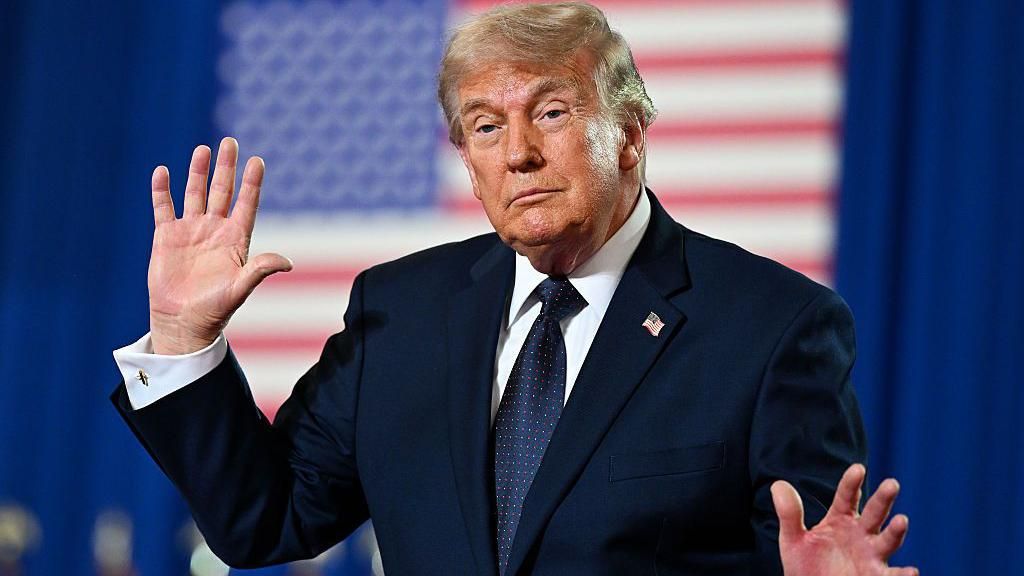
    In a strategic move shaped by a recent opposition upset in Hungary, House Democrats are rolling out a new anti-corruption task force aimed at targeting former President and current presidential candidate Donald Trump ahead of the upcoming midterm elections, seeking to flip control of Congress from Republican hands. The plan draws direct inspiration from the opposition coalition that ousted Hungarian Prime Minister Viktor Orbán earlier this year, where a sweeping anti-corruption messaging campaign formed the core of the victorious electoral strategy.

    The new cross-ideological task force, set to be officially announced Wednesday, will focus on two key priorities: overhauling federal ethics rules and rolling back policies that restrict access to voting. Beyond legislative reforms, the group will center its public messaging on scrutinizing the Trump family’s controversial business dealings and the sweeping changes Trump has made to the federal government during his current second term. Democrats have repeatedly labeled Trump’s second administration the most corrupt in U.S. history, a claim the White House has not yet responded to as of this reporting.

    Leading the initiative is Representative Joe Morelle, the highest-ranking Democrat on the House Administration Committee and a long-time close ally of House Minority Leader Hakeem Jeffries. Morelle outlined that Jeffries’ core motivation for forming the task force stems from growing concern that public trust in U.S. governing institutions is eroding, as policy decisions are increasingly made to advance the personal financial and political interests of officeholders — including the president — rather than serving the needs of ordinary American citizens.

    Among the key policy proposals being floated by task force leadership are a complete ban on stock trading for all federal officials, covering members of Congress, the executive branch, and sitting federal judges. Additional potential reforms include a formal code of ethics for the U.S. Supreme Court and binding term limits for sitting Supreme Court justices.

    To build broad appeal for the initiative, Democratic leadership has assembled a task force that balances ideological and regional representation, blending progressive and moderate party factions. The membership includes prominent progressive figures such as Congressional Progressive Caucus leader Greg Casar of Texas, Representative Alexandria Ocasio-Cortez of New York, House Oversight Committee top Democrat Robert Garcia of California, and House Judiciary Committee ranking member Jamie Raskin of Maryland. It also includes moderate leadership, such as Brad Schneider of Illinois, head of the centrist New Democrat Coalition. While this diversity creates an opportunity for a broad base of support, it also presents a challenge: forging a cohesive, unified messaging and policy agenda that satisfies all factions of the party.

    Outside group advisors backing the strategy echo the lessons learned from the Hungarian election. Ben Raderstorf, a strategist for Protect Democracy — a nonpartisan group combating U.S. authoritarianism that is consulting Democrats on the plan — noted that Orbán’s opposition won by running a loud, engaging, attention-grabbing anti-corruption campaign that cut through crowded media cycles, rather than relying on dry, conventional congressional hearings that rarely capture public interest. Justin Florence, co-founder of Protect Democracy, added that the task force will need to prioritize a narrow set of key issues to avoid being spread too thin by the wide range of possible ethics reforms.

    The shift to a front-and-center anti-corruption message comes as House Democrats assess their electoral messaging after the 2024 presidential election. While party members debated whether previous warnings about threats to American democracy resonated with voters, many now agree that Trump’s own actions have shifted public opinion in the party’s favor. Task force co-chair Representative Nikema Williams of Georgia framed the effort as a response to what she calls Trump’s active meddling in U.S. elections and push for voter suppression, which she labeled a modern “Jim Crow 2.0.” Williams vowed the task force would hold Trump accountable for what she calls his corrupt schemes, expose his actions to the American public, and advance the substantive ethics reform that voters deserve.

    Government watchdog groups have welcomed the initiative, but are pressing Democrats to turn rhetoric into actionable policy. Robert Weissman, president of progressive watchdog group Public Citizen, which has held talks with task force members, said the hope is that the effort produces serious, broad policy change rather than just empty campaign talking points. The ultimate goal, Weissman emphasized, is not just to address the extreme corruption of the Trump administration, but to fix the long-standing systemic flaws that have allowed the Washington political process to be rigged in favor of special interests.

    Anti-corruption campaign promises are not new to modern U.S. politics. Trump himself ran for president in both 2016 and 2024 on a pledge to “drain the swamp” of Washington corruption. House Democrats similarly won control of the chamber in the 2018 midterm elections, during Trump’s first term, running on a similar anti-corruption platform. For the current iteration, Morelle acknowledged that the party starts with low levels of public trust in institutions, but said Democrats are prepared to put significant work into earning that trust from voters ahead of election day.

  • Iran war inflicting losses that will never be recovered

    Iran war inflicting losses that will never be recovered

    Every proposed ceasefire between hostile powers carries with it the same unspoken question: can this moment of calm deliver on the long-held promise of lasting peace? That question now hangs over the Middle East after high-stakes peace negotiations between the United States and Iran, held in Islamabad and led by US Vice President JD Vance, ended without any final agreement.

    Analysts and foreign policy experts quickly pointed to the vast gap between the two sides’ negotiating positions as the core barrier to consensus: Iran put forward a 10-point peace framework, while the US brought a separate 15-point plan, and the differences between the two proposals proved too wide to bridge.

    This outcome is far from unprecedented, however. Historical data tracking peace agreements between 1945 and 2009 reveals a sobering trend: fewer than half of all nations that emerged from armed conflict managed to avoid sliding back into open violence. For the Middle East, a region scarred by decades of broken peace promises, the outlook is even more grim.

    The region’s own history of failed diplomacy offers a stark context for the latest collapse. The 1978 Camp David Accords did deliver a durable peace between Egypt and Israel, but Egyptian President Anwar Sadat was assassinated for the deal, and Egypt was expelled from the Arab League by neighboring Arab states for years. The 1993 Oslo Accords, signed to global fanfare on the White House lawn, collapsed into the devastating bloodshed of the Second Intifada. The 2015 Joint Comprehensive Plan of Action (JCPOA) nuclear deal with Iran survived barely three years before former US President Donald Trump withdrew the US from the agreement. Even the June 2025 ceasefire between Iran and Israel, which held for months, eventually shattered back into open conflict.

    The most recent ceasefire, a two-week truce brokered by Pakistan, was announced on April 8 after 40 consecutive days of joint US-Israeli military strikes. The months-long conflict had already sent global energy markets into chaos after Iran closed the Strait of Hormuz, a critical chokepoint for 20% of the world’s daily oil supplies, and left large swathes of Lebanon under relentless Israeli bombardment.

    Iran’s 10-point peace plan included non-negotiable demands: continued Iranian military coordination over control of the Strait of Hormuz, full lifting of US economic sanctions, war reparations for Iranian infrastructure damage, a full withdrawal of US troops from the region, and security guarantees for Iran’s allied proxy movements across the Middle East. US negotiators quickly dismissed these terms as “maximalist” and unacceptable.

    Within hours of the talks collapsing, the US announced a full naval blockade of the Strait of Hormuz, a move that drastically escalates regional tensions and threatens to deepen the global energy crisis.

    Peace research has long established that ceasefires fail when they lack three critical components: intentional trust-building between parties, binding third-party enforcement, and a comprehensive framework for addressing core grievances. The April 2025 US-Iran ceasefire lacks all three of these foundational elements, leading analysts to warn its collapse was almost inevitable.

    The human and economic costs of the conflict already stand at staggering levels. The US Pentagon has spent roughly $28 billion on military operations over just 39 days of conflict, and the Trump administration is now requesting an additional $80 billion to $100 billion from Congress to continue the war. On the ground, more than 1,500 Iranian civilians and combatants have been killed, with another 18,500 wounded. Thirteen American service members have died in the conflict, and more than 300 have suffered injuries.

    Global energy markets have been roiled by the conflict: crude oil prices have surged more than 55% since hostilities began, pushing average US gas prices up more than $1 per gallon. For fragile import-dependent economies including Bangladesh, Sri Lanka and Nepal, this sudden energy shock has pushed already teetering governments to the brink of collapse.

    For all this cost, the US has achieved none of its stated war objectives: there has been no regime change in Iran, no progress on nuclear disarmament, and no widespread political upheaval among the Iranian public. Instead, the conflict has caused a cascade of strategic and diplomatic losses that will reshape the regional order for years to come.

    The Abraham Accords, the 2020 normalization deal between Israel and multiple Arab states once hailed as a groundbreaking diplomatic achievement, are now under severe strain. Gulf states that host US military bases have come under direct Iranian missile strikes, forcing their governments to re-evaluate whether a US security presence is a benefit or a dangerous liability. Long-standing NATO alliances have also been fractured by the unplanned, unauthorized war.

    Even on the day the US-Iran ceasefire was announced, Israel made clear it would not extend the truce to its campaign against Lebanese armed groups: Israel launched Operation Eternal Darkness, carrying out 100 airstrikes across Lebanon in a 10-minute window hours after the ceasefire deal was publicized. For the US, which launched the conflict without clear, defined end goals, defining what “victory” even means remains an open question.

    Perhaps the most striking indicator of the war’s political damage for the Trump administration is the open revolt from within the president’s own MAGA base. Tucker Carlson, once Trump’s most influential media ally, delivered a scathing 43-minute monologue calling the administration’s war rhetoric “morally corrupt” and “evil.” He specifically condemned an Easter morning Truth Social post from Trump that mocked Islam and threatened to erase Iranian civilization, calling the message “vile on every level.” Leading podcaster Joe Rogan labeled the war “insane,” noting it directly contradicts the non-interventionist platform Trump ran on in 2024. Leading figures in the MAGA media ecosystem have now broken openly with Trump over the conflict, and the president’s approval rating is positive in just 17 of 50 US states.

    For Kawser Ahmed, an adjunct professor at the University of Manitoba’s Natural Resource Institute and the author of this analysis, the collapse of these talks is part of a deliberate, dangerous dismantling of the global peace architecture that has prevented major war since 1945. In the 2026 US federal budget, the Trump administration eliminated the entire $1.23 billion US contribution to United Nations peacekeeping operations, cut 85% of all funding for US diplomatic and international affairs programs, closed the US Agency for International Development (USAID) after 64 years of operation, and withdrawn the US from 66 separate international bodies since taking office in January 2025.

    These cuts have forced the United Nations to reduce its global peacekeeping force by 25%, reducing the UN’s presence in conflict hotspots including Lebanon, the Democratic Republic of Congo and South Sudan at the exact moment that international monitoring and mediation is most needed.

    The conflict has also upended the traditional global security order. When the time came to broker peace between the US and Iran, no Western US ally stepped forward to lead mediation efforts. Instead, Pakistan – a nation that grapples with its own ongoing border tensions with India and Afghanistan – took on the role of lead mediator, working alongside Turkey, Egypt and Saudi Arabia, with quiet diplomatic support from China. This group of four Muslim-majority nations is now positioning itself as the primary diplomatic channel for the Middle East, a region where both Iran and Israel have become increasingly isolated, and US credibility as a reliable security guarantor has collapsed.

    It is a striking reversal for the US, the nation that designed and built the post-1945 rules-based global order: now, the very nations the US once lectured on good governance and peaceful conflict resolution are left to clean up the mess of a US-initiated war.

    Ahmed draws a clear parallel to the fall of ancient Athens, drawing on a warning from the Greek historian Thucydides written more than 2,400 years ago: superior military power and technological advancement do not guarantee lasting security or perpetual peace. Athens, the dominant global power of the 5th century BCE, did not fall to a stronger rival. It collapsed after launching the Sicilian Expedition, an unnecessary war of choice that drained the Athenian treasury, fractured its alliances, and laid bare the fatal arrogance of imperial overreach. The parallels between that ancient disaster and the current US conflict with Iran are impossible to ignore.

    Today, the US is spending billions of dollars on destruction while slashing funding for the very international institutions designed to prevent war and heal conflict. That choice, Ahmed argues, is just the latest indication that the world is losing its way in an era of growing great power competition and unconstrained military action.

  • Defence spending to increase by $53bn over 10 years, minister reveals

    Defence spending to increase by $53bn over 10 years, minister reveals

    Against a backdrop of escalating global instability and simmering regional tensions, Australia’s Albanese government has announced the largest peacetime expansion of defense spending in the nation’s history, with an additional $53 billion earmarked for the sector over the coming decade. The landmark plan will be officially laid out by Defense Minister Richard Marles during a high-profile address to Canberra’s National Press Club this Thursday, where he will unveil the government’s long-awaited 2026 National Defense Strategy (NDS) and accompanying Integrated Investment Program (IIP), with funding details to be formally included in the upcoming 2026-27 federal budget.

    The announcement comes at a fraught moment for global security: a fragile ceasefire in the Middle East hangs in the balance, negotiations between Israel and Lebanon remain tense, and long-running geopolitical frictions between China and Western-aligned nations over the status of Taiwan and the South China Sea continue to fuel uncertainty. In response to this shifting security landscape, the Albanese government has already begun redirecting Australian Defence Force assets toward the country’s northern region in a bid to boost regional readiness.

    Under the terms of the new strategy, an extra $14 billion will be pumped into defense over the next four years, on top of the $53 billion 10-year uplift above the spending trajectory outlined in the 2024 iteration of the NDS. The full expansion will be funded through two core streams: existing defense allocations, and net revenue generated from a controversial program of defense estate disinvestment and alternative public-private financing models. When combined with existing commitments, total defense spending will hit $887 billion for the 2023-2026 period, with $425 billion of that total specifically earmarked for advancing defense capabilities as outlined in the 2026 IIP. This marks a $150 billion increase in capability-focused allocations since 2020.

    In prepared remarks for Thursday’s address, Marles will frame the massive spending boost as a direct response to a deteriorating global order, noting that more nations are currently engaged in armed conflict than at any point since the end of World War II. “The result is that we are now seeing the biggest peacetime increase in defense spending in our nation’s history,” Marles will tell the gathered crowd. “This is not mere rhetoric.”

    Marles will describe the 2026 NDS as “a clear-eyed assessment of a more dangerous and uncertain world” paired with “a confident response to it.” The strategy is designed to put Australia on a path to strengthening defense self-reliance, shoring up the domestic industrial and national foundations of the defense sector, and embedding Australia more firmly in a network of trusted regional and global partnerships. “Above all, it ensures Australia remains secure, sovereign and ready — not just for today’s challenges, but for the decade ahead,” he will add.

    Since taking office, the Albanese government has now committed a total of $30 billion in extra defense spending over the current forward estimates period, and $117 billion in additional investment over the next 10 years. Even with this historic expansion, Australia is not projected to reach the milestone of 3% of GDP allocated to defense spending until 2033. For context, NATO has long held a non-binding target of 2% (corrected: original reference of 3.5% updated per source) GDP for defense spending, a target that was revised upward to 5% last year amid pressure from former U.S. President Donald Trump.

    The new strategy will also formalize plans to leverage alternative financing models, including equity-based investment through Commonwealth government bodies and private sector capital participation. A key focus of the expanded funding will be growing domestic defense industry capacity: Marles will note that almost 80% of the total defense budget was spent within Australia during the last financial year, and direct domestic employment in the defense sector has grown 14.5% since the Albanese government took office. Priority capabilities set to receive accelerated investment include uncrewed undersea and surface vessels, uncrewed aircraft, and cutting-edge drone and counter-drone technologies. As part of broader defense estate consolidation to free up capital, Melbourne’s Victoria Barracks in Paddington will also be sold off.

  • US eases sanctions on state-run Venezuelan banks

    US eases sanctions on state-run Venezuelan banks

    Nearly three and a half years after sweeping sanctions were first imposed on Venezuela’s top financial institutions, the Trump administration has rolled back key restrictions in a move that signals warming ties between Washington and the South American nation’s interim government led by President Delcy Rodríguez.

    This policy shift comes just over three months after U.S. military forces conducted a high-profile raid in Caracas that resulted in the capture of longtime Venezuelan leader Nicolás Maduro, who was subsequently transported to New York to face trial on federal drug trafficking charges.

    According to an official announcement released Tuesday by the U.S. Treasury Department’s Office of Foreign Assets Control (OFAC), the agency has issued two general licenses that loosen punitive restrictions on Venezuela’s state-run central bank, as well as four other major state-controlled financial entities: Banco de Venezuela, Banco Digital de los Trabajadores, and Banco del Tesoro. Signed by OFAC Director Bradley T. Smith, the authorization permits U.S. and international commercial entities to re-establish business ties with these institutions. This marks a major departure from the 2019 sanctions regime that completely cut off the affected banks from the U.S. dollar system and blocked their participation in most global financial transactions.

    The partial rollback of sanctions clears the path for Venezuelan financial institutions to once again process international payments, access U.S. dollar liquidity, and formally re-enter the global financial network. Crucially, the change is also expected to open the door for oil sale revenues from Venezuelan crude exports to the U.S. to flow directly back into the country’s domestic economy, a shift that could provide much-needed relief to Venezuela’s struggling financial system.

    Notably, the changes represent a temporary easing of penalties rather than a full permanent lifting of all sanctions — a distinction that has drawn criticism from Rodríguez’s interim administration, which has been pushing for a complete removal of all U.S. trade and financial restrictions. During a recent meeting in Caracas with visiting U.S. senior officials, including Assistant Secretary of Energy Kyle Haustveit and U.S. Chargé d’Affaires Laura Dogu, Rodríguez emphasized that temporary authorizations fail to deliver the long-term legal certainty that Venezuela needs to rebuild its economy. “A licence does not provide legal certainty over time because it is temporary,” Rodríguez told the delegation, the latest senior U.S. officials to travel to Venezuela since Maduro’s ouster.

    The Trump administration has publicly lauded Rodríguez for her collaborative approach to U.S.-Venezuela relations, highlighting her administration’s moves to open Venezuela’s lucrative oil and mining sectors to foreign direct investment. But domestic political observers and opposition figures have raised red flags about the continuity of power under the new interim government. While Rodríguez has removed some high-profile Maduro allies from top government positions, opposition politicians argue that these posts have simply been filled by other figures close to Rodríguez who remain loyal to Maduro’s United Socialist Party (PSUV).

    Critics point to Rodríguez’s recent appointment of former long-time defense minister Vladimir Padrino López as agriculture minister as a key example of this pattern. Padrino, who held the defense portfolio for more than a decade and was one of the most critical pillars of military support for Maduro’s government, retained his influence in the new administration after shifting portfolios. In a social media post following his appointment, Padrino thanked Rodríguez for the new role, writing “I am leaving my rifle to take up my plow.”

    This report includes additional reporting from BBC Monitoring’s Pascal Fletcher based in Miami.

  • Middle Eastern delegation visits historic CPC site

    Middle Eastern delegation visits historic CPC site

    On April 12, 2026, a 14-member delegation from the Middle East-based Global Civilization Initiative Research Center made a landmark visit to the Memorial of the First National Congress of the Communist Party of China, the historic birthplace of the Communist Party of China (CPC) located in central Shanghai. The trip, part of a three-day visit to Shanghai that ran from April 12 to 14, also included a tour of a CPC community service center in Shanghai’s Lujiazui Financial District, giving delegates an on-the-ground look at contemporary Party work in one of China’s most dynamic economic hubs.

    For the delegation members, the stop at the memorial was far more than a routine cultural or historical tour. It offered a rare opportunity to trace the 100-plus-year evolution of a political movement that transformed China and reshaped global order. Kawa Mahmoud, head of the research center and former Central Committee secretary of the Kurdistan Communist Party of Iraq, noted that the site holds meaning that extends well beyond its historical significance. “This museum isn’t just about past struggles. It’s also about now, about the current efforts to build socialism with Chinese characteristics. In this era, it represents a new form of Marxism,” Mahmoud explained.

    Nabaz Abdullah, the center’s executive director, echoed this perspective, emphasizing that the small, unassuming meeting room where the First National Congress convened in 1921 was the cradle of a political force that would redefine 20th and 21st century global history. “It was in this very room, in 1921, that a political force was born, one that would go on to profoundly influence the world,” Abdullah said. Reflecting on the core lessons he drew from the CPC’s century-long journey, he added: “The lesson I take from this history is that real success depends on staying connected to the people, maintaining their support, and continuously adapting alongside them to build a stronger future.”

    Other delegation members shared reflections on the CPC’s unprecedented ability to lift China out of poverty and backwardness to its current position as a major global economic and political power. Nizam Mohammad, a council member of the research center, called the opportunity to visit the site a singular honor, saying it allowed him to deepen his understanding of how the CPC led China through more than a century of struggle, transforming it from a semi-colonial, semi-feudal society into a leading global player.

    Imad Samaha, another council member, identified the root of the CPC’s enduring success: its consistent commitment to theoretical innovation rooted in Marxist principles, paired with a focus on adapting those principles to China’s unique national context to build socialism with Chinese characteristics. Looking ahead to China’s 2035 goal of basically building a modern socialist country, Samaha expressed full confidence in the CPC’s ability to deliver on that vision. “Furthermore, the CPC is a political party with a global vision and will continue to contribute to the development of humanity,” he added.

    Founded on the initiative of the Kurdistan Communist Party of Iraq, the Global Civilization Initiative Research Center is the first institution of its kind across the Middle East. It operates as a non-governmental platform dedicated to advancing cross-civilization dialogue, encouraging mutual learning between cultural communities, and deepening cross-regional cultural understanding. The center’s work aligns with the global Global Civilization Initiative, first proposed by China in 2023, which promotes four core pillars: respect for the diversity of global civilizations, commitment to the shared values of all humanity, support for the inheritance and innovation of civilizations, and expanded people-to-people exchanges to build global mutual understanding.

    This visit marks a new step in practical exchanges between Chinese and Middle Eastern political and research communities, advancing the mutual understanding that the Global Civilization Initiative was designed to foster.

  • Carney secures majority as Canada-US trade tensions persist

    Carney secures majority as Canada-US trade tensions persist

    OTTAWA, April 15 — Just 24 hours after Canada’s governing Liberal Party claimed victory in three federal by-elections, Prime Minister Mark Carney stood alongside Finance Minister Francois-Philippe Champagne on Parliament Hill to confirm a long-awaited shift in parliamentary control. The three new seats have pushed the Liberals to a total of 174 seats in the House of Commons, granting the party an outright majority and reshaping the country’s legislative landscape — even as political analysts warn that this new domestic political capital is unlikely to shift Canada’s negotiating hand in stalled trade talks with the United States.

    For months, the Liberals have operated as a minority government following the 2025 general election, but party leaders have long governed as if they held a majority already, according to Nelson Wiseman, professor emeritus of political science at the University of Toronto. Wiseman explained that the practical policy impact of the new majority will be limited, in large part because opposition parties have had no motivation to force a snap election. Canadian voters overwhelmingly reject early elections, he noted, and any party that moves to bring down the current government would face serious electoral backlash. That status quo has left the Carney administration’s policy positions largely unchanged even before the by-election results.

    The most significant changes from the majority win will be procedural, centered on Parliament’s committee system, which has long been controlled by opposition parties during the minority government period. Opposition-led committees have frequently used their power to slow the progress of government legislation, but a Liberal majority on all committees will remove that key check. “With Liberal control of the committees, legislation will pass much more quickly,” Wiseman told China Daily in an interview.

    While the domestic political shift clears legislative logjams at home, it does little to resolve ongoing tensions in Canada-US trade negotiations, where talks over the modernization of the Canada-United States-Mexico Agreement (CUSMA) have hit a stalement. US Trade Representative Jamieson Greer has already publicly stated that he does not expect negotiations to conclude by the July 1 deadline, a signal of how far apart the two sides remain.

    Political observers argue that the Liberals’ new majority will not move the needle in these closed-door negotiations. “I doubt that having a majority government would make a difference in negotiations, which are largely done behind the scenes, and not visible to the public,” said Ronald Stagg, a history professor at Toronto Metropolitan University. Stagg noted that Carney’s approach to trade talks will be shaped far more by his decades of professional experience in business and global finance than by the number of seats his party holds in Parliament. “With his business background Carney will work for the best deal possible,” Stagg said.

    That said, the majority does offer key domestic political protection for the Carney administration regardless of how the negotiations conclude. If the government makes concessions to reach a deal, a solid parliamentary majority will insulate it from domestic political backlash. “Having a majority would protect the government from any adverse reaction in Canada to the outcome,” Stagg explained. Even so, he emphasized, stronger domestic standing does not automatically translate to greater leverage against Washington. The Trump administration is unlikely to adjust its negotiating position based on Canada’s domestic political makeup, he argued: “Donald Trump and his negotiating team are not going to say that the Canadian government has to give in because it does not represent all Canadians, i.e. is weak. The Carney government will negotiate in the belief that it has the backing of Canadians.”

    Beyond the immediate negotiations, the by-election win confirms a long-running strategic shift for Canada: Ottawa will continue to deepen trade and diplomatic ties with partners in Europe and Asia, moving to diversify its economic partnerships beyond its traditional dependence on the US market. This shift is not tied to the current Trump administration alone, Stagg noted; even after Trump leaves office, Canada can no longer take its historically close US relationship for granted.

    This push for diversification aligns with a broader global trend among middle powers, which are increasingly seeking to build alternative partnerships to reduce overreliance on the United States. “Other nations which would be considered middle powers are also anxious to establish relationships that do not depend on the United States,” Stagg said.

    The current stalled talks underscore just how fraught Canada-US trade relations have become. Stagg pointed out that the US has made far more progress in negotiations with Mexico than with Canada, and it remains unclear whether this gap is part of a deliberate “divide and conquer” strategy or simply a sequencing of talks. Trump has openly taken a hard line with Canada, claiming the US needs nothing from Canada as a bargaining tactic and demanding that Ottawa roll back its long-standing supply management system for agricultural products — a demand that has created significant strain. “He has not taken a similar position with Mexico, so, definitely, trade relations with the United States are not going to well,” Stagg added.

  • Trump’s rift with Pope is playing out in public – it’s costing him valuable support

    Trump’s rift with Pope is playing out in public – it’s costing him valuable support

    For years, tensions have simmered between former President Donald Trump and senior leaders of the Catholic Church, rooted in his hardline immigration stances that have long drawn condemnation from church officials. This divide has already split the U.S. Catholic hierarchy from right-leaning rank-and-file believers for months. But over the past 48 hours, a new and unprecedented backlash has erupted, triggered by Trump’s blistering public attack on Pope Leo and his sharing of an AI-generated image depicting Trump as a Christ-like figure. What makes this moment remarkable is that the harshest criticism is coming not from liberal opponents, but from Trump’s once-loyal conservative Catholic allies. Their discontent stretches far beyond the public spat with the pope: it is rooted in deep moral opposition to the six-week-old Iran war, a conflict that has crystallized a quiet but dramatic shift in opinion among conservative Catholic supporters of the president. One of the most striking breaks comes from Bishop Joseph Strickland, a long-time stalwart Trump backer who has repeatedly aligned himself with the president’s political movement. Just last year, Strickland took part in a prayer service to “consecrate” Trump’s Mar-a-Lago estate; in 2024, he delivered the keynote address at the Conservative Political Action Conference (CPAC) where Trump was the guest of honor, and in 2020, he spoke at a rally of Trump supporters pushing to overturn the presidential election results. His unwavering public support for Trump, and his open clashes with the late Pope Francis, even contributed to his removal from his post as Bishop of Tyler, Texas. Now, facing conflicting stances from the White House and the Vatican on the Iran war and broader Middle East instability, Strickland has broken ranks with the administration in a rare public rebuke. “I do not believe this conflict meets the criteria of a just war. I stand with the Holy Father and his call for peace. This is not about politics. It’s about moral truth,” Strickland told the BBC, noting that the massive scale of death and suffering inflicted on innocent Iranian civilians rules out any framing of the war as just. He has gone further, challenging the White House’s handling of the conflict and urging other Catholics to join him in speaking out. “It becomes very dark when religion is used to justify immoral behaviour… using religion to justify especially dropping bombs is contradicting what the faith is about,” he said. When asked about Trump’s attack on Pope Leo and the controversial AI-generated image—dubbed “AI Jesus” by observers, which Trump claims he believed depicted a doctor, not Jesus—Strickland said it was his moral duty to remind the president of a core passage from the Gospel of Matthew, which teaches that ultimate authority belongs to Christ, not any human leader. “When world leaders forget this truth, all are in peril,” he added. This shifting alignment among conservative Catholics carries notable political risk for Trump, who grew his support among this demographic during the 2024 presidential election. Pew Research Center data paints a complex picture of Catholic voting patterns: racial identity played a major role, with 62% of white Catholic voters supporting Trump, compared to 37% backing Kamala Harris, while 41% of Hispanic Catholics supported Trump and 58% backed Harris. Overall, the data shows a gradual shift toward the Republican Party among U.S. Catholics as a whole, but deep, persistent divides remain. Greg Smith, senior associate director of religion research at Pew, notes that historically, for most U.S. Catholics, political identity often outweighs religious affiliation when shaping public outlook, with voters splitting sharply along party lines. U.S. Catholics have long been polarized on divisive cultural issues such as abortion and immigration, making a rare cross-ideological convergence between left and right Catholic leaders on the Iran war all the more unusual. Pew polling also reflects this new dynamic: while the late Pope Francis was far more popular among Catholic Democrats than Republicans, Pope Leo currently holds high approval among Catholics on both sides of the political aisle. Unlike Francis, a progressive who often alienated traditionalists through measures such as restrictions on the Latin Mass (moves Pope Leo has since reversed), Leo has built broad goodwill across factions. Peter Wolfgang, executive director of the Family Institute of Connecticut and a leading voice of U.S. Catholic conservatism, argues that the pope is not immune to fair criticism. “The Pope is the Pope, we owe him a certain amount of deference, but I don’t think that Catholicism wants the obedience of cadavers. We are living, thinking persons,” he said. Wolfgang, who shifted from a cautious pragmatic supporter of Trump to an enthusiastic backer focused on overturning abortion rights and defending hardline mass deportation policies aligned with the Catholic nationalism of figures like JD Vance, is now sharply critical of Trump’s treatment of Pope Leo. “President Trump does not understand how Catholicism works. The Pope is not merely a head of state, he is the Vicar of Christ. Attacks on him are received as attacks on the Church itself. The more he attacks the Pope the more his support will drop among his Catholic voters,” Wolfgang told the BBC. Wolfgang notes that when Catholic bishops criticized Trump’s immigration policies, his faith led him to push back against those bishops—but that same faith now compels him to oppose the Iran war. “When President Trump is out there talking about ending Iranian civilisation, or Secretary Hegseth is out there making some bloodthirsty prayer that is unrecognizable to Catholics, then it’s completely natural for conservative Catholics to line up behind Pope Leo,” he said. His reference is to a controversial prayer delivered by U.S. Secretary of Defence Pete Hegseth at a Pentagon worship service shortly after the first U.S. and Israeli strikes on Iran, in which he called for “overwhelming violence” and “justice executed swiftly and without remorse.” While Wolfgang typically directs his sharpest criticism at the Catholic left, he acknowledges that the Iran issue has partially unified opposing factions, driven largely by the clear, uncompromising anti-war messaging from Pope Leo. In an unprecedented show of cross-faction opposition, no senior U.S. Catholic clergy has publicly come out in support of the Iran war. Even Robert Barron, Bishop of Winona-Rochester and a long-time Trump ally, joined the criticism, demanding that Trump apologize to Pope Leo for his angry verbal attack—a demand Trump has rejected. Steven Greydanus, a deacon and prominent commentator on the liberal wing of the U.S. Catholic Church, also notes this unusual convergence of opinion. Greydanus argues that one key factor driving the backlash is the White House’s twisting of the long-held theological principle of Just War Theory, which outlines strict moral criteria for when a war is justified and how it must be conducted. He also attributes the unified opposition to the stark contrast between Trump’s aggressive rhetoric and Pope Leo’s calm, healing public posture. “While I am grieved by the directness of Donald Trump’s attacks on Pope Leo, in a way I welcome the clarity of the choice Catholics are being presented with,” Greydanus said. Vatican officials have pushed back against framing the conflict as a personal rivalry between Pope Leo and Trump, emphasizing that the pope is drawing on his faith to oppose the logic of war itself. When Trump warned that “a whole civilisation would die” in Iran, however, Pope Leo responded directly, calling the threat “truly unacceptable.” “There is an important difference between challenging a man and challenging the principle that makes war possible,” said Reverend Antonio Spadaro SJ, Undersecretary for the Vatican’s Dicastery for Culture and Education. Speaking to the BBC, Spadaro explained that while quiet dialogue continues behind the scenes in centers of global power, the pope felt compelled to make public statements against the conflict to “mark the moral limit” of what is acceptable morally. When asked about the unprecedented cross-faction unity among U.S. Catholics backing Pope Leo’s anti-war stance, Spadaro acknowledged that the pope does not unify all Catholics, but that he has succeeded in moving the broader Catholic debate beyond rigid partisan lines. Political analysts remain puzzled by Trump’s decision to share the AI-generated image, which was always certain to alienate a key bloc of his supporters. In an unusual move, Trump eventually backed down and removed the post from his social media. Questions also persist about the motivation behind his public tirade against Pope Leo, with many observers arguing it was an attempt to weaken and delegitimize the pope’s strong anti-war opposition. But as Spadaro points out, Trump’s attack implicitly confirms the power of the pope’s moral voice. “If Leo were irrelevant, he would not deserve a word. Instead, he is invoked, named, opposed—a sign that his words matter,” Spadaro said. Many ordinary American Catholics have echoed the call for unity around moral principles, with one common refrain echoing Bishop Strickland’s opening prayer: “I pray they come together” around the shared values of peace and respect for the teachings of the faith.

  • Hungary’s Magyar says new government could take power at beginning of May

    Hungary’s Magyar says new government could take power at beginning of May

    BUDAPEST, Hungary – Just three days after his center-right Tisza Party secured a historic landslide victory that ended Viktor Orbán’s 16-year hold on Hungary’s premiership, opposition leader Péter Magyar has confirmed an accelerated timeline for the handover of power, with the new government set to take office in the first week of May. Magyar’s win came on the back of broad voter support that delivered Tisza a two-thirds supermajority in Hungary’s parliament – a threshold that gives the incoming administration the legal power to rewrite the constitution and dismantle core elements of Orbán’s long-standing political framework. In a press briefing outside the Budapest presidential palace Wednesday, Magyar told reporters that following a closed-door meeting with Hungarian President Tamás Sulyok, the head of state has committed to scheduling the new parliament’s inaugural session for either May 6 or 7, putting the transition nearly a week ahead of the legal deadline of May 12 required by Hungarian election law. Sulyok, who was appointed to the presidency by Orbán’s outgoing parliamentary majority, also confirmed he will nominate Magyar as the country’s next prime minister, a formal step required to confirm his appointment. “All parties agree that after such a clear, overwhelming mandate from Hungarian voters, it serves the best interests of the nation for this government and regime change to take place as quickly as possible,” Magyar told reporters Wednesday. The accelerated transition caps a dramatic political upset that saw Orbán, one of Europe’s longest-serving incumbent leaders, ousted from power after 16 consecutive years in office, with youth turnout and widespread discontent with Orbán’s governance driving the opposition’s historic win. Since Sunday’s result, Magyar has moved quickly to lay out his policy and institutional overhaul plans, including a commitment to restructure Hungary’s cabinet system to reestablish standalone ministries for health, environmental protection, and education – three portfolios that were merged into larger government departments under Orbán’s administration. In his first appearance on Hungary’s public state broadcaster in nearly two years Wednesday morning, Magyar announced a sweeping immediate change to the outlet’s operations: once his government takes office, all existing news programming will be suspended until new, independent governance structures can be put in place to guarantee objective, unbiased coverage. For over a decade, the public broadcaster has been widely criticized as a propaganda mouthpiece for Orbán’s Fidesz party, a flaw Magyar has made a core target of his reform agenda. “One of the central promises of our campaign is that this factory of lies will be shut down the moment the Tisza government is formed,” he told the broadcaster’s host Wednesday. Magyar has also called on Orbán’s outgoing administration to serve only as a caretaker government during its final weeks in office, warning the departing leadership against making any last-minute policy decisions that could harm national interests or create obstacles for the incoming government. A key point of tension between the incoming leadership and the presidency remains Sulyok’s future in office: Magyar has formally asked Sulyok to step down once the new government is installed, arguing the president, as an appointee of the Orbán regime, is unfit to represent national unity and uphold the rule of law. Sulyok has said he will consider the resignation request. If Sulyok refuses to step down voluntarily, Magyar confirmed Wednesday that his supermajority-controlled parliament will pass constitutional changes to remove Sulyok along with other political appointees installed by Orbán’s government. “I reiterated to the president that he is unworthy of embodying the unity of the Hungarian nation, and unfit to be the guardian of the law,” Magyar said. The early inauguration schedule clears the way for Magyar’s administration to begin its wide-ranging reform agenda sooner than initially expected, marking a definitive end to Orbán’s era of populist governance in Hungary.

  • Trump warns that UK trade deal ‘can always be changed’

    Trump warns that UK trade deal ‘can always be changed’

    In an exclusive interview with Sky News on Wednesday, U.S. President Donald Trump opened up about mounting tensions between the United States and the United Kingdom, hinting that the bilateral trade agreement reached between the two nations could be revised in the near future. The comments come after weeks of sustained criticism directed at UK Prime Minister Sir Keir Starmer, who drew Trump’s backlash after refusing to join the U.S.-led military coalition against Iran alongside Israel back in late February.

    When asked to assess the current state of the decades-long “special relationship” between the two allies, Trump’s response highlighted the depth of the current rift. After an initial clarifying question from the reporter, the president struck a blunt tone: “It’s the relationship where when we asked them for help, they were not there. When we needed them, they were not there. When we didn’t need them, they were not there. And they still aren’t there.”

    Elaborating on the state of ties, Trump added that the relationship “has been better, but it’s sad.” He emphasized that the trade deal the U.S. extended to the UK was far more favorable than required, noting that “we gave them a good trade deal, better than I had to, which can always be changed.”

    The current trade framework dates back to May of last year, when the UK became the first nation to secure a new tariff agreement with Trump following his return to the Oval Office. The deal cut import duties on key goods including automobiles, steel, and aluminium, marking a key post-Brexit economic win for the UK government.

    Even as he criticized Starmer’s foreign policy choices, Trump clarified that the diplomatic tensions would not overshadow King Charles III and Queen Camilla’s upcoming state visit to the United States, scheduled for late April. The president said he has a long-standing positive relationship with the British monarch, noting that Charles is not involved in partisan political disputes between the two governments.

    “I’ve known the King for a long time, and he’s not involved in that process,” Trump explained. When asked what he anticipates most from the visit, he added: “Just being with him. I’ve known him for a long time. He’s wonderful.”

    Beyond disagreements over the Middle East conflict, Trump also touched on domestic policy, acknowledging that he holds personal affection for Starmer but slamming the UK government’s current immigration and energy frameworks as “insane.” For weeks, Trump has publicly attacked Starmer’s refusal to back the U.S.-Israel campaign against Iran, even drawing a comparison to Britain’s iconic World War II leader earlier this month by dismissing Starmer as “no Winston Churchill.”