分类: politics

  • Trump says Israel, Lebanon leaders to hold talks Thursday

    Trump says Israel, Lebanon leaders to hold talks Thursday

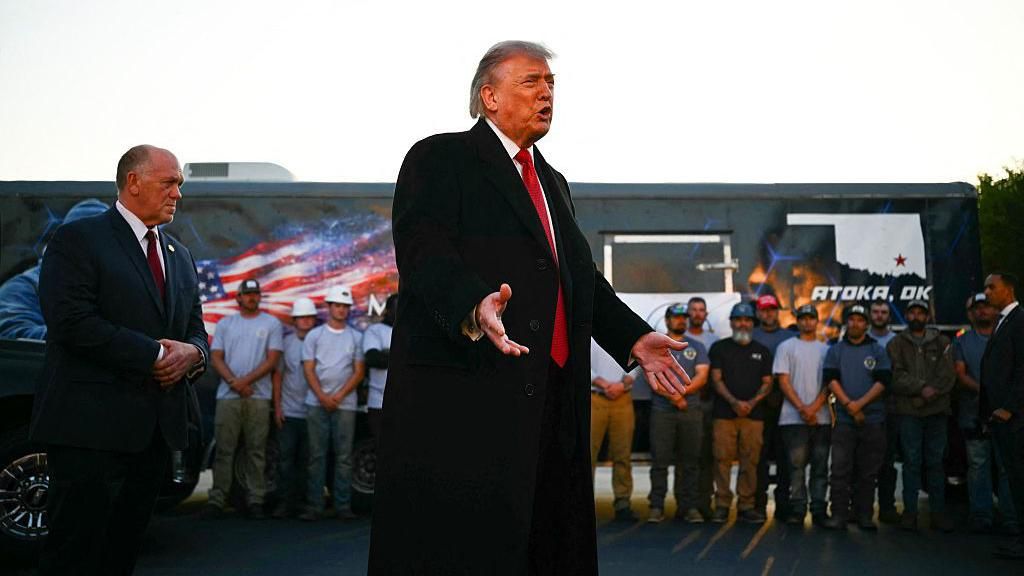
    U.S. President Donald Trump has made an unexpected announcement claiming that the top leaders of Israel and Lebanon will hold their first ever direct conversation Thursday, a move that would mark a major breakthrough in decades of frozen relations between the two neighboring states. But as of Thursday morning, neither the Israeli nor Lebanese governments have verified the announcement, leaving the diplomatic development shrouded in uncertainty.

  • Modi is pushing to get more women into India’s Parliament. That could have other consequences

    Modi is pushing to get more women into India’s Parliament. That could have other consequences

    NEW DELHI – India’s Parliament kicked off a historic debate Thursday on a transformative bill that would reserve one-third of all national and state legislative seats for women, a proposal framed as a decades-overdue step to expand gender representation in Indian politics that is already sparking fierce political friction over its tie to a sweeping electoral boundary overhaul.

    If enacted, the legislation would accelerate implementation of a 2023 law mandating 33% female reservation in legislative bodies, marking one of the most significant shifts to India’s political landscape since the country gained independence in 1947. For a national legislature where women currently hold just 14% of lower house seats, the reform could dramatically expand female participation in a system long dominated by male politicians.

    The core point of controversy stems from the bill’s dependency on a separate, contentious delimitation proposal that would redraw India’s parliamentary voting boundaries based on 2011 census population data. If approved, the redraw could expand the total number of seats in the Lok Sabha, India’s lower house of Parliament, from the current 543 to roughly 850.

    While broad cross-party support exists for the goal of increasing women’s representation in Parliament, opposition parties have raised urgent alarms over the linked boundary redraw, warning the process would be manipulated to shift political advantage toward Prime Minister Narendra Modi’s ruling Bharatiya Janata Party (BJP). The bills are being considered during a three-day special parliamentary session, and both require a two-thirds majority vote in both upper and lower houses to pass. Modi’s National Democratic Alliance coalition currently holds 293 seats, 67 short of the 360 votes needed for approval.

    Proponents of the quota argue the reform will close India’s persistent gender gap in political leadership. Several of India’s regional neighbors, including Nepal and Bangladesh, already enforce similar female reservation policies for national legislatures, and India has long required 33% of seats in local governance bodies to be reserved for women. Supporters say adding hundreds of women to national and state legislatures will reframe policy priorities to address long-neglected issues such as women’s healthcare, access to education, and gender-based violence. The exact mechanism for allocating female seats in the expanded parliament has not yet been clarified.

    Women’s rights advocate Ranjana Kumari emphasized that the reform would make India’s democracy truly reflective of its population, pushing political parties to field far more female candidates than they currently do. “The door is little open. Women will enter and fill the room slowly,” Kumari noted.

    For young Indian women, the reform also carries profound symbolic meaning. Pranita Gupta, a 23-year-old law graduate, said the policy would instill “a sense of confidence that we can participate in politics and we can be part of Parliament not only as an exception but as well as a norm.”

    Critics of the linked delimitation process warn that basing new constituency boundaries on population will reallocate parliamentary power toward India’s faster-growing northern states, where the BJP holds its strongest base of support, at the expense of southern states that have seen sharper declines in birth rates and built more robust regional economies. India’s Constitution requires parliamentary seat allocations to be revised after each national census to reflect population shifts, but boundary redraws have not been conducted since the 1971 census, as successive governments delayed the process over fears of political conflict driven by uneven population growth across regions.

    Southern state leaders argue that a population-based delimitation would punish regions that successfully reduced population growth, cutting their seat share and national political influence while awarding additional seats to northern states. The BJP has dismissed these concerns as unfounded and misleading, according to Parliamentary Affairs Minister Kiren Rijiju, who pushed back against criticism earlier this week.

    Political backlash has already spread rapidly. On Thursday, Tamil Nadu Chief Minister M.K. Stalin publicly burned a copy of the delimitation bill and raised a black flag in protest, urging residents across his southern state to join the demonstration. Several other southern state parliamentary representatives appeared in the legislature dressed in black to signal their opposition. India’s top opposition leader Rahul Gandhi has alleged the delimitation process is a deliberate attempt to gerrymander parliamentary constituencies to benefit the BJP ahead of the 2029 national elections. “Delimitation should be based on a transparent policy framework, developed after wide consultations with a consensus,” Gandhi wrote on the social platform X Wednesday.

  • Australia boosts military spending as Iran war makes global impact

    Australia boosts military spending as Iran war makes global impact

    CANBERRA, MELBOURNE – Amid escalating regional and global tensions sparked by the recent conflict between the U.S.-Israel coalition and Iran, Australia has announced the largest peacetime expansion of defense investment in the nation’s modern history, according to Defense Minister Richard Marles, who spoke to reporters Thursday. Marles used the announcement of the two-year defense strategy update to reveal the federal government plans to inject an extra AU$53 billion (US$38 billion) into defense programs over the coming 10 years, setting a clear timeline to lift Australia’s defense budget from its current 2.8% of gross domestic product to 3% by 2033. This milestone spending shift comes as the nation confronts what Marles described as the most unstable and dangerous strategic environment it has faced since the conclusion of World War II. When pressed to quantify how the February strikes targeting Iran by the United States and Israel have worsened Australia’s security risks, Marles declined to give a definitive measure, but emphasized that the conflict has already upended long-standing global security dynamics. “I don’t think anyone could honestly answer that question,” Marles told reporters. “It greatly complicates the global strategic landscape. The world feels less safe.” Despite these heightened risks, Marles reaffirmed Australia’s backing for the international goal of preventing Iran from developing a deployable nuclear weapons capability. Marles pushed back on speculation that the dramatic spending increase is a reaction to pressure from the administration of U.S. President Donald Trump, noting the U.S. Pentagon’s January National Defense Strategy publicly pressured American allies to take greater ownership of their own regional security. He stressed that all defense resourcing decisions are being made independently by the Australian government, pointing to the expansion as the outcome of the current administration’s long-term planning rather than external pressure. “What that has yielded to date is, under our government, the biggest peacetime increase in defense spending that our nation has seen,” Marles said. The updated strategy centers on boosting Australian defense self-reliance – a priority Marles clarified is not equivalent to pursuing full military self-sufficiency, nor does it signal a retreat from Australia’s long-standing alliance commitments. “This is not about jettisoning alliance relationships. To the contrary, alliances, especially with the United States, will always be fundamental to Australia’s defense,” Marles said. The cornerstone of Australia’s long-term defense modernization is the AUKUS partnership, a trilateral security agreement with the U.S. and United Kingdom that will deliver a fleet of at least eight nuclear-powered submarines to the Royal Australian Navy. The massive submarine project, the largest defense acquisition in Australian history, is projected to cost between AU$268 billion (US$193 billion) and AU$368 billion (US$264 billion) over its 30-year lifecycle.

  • A dispatch from inside the Vatican bubble during a remarkable exchange between pope and president

    A dispatch from inside the Vatican bubble during a remarkable exchange between pope and president

    Traveling with the Vatican press pool while covering Pope Leo XIV comes with a unique, almost secluded experience. Chaperoned between stops by police motorcades that cut through even the gridlock of the busiest urban centers, this exclusive press access offers no shortage of perks for working journalists. But during Leo XIV’s landmark four-nation tour of Africa, life inside the carefully managed Vatican “bubble” has taken on a surreal edge, as an unprecedented public exchange of words plays out across continents between the first American pope in history and U.S. President Donald Trump.

    Every morning of this tour, the roughly 70 accredited reporters traveling with the papal delegation wake to new overnight developments out of Washington, and one set of questions hangs over the entire press corps: Will Pope Leo engage directly with the latest attacks? How, if at all, will he address Trump’s criticism while staying focused on the pre-planned pastoral and diplomatic agenda he set for his African trip?

    That dynamic was on full display Wednesday, when the pontiff, his Vatican entourage and the traveling press pool boarded an ITA Airways charter for the second leg of Leo’s 11-day journey: a flight from Algiers, Algeria bound for Yaounde, Cameroon.

    Early in the trip, the pope had already delighted reporters by confronting Trump head-on. Shortly after departing Rome for Algiers on April 13, Leo stopped to answer press questions about a Truth Social post Trump had published the day prior, in which the U.S. president accused the pontiff of being soft on crime, aligned with progressive U.S. political factions, and even claimed Leo owed his election as pope to his own administration’s influence.

    Trump’s original criticism came in response to comments Leo made regarding the ongoing conflict between the U.S. and Iran, where the pope had called for urgent peace and labeled Trump’s threat to annihilate Iranian civilization “truly unacceptable.” Aboard that first flight, the pope told reporters his calls for peace and rejection of war were nothing more than a straightforward articulation of Gospel values, and that he held no fear of the Trump administration.

    On Wednesday, however, Leo chose not to take new questions from reporters, and directed his brief on-plane remarks to his just-concluded visit to Algeria — the first papal visit to the North African nation in history — where he honored the legacy of St. Augustine of Hippo, his own reported spiritual inspiration. While he made no explicit mention of the Iran conflict or Trump’s latest attacks, his choice to deliver the entire address in English, a break from his usual multilingual remarks on the trip, left little doubt that the overnight broadsides from Washington had not gone unheard. In the hours leading up to the flight, Trump had renewed his criticism on Truth Social, while U.S. Vice President JD Vance — a convert to Catholicism — publicly warned the pope to “be careful” when discussing theological matters.

    In his remarks, Leo highlighted the “goodness,” “generosity,” and “respect” extended by the Algerian government during his visit, noting the honor of a full military aerial escort that accompanied the papal plane through Algerian airspace. He also reflected on his historic stop at Algiers’ Great Mosque, framing the visit as a powerful demonstration that even with differing religious beliefs, worship practices and ways of life, diverse communities can coexist peacefully. He added that St. Augustine’s core message — of seeking God and truth, building cross-community bridges, and working toward unity — is a lesson the modern world desperately needs to hear, and one the apostolic trip would continue to lift up through his papal witness.

    Beyond the high-profile transatlantic tension, the papal traveling press pool operates by its own set of rules. Like other heads of state, the pope travels internationally with both an in-house Vatican media team and a cohort of reporters from external global news organizations, which pay substantial fees to secure a spot on the papal plane and gain exclusive access to the pontiff’s events.

    Life inside the Vatican bubble carries clear journalistic tradeoffs. On one hand, reporters get unrivaled access to the pope and his delegation, travel under the protection of the Vatican’s robust security apparatus, and face none of the logistical hurdles that come with independent international reporting: the Vatican handles advance visa processing, secures local SIM cards, arranges accommodation and ground transportation, freeing journalists to focus on reporting rather than planning. Reporters also receive advance copies of the pope’s speeches, occasional off-the-record access to senior Vatican officials, and real-time updates from the Vatican spokesman.

    For most news organizations, however, the primary draw of investing thousands of dollars per reporter for a single papal trip is the chance to be present for impromptu on-board press briefings, the only setting where popes regularly take unscripted questions from reporters while cruising at 35,000 feet. One of the most iconic papal quotes of modern history came from exactly this setting: Pope Francis’ famous “Who am I to judge” remark, made during his 2013 maiden papal trip to Rio de Janeiro when asked about a reportedly gay priest.

    The downside of the bubble, however, stems from the same perks that make it appealing: it deliberately separates reporters from the on-the-ground reality of the countries the pope visits, whether that’s Algeria or any other nation, leaving little time for the independent grassroots reporting that creates balanced, nuanced news coverage. Large news organizations with sufficient resources often offset this gap by deploying separate reporting teams on the ground to produce local context, or allow bubble-based reporters to break away for independent trips, resulting in a mix of official Vatican access and on-the-ground insight.

    But when the biggest breaking news involving the pope is unfolding thousands of miles away, across multiple time zones, life inside the bubble becomes a distinctly jarring experience. The story every news outlet is chasing is not always the formal pastoral agenda the pope has laid out for the trip. Even so, for a historic trip that marks the first visit by an American pope to Africa, the bubble has offered unrivaled front-row access to a moment that will shape both Vatican-U.S. relations and the pope’s global legacy.

    This reporting on religion from the Associated Press is supported through a collaboration with The Conversation US, with funding provided by Lilly Endowment Inc. The AP retains full editorial responsibility for all content.

  • Trump budget director defends 43% military spending boost

    Trump budget director defends 43% military spending boost

    On Wednesday, during testimony before the House Budget Committee, White House Office of Management and Budget Director Russ Vought stood firm in defending the Trump administration’s controversial new fiscal year budget request, which calls for a 43 percent jump in defense spending paired with a 10 percent reduction across non-military domestic programs. Vought framed the imbalanced proposal as the most viable path forward for U.S. national security and fiscal priorities, but the plan drew fierce pushback from committee Democrats, and bipartisan skepticism over defense spending accountability leaves its full passage highly unlikely as lawmakers begin months of debate.

    Top Democratic committee leaders slammed the proposal’s skewed priorities, arguing it abandons core domestic needs that matter most to American households. Ranking member Rep. Brendan Boyle of Pennsylvania pointed out that the dramatic defense expansion comes with no corresponding boost to critical public health programs including Medicare and Medicaid, and no new relief for families struggling with soaring child care costs. “This is a reflection of priorities that are out of whack” with what Americans actually need, Boyle stated.

    In response to criticism, Vought characterized the large defense investment as a paradigm-shifting overhaul of the U.S. military industrial base, designed to break longstanding bureaucratic backlogs that have slowed production of critical military assets. “For instance, the president and his Department of Defense are exhibiting tremendous leadership to build ships, planes, drones, munitions and satellites faster without the backlog of status quo,” he explained during the three-hour hearing. To expand the nation’s defense production capacity enough to double or triple output through new facility construction, rather than just adding shifts to existing sites, Vought noted that multi-year forward purchasing agreements are required, and those upfront costs must be accounted for in the first year of the budget.

    To advance the proposal, Vought outlined a two-track budget strategy for congressional Republicans: the plan would allocate roughly $1.15 trillion for defense in the regular annual appropriations bill, which needs bipartisan support to advance through the evenly divided Senate, and slot an additional $350 billion into a budget reconciliation package that Republicans can pass without Democratic votes. This structure, Vought argued, would avoid the longstanding rule that has seen Democrats demand every one-dollar increase in defense spending be matched by a one-dollar increase in domestic spending. “This Congress has changed the way we can spend money through the reconciliation process to avoid the pitfalls that really caused two decades of not being able to accomplish anything,” he said, noting the procedural change deserves credit. Republicans already leveraged reconciliation to pass major domestic legislation last year, and are currently preparing another reconciliation bill to expand funding for immigration enforcement in the coming months.

    One key gap in the administration’s current request drew repeated questions from committee members: Vought confirmed that the White House cannot yet share even a rough estimate of additional defense funding that will be requested to support ongoing military operations related to the Iran war. “We’re not ready to come to you with a request. We’re still working on it,” Vought testified. “We’re working through to figure out what’s needed in this fiscal year versus next fiscal year.” The current 2025 fiscal year is set to end on September 30, ahead of the new fiscal year beginning October 1.

    The proposed 43 percent defense increase also faced bipartisan pushback over longstanding issues with Pentagon financial accountability. Lawmakers from both parties noted that the Defense Department has consistently failed to complete full, clean audits of its sprawling spending portfolio, and questioned the wisdom of approving a massive funding hike before fixing transparency and fraud issues.

    Washington Democratic Rep. Pramila Jayapal challenged whether the administration was genuinely committed to rooting out waste and fraud across all federal agencies, given its push to add more than half a trillion dollars to Defense Department funding. Vought countered that the department is continuing to make progress toward completing a full, comprehensive audit. Wisconsin Republican Rep. Glenn Grothman echoed that frustration, lambasting what he called pervasive arrogance within Defense Department leadership. “I keep holding my nose because defense is the most important thing. And they just say, ‘We don’t have to do an audit. We’re so damn important. We don’t care what Congress thinks,’” Grothman said, demanding that the full audit be completed by July 31, before lawmakers must advance final spending legislation. Vought sought to reassure skeptical lawmakers, stressing that the administration is committed to rooting out inefficiencies at the Pentagon, with any savings redirected to procurement and military research.

    The House Budget Committee does not have the authority to draft the 12 annual government spending bills. That responsibility falls to the House Appropriations Committee, which will hold hearings with cabinet secretaries and agency leadership in the coming weeks to review the full presidential budget request for the 2026 fiscal year. Appropriations subcommittees will then draft and debate individual spending bills that make up the discretionary portion of the roughly $7 trillion total U.S. federal budget. The vast majority of annual federal spending — around $4.2 trillion — is allocated to mandatory entitlement programs including Social Security, Medicare and Medicaid, while another $970 billion goes to interest payments on the national debt.

    According to nonpartisan Congressional Budget Office data, total defense spending for the 2025 fiscal year, which ended in September 2025, reached $893 billion, while non-defense domestic programs received a combined $980 billion. Under the administration’s proposal, defense spending would surpass domestic discretionary spending for the coming fiscal year, while 10 percent cuts would be spread across dozens of domestic agencies including Agriculture, Education, Health and Human Services, Homeland Security, Housing and Urban Development, Labor, Transportation, State, and Veterans Affairs, among smaller agencies.

  • Doubt cast over One Nation seat as ‘absent votes’ found

    Doubt cast over One Nation seat as ‘absent votes’ found

    A razor-thin election victory for Australia’s One Nation party in the state of South Australia has been thrown into uncertainty after election officials uncovered dozens of overlooked ballots that could overturn the initial result.

    Chantelle Thomas, running on behalf of Pauline Hanson’s right-wing populist party, was officially declared the winner of the regional Narungga seat in last month’s state election, holding a wafer-thin 58-vote advantage over her closest competitor, Liberal Party candidate Tania Stock. That narrow margin, the smallest of any contest across the entire election, meant Thomas’s victory was not finalized until April 2, nearly two full weeks after polling closed on March 21. The Narungga electorate covers most of South Australia’s rural Yorke Peninsula region.

    The entire outcome was upended this week when election administrators discovered 77 uncounted absent ballots that had not been included in the original final tally. Critically, the number of uncounted votes exceeds Thomas’s winning majority by 19 votes, opening the door for the result to be reversed.

    On Thursday, the Electoral Commission of South Australia officially notified all competing candidates of the discovery and ordered a full recount scheduled for Friday April 17. “Following the discovery of votes that have not been counted, I have secured the unopened ballot papers and have ordered a further count for the district of Narungga,” explained Leah McLay, the commission’s acting commissioner. “I have informed all candidates and will oversee the count on Friday, April 17 and nominated scrutineers are invited to attend.”

    Reaction to the administrative blunder has been sharp, with One Nation’s South Australian leader Cory Bernardi launching a scathing attack on the electoral commission’s competence. “How can we rely on the integrity of what has transpired?” Bernardi told local outlet The Advertiser. “Now there’s plenty of questions to be asked and I think the answers need to be forthcoming, but this is very shaky territory for democracy right now.”

    For the opposition Liberal Party, leadership has called for rapid transparency from election officials to clear up widespread public confusion. “Who knows what this will mean for the seat of Narungga, but that’s why I think the electoral commission needs to provide some clarity to people quickly,” said Ashton Hurn, leader of the South Australian Liberals, in comments to the Australian Broadcasting Corporation. Stock, the Liberal candidate who placed second in the original count, told reporters she had not yet been contacted by the commission and was unaware of the planned recount when approached for comment.

    All parties and local voters are now bracing for an anxious 24 hours as the recount gets underway, with the final result of the closely contested seat hanging in the balance. The unforeseen error has sparked broader questions about the integrity of South Australia’s election administration, even as officials move quickly to correct the mistake and confirm a definitive final result.

  • China raises pressure on underground Catholics to join official church, Human Rights Watch finds

    China raises pressure on underground Catholics to join official church, Human Rights Watch finds

    In a detailed new report released Wednesday, New York-based international rights organization Human Rights Watch has documented a sharp escalation in pressure from Chinese authorities on underground Catholic communities to align with the state-controlled official church, alongside expanded surveillance and movement restrictions targeting China’s estimated 12 million Catholic believers. The report frames the intensifying crackdown as an extension of a 10-year government campaign designed to enforce the loyalty of all religious groups and independent religious communities to the officially atheist Chinese Communist Party.

    For decades, China’s Catholic population has been split along two distinct paths: the state-sanctioned Chinese Catholic Patriotic Association, which does not recognize the Vatican’s papal authority, and an underground network of congregations that have maintained unbroken loyalty to Rome even amid sustained persecution. In 2018, Pope Francis brokered a landmark agreement with Beijing aimed at easing decades of bilateral tensions between the Vatican and China. Under the terms of the deal—whose full text has never been disclosed to the public—Beijing puts forward candidates for bishop positions, while the Pope retains the power to veto unacceptable nominees, a departure from centuries of tradition that gave the Vatican exclusive control over bishop appointments.

    Despite the 2018 accord, Human Rights Watch senior China researcher Yalkun Uluyol emphasized that Catholics across China continue to face mounting repression that systematically violates their fundamental right to religious freedom. The organization is calling on Pope Leo XIV, who assumed the papacy last year, to launch an urgent full review of the agreement and pressure Beijing to end ongoing persecution and intimidation targeting underground clergy, church leaders and ordinary worshippers.

    Since the 2018 deal was signed, Human Rights Watch found, Chinese authorities have used a range of coercive tactics to force underground Catholic communities into joining the state-controlled Patriotic Association. These tactics include arbitrary detention, enforced disappearances, and long-term house arrest targeting underground Catholic bishops and priests. The report also notes that ideological control and digital surveillance have been tightened within the official state-approved church, alongside new restrictions on religious activities and foreign connections. A regulatory change adopted last December now requires all Catholic clergy to obtain explicit state approval before traveling abroad.

    Because Human Rights Watch researchers are barred from entering mainland China, the organization based its findings on firsthand accounts from individuals with direct knowledge of Catholic life inside China who now reside outside the country, as well as input from leading experts on religious freedom and Chinese Catholicism. Specific testimonies included in the report are attributed to anonymous sources who left China to avoid government retaliation.

    Pope Leo made his first appointment of a Chinese bishop under the 2018 agreement just one month after taking office last year, and in subsequent public comments, he confirmed he would maintain the agreement “in the short term.” “I’m also in ongoing dialogue with a number of people, Chinese, on both sides of some of the issues that are there,” Leo stated in an interview. “It’s a very difficult situation. In the long term, I don’t pretend to say this is what I will and will not do, but after two months, I’ve already begun having discussions at several levels on that topic.” As of Wednesday, Vatican spokesman Matteo Bruni had not issued any immediate response to requests for comment on the Human Rights Watch report, and China’s Foreign Ministry also declined to immediately answer queries from the Associated Press on the findings.

    The broader crackdown on Catholic communities is part of a larger national policy launched by Chinese President Xi Jinping in 2016, centered on the “Sinicization” of all religion. The policy seeks to expand state oversight and ideological control to bring all religious practice into alignment with Communist Party ideology and leadership. Under this campaign, Human Rights Watch found, authorities have demolished hundreds of church buildings and crosses, banned gatherings at unregistered unofficial churches, restricted access to religious texts including the Bible, and seized unauthorized religious materials. The Sinicization drive has already led to severe repression of other religious communities, including Tibetan Buddhism and Uyghur Islam, according to the report.

    The escalating pressure on independent religious groups extends beyond Catholic communities. Last October, Pastor Ezra Jin Mingri, leader of one of China’s largest unregistered underground Protestant congregations, Zion Church, was detained at his home in Guangxi Zhuang Autonomous Region, alongside dozens of other unregistered church leaders across the country, according to his family and China-based religious monitoring groups. In April, U.S.-based religious freedom advocacy group ChinaAid called on former U.S. President Donald Trump to demand Jin’s release during a planned scheduled meeting with Xi Jinping in May. Bob Fu, president of ChinaAid, argued that the Chinese Communist Party has accelerated its systematic campaign to eliminate independent religious life entirely, and called on the U.S. government to impose tangible consequences rather than only issuing expressions of concern.

  • Albanese government considering exempting new houses from capital gains reform

    Albanese government considering exempting new houses from capital gains reform

    As Australia’s Albanese government prepares for its upcoming May federal budget, a key policy debate over capital gains tax (CGT) reform has moved to the forefront, with new residential properties emerging as a potential candidate for exemption from planned cuts to the controversial CGT discount.

    CGT is a levy applied to profits earned from the sale of assets including stocks and real estate, which is counted toward a taxpayer’s annual income. Current rules grant a 50% discount on capital gains for assets held longer than 12 months, with an automatic full exemption for an individual’s primary place of residence.

    Ahead of potential changes expected to be outlined in the budget, the Business Council of Australia (BCA) has formally called on the government to carve out an exception for newly built dwellings if it proceeds with rolling back the existing 50% CGT discount. BCA chief executive Bran Black argued that any adjustment to the CGT discount must be structured to avoid discouraging critical investment in new housing supply, a core priority of the current government’s economic agenda. Black also pushed back against any retrospective application of CGT changes, noting that any alterations to the tax code are best implemented as part of a broader, comprehensive tax reform effort rather than isolated adjustments.

    Prime Minister Anthony Albanese this week confirmed to Nine Entertainment publications that the government is exploring policy changes that go beyond simply increasing overall housing supply, amid ongoing political pressure to address rising wealth inequality. The Labor government is currently facing growing pressure from populist party One Nation, which has sought to mobilize voter anger over widening income and wealth gaps. Albanese pushed back against populist framing, arguing that meaningful change comes from giving all Australians a tangible stake in the national economy, not divisive rhetoric.

    The push for CGT reform lines up with recent comments from Treasurer Jim Chalmers, who said last week he would be “pretty happy” if the 2026-27 budget is remembered as a landmark tax reform budget. The budget’s finalization has been delayed compared to typical timelines, a knock-on effect of economic volatility stemming from the ongoing war in the Middle East.

    This is not the first time Labor has pursued changes to property-focused tax arrangements: prior to the 2016 and 2019 federal elections, the party proposed adjustments to negative gearing that were intentionally structured to avoid retrospective application and exempt new housing, in a bid to protect investment in new supply.

    Ahead of the May budget, the government faces competing pressure from both the opposition crossbench and major political parties on the CGT debate. Greens Senator Nick McKim argued last month that Labor holds a historic opportunity to pass ambitious, progressive tax reform through the current parliament, saying that if the government is serious about cutting inequality and addressing the national housing crisis, now is the time to modify CGT. On the opposite side of the debate, the center-right Coalition has raised repeated concerns that any changes to CGT will increase the overall tax burden for Australian investors and homeowners.

    Independent voices have also weighed in to the Senate Select Committee on the Operation of the Capital Gains Tax, which has been collecting submissions on the current system. Prominent financial journalist and author Alan Kohler told the committee earlier this year that the current tax structure sends a clear signal that capital income is prioritized over labor income in Australia, a dynamic he described as one of the foundational drivers of national inequality. Kohler argued that the current CGT framework over-adjusts for inflation, unlike income tax, and that the 50% discount is larger than needed to account for inflation while unnecessarily distorting investment choices toward existing assets.

  • ‘A disgrace’: Why Australia’s oil refineries were shuttered before Geelong fire

    ‘A disgrace’: Why Australia’s oil refineries were shuttered before Geelong fire

    A dramatic overnight explosive fire at one of Australia’s only two remaining oil refineries has reignited fierce political debate over the nation’s decades-long erosion of domestic fuel refining capacity, with critics slamming the current state of sovereign energy capability as a national disgrace.

    The blaze broke out Wednesday night at Viva Energy’s Corio Refinery in Geelong, a facility that supplies 10% of Australia’s total fuel demand and meets half of the state of Victoria’s consumer and commercial fuel needs. Emergency crews worked through the night to contain the fire, bringing it under control after hours of intensive response. The incident has thrown a harsh spotlight on how far Australia’s domestic refining sector has shrunk since the turn of the century, a shift that has left the country heavily dependent on imported fuel from large-scale Asian refineries.

    In 2000, Australia maintained a network of eight operational oil refineries spread across multiple states. Today, only two remain: Viva’s Geelong site and Ampol’s Lytton Refinery in Brisbane. Labor party figures confirm six of the six closed facilities were shut down during previous Coalition federal governments, with a decades-long trend of closures driven by rising domestic operating costs and intense competition from larger, newer, more cost-competitive refineries across East and Southeast Asia.

    The first major closure came in 2003, when ExxonMobil began winding down operations at its Port Stanvac refinery in South Australia, permanently ceasing production in 2009 after years of mounting losses that made the facility economically unviable. Just a few years later, Shell followed suit by closing its Clyde refinery on Sydney’s Parramatta River, citing steep upgrade and maintenance costs plus unbeatable competition from Asian operations. Caltex closed its Kurnell refinery at Botany Bay just 12 months later, marking the start of a steady contraction that would continue for nearly two decades.

    As early as 2013, a House of Representatives Economics Committee report warned of the risks of shrinking domestic capacity even as the federal government’s 2012 Energy White Paper took a more relaxed stance on fuel security. The white paper argued that open, competitive global supply chains would reliably meet Australia’s fuel needs, and framed the goal of full national self-sufficiency as unnecessary and economically inefficient. The report acknowledged that Australian refiners had poured $9.5 billion into facility upgrades over the 10 years to 2012, but noted structural pressures: larger Asian refineries had set a far lower break-even price benchmark that domestic operations could not match, while high local labor and operational costs and a strong Australian dollar kept the sector under persistent financial pressure.

    Closures continued long after the 2013 report: BP shut its Bulwer Island refinery in Queensland in 2015, then converted its Kwinana refinery in Western Australia to a fuel import terminal in 2021, a move matched by ExxonMobil at its Alton, Victoria facility that same year. Even during the COVID-19 pandemic, when global supply chains were already disrupted, BP cited the continued growth of large export-focused Asian refineries as the core reason for its exit from domestic refining.

    The issue of national fuel security only returned to the top of the political agenda in early 2025, after geopolitical tensions disrupted global crude supplies. Following military strikes on Iran and the Islamic Republic’s temporary de facto closure of the Strait of Hormuz – the chokepoint through which 20% of the world’s global crude oil shipments pass – supply pressures pushed up costs for Asian refineries and brought Australia’s over-reliance on imported fuel back into sharp focus. In response, the Albanese government has moved to strengthen regional energy trade agreements, with Prime Minister Anthony Albanese visiting Malaysia, Singapore and Brunei to shore up supply relationships, and has pursued diversification by increasing fuel imports from the United States.

    In the wake of the Geelong fire, political parties have traded blame over who is responsible for the nation’s vulnerable refining capacity. Former Labor Environment Minister Tanya Plibersek said the incident had reaffirmed the party’s longstanding commitment to maintaining domestic refining self-sufficiency, noting that the current Albanese government has made keeping the two remaining refineries operational a core policy priority.

    But Opposition Leader Angus Taylor, of the Liberal-National Coalition, claimed credit for his party’s previous government, saying it was the Coalition that “saved the last two refineries.” Taylor criticized the current government’s energy policies, arguing that Australia needs to expand domestic fuel production and drilling, a goal he says the Labor government has no interest in pursuing.

    Australian Workers’ Union Victorian Branch President Ross Kenna, who spoke to media Thursday from the Geelong refinery site, called the current state of Australia’s refining sector “a disgrace.” “We do need to invest in this sort of sovereign capability,” Kenna told Sky News. “The union movement has been pushing that entire time to try to ensure that these sort of industries don’t go by the wayside.”

  • Iran used Chinese spy satellite to attack US bases in Gulf: Report

    Iran used Chinese spy satellite to attack US bases in Gulf: Report

    A Wednesday report from The Financial Times has unveiled new details of a military space cooperation deal that is roiling geopolitics across the Middle East, revealing that Iran acquired a high-resolution Chinese surveillance satellite late in 2024 specifically to aid in targeting US military installations across the region ahead of recent missile and drone strikes.

    According to the FT investigation, Iran’s Islamic Revolutionary Guard Corps Aerospace Force purchased the TEE-01B spy satellite system for approximately $36.6 million, with the transaction settled entirely in Chinese renminbi. Cross-referenced data including time-stamped geographic coordinates, captured satellite imagery, and independent orbital trajectory analysis confirms that Iranian military commanders leveraged the satellite to continuously monitor key US military facilities in the weeks surrounding the March strikes, both before and after the attacks were carried out.

    The surveillance targets documented in the report span five Middle Eastern countries: the Prince Sultan Air Base in Saudi Arabia, Muwaffaq Salti Air Base in Jordan, areas adjacent to the US Fifth Fleet’s naval headquarters in Manama, Bahrain, and Erbil International Airport in Iraq. Official logs obtained by the FT show that Prince Sultan Air Base was placed under sustained surveillance on March 13, 14 and 15, and just days after the final day of monitoring, US President Donald Trump publicly confirmed that American warplanes stationed at the base had sustained damage in an Iranian strike.

    Following the strike, separate reporting from Middle East Eye outlined subsequent US moves to reposition its regional military footprint: Washington lobbied Riyadh to grant US forces access to King Fahd Air Base in the western Saudi province of Taif, as US officials privately signaled they were considering a partial drawdown of forces from the Persian Gulf. Saudi Arabia ultimately granted the US request, but the advanced Chinese satellite has extended Iran’s surveillance reach far beyond the new Taif location, allowing it to track activity at the sprawling Camp Lemonnier US base in Djibouti, Camp Buehring and Ali Al Salem Air Base in Kuwait, and Duqm International Airport in Oman.

    The FT’s findings upend long-held assumptions about military intelligence asymmetry in the Middle East. For decades, the US has held a decisive military advantage over rival powers rooted in cutting-edge intelligence gathering and space technology, a capability it has openly shared with Ukraine to enable precision strikes against Russian targets. Compared to Iran’s previous most advanced military satellite, the Noor-3, which only captured imagery at a 5-meter resolution, the TEE-01B can deliver half-meter resolution imagery – a capability on par with leading commercially available Western surveillance satellites.

    Further scrutiny of the satellite’s supply chain reveals clear links to Chinese military entities. The satellite was manufactured by Earth Eye, a private Chinese firm that publicly highlights its partnerships with leading Chinese universities that have long-standing research collaborations with the People’s Liberation Army. Emposat, the Chinese company that provided the ground control infrastructure and operational software for the system, is formally tied to the PLA Aerospace Force, according to a previous public report released by the US Congress.

    This disclosure is not an isolated development; it adds to a growing body of reporting outlining China’s quiet military support for Iran amid escalating tensions with the US and Israel. As early as July 2025, Middle East Eye reported that China had supplied Iran with advanced surface-to-air missile systems to help Tehran rebuild air defenses damaged by US and Israeli strikes during a 12-day regional conflict. Before the joint US-Israeli offensive launched in February, MEE also revealed that Iran had received suicide drones and other small offensive weapons from Chinese suppliers. Just this week, The New York Times added another layer to the picture, reporting that China may have also delivered man-portable air defense systems (Manpads) to Iran during the ongoing conflict.

    Beijing has repeatedly denied all allegations that it is providing lethal military assistance to Iran. For his part, Trump has responded to the new reports by threatening to impose a 50% tariff on all Iranian goods. In a Wednesday interview with Fox News, Trump noted that Chinese leader Xi Jinping has denied arming Iran. The US president’s planned March visit to Beijing for a bilateral meeting with Xi was delayed until May amid the regional conflict, and Trump sought to downplay rising bilateral tensions in a post to the social platform X, writing that Xi would give him “a big, fat hug” when he finally arrives in the Chinese capital.