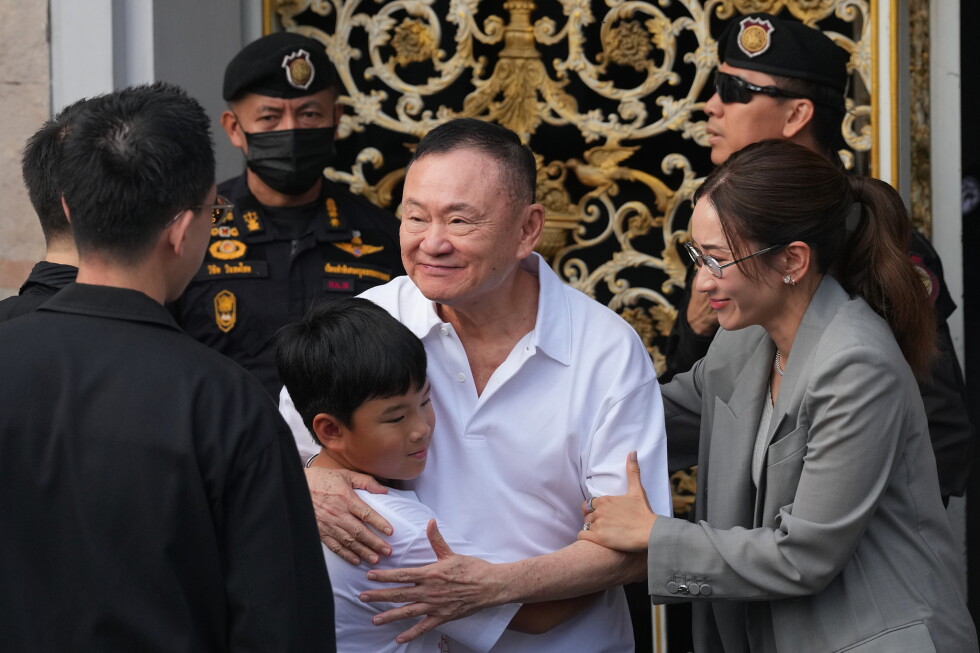
BANGKOK – In a move that reshapes Thailand’s volatile political landscape, former Prime Minister Thaksin Shinawatra has officially wrapped up all court-mandated legal obligations after King Maha Vajiralongkorn granted a royal pardon that cut short his four-month probation period, with the decree taking full effect on Wednesday.
The 76-year-old billionaire populist, whose influence has rippled through Thai politics for more than 20 years, walked out of a Bangkok prison last month to throngs of cheering supporters. Ever since his release, political observers have engaged in intense speculation over whether he will continue to wield significant sway over the Pheu Thai Party, the leading faction in Thailand’s current governing coalition, even as his family has suggested he may be preparing to step away from frontline politics.
The royal pardon decree, announced to mark Queen Suthida’s birthday, was published in the official Royal Gazette on Tuesday evening. Under Thailand’s constitutional monarchy framework, the king holds exclusive final authority over pardon grants for convicted individuals. The pardon applied to a broad group of qualifying inmates who met pre-set eligibility criteria; Thaksin qualified for full clemency because he had already been released on probation and had fewer than 12 months left on his original commuted sentence.
Thaksin first entered politics as a telecommunications tycoon, launching his own political party in 1998 before winning the prime ministership in 2001. His time in office ended abruptly in 2006, when a military coup ousted him while he was traveling overseas, triggering nearly 20 years of deep political polarization that continues to define Thai public life.
Even during 15 years of self-imposed exile following the coup, political parties aligned with Thaksin repeatedly won general elections and returned to power. His signature populist policies, which expanded access to public services and microloans for low-income households, built a fiercely loyal base among working-class and rural voters, particularly in Thailand’s northern and northeastern regions. But his overwhelming popularity and confrontational governing style also created intractable divisions between his grassroots supporters and the country’s established urban elite, royalist factions, and military establishment.
Thaksin returned to Thailand in 2023, after which he began serving an eight-year prison sentence handed down on corruption-related charges, including convictions for abusing his prime ministerial authority to benefit his personal business holdings and improperly approving a state lottery project that caused public financial losses. Shortly after his conviction, King Maha Vajiralongkorn commuted his sentence to one year, and Thaksin was initially allowed to serve his term in a private suite at Bangkok’s Police Hospital on medical grounds.
After widespread public outcry over claims of unfair preferential treatment, Thailand’s Supreme Court ordered Thaksin moved to a mainstream prison to serve his sentence in September 2025. He was granted parole on May 11, having served eight months of his one-year commuted sentence. As a condition of his parole, he was required to wear an electronic monitoring ankle bracelet, with his original four-month probation period set to run through early September. His legal representative, attorney Winyat Chatmontree, confirmed to the Associated Press on Wednesday that all legal restrictions have now been lifted, though administrative procedures to remove the monitoring bracelet will take several additional days to complete.
The early end to Thaksin’s sentence comes as Thailand’s governing coalition navigates shifting internal dynamics, leaving open the question of how much the former premier will participate in national politics moving forward.