分类: politics

  • Trump says shooting at press dinner ‘won’t deter him’ from Iran war

    Trump says shooting at press dinner ‘won’t deter him’ from Iran war

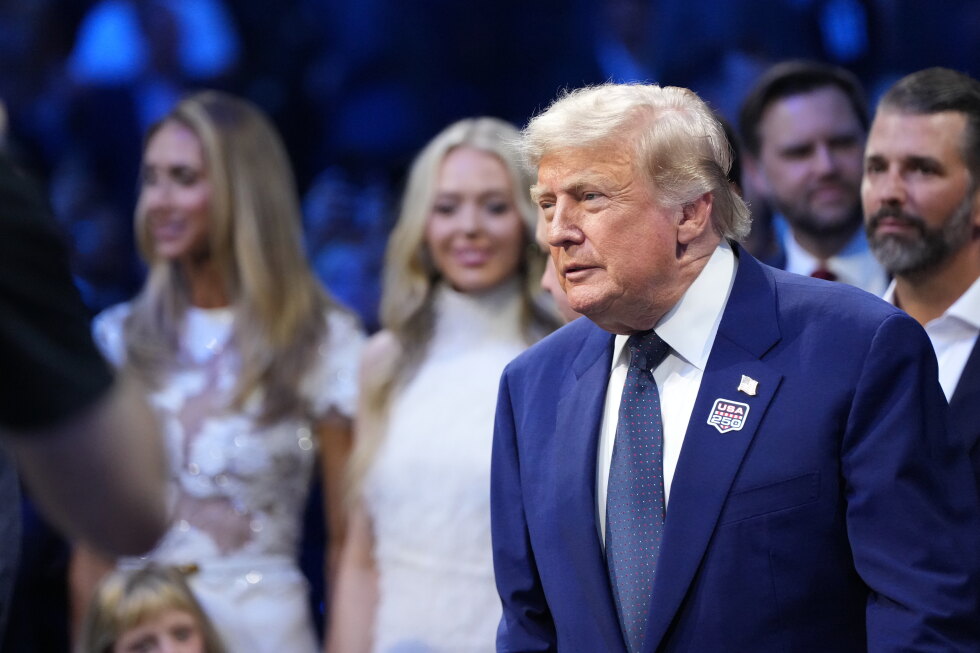
    A dramatic shooting incident outside the venue of the annual White House Correspondents’ Association Dinner on Saturday night triggered an emergency evacuation of former President Donald Trump and dozens of top ranking U.S. administration officials, leaving a Secret Service agent wounded and the high-profile event postponed indefinitely. The incident, which marks the third documented assassination attempt targeting Trump in less than a year, has sent shockwaves through Washington D.C.’s political circles even as authorities move forward with criminal charges against the identified suspect.

    Emergency response protocols were activated immediately after attendees reported hearing between five and eight gunshots ring out near the Washington Hilton’s banquet hall, where the dinner was already underway. Video footage captured from the scene shows White House Press Secretary Karoline Leavitt and First Lady Melania Trump visibly stunned by the sudden gunfire, before security personnel rushed the pair offstage alongside Trump, who was pulled to the ground by his protective detail for safety.

    In an update to reporters shortly after the situation was contained, Trump confirmed that the suspected shooter had been taken into custody, labeling him a “lone wolf” and a “very sick person.” U.S. law enforcement later identified the 31-year-old suspect as Cole Tomas Allen, a resident of Torrance, California. Washington’s police chief confirmed Allen was found armed with a shotgun, a handgun, and multiple knives, and preliminary investigations indicate he was registered as a guest at the Hilton hotel where the event was held. According to anonymous sources cited by CBS News, Allen told arresting officers he specifically intended to target senior Trump administration officials. The U.S. Attorney for the District of Washington has already filed initial charges of illegal firearms possession and assault of a federal officer with a dangerous weapon, confirming that additional felony counts are forthcoming.

    One Secret Service agent was hit by gunfire during the incident, but survived unharmed after a bulletproof vest stopped the round, a detail Trump confirmed to reporters. In the hours after the evacuation, the former president drew controversy for posting an image on his Truth Social platform that showed a shirtless Allen lying face-down on the ground with his hands cuffed behind his back.

    Addressing reporters after the incident, Trump sought to link the latest attempt on his life to his high-profile policy agenda, drawing a parallel between himself and iconic former President Abraham Lincoln. “They don’t go after the ones that don’t do much,” he told reporters Saturday evening. “I hate to say I’m honoured by that, but we’ve done a lot.” This incident marks the third documented assassination attempt against Trump since July 2024, when he narrowly escaped an attempt at a Pennsylvania campaign rally that left a bullet grazing his upper body. Two months after that rally attack, a second suspect armed with a rifle was arrested at Trump’s southern Florida golf course, and was ultimately sentenced to life in prison on attempted assassination charges.

    When asked if the shooting could be connected to ongoing U.S. military tensions with Iran, Trump initially said “you never know” but quickly walked back that suggestion to align with preliminary law enforcement findings. “I don’t know if that had anything to do with it, I really don’t think so, based on what we know,” he stated. The former president went on to reaffirm his unwavering stance on U.S. policy toward Iran, saying the shooting would not deter him from advancing his priorities in the ongoing conflict. “It’s not going to deter me from winning the war in Iran,” he emphasized. The comment came just hours after Trump confirmed he had canceled a planned trip by his diplomatic envoys to hold peace talks with Iranian officials, telling reporters Tehran could “call us” whenever it was ready to negotiate.

    Officials with the White House Correspondents’ Association confirmed the dinner would be postponed to a later date, with no new scheduling details released as of Sunday morning.

  • Former Italian PM: China and EU should cooperate to restore multilateralism

    Former Italian PM: China and EU should cooperate to restore multilateralism

    Against a backdrop of escalating global geopolitical fragmentation that has shaken the foundations of long-standing international cooperation, a former leader of Italy has issued a clear call for coordinated action between China and the European Union to rebuild the global multilateral system. In an exclusive interview with China Daily conducted on the sidelines of the 2026 Shanghai Forum, which brought together global policymakers and scholars from April 24 to 26, Enrico Letta — current dean of the IE School of Politics, Economics & Global Affairs at IE University and former Italian Prime Minister — warned that the world is currently grappling with what he described as a major geopolitical ‘earthquake’ that threatens to unravel decades of collaborative progress. Letta stressed that this moment of global instability demands that two of the world’s largest economic and political actors, China and the EU, set aside differences and work in lockstep to reverse the retreat from multilateral cooperation. He specifically pushed back against the growing adoption of ‘law of the jungle’ power politics that has eroded trust between nations in recent years, reaffirming his strong commitment to upholding a rules-based international order anchored in the United Nations framework. The 2026 Shanghai Forum, which served as the stage for Letta’s remarks, has long functioned as a key platform for open dialogue between Asian and global stakeholders, making it a fitting venue for a discussion focused on repairing fractured international cooperation. Letta’s intervention comes at a time when growing unilateralism, trade tensions, and geopolitical rivalries have put the post-Cold War multilateral system under unprecedented strain, with many global leaders and analysts calling for renewed collective action to address shared challenges ranging from climate change to economic inequality.

  • Palace holding talks over plans for King’s US visit after DC shooting

    Palace holding talks over plans for King’s US visit after DC shooting

    Just days ahead of King Charles III’s first state visit to the United States as Britain’s monarch, a shooting incident at the Washington DC White House Correspondents’ Dinner has forced security officials on both sides of the Atlantic to re-evaluate the trip’s operational plans. The four-day visit, which will also see Queen Camilla accompany the King, is still scheduled to kick off Monday, when the royal couple is set to arrive in the nation’s capital to be hosted by President Donald Trump.

    Buckingham Palace confirmed in an official statement released Sunday that King Charles has received continuous updates on the Saturday evening shooting. The statement added that the monarch was “greatly relieved” to learn that President Trump, former first lady Melania Trump, and all other attendees at the dinner left the incident unharmed. Throughout Sunday, UK and US security and diplomatic teams held a series of discussions to assess whether the shooting would alter the trip’s itinerary and security protocols.

    The details of the shooting have now been confirmed by law enforcement and administration officials: a 31-year-old suspect identified as Cole Tomas Allen, a native of Torrance, California, opened fire while attempting to force entry into the dinner venue. President Trump and Melania Trump were immediately evacuated, and footage of the immediate aftermath shows armed security personnel rapidly removing U.S. Vice President JD Vance from the event stage. One Secret Service agent sustained a close-range gunshot wound, but his bulletproof vest prevented a fatal injury; no other attendees or officials were hurt. Acting U.S. Attorney General Todd Blanche told NBC’s *Meet the Press* that Allen is believed to have targeted current Trump administration officials, and will be arraigned on federal charges on Monday, the same day the royal visit begins.

    Blanche sought to reassure the public that robust security arrangements are already in place for the King’s visit, saying he is “very confident” in the royal couple’s safety. He framed the response to the Saturday shooting as proof that the U.S. national security system functions as intended, noting that an “all-government approach” is being deployed to secure the visit.

    UK officials echoed that the trip will move forward with adjusted, enhanced security. Chief Secretary to the Prime Minister Darren Jones told the BBC’s *Sunday with Laura Kuenssberg* that Downing Street and Buckingham Palace have maintained close coordination with U.S. security teams since before the shooting, and additional discussions would continue Sunday to finalize updated plans. A senior government official emphasized that “appropriate security in place in relation to the risk” for the visit.

    Shadow Home Secretary Chris Philp also agreed the visit should not be canceled, arguing that violence must not be allowed to disrupt normal diplomatic and political activity. Even so, he urged joint UK-US security teams to conduct a full overnight review of the King’s security detail to close any potential gaps, noting that while standard high-level visit security is already stringent, a fresh review was “vital” after the shooting.

    Top UK political leaders from across the partisan divide have already united to condemn the shooting. Prime Minister Keir Starmer wrote on X that he was shocked by the incident, calling any attack on democratic institutions and press freedom something that “must be condemned in the strongest possible terms.” Liberal Democrat leader Ed Davey called the scenes “really shocking,” stressing that “political violence is wrong” and expressing relief that no lives were lost. Reform UK leader Nigel Farage echoed that sentiment, noting that “however much we disagree about politics, if violence is used we all lose.”

    This state visit marks the first by a British monarch to the United States since Queen Elizabeth II’s 2007 trip, and the itinerary includes major diplomatic engagements: King Charles is expected to address a joint session of the U.S. Congress, lay a wreath honoring fallen British and American service members in Virginia, and visit the 9/11 Memorial in New York City. While the trip is moving forward, security planners are weighing adjustments to the King’s traditional public meet-and-greets with crowds, a staple of royal overseas visits. Security was already set to be extremely high-profile for the trip, but has now been elevated another tier. The unprecedented security bubble that surrounded President Trump’s autumn 2024 visit to the UK, which kept him entirely within the secured grounds of Windsor Castle and cut off all public interaction, is being cited as a potential precedent for any last-minute changes.

    Beyond security, the visit arrives amid a fresh diplomatic point of friction: recent reports have emerged that the U.S. may review its longstanding position on UK sovereignty over the Falkland Islands. Philp said it would be “very reasonable” for the King to raise the issue with President Trump during their talks. While Jones declined to speculate on what the King would discuss in private, he reaffirmed the UK government’s clear stance: “The Falklands is British territory and the only people that get to decide otherwise are the islanders themselves.”

    Not all voices have backed moving forward with the trip, however. Jonathan Dimbleby, a prominent broadcaster, royal historian, and close associate of King Charles, told BBC Radio 4 that the visit should be postponed. He argued that the inherent unpredictability of President Trump, who Dimbleby claimed has “systematically mocked” the UK, makes this a poor moment to deploy the monarch as a tool of British soft power. “Sound judgement is to deploy that asset, that soft power, at the right time. I think this is not the right time,” Dimbleby said, noting that Trump can be effusive in praise of the royal family one day and critical of British leadership and institutions the next. For trip planners already navigating a diplomatically complex visit, the Saturday shooting has added a new set of last-minute uncertainties and decisions to resolve before Monday’s arrival.

  • Washington hotel shooting raises questions about Trump security

    Washington hotel shooting raises questions about Trump security

    On a Saturday evening in Washington D.C., gunfire interrupted the annual White House Correspondents’ Association dinner at the Washington Hilton, throwing the nation’s capital into another national security crisis and triggering urgent questions about gaps in presidential protection protocols.

    Even hours after the incident was contained, U.S. President Donald Trump appeared before reporters in a crisp black tuxedo, reflecting on the recurring threats that have followed him through his political career. “I can’t imagine that there’s any profession that is more dangerous,” he told assembled media. While Trump remains the most heavily protected public figure in the world, guarded by a large contingent of Secret Service agents around the clock, three major security incidents targeting the president in less than two years have exposed persistent vulnerabilities in the system designed to keep him safe.

    This latest incident marks the third high-profile attempt on Trump’s life since summer 2024. The first saw a bullet graze his ear during a campaign rally in Butler, Pennsylvania. Just 64 days later, a second would-be assassin targeted Trump while he played golf at his private course in Florida. Now, just months into his second term, a shooting at one of Washington’s most high-profile annual political gatherings has once again put presidential security under intense public and political scrutiny.

    The suspected shooter has been identified as 31-year-old Cole Tomas Allen, a registered guest at the Washington Hilton. Authorities confirmed Allen was armed with a shotgun, a handgun, and multiple edged weapons when he attempted to breach security checkpoints leading to the dinner ballroom. Closed-circuit footage shared on social media by Trump shows Allen charging through a Secret Service checkpoint located one floor above the main gala space. He exchanged gunfire with responding law enforcement officers before being taken into custody, and no civilians or protecting agents were seriously injured during the confrontation. Trump and Vice-President JD Vance were immediately evacuated from the stage by Secret Service agents and were never in imminent danger, according to official statements.

    Multiple witnesses who attended the dinner, including senior journalists and foreign diplomats, have raised sharp questions about the laxity of on-site security arrangements. BBC Chief North America Correspondent Gary O’Donoghue, who was present at the event, noted that while surrounding roads were closed for hours ahead of the dinner, security screening at the venue itself was surprisingly minimal. “The man on the door outside only took a cursory look at my ticket from what must have been six feet away,” he recalled. Former UK ambassador to Washington Kim Darroch, a veteran of multiple past correspondents’ dinners, criticized the layered security setup for the event, telling the BBC’s *Sunday with Laura Kuenssberg*: “If you were there [as a hotel guest] and you had bad intentions about breaking into this dinner, there’s just one security thing you had to get past… and then you’re in the ballroom.” The hotel remained open to regular paying guests throughout the gala, a decision that allowed Allen access to the building without additional screening.

    Acting U.S. Attorney General Todd Blanche told NBC News that early investigations indicate Allen intended to target senior administration officials, “likely including the president.” Trump later used the incident to bolster his case for a new, purpose-built White House event ballroom, a project currently tied up in litigation. He described the Washington Hilton as “not a particularly secure building” and argued the new facility would address critical security gaps. “It’s actually a larger room, and it’s much more secure. It’s drone proof. It’s bullet-proof glass. We need the ballroom,” he emphasized. At the same time, he praised the Secret Service agents who responded to the threat, saying they did “a great job” evacuating him and the Vice-President and stopping the suspect quickly.

    Law enforcement and presidential security experts have offered mixed assessments of the incident response. Many argue that the system worked as intended: the gunman never breached the ballroom where hundreds of high-profile guests were gathered, and agents followed their training to protect the president immediately. Former FBI special agent Jeff Kroeger told the BBC: “This is exactly what the Secret Service is trained do to. When gunshots were heard they converged on the president, creating a body barrier.” Former Secret Service agent Barry Donadio similarly noted that there was no shortage of personnel deployed to the event, adding that the suspect was stopped well before he could reach primary targets. Moving forward, experts predict security protocols for all Trump-related events will be tightened, most notably with expanded secure perimeters around venues.

    Beyond immediate questions about security at the dinner, the incident has refocused national attention on the growing crisis of political violence in the United States. Official data shows threats against sitting members of Congress and senior executive branch officials have risen sharply in recent years: U.S. Capitol Police investigated more than 8,000 threats against lawmakers in 2023, a 50% increase compared to 2018.

    This shooting is just the latest in a long string of high-profile political attacks stretching back nearly a decade. In 2017, House Majority Whip Steve Scalise and four other people were shot and wounded during a congressional baseball practice in Virginia. In 2022, Paul Pelosi, husband of then-House Speaker Nancy Pelosi, was attacked with a hammer and suffered a fractured skull. Just last year, Minnesota State Representative Melissa Hortman and her husband were shot and killed, while State Senator John Hoffman and his wife were seriously injured in a targeted attack. Just months later, prominent conservative commentator Charlie Kirk was assassinated while speaking at a Turning Point USA event in Utah, with the attack filmed and spread widely across social media platforms.

    Notably, the 1981 assassination attempt on former President Ronald Reagan also took place outside the Washington Hilton, the same venue that hosted Saturday’s dinner. Reagan survived a punctured lung from the gunshot wound inflicted by would-be assassin John Hinckley Jr.

    When asked about the recurring threats against him, Trump noted that he had studied the history of presidential assassination attempts, pointing out that iconic past presidents including Abraham Lincoln also faced repeated threats. “They’re big names, and I hate to say I’m honoured by that, but I’ve done a lot [for the US],” he said.

  • Penny Wong to travel to China, Japan, Korea as Iran ceasefire holds

    Penny Wong to travel to China, Japan, Korea as Iran ceasefire holds

    As a fragile ceasefire in Iran holds and global energy markets brace for further volatility, Australia’s Minister for Foreign Affairs Penny Wong is set to embark on a high-stakes regional tour encompassing China, Japan and the Republic of Korea. The journey comes as the Albanese government prioritizes strengthening diplomatic and economic ties across the Indo-Pacific, with a sharp focus on shoring up global and domestic energy security.

    This diplomatic push follows closely on the heels of Prime Minister Anthony Albanese’s recent visit to Singapore, Malaysia and Brunei, where he moved to lock in existing fuel supply arrangements critical to Australia’s energy infrastructure. Wong’s tour will build on that foundation, with coordinated engagement designed to address ongoing disruptions flowing from Middle East tensions.

    In an official statement ahead of the trip, Senator Wong emphasized that direct, face-to-face dialogue with regional partners is essential to maintaining effective coordination amid unfolding global disruptions. “The Middle East conflict and closure of the Strait of Hormuz continue to disrupt global energy markets, with Asian refineries and the Indo-Pacific region disproportionately affected,” she explained. “Australia will continue working with international partners to help secure the supplies we need – including diesel, petrol and fertiliser – and ensure Australia is prioritised as a reliable energy partner.”

    A core milestone of the China leg of the tour will be the eighth iteration of the Australia-China Foreign and Strategic Dialogue, where Wong will meet with her Chinese counterpart Foreign Minister Wang Yi. Senator Wong reaffirmed the Australian government’s commitment to fostering a stable, constructive bilateral relationship with Beijing, noting that this outcome serves the core national interests of both nations. “Australia and China have a Comprehensive Strategic Partnership and benefit from deep economic ties, with our trade relationship underpinning supply chains, investment and livelihoods in both economies,” she said. “Dialogue between our countries enables us to progress the full range of our interests and manage our differences.”

    Despite a recent gradual thaw in bilateral relations, tensions remain under the surface. China has implemented new trade protective measures in response to escalating geopolitical risk surrounding the Iran conflict, a move partially driven by the renewed trade war and tariff agenda pushed by former U.S. President Donald Trump. Chinese diplomatic officials have also publicly criticized the Albanese government’s policy of backing U.S. actions related to the Iran conflict.

    In Japan, Wong is scheduled to hold talks with Japanese Foreign Minister Motegi Toshimitsu, senior cabinet ministers and leading industry representatives. Agenda items include joint collaboration on energy and fuel security, developments in the Middle East, and other regional issues of mutual concern. Wong described Japan as a close ally and shared partner in advancing a free, open, inclusive and resilient Indo-Pacific.

    The final stop on the tour will see Wong travel to the Republic of Korea, a critical trade partner that ranks among Australia’s most important suppliers of refined fuels, including diesel, gasoline and aviation fuel. Discussions in Seoul will focus on reinforcing supply chain stability and expanding energy cooperation amid ongoing global market uncertainty.

  • Japanese government’s push to revise Self-Defense Forces rank titles sparks doubts

    Japanese government’s push to revise Self-Defense Forces rank titles sparks doubts

    A controversial proposal from Japan’s central government to revise the rank nomenclature of the nation’s Self-Defense Forces (SDF) has triggered widespread doubt and criticism across the country, after local media confirmed the administration’s plan to submit amending legislation to the national Diet before the end of 2026.

    Among the most contentious changes proposed is the rebranding of the rank currently called “issa”, which translates directly to “first field officer”, to “taisa” — a term that was widely used for officer ranks in the defunct Imperial Japanese Army, the military force that led Japan’s aggressive expansion across Asia in the years leading up to and during World War II. The revival of this pre-1945 military terminology has put the government’s motivations under intense scrutiny.

    Japan’s SDF has operated with a unique set of rank titles since the force was formally established in 1954, a deliberate structural choice designed to align with the constraints of Japan’s post-war pacifist constitution. The SDF has long been positioned as a defensive force distinct from conventional national militaries, and this upcoming reform marks the first time the country has revised its military rank naming system since the SDF’s founding. According to a report from Japan’s leading daily newspaper *Yomiuri Shimbun*, the change represents a major policy departure from the framework that has stood for more than 70 years.

    Concerns over the reform have spread rapidly across Japanese social media, with many users questioning the government’s reasoning. One user asked publicly, “Titles like ‘taisa’ belonged to the old Imperial Japanese Army. Why are we bringing them back now?” Another commentator pushed back against the government’s official justifications, which frame the changes as a way to build a greater sense of honor and pride among SDF personnel and bring Japanese ranks into alignment with international naming standards. “Can’t our current ranks already instill honor and pride?” the user wrote, adding that the move is a clear reflection of the right-leaning policy orientation of the current Takaichi administration.

    Veteran Japanese military journalist Kazutaka Kimura has gone as far as labeling the renaming initiative a “stupid policy” in public commentary. Ryo Tsunoda, a senior researcher at Japan’s Ritsumeikan University, noted that for decades, the Ground Self-Defense Force has intentionally distanced itself from the legacy of the Imperial Japanese Army as part of Japan’s broader reflection on its wartime responsibilities. Tsunoda added that the government’s claim that the public will accept the renaming as nothing more than a symbolic measure to boost respect for the SDF remains highly unproven, with broad public skepticism still lingering across Japanese society.

  • Watch: How gunfire sparked chaos at Trump press dinner

    Watch: How gunfire sparked chaos at Trump press dinner

    A routine press dinner hosted at Washington D.C.’s iconic Washington Hilton hotel took a terrifying turn Wednesday night when sudden gunfire echoed through the venue, triggering immediate chaos and forcing a rapid emergency evacuation of former President Donald Trump and Vice-President J.D. Vance. Witnesses at the event describe a scene of sudden panic, with attendees scrambling for cover moments after the first shots rang out, cutting off remarks that Trump was delivering from the main stage.

    Within seconds of the gunfire being reported, Secret Service personnel, tasked with protecting the former president and other high-ranking officials in attendance, moved quickly to secure the stage and escort Trump and Vance away from the area to a secure location. Local law enforcement units swarmed the hotel immediately after receiving emergency calls, locking down the entire venue to conduct a systematic search for the shooter and secure any potential evidence. As of initial reports, there has been no immediate confirmation of injuries to attendees or the evacuated officials, though investigations are still ongoing to determine the source of the gunfire, the identity of the perpetrator, and any potential motive for the attack. The incident has once again reignited conversations around security protocols for high-profile political events in the United States, as authorities work to piece together exactly what unfolded at the Washington Hilton Wednesday night.

  • What we know about press dinner shooting suspect

    What we know about press dinner shooting suspect

    On Saturday evening, a chaotic shooting incident unfolded at the Washington Hilton, the venue hosting the annual White House Correspondents’ Dinner, leading to the immediate arrest of a male suspect identified by law enforcement sources as 31-year-old Cole Tomas Allen. A native of Torrance, a community in California’s Los Angeles region, Allen’s actions have sent shockwaves through Washington D.C.’s political and media circles. Multiple senior law enforcement sources confirmed to CBS News, the BBC’s U.S. news partner, that after being taken into custody by hotel security personnel, Allen explicitly told investigators he had entered the venue with the goal of targeting and shooting current and former officials from the Donald Trump administration. Initial witness and law enforcement accounts indicate between five and eight gunshots rang out inside the hotel during the incident. Closed-circuit security footage later shared by former President Donald Trump on his Truth Social platform captures the suspect rushing past uniformed security officers, who immediately pivot to pursue him through the hotel corridors. During a late-night emergency press briefing shortly after the incident was contained, Washington’s interim police chief Jeffery Carroll confirmed that security personnel and the suspect exchanged gunfire during the confrontation, though he declined to confirm the total number of shots fired at that time. Carroll clarified that the suspect was not hit by any gunfire during the exchange, but was transported to a local medical facility for mandatory psychological evaluation following his arrest. Further details released by Carroll confirmed Allen was registered as a guest at the Washington Hilton the night of the dinner, and was found to be carrying an arsenal of weapons upon arrest: a shotgun, a loaded handgun, and multiple edged weapons. “At this point in our ongoing investigation, it does appear he is a lone actor, a lone gunman,” Carroll told reporters, adding that no accomplices have been identified at this stage of the probe. Hours after the arrest, former President Trump shared a close-up photograph on his Truth Social account showing a shirtless Allen on the hotel floor, his hands cuffed behind his back, surrounded by uniformed U.S. Secret Service agents. The photograph has circulated widely across social media platforms in the hours since the incident. Law enforcement teams have also expanded their investigation to California, where visual evidence shows FBI agents and local law enforcement officers searching a residential address linked to Allen. Additional background checks have uncovered that Allen was employed by C2 Education, a private tutoring firm based in his hometown of Torrance. Two law enforcement sources confirmed to CBS that Allen was even recognized by the company with a “Teacher of the Month” award in December 2024, though it remains unclear whether he was still actively employed by the firm at the time of the incident. In a public statement, the Torrance Unified School District clarified that Allen had never been employed as a staff or faculty member at any of the district’s campuses. The California Institute of Technology also confirmed in an email to CBS that Allen graduated from the prestigious research institution in 2017, but declined to release any further information about his academic record or time on campus. On Sunday, U.S. Attorney for Washington Jeanine Pirro announced formal criminal charges against the suspect: two felony counts, including use of a firearm during a crime of violence and assault on federal officers with a dangerous weapon. Pirro confirmed Allen is scheduled to make his first formal court appearance for arraignment in federal court on Monday. As of Sunday, investigators continue to work to map out the suspect’s radicalization process, travel planning, and potential motives beyond his stated intention to target Trump administration officials.

  • Shooting triggers evacuation at White House correspondents’ dinner

    Shooting triggers evacuation at White House correspondents’ dinner

    A late-afternoon shooting incident at the annual White House Correspondents’ Association (WHCA) dinner in downtown Washington, D.C. on April 25, 2026, sparked immediate mass evacuation of high-profile attendees, prompting a rapid large-scale response from U.S. security forces. The high-profile annual gathering, which draws top administration officials, congressional leaders, national media figures, and former presidents, was interrupted abruptly when gunfire was reported near the venue, setting off emergency protocols.

    Eyewitness and agency footage shows security teams immediately moving to extract key attendees from the event. Among those evacuated was U.S. House Speaker Mike Johnson, a Republican from Louisiana, who was quickly escorted away from the venue by Secret Service personnel. Former President Donald Trump, who was in attendance at the dinner, was also removed from the premises by security responders as a precaution. Alongside Trump, U.S. Senator JD Vance, another prominent attendee, was also moved to a secure location shortly after the incident began.

    Within an hour of the first reports of gunfire, law enforcement officials confirmed that the suspected shooter had been taken into custody. Responding units including the National Guard were deployed to the perimeter of the venue within minutes, securing the red carpet entrance and surrounding areas to prevent further risk. In an official update released shortly after the situation was contained, authorities confirmed that neither Trump nor Vance suffered any injuries during the incident or evacuation process.

    The WHCA dinner, a decades-old tradition that bridges the White House, Congress, and the national press corps, was put on indefinite hold following the security breach. Event organizers have not yet released further details about potential casualties, the motive of the suspect, or plans to resume or cancel the remainder of the event. This incident marks an unprecedented security disruption to one of Washington D.C.’s most high-profile annual political-media gatherings, prompting immediate discussions about revising security protocols for future major open political events in the nation’s capital.

  • World leaders react to Washington gala shooting

    World leaders react to Washington gala shooting

    In a shocking incident that sent ripples through global political circles, an armed suspect stormed a high-profile media gala in Washington D.C. on Saturday night, where former U.S. President Donald Trump was in attendance. The incident, which targeted an event that stands as a cornerstone of American political and press engagement, has drawn swift reaction from heads of state across the world, with widespread condemnation of political violence and collective relief that no lives were lost.

    U.S. law enforcement agencies confirmed that they have taken the lone attacker into custody. According to official statements, the suspect was heavily armed, carrying a shotgun, a handgun, and multiple bladed weapons when he advanced on the glitzy White House Correspondents’ Dinner venue. The detained individual is scheduled to make their first court appearance at a federal courthouse on Monday, where formal charges will be laid out. One law enforcement officer was injured in the incident during the response to the attack.

    In the hours following the incident, global leaders took to social media platform X to share their reactions, nearly all echoing two core sentiments: outrage at the act of violence, and relief that Trump, the first lady, and all other attendees emerged unharmed.

    United Kingdom Prime Minister Keir Starmer was among the first to speak out, stating he was shocked by the chaotic scenes that unfolded at the annual dinner. Starmer emphasized that any act of aggression targeting democratic institutions or press freedom demands the strongest possible condemnation from the international community.

    Israeli Prime Minister Benjamin Netanyahu framed the incident as an attempted assassination of Trump. In his post, Netanyahu noted that he and his wife Sara were stunned by the attack, adding that they felt profound relief knowing the former president and first lady were unharmed and in good condition. He extended wishes for a rapid full recovery to the injured police officer and praised the U.S. Secret Service for their immediate and effective response that prevented a far worse outcome.

    Indian Prime Minister Narendra Modi echoed the global relief, confirming that he was greatly reassured to learn Trump, the first lady, and U.S. Vice President were all uninjured. Modi extended his ongoing wishes for their safety and wellbeing, stressing that violence has no place in democratic societies and must be rejected without ambiguity.
    Canadian Prime Minister Mark Carney also shared his reaction, saying he was relieved that the former president, first lady, and all event guests escaped unharmed. He noted that political violence has no place in any democratic system, and offered his solidarity to all those left shaken by the distressing event.

    Mexican President Claudia Sheinbaum stated that it was a positive outcome that Trump and his wife remained safe following the incident, extending her respect to the couple. She reinforced that violence can never be an acceptable course of action in political or public life. Similarly, Spanish Prime Minister Pedro Sanchez formally condemned the attack targeting Trump, writing that violence never resolves disagreement, and that humanity can only progress through democracy, peaceful coexistence, and dialogue. Pakistani Prime Minister Shehbaz Sharif added his voice to the global reaction, saying he was deeply shocked by the troubling shooting incident. He shared that he was relieved to confirm Trump, the first lady, and all other gala attendees were safe, offering his prayers and well wishes for the continued safety of all those involved.