分类: politics

  • Rebuilding closed refineries ‘not realistic’, says minister

    Rebuilding closed refineries ‘not realistic’, says minister

    Australia’s national approach to long-term fuel security has received a clear policy update, with Climate and Energy Minister Chris Bowen definitively ruling out efforts to restore the country’s four retired oil refineries in comments made at a Sunday press conference. Between 2013 and 2022, Australia shut down four of its once-operational domestic refineries, leaving just two facilities still in production. In recent months, calls have grown from some quarters to reconstruct the shuttered sites as a way to boost domestic energy independence and insulate the country from global fuel market volatility. But Bowen has pushed back on these proposals, emphasizing that the economic and practical barriers to restarting closed facilities are far too high to justify the investment.

    Once a refinery ceases operations, it is almost always fully dismantled rather than kept in a idle, restorable state, Bowen explained. There is no quick, low-cost path to reverse the closure process. “You can’t just rustle them back, magic them back,” Bowen told reporters. “Rebuilding it is not that easy or cheap undertaking; the time to save a refinery is when it’s existing.”

    Instead of pouring billions of dollars into reconstructing closed sites, Bowen said the Labor government is prioritizing supporting the two remaining domestic refineries to keep them operational. To that end, the government has already expanded access to financial support for these facilities, helping them remain competitive against larger, lower-cost international refining operations that dominate regional fuel markets. Bowen also made a key guarantee amid ongoing market uncertainty: under his government’s term, no additional domestic refineries will be shuttered. “No refineries closed, and none will close, under our time in office,” he stated.

    The government is currently developing both short-term and long-term strategies to strengthen national fuel security, with further policy measures expected to be announced in the upcoming national budget. Bowen added that any proposals to expand domestic crude oil extraction will receive careful, pragmatic review, with an eye toward cutting Australia’s reliance on fuel imports. In addition to supporting existing refining capacity, Bowen said Australia is building long-term energy resilience by diversifying its energy mix toward renewable sources – resources that carry far less risk of supply disruption from geopolitical conflict or international sanctions than imported fossil fuels. “We’re building energy security through diversifying our energy, including renewable energy – including the sun that can’t be interrupted in its flow to Australia and the wind that can’t be interrupted by sanctions,” he said.

    Bowen also used the press conference to announce an immediate short-term measure to boost domestic fuel supply: an additional 939 million litres of crude oil will be delivered to Australia over the next four weeks, which will be processed at the country’s two active refineries to produce finished fuel for domestic markets. Addressing calls for reconstruction again, Bowen stressed the need for realistic expectations. All four shuttered refineries were closed during previous Liberal government administrations, and Bowen argued that reviving them at massive public expense is simply not a realistic policy option for Australia today.

  • Iran diplomat leaves Islamabad, Trump cancels US delegation trip

    Iran diplomat leaves Islamabad, Trump cancels US delegation trip

    On a Saturday marked by already tense diplomatic posturing around the ongoing U.S. war on Iran, former President Donald Trump made an abrupt last-minute call to scrap a scheduled diplomatic trip by two of his top administration negotiators to Pakistan’s capital Islamabad. The sudden cancellation, justified by Trump as a response to the excursion being “too much work”, came just moments after Iranian Foreign Minister Abbas Araghchi had departed the Pakistani capital following his own diplomatic outreach.

    Araghchi, who had shared Iran’s formal position on a viable long-term framework to end the U.S.-led war with Pakistani authorities, left open a key question that has underscored months of stalled diplomacy: whether the U.S. is genuinely committed to negotiated resolution, rather than just performative diplomatic posturing. This breakdown in planned talks was far from unexpected. For days leading up to the scheduled meeting, Iranian officials had repeatedly made clear they would refuse to participate in direct negotiations with the Trump administration as long as the U.S. naval blockade on Iranian territory remained in effect.

    Despite these explicit public refusals from Iran’s top leadership, the Trump White House doubled down on its plans, pushing forward with preparations for a new round of direct talks between special envoys Jared Kushner and Steve Witkoff and Iranian representatives. This pattern of misalignment between U.S. claims and Iranian reality has become a recurring feature of the war’s diplomatic phase, according to investigative journalist Jeremy Scahill of Drop Site.

    Scahill, who published a pre-cancellation analysis of the diplomatic standoff, noted: “This has happened repeatedly: Trump claims the Iranians are begging for talks, Iran says it is false. The U.S. says Iran is lying, and then it becomes clear Iran meant what it said.” His assessment confirmed that it is the United States, not Iran, that is actively pursuing direct negotiations at this juncture. Scahill also warned that Iranian leadership remains deeply skeptical that the U.S. and Israel will uphold any ceasefire long-term, and has used the current lull in fighting to accelerate military preparations for renewed conflict. Tehran has not only prepped new retaliatory strike capabilities, including targeted actions in the strategic Strait of Hormuz, but has also upgraded its core weapons systems while the U.S. has reinforced its own regional military footprint during the ceasefire.

    Trump has pushed back against narratives of stalled diplomacy, claiming Saturday his administration “holds all the cards” and that Iranian leadership is facing internal unrest. But Sina Toossi, a senior fellow at the Center for International Policy, pushed back on that framing, arguing that Trump’s actions reveal clear desperation to secure any sort of deal ahead of upcoming political milestones. “So he invents ‘fractures’ in Tehran to explain being repeatedly stood up,” Toossi noted, adding that Iran’s negotiating position has remained entirely consistent: it demands an end to the blockade and refuses to back down from its core red lines, while Trump relies on spin to mask repeated diplomatic setbacks.

    The cancellation of the Kushner-Witkoff trip also came on the heels of a bombshell NBC News report that revealed extensive damage to U.S. military bases and equipment across the Persian Gulf from recent Iranian strikes, damage far more severe than the administration has publicly acknowledged, with repair costs projected to reach billions of dollars. Toossi called the entire Iran conflict a tactical and strategic disaster for the U.S., noting that despite aggressive efforts to control public narrative, the full scale of U.S. losses is now coming into view. “The war backfired and inflicted far more damage than its proponents want to admit,” he said.

    The chaos around diplomatic efforts has been matched by escalating rhetoric and controversial actions from Pentagon leadership. On Friday, Defense Secretary Pete Hegseth used a press briefing to issue fresh threats against journalists who publish classified information from anonymous sources, doubling down on the aggressive, violent language that has become a hallmark of his public comments. Most notably, Hegseth threatened that the U.S. military would “shoot and kill” any Iranian boats found attempting to disrupt shipping through the Strait of Hormuz, which has remained closed despite a recent extension of the bilateral ceasefire.

    Hegseth equated the potential action to the U.S.’s controversial Caribbean drug boat operation, which has killed at least 180 people accused of drug trafficking and been widely condemned as a campaign of extrajudicial killing. “The War Department stands ready for what comes next, locked and loaded,” Hegseth said, adding that he has repeatedly criticized longstanding rules of engagement designed to protect civilian lives as “stupid.” “We’ll use up to and including lethal force if necessary,” he added.

    Hegseth’s efforts to control media coverage of the Pentagon have also escalated in recent days: on Thursday, the department fired the ombudsman for independent military newspaper Stars and Stripes, and Hegseth has demanded journalists adhere to a policy that prohibits any coverage not pre-approved by the department. It was in this charged environment that a new Capitol Hill presence, celebrity gossip outlet TMZ, which recently expanded into political reporting, got the chance to question Hegseth in the briefing room.

    TMZ correspondent Jacob Wasserman asked a question that cut through the usual talking points, pressing the Defense Secretary on the mental and physical impact of ordering lethal strikes across multiple regions. “I’ve heard you talk a lot about bombing people and places,” Wasserman said. “And when you give these orders to carry out this extreme level of violence, what’s going through your mind and your body? Do you have, like, an adrenaline rush? Are you scared? Do you feel like you’re on a power trip?”

    Hegseth appeared caught off guard, smirking and dismissing the question as a “very TMZ question” before denying that any pursuit of power informs his strike decisions. He refused to engage with the question’s core, instead repeating that his “only thought process is to ensure that our war fighters have everything they need to be successful, defeat and destroy the enemy”, before returning to his familiar call for “maximum violence to the enemy.”

    Wasserman’s colleague Charlie Cotton followed up with a second provocative question, referencing Hegseth’s repeated comments about renaming the Department of Defense to the Department of War (a change that would require congressional approval). Cotton asked if Hegseth would instead consider renaming the agency the Department of Peace, given that is the stated end goal of all U.S. military action. In response, just moments after calling for “maximum violence”, Hegseth claimed the U.S. military deserves the Nobel Peace Prize every year, framing it as the primary guarantor of global security and safety for people around the world.

  • Police: Correspondents’ dinner suspect charged checkpoint, had multiple weapons

    Police: Correspondents’ dinner suspect charged checkpoint, had multiple weapons

    A suspect accused of attempting to breach a security checkpoint ahead of the annual White House Correspondents’ Dinner has been formally charged, law enforcement officials have confirmed. The individual was found to be in possession of multiple firearms after the alarming incident that triggered an immediate security lockdown in the area.

    Surveillance footage, later publicly released by former U.S. President Donald Trump, captures the moment the suspect sprinted past stationary metal detectors as responding security agents quickly drew their weapons in response to the breach. The incident unfolded just hours before hundreds of high-profile journalists, political leaders, and media personalities were set to gather for the traditional dinner, an event that has long served as a centerpiece of Washington D.C.’s media and political calendar.

    Local law enforcement agencies have not yet released additional details about the suspect’s identity, motive, or background, but confirmed that ongoing investigations are underway to determine whether the incident was connected to any broader plot. Security officials have reiterated that the situation was quickly contained, and no injuries were reported during the confrontation or subsequent apprehension of the suspect. The breach has sparked renewed conversations about the adequacy of security protocols for major political events in the nation’s capital, amid ongoing concerns over violence targeting political gatherings.

  • What it was like in the room as shots rang out at correspondents’ dinner

    What it was like in the room as shots rang out at correspondents’ dinner

    It was a routine Saturday night at the Washington Hilton’s ballroom for the annual White House Correspondents’ Dinner, until the moment veteran reporter Gary O’Donoghue set down his knife and fork. A low, booming rumble rolling from the direction of the main entrance caught his attention — a sound that would instantly trigger familiar dread for a journalist who has covered multiple mass shooting incidents and assassination attempts.

    As a blind reporter, O’Donoghue relies heavily on audio cues to parse his surroundings, and the noise immediately struck him as the distinct thud of semi-automatic gunfire. Moments later, he heard glass shatter across the room, before feeling the head of his colleague Daniel brush past him as the man dove for cover under the table. Without hesitation, O’Donoghue followed, dropping to his knees beneath the tablecloth as fear raced through his mind.

    This was not the first time O’Donoghue had found himself in the middle of an assassination attempt against a sitting U.S. president. Just 21 months earlier, he was on the ground in Butler, Pennsylvania, when a shooter opened fire on then-candidate Donald Trump, coming inches away from taking the former president’s life. As panic erupted across the ballroom that night in D.C., with hundreds of attendees screaming and scrambling for safety, this experience left O’Donoghue bracing for the worst.

    Unlike the chaotic aftermath of the Butler attempt, the ballroom quickly settled into a terrified hush, with thousands of attendees dropping under tables within seconds of the first shots. For five to ten long minutes, those hiding waited in breathless silence, uncertain whether the gunman had breached the ballroom and was preparing to open fire on the crowd of 2,500 political leaders, journalists, and public figures gathered for the event.

    Multiple witnesses confirmed that Secret Service agents immediately moved to evacuate former president and current 2026 officeholder Donald Trump, First Lady Melania Trump, and Vice President JD Vance from the stage moments after the incident. Other agents, clad in full tactical gear including helmets and bulletproof vests, took positions across the room with weapons drawn, scanning the crowd for any additional potential threats.

    O’Donoghue shared small, human details that put the chaos in perspective: just minutes before the shooting, he had run into Health Secretary RFK Jr. in a small anteroom off the ballroom, where the secretary told him he was simply hungry and ready for the dinner to begin. Kennedy was seated just a few tables behind O’Donoghue when the shots rang out. Roughly 30 meters closer to the main entrance, FBI Director Kash Patel also took cover on the floor alongside other attendees, shielding his girlfriend from potential harm as a Secret Service agent rushed across the ballroom to secure his position.

    In the aftermath of the incident, O’Donoghue says one question weighed more heavily on his mind than any other: How could a potential shooter get this close to the president, for the second time in less than two years? In the hours leading up to the dinner, all roads surrounding the Washington Hilton had been fully closed and secured by local law enforcement, but venue security itself felt surprisingly lax. O’Donoghue recalls that the ticket checker at the entrance only glanced at his credential from a distance of roughly six feet, with no closer inspection. When he went through screening to enter the ballroom, an agent waved a wand over his person but did not investigate the device that triggered the alarm from items in his inner jacket pocket, nor did they ask him to empty his pockets for a closer search.

    In the end, O’Donoghue notes, the security detail matched that of a typical White House Correspondents’ Dinner where no sitting president is in attendance — a fatal oversight that left thousands of people vulnerable. For the duration of the post-incident lockdown, attendees struggled to get cellular service to report on the incident or gather updates on what had unfolded outside the ballroom. Even as O’Donoghue tried to push thoughts of worst-case scenarios out of his mind, he couldn’t shake the emotional weight of the moment. As a reporter covering U.S. politics, he wondered, how many more close calls must the country endure before a catastrophic tragedy occurs that ends the pattern of near-misses that have become a grim new normal for political events.

  • What we know about the shooting incident at the White House Correspondents’ Dinner

    What we know about the shooting incident at the White House Correspondents’ Dinner

    On Saturday night, an unfolding security crisis disrupted one of Washington D.C.’s most enduring political press traditions, as US President Donald Trump and First Lady Melania Trump were hurriedly evacuated from the annual White House Correspondents’ Dinner at the Washington Hilton following reports of active gunfire on the venue’s premises.

    The US Secret Service quickly issued an official confirmation that no civilians or government officials had been injured in what law enforcement describes as a targeted shooting incident, and that a single suspect had been taken into custody within minutes of the first shots being fired. In a public address delivered shortly after returning to the secured White House compound, Trump reflected on the incident, noting “it was always shocking when this happens, that never changes.”

    Shortly after the situation was contained, the president posted multiple updates to his Truth Social platform. In his first post, he confirmed that the suspect had been apprehended, and stated that he had personally pushed to “LET THE SHOW GO ON”, adding that he would defer fully to law enforcement guidance on next steps. A follow-up post clarified that law enforcement officials had formally requested the president and first lady evacuate the venue out of an abundance of caution.

    Speaking to reporters roughly an hour after the incident, Trump provided additional details: the suspect had charged security barriers at the hotel while armed with what the president described as a “powerful” weapon, before being taken into custody. The president went on to say that one Secret Service agent was struck by gunfire at close range, but survived unharmed thanks to his bulletproof vest. “I just spoke to the officer, and he’s doing great,” Trump told reporters. “He has very high spirits, and we told him we love him and respect him, he’s a very proud guy.”

    Trump also highlighted the response of dinner attendees, describing the ballroom as “totally unified” in the wake of the gunfire, with a “tremendous amount of love and coming together” as the situation unfolded. The president emphasized that he had pushed for the dinner to resume immediately after the suspect was detained, but formal security protocol prevented the event from continuing. He added that the dinner would be rescheduled, and vowed the new event would be “bigger and better and even nicer” than the original.

    The incident marked the third known threat to Trump’s life since he took office, and the president referenced two prior attempts: an assassination attempt at a campaign rally in Butler, Pennsylvania, and another incident at his golf course in Palm Beach, Florida. He added that the first lady had been left “rather traumatised” by the sudden disruption and violence. In a rare show of praise for the press, Trump thanked media attendees for their responsible coverage of the unfolding emergency.

    Shortly before addressing the press, the president authorized the release of surveillance images and a video clip of the alleged suspect to the public. A still close-up image shows a shirtless man in handcuffs on the hotel floor, surrounded by Secret Service personnel, while grainy surveillance footage captures the suspect rushing past uniformed security officers, who immediately pursued and detained him.

    CBS News, the North American partner of the BBC, has identified the suspect as 31-year-old Cole Tomas Allen, a resident of Torrance, California. Washington D.C. Interim Police Chief Jeffery Carroll confirmed that Allen was a registered guest at the Washington Hilton, the venue hosting the dinner, and stated that there was no credible information suggesting any additional accomplices or ongoing public danger. While law enforcement has confirmed that an exchange of gunfire occurred between the suspect and security personnel, the exact number of shots fired has not yet been released.

    Carroll added that the suspect was found to be carrying a shotgun, a handgun, and multiple knives at the time of his arrest. US Attorney for Washington Jeanine Pirro announced that Allen faces two initial federal charges: use of a firearm during a crime of violence, and assault on federal officers with a dangerous weapon. A formal arraignment to officially file the charges is scheduled for Monday. As of Saturday evening, the suspect’s motivation for the attack remains unclear, though Trump stated he expects to release additional updates on the investigation on Sunday.

    The White House Correspondents’ Dinner, a tradition that dates back to 1921, is almost always attended by the sitting US president, and Saturday’s event marked Trump’s first appearance at the dinner since he began his second term as president. His last attendance at the event was in 2011, when he appeared as a private citizen. Multiple BBC correspondents who were in attendance during the incident reported scenes of widespread confusion immediately after gunshots were heard near the main ballroom. In addition to the Trumps, senior cabinet officials including Health Secretary Robert F. Kennedy Jr. and Defence Secretary Pete Hegseth were also hurriedly evacuated by their personal security details. Other guests remained locked down in the ballroom for roughly an hour, with many working journalists filing initial reports of the incident from inside the secured room.

    The US Secret Service and FBI have launched a joint investigation into the incident, with law enforcement executing search warrants at Allen’s last known address in California as of Saturday night.

  • Loud bangs and a Trump evacuation: chaos at correspondents’ dinner

    Loud bangs and a Trump evacuation: chaos at correspondents’ dinner

    What was supposed to be a glamorous, landmark Saturday evening at Washington D.C.’s Washington Hilton — marking Donald Trump’s first attendance at the annual White House Correspondents’ Association (WHCA) dinner as sitting president — quickly descended into chaos when reports of gunshots sent attendees scrambling for cover and security agents rushing the commander-in-chief to safety. The incident unfolded as Trump sat on the event’s main dais, with sudden loud bangs cutting through the atmosphere of celebration, catching the president and other stage guests off guard, who immediately looked up in alarm. Footage captured by AFPTV, independent journalists on site, and other media outlets documents the panicky scene that unfolded in seconds. Moments after the loud reports, which attendees initially believed were gunshots, urgent shouts of “Get down!” and “Stay down!” rippled through the packed ballroom. Attendees ranging from veteran White House correspondents to senior Trump administration officials and cabinet members dropped to the floor or dove under tables to take cover. In the immediate aftermath of the disturbance, U.S. Secret Service agents surrounded President Trump with weapons drawn, swiftly escorting him off the stage through a rear curtain as the stunned crowd remained crouched in their places. The event’s big band performance came to an abrupt halt, and the normally festive room full of guests in formal ball gowns and tuxedos fell dead silent. Agents swarmed through the massive ballroom, moving past guests huddled on the floor, in a venue that carries grim historical weight: it is the same hotel where President Ronald Reagan survived an assassination attempt 45 years prior to this incident. Mehmet Oz, Trump’s pick to lead the Centers for Medicare and Medicaid Services, was being evacuated when he told reporters on site, “Shots fired upstairs.” Also hurried out of the ballroom by security was U.S. Health and Human Services Secretary Robert F. Kennedy Jr., who carries his own family history of assassination: his uncle, President John F. Kennedy, was killed by an assassin’s bullet in Dallas, Texas in 1963. Alexandra Ingersoll, a correspondent with One America News, who was inside the ballroom when the chaos began, described the rapid response from the Secret Service to protect the president. “I just ducked under the table and I was like ‘I’m not going to risk this,’” Ingersoll told AFP. “I didn’t know if the shooter was neutralized or what was going on.” With few immediate details available about what had actually triggered the disturbance, officials ordered a full evacuation of the ballroom. Hundreds of attendees filed out into the Hilton lobby and eventually into the chilly Washington evening, where many gathered outside. Guests could be seen hugging one another, frantically calling and texting friends, family members and their news organizations to update them on their safety. In an official statement released shortly after the incident, the Secret Service confirmed it was investigating a shooting near the main security screening perimeter for the dinner. “The president and the first lady are safe, along (with) all protectees,” the agency confirmed. “One individual is in custody.” As of Saturday evening, it remained unclear whether the person taken into custody had fired shots, or if the gunfire reported was from Secret Service agents responding to the threat. Around 8:40 pm local time (0040 GMT), an AFP reporter on the scene observed uniformed police sprinting through the streets surrounding the hotel, moving barriers to redirect foot traffic, clearing vehicles from the area as quickly as possible, while a police helicopter circled overhead. Minutes after the evacuation, a presidential motorcade departed the Hilton, heading toward the White House. No further updates on the condition of the individual in custody or the nature of the threat had been released as of the initial reporting.

  • Shots fired, Trump evacuated unhurt from press dinner in Washington

    Shots fired, Trump evacuated unhurt from press dinner in Washington

    On Saturday night, a shooting incident disrupted the annual White House Correspondents’ Dinner at Washington Hilton, triggering an immediate emergency evacuation of former president and current officeholder Donald Trump. What was meant to be a landmark appearance—Trump’s first attendance at the iconic media gala during his term in office—descended into chaos when gunshots rang out near the venue’s main security screening checkpoint, located just outside the packed ballroom where hundreds of formally dressed guests had gathered.

    Within seconds of the loud bangs being reported, United States Secret Service agents drew their weapons, rushed Trump from the stage he was preparing to speak from, and swarmed through the crowds of attendees. Panicked guests dove under tables to take cover as tactical security units established defensive positions around the stage, while uniformed police flooded the hotel perimeter and law enforcement helicopters circled overhead.

    The suspect, identified as the gunman, was taken into custody at the screening area shortly after the incident, and Trump confirmed he emerged from the evacuation completely unharmed. In a post to social media immediately after the incident, Trump praised the rapid response of security teams, writing, “Secret Service and Law Enforcement did a fantastic job. They acted quickly and bravely. The shooter has been apprehended.”

    He also confirmed that all other senior officials, including First Lady Melania Trump, Vice President and Cabinet members, were unharmed, stating, “The First Lady, plus the Vice President, and all Cabinet members, are in perfect condition.” Shortly after the evacuation, Trump announced he would hold an official press conference at the White House to address the incident, and shared plans to reschedule the gala event within 30 days.

    This incident marks the third high-profile security threat targeting Trump in less than a year. In 2024, an assassination attempt at a campaign rally in Butler, Pennsylvania left one attendee dead and Trump with a minor wound to the ear. Just months after that attack, a second man was arrested after a Secret Service agent spotted a rifle barrel protruding from bushes on the perimeter of a West Palm Beach golf course where Trump was playing a round.

    Adding historical weight to the incident, the Washington Hilton—site of Saturday’s gala—was also the location of the 1981 assassination attempt on Republican president Ronald Reagan, who survived a gunshot wound after the attack just outside the venue.

    Confusion lingered in the immediate aftermath of the shooting, with senior administration officials evacuated first, and no clear initial details emerging on the severity of the incident or the suspect’s motives. Cabinet member Mehmet Oz, who was escorted out by security, confirmed to reporters he had been told “shots fired upstairs” as the evacuation began. Organizers initially told guests the dinner would continue following the incident, but later reversed course and announced the event would be postponed.

    This year’s dinner was already notable for breaking decades of precedent: the White House Correspondents’ Association extended an invitation to Trump despite his years of public attacks on the mainstream media, and his attendance marked the first time he had appeared at the annual gathering during his current term in office. For more than a century, every sitting U.S. president has attended the dinner regularly, a tradition Trump had declined to uphold until this year.

    Dubbed the “Nerd Prom” by attendees, the annual event brings together hundreds of Washington-based journalists, media executives, and political figures to raise funds for journalism scholarships and honor outstanding reporting. The gala traditionally features a stand-up comedian routine skewering the sitting president, followed by comedic remarks from the president himself—but organizers did not book a comedian for the 2025 iteration of the event.

  • Trump pulls envoys out of Iran talks trip to Pakistan

    Trump pulls envoys out of Iran talks trip to Pakistan

    In a sudden shift to ongoing diplomatic efforts between Washington and Tehran, U.S. President Donald Trump has officially confirmed that the White House scrapped a planned visit to Pakistan by two senior American envoys, Jared Kushner and Steve Witkoff, that was intended to facilitate negotiations with Iran. The decision was announced Saturday, and it follows closely on the heels of a key diplomatic move from Tehran: Iranian Foreign Minister Abbas Araghchi had already departed Islamabad earlier that same day after concluding high-level bilateral talks with top Pakistani government officials.

    Taking to his Truth Social platform to break the news of the cancellation directly to the public, Trump stated that he personally made the call to call off the trip. He justified the reversal by pointing to what he called unnecessary travel delays, as well as what he described as ongoing infighting and organizational confusion within Iran’s top governing bodies. Despite the abrupt cancellation, the former president struck a confident tone, asserting that the United States currently holds all the leverage in any future interactions with Iran.

    In an additional comment to U.S. news outlet Axios, Trump sought to dampen speculation that the sudden cancellation signaled a looming shift toward military confrontation with Iran. He emphasized that the move does not mean Washington has made any decision to resume offensive military action against Tehran, adding that the administration has not even considered that option at this stage.

    For his part, Araghchi offered a mixed assessment of his own diplomatic visit to Pakistan in a post on the social platform X. The Iranian foreign minister described his meetings in Islamabad as “fruitful,” and publicly commended Pakistan’s sustained efforts to mediate and advance peace efforts across the volatile Middle East region. However, he also made clear his government remains skeptical of U.S. diplomatic commitments, writing that Tehran has yet to see concrete evidence that Washington is genuinely serious about pursuing diplomatic solutions to ongoing tensions between the two countries.

    This report included contributions from multiple international news agencies.

  • Moment Trump rushed from White House Correspondents’ Dinner after  gunshots heard

    Moment Trump rushed from White House Correspondents’ Dinner after gunshots heard

    A routine appearance by former U.S. President Donald Trump at the annual White House Correspondents’ Dinner took a frightening turn Saturday evening when sudden gunshots rang out, forcing an immediate emergency evacuation of the commander-in-chief. Witnesses reported that the former president was in the middle of an on-site conversation with guests when multiple loud bangs echoed through the event venue, cutting the interaction short abruptly. Within seconds of the sounds being identified as gunfire, Secret Service agents, who are tasked with 24/7 protection for former U.S. presidents, moved quickly to surround Trump and rush him out of the banquet hall to a secured location. Attendees and staff at the dinner, a high-profile annual gathering that brings together top White House officials, journalists, and national media figures, were immediately placed on lockdown as law enforcement units swept the venue to locate the source of the gunfire and neutralize any potential threat. While initial reports confirmed that Trump was escorted to safety unharmed, the incident has sparked renewed discussions about security protocols at high-profile political events open to large public and media gatherings. As of the latest updates, law enforcement is continuing to investigate the circumstances surrounding the gunshots and has not yet released details on whether any suspects have been detained or if any injuries were reported at the scene.

  • Angus Taylor takes on ‘bad countries’, Pauline Hanson to rally outside parliament

    Angus Taylor takes on ‘bad countries’, Pauline Hanson to rally outside parliament

    As preparations got underway Sunday for a controversial anti-mass immigration rally led by One Nation founder Pauline Hanson on the grounds of Australia’s Parliament House in Canberra, senior Liberal Party figure Angus Taylor has publicly admitted he shares some policy ground with the far-right leader, while pushing for sweeping changes to Australia’s immigration system centered on “Australian values” screening.

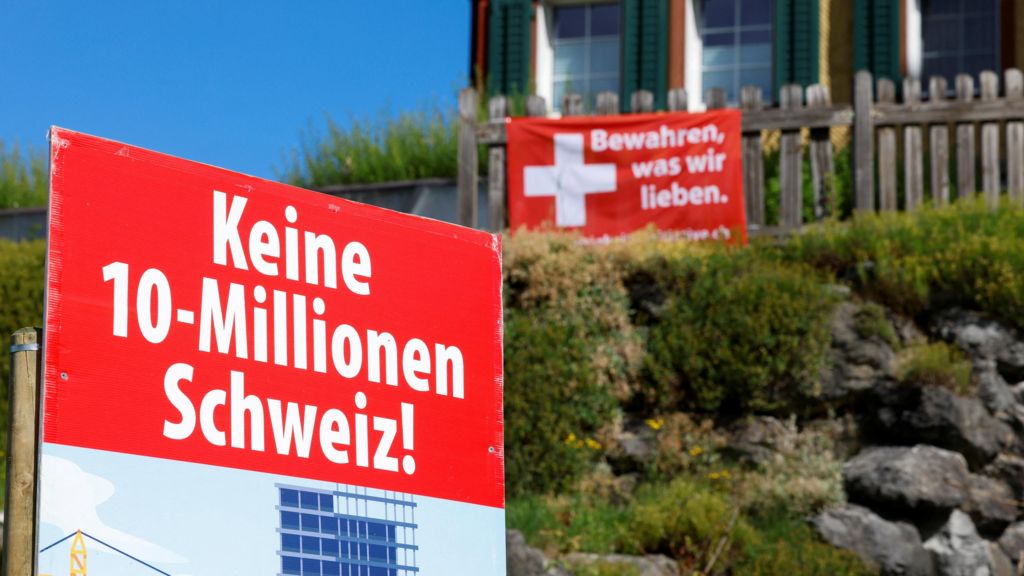
    By early Sunday morning, event organizers had already begun setting up rally infrastructure, installing Australian national flags and immigration-focused posters emblazoned with flag motifs, with a large contingent of Australian police deployed to the site to maintain public order. Hanson is scheduled to address attendees of the “Rally To End Mass Immigration” later that day.

    In an interview with public broadcaster ABC, Taylor responded to questions about Hanson’s hardline anti-immigration position, confirming that the two politicians see eye-to-eye on some key issues, though disagree on others. Taylor’s core starting point for immigration reform, he said, is that Australia’s current annual migration intake has remained far too high, while entry standards have dropped to unacceptably low levels.

    The Liberal MP has repeatedly called for a full review and restructuring of Australia’s migration framework, one that enshrines Australian values as a core requirement for entry, including explicit provisions to block radical extremists from gaining entry to the country.

    Taylor pushed back on suggestions that his framing of values-based screening would advantage migrants from majority Western nations such as the United Kingdom over migrants from Asian countries including China and Vietnam. He clarified that while “many good people come from bad countries”, noting that some of Australia’s most accomplished citizens trace their roots to nations that were considered unstable or hostile at the time they migrated, he believes “bad countries” inherently carry a higher risk of producing “bad people” seeking entry to Australia.

    Despite this, Taylor insisted that the proposed screening process would not be based on country of origin, religion, or race, but exclusively on alignment with Australian values.

    When pressed to confirm whether China – which critics frequently accuse of mass imprisonment of journalists and broad application of the death penalty – qualifies as a “bad country”, Taylor avoided a direct answer, instead pointing to other examples. “To claim that Iran is a good country right now. Seriously?” he said, noting that the current federal Labor government has already implemented legislation restricting entry for Iranian citizens, a move Taylor supports.

    Taylor also repeated his earlier critical remarks about resettling Palestinian refugees from the Gaza Strip, pointing to ongoing “terrible acts of atrocity” connected to the Israel-Hamas war in the blockaded enclave.

    The public alignment between Taylor and Hanson comes at a tense political moment for the Liberal Party, as One Nation is widely predicted to win the New South Wales federal seat of Farrer from the Liberals following the resignation of former Liberal leader Sussan Ley. The Victorian-based MP addressed questions about the Coalition’s controversial decision to give One Nation candidate preferences ahead of Climate 200-backed independent candidate Michelle Milthorpe, brushing off concerns about the strategic choice.

    Taylor said the Liberal Party continues to prioritize earning first-preference votes from Farrer voters, and has ranked the National Party second on its how-to-vote cards. Pressed on whether One Nation poses an existential threat to the Liberal Party, Taylor argued that the “existential threats” to Australia’s regional communities are teal independent policies and federal Labor policies.

    Speaking to the impacts of current policy on regional Australia, Taylor said residents of rural areas are already facing acute anxiety over access to diesel, a critical resource for planting crops and operating freight transport that underpins regional economies across the country.