分类: politics

  • AG: Gunman believed to target Trump

    AG: Gunman believed to target Trump

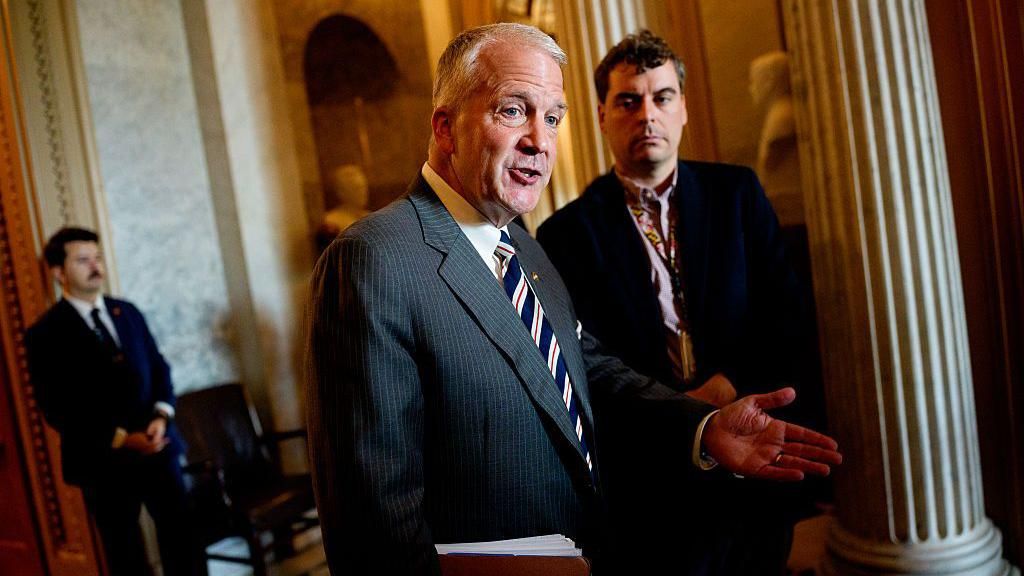
    On the evening of April 26, 2026, a chaotic shooting incident unfolded at the annual White House Correspondents’ Association (WHCA) dinner held at Washington Hilton, leaving the United States confronting another stark reminder of its growing crisis of politically motivated violence. The 31-year-old suspect, Cole Tomas Allen, a resident of Torrance, California, was taken into custody by law enforcement before he could reach the ballroom where former and current President Donald Trump, First Lady Melania Trump, Vice President JD Vance, and multiple senior cabinet members were gathered.

    According to statements from senior US law enforcement and acting Attorney General Todd Blanche, early investigations into the suspect’s electronic devices and interviews with his acquaintances confirm that Allen planned to target senior members of the Trump administration, with President Trump as his primary target. “It does appear that he did in fact have set out to target folks that work in the administration, likely including the president,” Blanche told reporters.

    Authorities have recovered a 1,000-word manifesto reportedly written by Allen, which was sent to the suspect’s family members minutes before he launched his attack. The document outlines a premeditated mass shooting plan that prioritized targets from the highest-ranking administration officials down to lower-ranking staff. Allen wrote, “I would still go through most everyone here to get to the targets if it were absolutely necessary,” while adding that he “really hope it doesn’t come to that”. The manifesto also explicitly rails against Trump administration policies, and Allen refers to himself as a “Friendly Federal Assassin” in the writings, confirming the attack was politically motivated. Investigators have also uncovered dozens of anti-Trump social media posts linked to Allen, and the manifesto includes critical commentary on political oppression that frames inaction against perceived injustice as complicity.

    Interim Washington Police Chief Jeffery Carroll confirmed that when Allen was apprehended in the hotel outside the WHCA dinner venue, he was carrying a shotgun, a handgun, and multiple bladed weapons. Investigators have secured a hotel room booked under Allen’s name and are conducting a forensic search to recover additional evidence. Allen is scheduled to appear at a federal court hearing in Washington, DC on Monday, and faces two severe federal charges: weapons possession during a violent felony, and assault of a federal officer with a dangerous weapon.

    One Secret Service agent was wounded in the incident after being struck by gunfire, but the agent survived thanks to the protection of a ballistic vest. Footage of the incident released to the public shows Allen opening fire as he advanced toward a security checkpoint, before being taken into custody by law enforcement out of public view, well before he could access the main ballroom.

    In comments made the day after the incident, President Trump stated that the suspect’s manifesto held anti-Christian beliefs and that the suspect “had a lot of hatred in his heart.” Trump, who had previously boycotted the WHCA media gala, noted after the attack that even amid the violence, the dinner had fulfilled its core purpose: “This was an event dedicated to freedom of speech that was supposed to bring together members of both parties with members of the press. And in a certain way, it did, because the fact that they just unified, I saw a room that was just totally unified.” Trump has also called for the event to be rescheduled amid the ongoing investigation, with the WHCA set to make a final decision on next steps. The incident has also bolstered Trump’s ongoing push to build a new dedicated event ballroom at the White House, as he criticized the Washington Hilton – located roughly a 10-minute drive from the White House and the site of the 1981 assassination attempt on President Ronald Reagan – for lacking adequate security. “It’s not particularly a secure building,” Trump said of the venue.

    This incident marks at least the third apparent plot against Trump in less than two years: he survived an assassination attempt at a 2024 campaign rally in Pennsylvania, and just months after that, another man was arrested for pointing a rifle at Trump during a golf trip in Florida.

    Saturday’s attack has also thrown a harsh spotlight on the systemic security gaps at the high-profile event. While all 2,600 dinner attendees were required to pass through metal detectors to access the basement ballroom, the hotel itself remained open to the general public, and anyone holding a ticket could enter the building without additional screening. Despite deploying hundreds of Secret Service agents to secure the event, Allen was still able to bring multiple firearms onto the same floor as the ballroom, where hundreds of senior lawmakers, cabinet officials, and public figures were gathered.

    Multiple commentators and news outlets have framed the incident as the latest proof of the accelerating trend of political violence across the United States. Just months before this attack, conservative activist Charlie Kirk was shot and killed at a public rally, and before that, Democratic Minnesota State Representative Melissa Hortman and her husband were murdered, with a state senator also wounded in the attack. A recent Reuters/Ipsos poll conducted after Kirk’s killing found that a large majority of US voters agree that increasingly inflammatory partisan political rhetoric is directly fueling the rise in violent attacks across the country.

  • Coalition puts forward an $800m plan to double fuel reserves and provide more storage

    Coalition puts forward an $800m plan to double fuel reserves and provide more storage

    Against the backdrop of escalating global market disruption stemming from the ongoing Middle East conflict, Australia’s opposition Coalition has launched a targeted $800 million initiative to drastically strengthen the nation’s fuel resilience, expanding strategic reserves and adding 1 billion litres of new domestic storage capacity. The proposal, framed as a critical response to growing global energy supply uncertainty, calls for a sweeping overhaul of Australia’s existing fuel stockholding rules, with a specific focus on shoring up supplies of diesel, the fuel that powers most of the country’s freight, agriculture and regional sectors. At the core of the plan is a move to more than double the current Minimum Stockholding Obligation (MSO), requiring suppliers to maintain enough reserve fuel to cover 60 days of national demand — representing a more than 50% jump in total minimum reserves and a nearly 25% increase in critical stockholdings. The Coalition is also proposing the creation of a dedicated Australian Fuel Security Facility, backed by the full $800 million in government funding, that will support the construction of at least 1 billion litres of new onshore storage infrastructure, again prioritizing diesel storage to meet the needs of key domestic industries. Opposition leader Angus Taylor has urged Prime Minister Anthony Albanese’s government to adopt the plan immediately, warning that any delay leaves Australia exposed to catastrophic supply disruptions. “If fuel stops, Australia stops. It’s that simple. Trucks don’t move, supermarkets don’t stock, businesses shut their doors,” Taylor said in remarks announcing the policy. “We are putting forward a practical plan to make sure that never happens. More fuel in reserve, more storage on the ground, and a country that can stand on its own two feet. This is about protecting Australians’ way of life and restoring their standard of living. You don’t do that with talk. You do it with action.” The plan has received strong backing from the Nationals, the junior coalition partner that represents regional and rural Australia, where reliance on diesel for farming, freight and everyday transport is far higher than in major urban centers. Nationals leader Matt Canavan emphasized that increasing domestic stockpiles reduces Australia’s dangerous overreliance on vulnerable overseas supply chains that can be disrupted by global conflict or geopolitical tension almost overnight. “People in the regions know how serious this is. If the diesel doesn’t turn up, the farm doesn’t run and the shelves go empty,” Canavan said. “This plan is just common sense. Keep more fuel here in Australia so we are not relying on overseas supply lines that can be cut overnight. We cannot keep hoping for the best. We need to be ready, and this plan gets us there.” Under the current regulatory framework, fuel suppliers are already required to hold minimum reserve stocks, with the associated costs passed through to consumers at the fuel pump. The Coalition’s plan would require suppliers to build new storage capacity and acquire additional inventory, with government financial support offsetting much of the upfront cost. The opposition estimates that expanding the MSO would add only around 1 cent per litre to retail fuel prices, a modest increase that it argues is well worth the cost of enhanced national energy security. Shadow Energy Minister Dan Tehan added that the proposal offers a clear, actionable path to strengthening the country’s entire fuel supply chain against unforeseen global shocks. “This is a practical, achievable plan that strengthens our fuel supply chain and backs Australian industry,” Tehan said. “It works with industry, builds storage where it is needed, and makes sure we have the buffer to withstand global shocks.” The Coalition has committed that if the government adopts the plan immediately, it would deliver the full 60-day fuel security target by 2030, putting Australia in a far stronger position to weather ongoing global energy volatility linked to the Middle East conflict and other geopolitical risks.

  • Trump says King will be ‘very safe’ during US visit after security talks

    Trump says King will be ‘very safe’ during US visit after security talks

    Four days of high-stakes diplomatic pageantry are set to kick off Monday in Washington D.C., as King Charles III and Queen Camilla arrive for their first state visit to the United States under the second Trump administration. The trip remains on track almost entirely in its original form, despite heightened security jitters following a weekend security breach at a Trump event that left a Secret Service agent with minor injuries.

  • US shooting bares security vulnerabilities

    US shooting bares security vulnerabilities

    On a Saturday night in Washington D.C., a brazen shooting attack at the annual White House Correspondents’ Association dinner has sent shockwaves across the nation’s capital, reopening long-simmering debates about gaps in U.S. security protocols amid a documented surge in political violence. The incident left one Secret Service agent injured, and remarkably, former and current U.S. President Donald Trump escaped without harm, though the attack has underscored just how vulnerable even the most heavily protected senior political figures remain.\n\nThe attack unfolded when an armed suspect stormed the lobby of the Washington Hilton, the venue hosting the high-profile gathering, before opening fire. Armed with a shotgun, a handgun, and multiple knives, the suspect managed to advance to a floor directly above the basement ballroom where Trump and dozens of the nation’s most senior government leaders were dining. This was Trump’s first appearance at the annual dinner since returning to the presidency, and hundreds of law enforcement officers from multiple federal and local agencies had been assigned to secure the event.\n\nIn addition to the president, Vice President JD Vance, Secretary of State Marco Rubio, Defense Secretary Pete Hegseth, Treasury Secretary Scott Bessent, and a roster of top congressional leaders, cabinet officials, and A-list celebrities were all in attendance at the event, which draws roughly 2,600 attendees annually.\n\nAuthorities have since identified the suspect as 31-year-old Cole Allen, a resident of Torrance, California. Washington’s police chief confirmed Allen was a registered guest at the Hilton hotel where the dinner was held, a venue with a fraught history: it was the site of the 1981 assassination attempt on former President Ronald Reagan, just a 10-minute drive from the White House.\n\nShortly after the incident, Trump shared an image of the subdued suspect, bound and lying on the ground, on his Truth Social platform. During a late-night White House press briefing, Trump confirmed law enforcement had raided Allen’s California apartment, and said preliminary investigations indicate the attacker acted as a lone wolf. When pressed on whether the attack could be tied to ongoing tensions related to the U.S.’s war with Iran, Trump noted, “I don’t think so. But you never know.”\n\nThe security breakdown that allowed an armed suspect to reach the upper floors of the venue has already raised urgent questions about protocol failures. While all dinner attendees were required to pass through metal detectors to access the basement ballroom, the hotel itself remained open to the general public, with anyone holding an event ticket allowed entry without additional screening. On the night of the attack, large crowds of protesters gathered outside the venue’s entrance demonstrating against the Trump administration’s Iran war, contributing to rushed entry screenings for guests, sources confirmed.\n\nFootage from inside the ballroom captured chaos as gunshots were reported, with attendees scrambling under tables and taking cover as security agents rushed Trump and other senior officials to secure evacuation routes. In a joint press conference following the attack, Washington D.C. Mayor Muriel Bowser confirmed all attendees had been accounted for and were unharmed beyond the injured Secret Service agent. U.S. Attorney for the District of Columbia Jeanine Pirro announced the suspect faces multiple felony charges, including use of a firearm during a violent crime and assault on a federal officer with a dangerous weapon. Trump later confirmed Allen is in official custody.\n\nInternational leaders have already spoken out to condemn the act of political violence. Canadian Prime Minister Mark Carney wrote on X, “Political violence has no place in any democracy and my thoughts are with all those who have been shaken by this disturbing event.”\n\nThis incident comes less than two years after two separate assassination attempts targeting Trump during the 2024 presidential campaign, the most high-profile of which was the July 2024 attack in Butler, Pennsylvania, where Trump narrowly escaped injury. Political violence has become increasingly frequent across the United States in recent years, and Saturday’s attack has confirmed what many security analysts have warned for months: even the nation’s most robust, well-funded protective detail for the president and senior leadership is not immune to critical vulnerabilities. Reuters notes it remains too early to draw definitive conclusions about whether law enforcement failures or communication gaps contributed to the security lapse, but the incident has already spurred renewed calls for sweeping reviews of security protocols for high-level political events.

  • Series of visits shows Beijing’s anchoring role

    Series of visits shows Beijing’s anchoring role

    Over a two-week period in mid-April 2026, the Chinese capital played host to an extraordinary flurry of high-level diplomatic visits, drawing leaders and senior officials from Europe, the Middle East, Southeast Asia, Africa and Eurasia. This unusually intensive schedule of diplomatic engagement comes at a moment of profound global uncertainty: ongoing Middle East conflicts have upended energy security, and the world economy continues to grapple with persistent sluggish growth. Among the visiting dignitaries were Spanish Prime Minister Pedro Sanchez, Abu Dhabi Crown Prince Sheikh Khaled bin Mohamed bin Zayed Al Nahyan, Vietnamese Party General Secretary and President To Lam, Mozambican President Daniel Francisco Chapo, Russian Foreign Minister Sergey Lavrov, and Lao Standing Deputy Prime Minister Saleumxay Kommasith.

    Global observers widely view this wave of visits as a clear reflection of shifting global power dynamics, underscoring the broad international appeal of China’s diplomatic approach and its growing recognition as a key anchor of stability in an increasingly turbulent world. “This intensive diplomatic schedule is no random coincidence. It reflects a growing circle of nations that trust China both as a reliable partner for practical cooperation and a source of stability in an increasingly fragile global landscape,” noted Ding Duo, a research fellow at the National Institute for South China Sea Studies. Ding emphasized that as global instability and uncertainty multiply by the day, China has emerged as a consistent source of stability and predictability for the international community. “This standing is not the product of short-term policy shifts. It is rooted in China’s consistent long-term diplomatic strategy, its long-held traditional Eastern principle of ‘do not do to others what you would not have them do to you,’ and the steady demeanor of a responsible major power,” Ding added.

    During meetings with visiting leaders, Chinese President Xi Jinping reaffirmed China’s commitment to its role as a champion of world peace, a core contributor to global development, and a steadfast defender of the established international order. He also emphasized China’s ongoing readiness to share its development opportunities with all countries through mutually beneficial win-win cooperation. Speaking with Spanish Prime Minister Sanchez, President Xi noted that China maintains firm resolve in advancing its process of Chinese modernization, and holds a broad commitment to sharing development opportunities with the world through high-standard opening-up. Through its own steady development, Xi stated, China will continue to inject much-needed confidence and new momentum into global economic growth.

    The timing of this wave of high-level visits coincided with the 2026 Spring and Annual Meetings of the International Monetary Fund and World Bank Group held in Washington, D.C. During the event, IMF Managing Director Kristalina Georgieva warned that ongoing conflict in the region will leave long-lasting “scarring effects” on the global economy, with an estimated 3% output drop in conflict-affected areas that will persist for years. Against a broader backdrop of slowing growth across major world economies, persistently tight global financial conditions, and growing Middle East tensions that have injected new uncertainty into energy markets and global supply chains, the search for reliable stability has become a top priority for policymakers and market actors around the world.

    Against this fragile global context, China’s economic trajectory has drawn increasing international attention. New data released by China’s General Administration of Customs on April 14 showed that the country’s total foreign trade volume reached 11.84 trillion yuan (approximately $1.72 trillion) in the first quarter of 2026, marking a robust 15% year-on-year increase. Exports grew 11.9% to hit 6.85 trillion yuan, while imports rose 19.6% to reach 4.99 trillion yuan, signaling strong trade momentum both inbound and outbound.

    International media framed Spain’s decision to send Prime Minister Sanchez on the visit as a clear signal that the country is pursuing a pragmatic, independent path to expand economic cooperation with China while upholding its existing transatlantic partnerships. Spanish broadcaster Onda Cero noted in an opinion piece that Spanish leaders have recognized the profound shift taking place in the global order, and that China is the most consequential actor capable of reshaping the global landscape moving forward.

    During his four-day state visit, Vietnamese leader To Lam worked to deepen the longstanding traditional friendship and strategic alignment between Hanoi and Beijing, with more than 30 new bilateral cooperation agreements signed across sectors including economic development, industrial and supply chain coordination, customs facilitation, and science and technology innovation.

    Mozambican President Chapo’s April 16-22 visit went far beyond routine diplomatic protocol. From high-level bilateral talks with President Xi in Beijing to visits to manufacturing facilities in Changsha, Hunan, and discussions on anti-poverty cooperation in Qinghai province, the trip laid out a practical new blueprint for the next stage of China-Africa cooperation, a partnership increasingly defined by tangible on-the-ground progress rather than empty promises, centered on shared pursuit of modernization.

    Russia’s Foreign Minister Lavrov centered his visit on deepening bilateral and multilateral cooperation between Moscow and Beijing to strengthen the resilience of both countries’ development paths, while coordinating policy positions on key pressing global issues. Saleumxay, visiting in his capacity as special envoy to Lao Party General Secretary and President Thongloun Sisoulith, used the trip to advance bilateral cooperation and push forward the development of the China-Laos community with a shared future, targeting progress around high standards, high quality and high levels of integration.

    Matteo Giovannini, a finance professional at the Industrial and Commercial Bank of China and nonresident associate fellow at the Center for China and Globalization, noted that China’s steady economic performance, paired with its forward-looking structural transformation and ongoing commitment to opening-up, has positioned the country as a critical anchor for the turbulent global economy. “A stable Chinese economy helps anchor global supply chains, supports sustained demand for commodities and manufactured goods from around the world, and offers a critical degree of predictability for international investors,” Giovannini explained. “In an era of heightened global uncertainty, this kind of stability is an increasingly valuable global public good.”

    During his meeting with the Abu Dhabi Crown Prince, President Xi put forward a four-point proposal for advancing lasting peace and stability in the Middle East, calling on all parties to remain committed to the core principles of peaceful coexistence, respect for national sovereignty, adherence to international rule of law, and a balanced approach to development and security. Beyond regional diplomatic coordination, the visit yielded multiple new bilateral cooperation agreements between China and the UAE across sectors including agriculture and science and technology.

    Ahmed Saeed Al-Alawi, editor-in-chief of UAE-based Al-Ain News, noted that the crown prince’s visit came at a moment of heightened sensitivity in regional and international affairs, giving the trip deeper strategic significance. Al-Alawi added that the UAE no longer views China solely as an important economic partner, but now recognizes it as a key strategic pillar in the broader international political landscape.

  • Kim Jong Un opens memorial for N Korean soldiers killed in Ukraine war

    Kim Jong Un opens memorial for N Korean soldiers killed in Ukraine war

    In a high-profile ceremony that underscores the deepening military alliance between North Korea and Russia, North Korean leader Kim Jong Un joined Russian Defense Minister Andrey Belousov on Sunday to unveil a new memorial in Pyongyang honoring North Korean personnel killed while fighting in the ongoing Ukraine war.

    The ceremonial opening of the Memorial Museum of Combat Feats at the Overseas Military Operations featured a flyover by North Korean military jets and the release of white balloons into the sky, as the two leaders together unveiled a commemorative statue and opened the doors of the new memorial facility. The event was intentionally scheduled to align with the one-year anniversary of Russia’s claim to have reclaimed full control over portions of the Kursk region, which Ukraine first entered in a surprise incursion in August 2024.

    Public confirmation of North Korean troop deployments to support Russia’s military operations comes amid widespread intelligence estimates from third-party observers, as neither Pyongyang nor Moscow has released official casualty or deployment figures. South Korean intelligence assessments put the total number of North Korean troops sent to Russia’s Kursk offensive at no fewer than 15,000, with approximately 2,000 of those personnel confirmed killed in combat, according to Seoul’s calculations.

    According to North Korean state media outlet KCNA, Kim used the occasion to reaffirm Pyongyang’s unwavering backing for Moscow’s strategic objectives in Ukraine. He stated that North Korea would continue to fully support the Russian Federation’s efforts to protect its national sovereignty, territorial integrity, and core security interests, adding that he is confident Russia will ultimately prevail in what he described as a “just sacred war.”

    Russian state news agencies report that Belousov used his visit to hold detailed talks with North Korean officials on expanding long-term military cooperation between the two countries. Beyond his meeting with Belousov, Kim also held discussions with Vyacheslav Volodin, speaker of Russia’s lower parliament and a close confidant of Russian President Vladimir Putin.

    This latest high-level diplomatic engagement builds on a series of increasingly close ties between the two nations over the past two years. In September 2025, during a sideline meeting at China’s Beijing military parade where both Putin and Kim attended as invited guests, Putin publicly thanked Kim for North Korea’s military support, noting that North Korean soldiers had fought with exceptional courage and heroism in combat. Just months earlier, in June 2024, the two leaders signed a landmark mutual defense treaty that commits both nations to provide military assistance to the other in the event of an armed aggression against either party, an agreement Kim hailed at the time as the strongest bilateral treaty in North Korea’s modern history.

    In addition to its deployment of combat troops, North Korea has also committed to sending thousands of civilian workers to assist with reconstruction efforts in the war-damaged Kursk region. International analysts widely believe that North Korea has received substantial compensation in exchange for its military and logistical support, including shipments of food, direct financial assistance, and advanced military technical expertise from Moscow.

  • King Charles III heads to Washington on a delicate mission to restore the UK-US relationship

    King Charles III heads to Washington on a delicate mission to restore the UK-US relationship

    Two hundred and fifty years after the 13 American colonies severed formal political ties with the British Empire under King George III, George III’s direct descendant King Charles III will touch down in Washington, D.C. on Monday for a landmark four-day state visit — one unfolding at a moment of unprecedented strain across the Atlantic and heightened focus on security protocols.

    Just two days before the king’s arrival, a shooting incident at a Washington-area dinner attended by U.S. President Donald Trump prompted urgent last-minute security reviews of the itinerary, which is designed to mark the 250th anniversary of U.S. independence and honor the longstanding “special relationship” between the two nations. Buckingham Palace quickly confirmed that the king was deeply relieved to learn Trump, First Lady Melania Trump, and all other attendees escaped unharmed, and that after a full security assessment, the visit would go forward as originally scheduled.

    Political tensions have loomed over the trip long before the security scare. A growing rift between the Trump administration and the U.K.’s Labour government led by Prime Minister Keir Starmer, rooted primarily in disagreements over U.S. military action against Iran, has elevated the political stakes of the royal visit. In recent weeks, Trump has launched repeated public attacks on Starmer, criticizing the prime minister for refusing to join U.S. strikes on Iran and dismissing him as a far cry from Winston Churchill — the World War II leader who first coined the term “special relationship” to describe the bilateral bond.

    This friction with the U.K. is part of a broader rift between Trump and NATO allies, whom the president has publicly derided as “cowards” and “useless” for declining to participate in anti-Iran military action. Adding to the unease, a leaked Pentagon email recently suggested the U.S. could revisit its longstanding position backing British sovereignty over the Falkland Islands — the South Atlantic territory that sparked a 1982 war between the U.K. and Argentina.

    Despite these public disagreements, Trump has repeatedly emphasized that political tensions will not overshadow the royal visit, noting the British monarch holds no formal governing power and bears no responsibility for NATO policy disputes. The president has spoken in consistently glowing terms about King Charles, referring to him as a personal friend and a “great guy,” and has highlighted his own landmark September 2024 state visit to the U.K. — an unprecedented second state visit for a U.S. president, hosted by the royal family at Windsor Castle with full ceremonial pomp including scarlet guardsmen, military brass bands, and a state banquet. Starmer personally delivered the king’s invitation for this return visit to the Oval Office just five weeks after Trump’s second inauguration, a deliberate public outreach effort to mend bilateral relations.

    “President Trump has always had great respect for King Charles, and their relationship was further strengthened by the president’s historic visit to the United Kingdom last year,” White House spokesperson Anna Kelly told the Associated Press. “The president looks forward to a special visit by Their Majesties, which will include a beautiful state dinner and multiple events throughout the week.” Trump himself told the BBC he believes the king’s visit “absolutely” can help repair frayed transatlantic ties, adding, “He’s fantastic. He’s a fantastic man. Absolutely the answer is yes.”

    Not all stakeholders have supported proceeding with the visit, however. Some U.K. politicians have publicly called for the trip to be canceled, warning it puts the monarchy in an awkward and potentially embarrassing position amid Trump’s controversial rhetoric. Those concerns were amplified after recent public broadsides Trump launched against Pope Leo XIV. Ed Davey, leader of the U.K.’s centrist opposition Liberal Democrats, labeled Trump “a dangerous and corrupt gangster” in remarks to the House of Commons earlier this month and urged the government to scrap the itinerary. “I really fear for what Trump might say or do while our king is forced to stand by his side,” Davey said. “We cannot put His Majesty in that position.” Starmer has pushed back against those calls, defending the visit by noting that the monarchy has long built cross-generational connections that bolster critical bilateral ties.

    Another shadow hanging over the visit is the ongoing controversy surrounding the king’s younger brother, Prince Andrew, who was stripped of his honorary royal titles and exiled from public life over his long-standing friendship with convicted sex offender Jeffrey Epstein. Andrew has repeatedly denied any criminal wrongdoing, but survivors of Epstein’s abuse have publicly called on King Charles to meet with them during the U.S. trip, a step that observers widely expect the king will not take.

    This visit marks a historic first for King Charles: while he has traveled to the U.S. 19 times previously, this is his first official state visit to the country since he ascended the throne following Queen Elizabeth II’s death in 2022. The 77-year-old monarch, who revealed an undisclosed cancer diagnosis in early 2024, will be accompanied throughout the four-day trip by Queen Camilla. Beyond the core Washington engagements — which include a private tea with the Trumps, a White House garden party, a formal state dinner, and a one-on-one bilateral meeting with President Trump — the royal couple will travel to New York to visit the National September 11 Memorial and Museum, then to Virginia for a public 250th anniversary “block party” where the king will meet Indigenous leaders working on nature conservation, a policy issue he has championed for decades.

    The diplomatic centerpiece of the visit will come on Tuesday, when King Charles addresses a joint meeting of the U.S. Congress. He will be only the second British monarch ever to receive this honor, following Queen Elizabeth II’s 1991 address to Congress. On that occasion, the late queen praised liberal democratic values, rejected the idea that “power grows from the barrel of a gun,” and celebrated the shared cultural and ethnic diversity of both nations.

    As University of Exeter American history professor Kristofer Allerfeldt notes, the two governments hold sharply different objectives for the high-profile visit. “For Charles, the trip is about reinforcing long-term ties, showcasing the monarchy’s soft power and reminding the world that Britain still carries diplomatic weight,” Allerfeldt explained. For Trump, by contrast, the event is largely a media spectacle focused on ceremonial optics, resembling a meeting “of two gilded monarchs.”

    While the king’s long-held policy priorities — from climate action to interfaith harmony — stand in clear contrast to Trump’s policy agenda, observers do not expect him to openly highlight those differences. Instead, Allerfeldt suggests the monarch will likely use subtle rhetoric to convey his perspective in the congressional address. “He does have an unorthodox way of looking at the world, and I think maybe he can actually have something valid to say when he addresses Congress,” Allerfeldt said.

    More broadly, the visit underscores the enduring role of the British monarchy as a tool of soft power, more than three centuries after the crown lost all formal political power in the U.K. Elected governments continue to deploy royal state visits to smooth strained international relationships and signal the U.K.’s core global priorities, a tradition King Charles is carrying forward with this trip.

  • British royals begin four-day US visit despite shooting

    British royals begin four-day US visit despite shooting

    Britain’s King Charles III and Queen Camilla kicked off their high-stakes four-day state visit to the United States on Monday, proceeding as planned despite a recent shooting incident at an event attended by US President Donald Trump and simmering diplomatic rifts between London and Washington over the ongoing Iran conflict. The trip, scheduled to coincide with the United States’ 250th anniversary of independence, is framed by the British government as a celebration of the centuries-long special relationship tying the two nations together.

    The itinerary for the royal tour carries significant symbolic weight: King Charles will become the first British monarch to address a joint session of the US Congress since his mother, Queen Elizabeth II, delivered remarks there in 1991. Beyond the address to lawmakers, the couple will meet with Trump and former First Lady Melania Trump for tea, attend a formal state dinner, travel to New York City on Wednesday to pay respects at the 9/11 Memorial Museum, and conclude the trip with a stop in Bermuda on Thursday – marking Charles’ first visit to a British Overseas Territory since ascending to the throne.

    The visit moved forward just two days after a shooting at the annual White House Correspondents’ Association gala, where Trump was in attendance. In a statement released Sunday, Buckingham Palace confirmed the tour would proceed unchanged, noting that Charles was “greatly relieved” that Trump, Melania Trump, and the vast majority of attendees escaped unharmed. The lone alleged shooter was taken into custody shortly after the incident, which left one member of Trump’s security detail wounded. UK Ambassador to the US Christian Turner told reporters in Washington Sunday evening that after multiple security reviews, “we are all very confident that all appropriate security measures are in place” for the entirety of the royal visit.

    While the trip is rooted in historic diplomatic tradition, it has sparked significant controversy on both sides of the Atlantic. The state visit was organized at the request of the UK government and President Trump, but deep divisions over the Iran war have opened a rare rift between the new UK Prime Minister Keir Starmer’s Labour government and the Trump administration. Trump has publicly lambasted Starmer for his opposition to the conflict, and has also criticized the UK government’s immigration and energy policies.

    The two leaders spoke by phone on Sunday, where Starmer extended his well wishes after the “shocking scenes” at the WHCA gala. The call also covered shared priorities in the Strait of Hormuz, with Starmer’s office confirming the pair discussed the “urgent need to get shipping moving again” amid disruptions that threaten severe harm to the global economy and already strained cost of living for households in the UK and worldwide. Though Starmer has repeatedly criticized Trump’s approach to the Iran war, he has defended the decision to move forward with the state visit, arguing that the British monarchy’s unique cross-party, cross-generational connections can help steady relations during tense periods. A YouGov poll conducted in early April found that 48 percent of British respondents supported canceling the visit, compared to a smaller share in favor of proceeding. For his part, Trump has said he believes the visit will absolutely help repair strained transatlantic ties, calling Charles a long-time personal friend who “represents his nation like nobody else can do it.”

    Observers note that Charles, 77, has a proven track record of deft diplomatic navigation: he earned widespread praise for his handling of Trump’s state visit to the UK in September 2024. Craig Prescott, a monarchy expert at Royal Holloway University of London, notes that Charles is “generally very good” at managing sensitive diplomatic occasions, but predicts he will address the transatlantic tensions over Iran – widely described as the “elephant in the room” – in coded language during his address to Congress on Tuesday.

    Another lingering controversy also hangs over the meticulously choreographed tour: the ongoing scandal surrounding King Charles’ younger brother, Prince Andrew, and his long-standing ties to disgraced late sex offender Jeffrey Epstein. The controversy reignited in mid-February when Andrew was arrested following new revelations about his relationship with Epstein, who died in prison while awaiting trial in 2019. Charles stripped Andrew of all his royal titles and patronages in October 2024, and issued a rare personally signed statement after the arrest affirming that “the law must take its course.” Andrew remains under active police investigation, has not been charged with any crime, and has repeatedly denied all wrongdoing. Organizers have structured the visit to avoid unscripted encounters: only official pool photographers will be permitted to document Charles’ Tuesday meeting with Trump in the Oval Office, with no press availability scheduled.

  • With presidents, cowboys and A-listers – King Charles in US over the years

    With presidents, cowboys and A-listers – King Charles in US over the years

    For nearly his entire adult life, King Charles III has maintained a steady thread of official and unofficial visits to the United States, building connections with U.S. presidents, cultural icons, and communities across the country across more than five decades. Now, he is set to make his most high-profile U.S. trip yet: his first official state visit to the nation since ascending to the British throne following the death of Queen Elizabeth II.

    The newly crowned monarch will touch down in the U.S. on Monday, kicking off a multi-stop itinerary that will take him to Washington D.C., Virginia, and New York, before he departs for the British overseas territory of Bermuda. This trip marks a major milestone: it is the first official state visit to the U.S. by a reigning British monarch in nearly 20 years, the last being Queen Elizabeth II’s 2007 visit hosted by then-President George W. Bush.

    To contextualize the significance of this upcoming historic visit, it is worth tracing the long arc of Charles’s connections to the U.S., dating back to his first official trip as a 21-year-old prince in 1970. During that debut visit, Charles took a seat in the White House Oval Office for a formal meeting with President Richard Nixon. That same trip, he and his sister Princess Anne enjoyed a distinctly American leisure activity: a baseball game at Washington D.C.’s iconic RFK Stadium, where they joined the children of the U.S. president and vice-president in the stands. In a 1974 stop during a naval deployment to San Diego, Charles traveled to Palm Springs to meet then-California Governor Ronald Reagan — a meeting that came six years before Reagan would be elected to the Oval Office. That same year, during a trip to Los Angeles, Charles visited the Warner Bros. set of *Funny Lady* where he met legendary American entertainer Barbra Streisand, sparking a decades-long personal friendship between the two.

    Charles’s 1977 U.S. trip brought both protests and lighthearted moments. During a campus visit in Cleveland, Ohio, mounted police were deployed to manage demonstrations against British involvement in Northern Ireland. Later that year, a visit to a Los Angeles department store brought a playful encounter: Charles shared a laugh with actors posing as the King’s Guard during the event. In 1980, a polo match at Florida’s Palm Beach Polo Club ended with an unexpected health scare, when Charles was hospitalized and treated for heat exhaustion and dehydration after the game.

    As Charles’s public role evolved, so did the nature of his U.S. visits. In 1985, he and his first wife, the late Princess Diana, made a stop at a Springfield, Virginia, department store, where Diana browsed jewelry selections while Charles chatted with a sales clerk. The following year, during a trip to Austin, Texas, the mayor of the city presented Charles with a traditional cowboy hat, which he gamely wore for photographers.

    It would be 20 years before Charles made another landmark official U.S. trip, after his divorce from Diana and his remarriage to Queen Camilla (then Camilla Parker Bowles). In 2005, he returned to the White House for an official dinner with President George W. Bush. That same New York trip, Charles met future president Donald Trump and his wife Melania at a reception held at the Museum of Modern Art, and also took time to greet students at Georgetown University in Washington D.C. A decade later, in 2015, Charles returned to the Oval Office once again for a meeting with President Barack Obama during another U.S. trip.

    Across more than 50 years of visits, Charles has built a long history of engagement with American political, cultural, and civic life, making his first state visit as monarch a highly anticipated event that carries both historical weight and new diplomatic meaning for the special relationship between the U.K. and the United States.

  • What to know about King Charles’s state visit to US

    What to know about King Charles’s state visit to US

    Nearly 20 years after Queen Elizabeth II’s final state visit to the United States, Britain’s current monarch King Charles III and his wife Queen Camilla have arrived for the first British state visit to the US in nearly two decades, set to run from April 27 to 30. Coming as the US prepares to mark the 250th anniversary of its Declaration of Independence from British rule, the four-day trip is framed as a celebration of the longstanding, close diplomatic alliance between the two nations. Unlike official working visits conducted by British prime ministers, state visits are formal, head-of-state-level engagements hosted by the invited nation’s head of state, placing this visit on the highest tier of diplomatic exchange.

    The royal couple’s itinerary weaves together formal diplomacy, cultural exchange, and commemorative events across three jurisdictions: Washington DC, New York, and Virginia. Their first engagement on opening day will be an intimate afternoon tea with President Donald Trump and First Lady Melania Trump at the White House, followed by a guided tour of the recently expanded White House Beehive on the South Lawn. Later that day, a garden party will welcome British and American guests at the official residence of the British ambassador to the US. This marks the first time a British royal garden party has been held on American soil in decades; the last such event was hosted by King George VI and Queen Elizabeth at the Washington embassy back in 1939.

    Day two of the visit will be centered on full formal diplomatic ceremonies at the White House. The Trumps will lead an official welcome featuring a full ceremonial military review, a tradition stretching back to the 1700s that will include the US Marine Band performing the national anthems of both countries and a 21-gun salute from the Presidential Salute Battery. Thousands of guests spanning cabinet members, congressional representatives, the British official delegation, military families, and students from the British International School of Washington will gather on the South Lawn to hear remarks from President Trump. After the welcome ceremony, the two heads of state will hold a bilateral meeting following a gift exchange and a formal receiving line for both national delegations. Parallel to this, Queen Camilla and First Lady Melania Trump will join American students for a cross-cultural education event that uses cutting-edge virtual reality headsets and AI-powered glasses to walk attendees through the shared history of the US and UK. In the evening, the Trumps will host a formal state dinner in the White House East Room in honor of the royal couple, where both President Trump and King Charles will deliver additional addresses. A key diplomatic highlight of the day will be King Charles’ address to a joint session of the US Congress, making him only the second British monarch ever to address the full legislative branch, following Queen Elizabeth II’s 1991 address during her state visit.

    The visit has not proceeded without pre-event turbulence. Just two days before the royal couple’s arrival, a suspected gunman attempted to force entry into the White House Correspondents’ Dinner in Washington DC, prompting questions about whether security arrangements would force a postponement or adjustment to the trip. UK Chief Secretary to the Prime Minister Darren Jones confirmed that additional security consultations would be held immediately following the incident, but stressed that appropriate security measures would be put in place to mitigate any risk. By Sunday evening, Buckingham Palace issued an official confirmation that the visit would proceed unchanged, noting that “The King and Queen are most grateful to all those who have worked at pace to ensure this remains the case and are looking forward to the Visit getting underway tomorrow.” President Trump has expressed strong optimism about the trip’s impact on US-UK relations, telling reporters that the visit will absolutely repair and strengthen bilateral ties, praising King Charles as a fantastic, brave man with whom he has maintained a longstanding personal relationship.

    After wrapping up their two days of engagements in the national capital, the royal pair will travel to New York City on Wednesday. Their first stop in the city will be the 9/11 Memorial, where they will meet first responders and family members of victims of the 2001 terrorist attacks. New York Mayor Zohran Mamdani will attend the memorial event but has no plans for a private meeting with the King, per a statement from his office. While in New York, King Charles will also visit a local community organization and meet with a gathering of transatlantic business leaders, while Queen Camilla will attend a literary celebration marking 100 years since the creation of the beloved children’s character Winnie the Pooh. The day will conclude with a high-profile reception focused on supporting the creative industries, with widespread expectation that A-list celebrities will be in attendance, though no guest lists have been released to the public.

    On the final day of the state visit, the King and Queen will return to Washington DC for a formal farewell ceremony with the Trumps, followed by a wreath-laying ceremony honoring fallen service members from both nations, a tribute to the longstanding US-UK military alliance. From Washington, they will travel to Virginia to visit a national park, engage with Indigenous communities and learn about the region’s Appalachian cultural heritage, before joining a public community celebration marking the 250th anniversary of American independence. After concluding the US state visit, King Charles will travel to Bermuda, a British overseas territory of which he is head of state, for his first official visit to the territory as monarch, before returning to the United Kingdom.

    Several key absences and unresolved controversies have marked the lead-up to the visit. BBC sources have confirmed that the royal couple will not hold a meeting with Prince Harry, Duke of Sussex, and his wife Meghan, who stepped down as working royals several years ago and currently reside in California. Additionally, there have been growing public calls from US lawmakers and Epstein survivor advocates for King Charles to meet with survivors of convicted sex offender Jeffrey Epstein. The calls come after King Charles’ brother, Prince Andrew, who had well-documented close ties to Epstein, was arrested in the UK in February on suspicion of misconduct in public office; Prince Andrew has repeatedly and vigorously denied all wrongdoing against him. Buckingham Palace has confirmed that King Charles will not hold a meeting with survivors during this visit, citing concerns that such a meeting could compromise ongoing police investigations and legal proceedings. Queen Camilla, however, is scheduled to meet with representatives of organizations working to end domestic abuse and violence against women during one of her public events on the trip.

    In a series of informal interviews with the BBC ahead of the visit, everyday Americans shared their own suggestions for the royal couple’s downtime, with one lighthearted, widely shared recommendation: find time to try authentic American gelato during their stay across the country’s east coast.