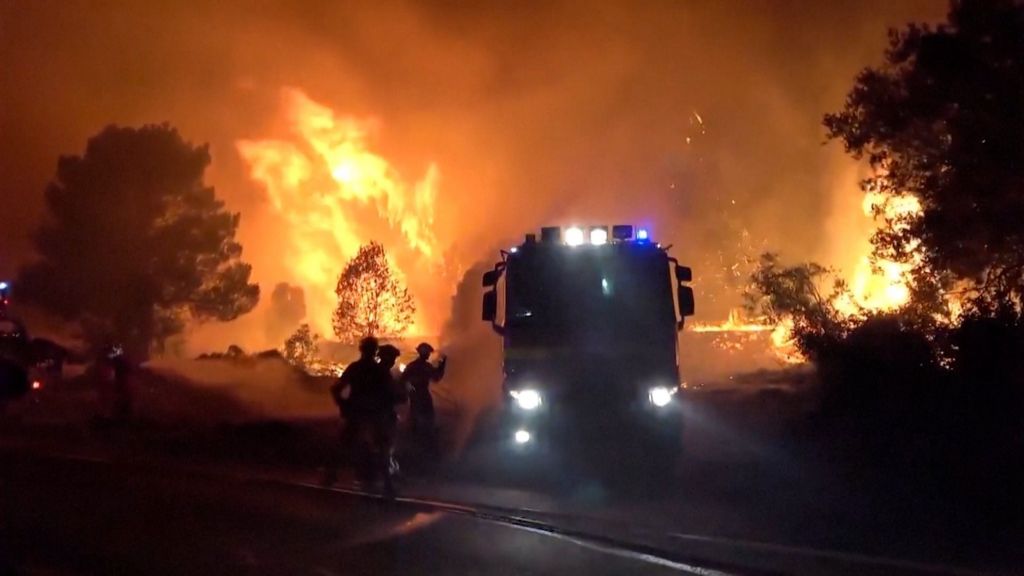
A rapidly spreading wildfire is currently raging across the western region of Madrid, Spain, prompting emergency authorities to deploy military units to contain the intense blaze. As the situation remains fluid and continues to develop, news outlets are providing real-time live updates to keep the public informed of changing conditions, evacuation orders, and containment efforts. The wildfire, which has already consumed large swathes of vegetation, is fanned by high temperatures and dry winds that are common in Spain’s summer fire season, creating significant challenges for first responders. This ongoing emergency adds to a growing pattern of more intense and frequent wildfires across the Mediterranean region, linked to rising global temperatures and prolonged drought conditions. Local authorities have urged residents in affected and at-risk zones to follow all official safety guidance and remain vigilant as fire crews work to stop the fire’s advance. As this story continues to evolve, new details on containment progress, structural damage, and community impacts are being released continually through live update channels.
分类: environment
-
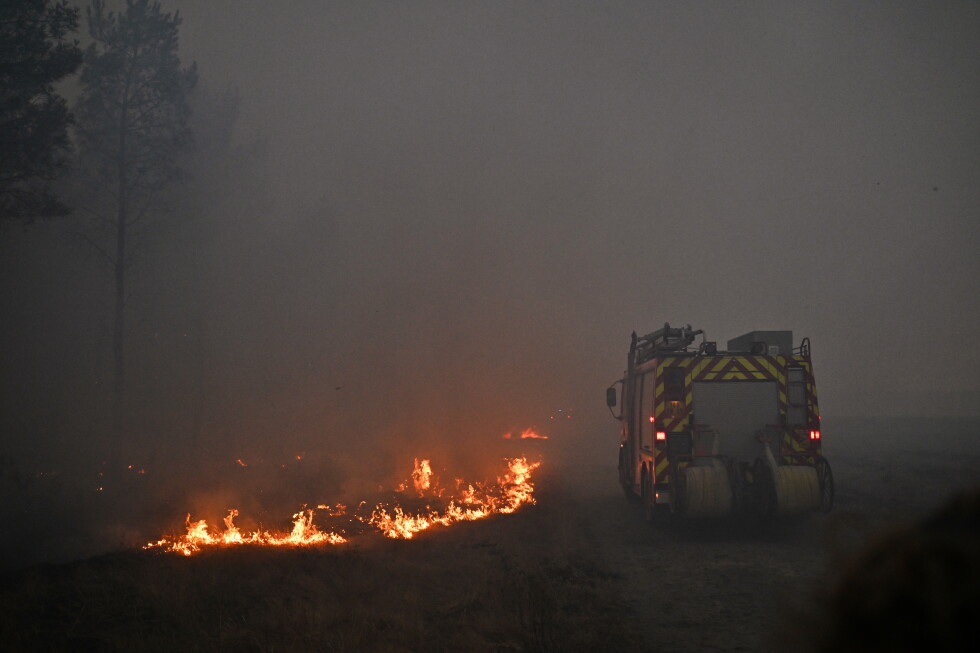
Macron calls crisis meeting as monster wildfires drive 250,000 from their homes
Across southwestern France and central Spain, catastrophic uncontrolled wildfires have triggered mass displacement of hundreds of thousands of residents and tourists, prompting emergency government action amid fragile early signs of progress in containing the blazes.
On France’s Gironde coast, where flames have already charred a swathe of land four times the total area of Paris, local authorities reported a tentative shift in the crisis on Monday: after days of relentless advance that pushed the fire line closer to the major wine hub of Bordeaux, the overnight situation held “globally stable.” The spread of the region’s massive blaze, which has burned for more than a week, has slowed enough that no additional evacuation orders were issued, offering a first glimmer of hope for overwhelmed firefighting teams.
That hope remains fragile, however. With France poised to enter its peak August summer tourist season, Gironde officials have enacted strict new measures to keep people out of high-risk zones, banning all holiday camp operations for children and people with disabilities. Thousands of ground firefighters and a fleet of air tankers dropping water and fire retardant are locked in a race against time: forecasters predict a sharp spike in temperatures starting Tuesday that will create drier, windier conditions far more favorable to flame spread.
In response to the escalating crisis, French President Emmanuel Macron called an emergency high-level meeting for Monday morning to coordinate the national response. Over the weekend, Macron posted a public pledge on social media platform X promising long-term backing for communities devastated by the blazes, writing: “We will rebuild, we will repair and we will be present for as long as necessary.”
The wildfire emergency is not isolated to France. Neighboring Spain is also fighting fast-moving blazes across multiple regions, including uncontrolled burns in areas surrounding the capital Madrid and new evacuation orders issued Sunday in the eastern Valencia region. The Spanish government confirmed that 76,000 people have already been evacuated from at-risk areas, with an additional 30,000 people ordered to remain confined in their homes to avoid exposure to smoke and advancing flames.
For evacuees on both sides of the border, the uncertainty lingers: many have no idea if their homes will still stand when they are allowed to return. Rocío Domínguez, who fled her hometown of Chapinería west of Madrid alongside her dog Simba, described the scene as she left as apocalyptic. “You couldn’t see anything. Everything was covered in ash,” she said. “We don’t know when we get to the town, if we’ll have half the house burned down or we’ll have it intact or we won’t have a house. All the clothes, all the memories, everything.”
-
Fires in Europe: latest developments
As record-breaking wildfires continue to sweep across multiple Western European nations, emergency authorities are racing to contain rapidly spreading blazes that have already scorched hundreds of thousands of hectares of land, forced mass evacuations and triggered unprecedented national emergency responses on Monday.
In southwestern France’s Gironde region, the epicenter of the country’s most destructive fire season on record, local officials reported that the large blaze burning near Bordeaux remained largely stable through overnight operations, though no major progress in full containment had been achieved as of Monday morning. “At this stage, the situation remained stable overall overnight, without any major developments,” the Gironde prefecture shared in an official media update. In a proactive precautionary move, local regulators implemented an immediate ban on all overnight holiday camps across the region, including planned Scout excursions and recreational camps for people with disabilities, to prevent avoidable risk to visitors.
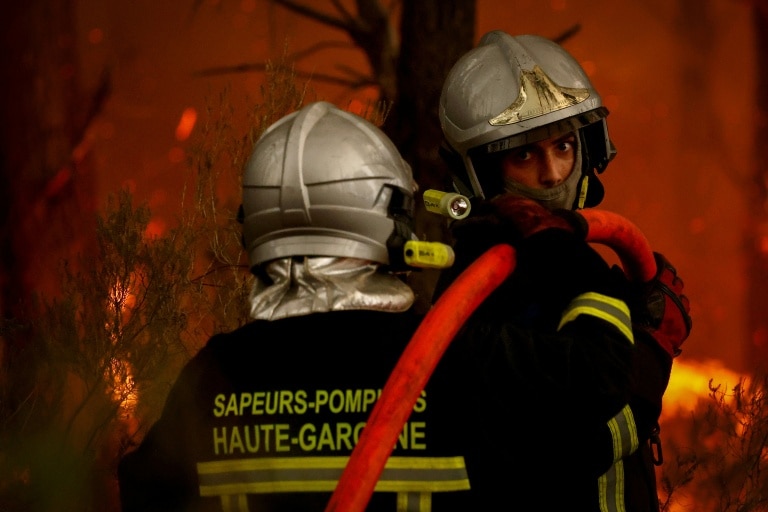
French Interior Minister Laurent Nunez confirmed Sunday that the 2026 wildfire season has already far outstripped any previous year in scale, with an estimated 115,000 hectares (284,000 acres) of land burned across the country since January. The nation is currently battling between 30 and 40 active wildfires daily, with the most dangerous conditions concentrated in southwestern Gironde and Landes, as well as the Mediterranean coastal Var region. To date, more than 2,500 firefighters (including a specialized contingent from Switzerland), 1,500 military personnel and 1,200 police officers have been deployed to reinforce containment efforts in Gironde alone.
In a development that marks a new milestone for France’s wildfire crisis, the National Firefighters Federation of France (FNSPF) confirmed that the massive Gironde blaze has spawned a rare, dangerous weather phenomenon never before recorded in the country: a pyrocumulonimbus, or “fire cloud.” Formed when intense wildfire heat superheats near-ground air, causing it to rise rapidly and condense into a turbulent storm cloud, pyrocumulonimbus clouds can generate their own independent wind patterns that often accelerate fire spread and make containment far more difficult.
French President Emmanuel Macron has called an emergency cabinet crisis meeting for Monday morning to coordinate the national response to the ongoing blazes, the Élysée Palace confirmed. Local officials have warned that the more than 220,000 residents and tourists evacuated from high-risk Gironde areas will not be allowed to return home until the main blaze is fully under control. “I urge tourists not to come, not to travel to the Gironde,” Gironde Prefect Sophie Brocas stated Sunday. All non-essential public and private operations were suspended in affected towns on Monday, with officials bracing for a potential worsening of conditions on Tuesday as temperatures are forecast to rise across the region.
The wildfire crisis is not isolated to France. On Italy’s southern Adriatic coast, the Italian Coast Guard announced Sunday that more than 400 people had already been evacuated by sea as wildfires advanced on coastal communities, with hundreds more additional evacuations planned through the day.
In Spain, the wildfires burning across central regions surrounding the capital Madrid have already become the largest forest fire event in the country’s recent modern history, Ecological Transition Minister Sara Aagesen told reporters. The blazes have burned approximately 77,000 hectares across the Madrid, Avila and Toledo regions, with the largest burned area concentrated around Avila.
During a visit to an evacuation shelter, Spanish King Felipe VI emphasized that the ongoing fires have caused “incalculable” damage to the nation’s irreplaceable natural heritage. Prime Minister Pedro Sanchez, who toured the fire zone west of Madrid over the weekend, warned that “difficult hours lie ahead” despite small, positive signs of progress in containing the largest blazes. Sanchez is scheduled to visit fire-affected regions in Valencia on Monday to assess damage and meet with first responders.
-
Macron calls crisis meeting as wildfires threaten Bordeaux and heatwave looms
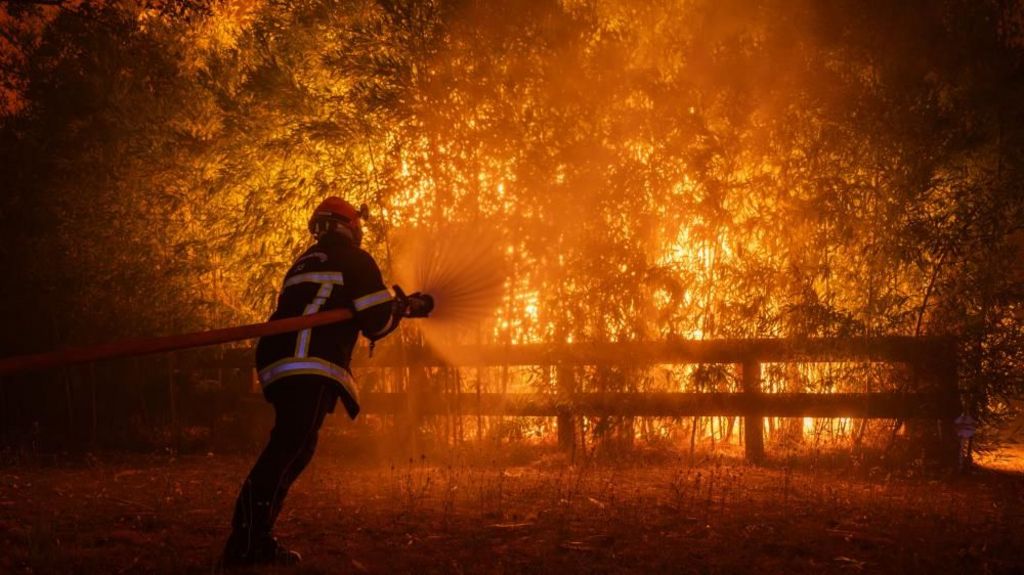
A fast-expanding wildfire that has already scorched tens of thousands of hectares of land is pushing toward the southwestern French city of Bordeaux, prompting President Emmanuel Macron to convene an emergency cabinet meeting on Monday to coordinate the national response to the growing crisis.
As of Sunday, the active fire line sat just 15 kilometers (9 miles) from Bordeaux’s city limits, where more than 850,000 residents currently remain under no evacuation orders, according to mayor Thomas Cazenave. However, officials warn an incoming second heatwave threatens to derail containment efforts, with forecasts predicting temperatures will surge to 40°C across parts of the country starting Tuesday. France’s Interior Minister Laurent Nuñez described the ongoing situation as “very unfavourable”, noting the blaze is moving “erratically” in the direction of the city. Tens of thousands of residents in outlying areas surrounding Bordeaux have already been forced to evacuate their homes over the past week.
The massive Gironde region fire has spawned an extremely rare and dangerous atmospheric phenomenon known as a pyrocumulonimbus – a fire-generated thunderstorm fueled by the blaze’s own intense winds and lightning, spokespeople for the National Firefighters Federation of France (FNSPF) confirmed. “We don’t know how the blaze will spread, the fire front is constantly shifting. We cannot fight it directly,” said FNSPF spokesman Eric Brocardi, framing the battle as a lopsided “David-versus-Goliath” scenario. Brocardi added that only two outcomes will bring the fire under control: three consecutive days of heavy rainfall, or deliberately steering the blaze toward a natural barrier like the ocean where it will burn itself out.
To date, the Gironde fire has destroyed roughly 42,000 hectares of land, marking one of the largest wildfire events in France since the end of World War II. Across the entire country, more than 98,000 hectares have burned since the start of 2026, and over 220,000 people have been displaced from fire-risk zones in southwestern regions alone. Speaking on Saturday, President Macron reaffirmed the national government’s commitment to supporting affected communities, stating France would “rebuild” and that his administration would “be there for as long as is needed”.
This crisis is not isolated to France. Over the past week, uncontrolled wildfires have swept across large swathes of Southern Europe, with neighboring Spain facing some of the most devastating conditions on record. Combined, more than 330,000 people have been evacuated across both countries.
In eastern Spain, firefighters worked through Sunday to contain a newly ignited blaze near the coastal city of Valencia that has already forced roughly 15,000 residents to flee. Pilar Bernabe, the central government’s delegate to Valencia, called the fire “very intense” and warned that worsening weather conditions would amplify challenges in the coming days. Spanish Interior Minister Fernando Grande-Marlaska, who is scheduled to tour the affected Valencia region on Monday, reported the fire is advancing slowly, while Prime Minister Pedro Sanchez warned “difficult hours lie ahead” during a visit to a fire zone in Ávila province, west of Madrid. Sanchez has also called for a sweeping national agreement to address the underlying climate emergency driving extreme wildfire events. During a tour of an emergency shelter in Villamanta, southwest of the capital, King Felipe VI stated the blazes have caused “incalculable” damage to Spain’s unique natural heritage.
The fire burning in the Ávila region is the largest wildfire in Spain’s recent history, according to Ecological Transition Minister Sara Aagesen. As of Sunday, Aagesen confirmed roughly 77,000 hectares of land across Spain have been burned by the ongoing outbreak, and more than 90,000 people have been evacuated from high-risk areas surrounding Madrid and Ávila.
For many displaced residents, the crisis has brought sudden, devastating upheaval. Olga Congacha, a 50-year-old resident who fled her village of Robledo de Chavela west of Madrid on short notice, described overwhelming panic when evacuation orders came. “I didn’t know whether to cry or what. It was a moment when you feel awful,” she said. When Congacha returned to her home briefly on Sunday to retrieve critical medication, she found the village streets empty and her home covered in a thick layer of ash. While authorities confirmed that winds are currently pushing the blaze near Madrid southward, away from the capital, the fire has already forced additional evacuations of small villages in its path.
-

Bus billboards, blimp launched by Australian activists in Korea in Great Barrier Reef plea
As the UNESCO World Heritage Committee convenes this week in Busan, South Korea, to deliberate on the long-term future of Australia’s Great Barrier Reef, environmental campaigners have launched a high-profile public campaign across the coastal city to pressure global and local fast-food chains over their links to deforestation that threatens the natural World Heritage site.
Last week, UNESCO’s cultural branch upheld a draft ruling that opted against adding the 2,300-kilometer reef to the organization’s “in danger” list, a decision that Australian federal authorities framed as a validation of years of investment and policy reform to protect the ecosystem. Last year, the Australian government passed sweeping legislative changes that introduced federal oversight of land clearing in the reef’s river catchment areas and established the country’s first-ever National Environmental Protection Agency, capping off years of back-and-forth negotiations between Canberra and UNESCO.
But environmental organizations have pushed back against claims of sufficient progress, arguing that the Australian government must speed up and expand conservation reforms, while also holding major food corporations accountable for their role in accelerating ecosystem decline. Campaigners argue that beef suppliers for major fast-food brands are directly tied to large-scale land clearing in the reef’s catchment zones, where deforestation for cattle grazing drives sediment pollution that damages fragile coral habitats.
To amplify their message during the week-long committee meeting, campaigners from Australian and global environmental groups have blanketed Busan – a city of more than 3 million residents – with attention-grabbing advertisements, including subway signs, bus shelter billboards, and even a flying blimp. The most viral of these ads parodies McDonald’s iconic golden “M” logo and famous slogan “I’m lovin’ it”, reworking it to read “I’m killin’ it with Aussie Beef” alongside a graphic of bleached coral. The modified slogan, printed in both English and Korean, appears across all campaign materials deployed across the city.
Kristin Urquiza, senior adviser for global environmental organization Mighty Earth, explained that the campaign targets McDonald’s alongside other major chains including Burger King and South Korea’s homegrown leading burger brand Lotteria, noting that 70% of McDonald’s locations worldwide – including those in South Korea – source Australian beef. South Korea is the third-largest market for Australian beef by value, trailing only the United States and China, with roughly one-third of all beef consumed in the country coming from Australian farms.
“Land clearing for grazing is the single biggest driver of sediment pollution that harms the Great Barrier Reef, and companies buying beef from cleared reef catchments are part of that harmful supply chain,” Urquiza said. “Australia has never met its own domestic targets for cutting sediment pollution flowing onto the reef, so corporate action is critical to driving change.”
Environmental experts confirm that deforestation in catchment areas that drain into the Great Barrier Reef releases large volumes of sediment into the marine ecosystem, which smothers coral and degrades critical inshore reef habitats. Data collected by the Australian Conservation Foundation shows that between 2018 and 2023, more than 856,700 hectares of forest and woodland were cleared in the reef’s catchment zones, 84% of which was cleared to make space for cattle grazing. The Burdekin and Fitzroy catchments alone – with the Fitzroy ranking as Australia’s second-largest sea-draining basin – dump more than 4.9 million tonnes of sediment into the reef’s waters every year.
Nathaniel Pelle, deforestation expert at the Australian Conservation Foundation, added that while a majority of Australian cattle producers prioritize responsible land stewardship to protect threatened ecosystems, a small minority continue clearing native forests that undermines the collective effort to protect the reef. “Every burger, sausage and steak sold by major retailers and chains should come from Australian producers that have committed to zero deforestation,” Pelle said.
McDonald’s has previously framed Australia as a high-priority market for its deforestation-free beef procurement policy, alongside other major beef producing nations including Brazil, Argentina, and Uruguay. In its official policy, the company states that it has collaborated with producer groups for years to “better understand and address the links and drivers between beef production, deforestation and conversion”.
For its part, the Australian government has welcomed UNESCO’s recent decision not to list the reef as in danger, with Environment Minister Murray Watt saying the ruling recognizes “Australia’s strong collaboration and ongoing efforts to protect the reef”. “While challenges like climate change remain significant, today’s recognition demonstrates that Australia’s long-term investments, strong management and governance frameworks and collaborative approach are delivering tangible results,” Watt said. “We will continue to build on our comprehensive suite of actions, leverage strong partnerships, and utilise our world‑leading reef management to support the Great Barrier Reef’s resilience into the future.”
Since 2014, the Australian federal government and the Queensland state government – which jointly manage the reef – have invested more than $5.3 billion in conservation initiatives. The Great Barrier Reef is one of Australia’s most important economic assets, supporting hundreds of thousands of jobs and contributing roughly $9 billion annually to the national economy. Alongside the Great Barrier Reef assessment, the World Heritage Committee is also set to discuss this week the Statement of Outstanding Universal Value for Australia’s recently inscribed Murujuga Cultural Landscape, a sacred Indigenous site in Western Australia home to tens of thousands of ancient rock engravings.
-

Whales at risk, hungry pelicans: Marine heat wave hits California
Along California’s sunbaked Pacific coastline, a quiet ecological crisis is unfolding beneath the waves, driven by an extended marine heat wave that has already begun reshape marine life patterns and threaten vulnerable species. As climate change amplifies extreme ocean warming and overlaps with a projected record-breaking El Niño event, scientists and conservationists are sounding the alarm over cascading harm to coastal ecosystems.
Sara Lesser, a 39-year-old naturalist at Long Beach’s Aquarium of the Pacific, has witnessed the shift firsthand during daily whale-watching excursions. This summer, she told AFP, the playful pods of dolphins and pods of whales that once drew tourists to the waters are increasingly hard to find. Rising surface ocean temperatures have pushed the small schooling fish that cetaceans depend on — anchovies and sardines — to retreat to deeper, cooler waters or migrate much farther north than their typical ranges. With their food source gone, whales and dolphins have followed, leaving fewer sightings for onlookers and signaling a far larger disruption to the coastal food web. For Lesser, the drop in encounters is not just a disappointment for tourists; it is an early warning sign of more systemic damage underway.
Data from the U.S. National Oceanic and Atmospheric Administration (NOAA) confirms the severity of the current warming event: surface water temperatures along California’s coast are currently 3 to 4 degrees Celsius above the long-term average, and the heat wave has persisted for roughly six months, according to NOAA research oceanographer Andrew Leasing. What makes this event particularly worrying is its overlap with a developing El Niño, the climate pattern that warms equatorial Pacific surface waters and alters global weather systems. Scientists project this El Niño could rank among the strongest ever recorded, potentially outpacing the destructive 2015–2016 event that devastated California’s marine ecosystems.
That 2015 event, which followed an earlier marine heat wave that started in 2014, offers a grim preview of what may come. Thousands of seabirds starved when fish moved out of accessible surface waters, and the bodies of emaciated sea lions and whales washed up on public beaches. Today, early signs of the same collapse are already appearing. In recent months, dozens of dead pelicans and cormorants have been recovered near San Diego. One of California’s most iconic native species, sea lions, face growing risk: Leasing explained that warming waters force female sea lions to abandon their pups to travel farther for food, leaving young pups to starve. Additionally, higher ocean temperatures fuel the growth of toxic algal blooms that produce domoic acid, a neurotoxin that accumulates in anchovies and sardines, which then poison marine mammals that eat them. In early June, two juvenile humpback whales washed up dead on the shores of Monterey Bay from domoic acid poisoning — a mass poisoning event so large it has not been seen in a decade, according to Elliott Hazen, an adjunct professor of ecology and evolutionary biology at the University of California, Santa Cruz. “These are such large predators, it just highlights how much domoic acid there has to be in the ecosystem for it to affect them,” Hazen told AFP.
The ecological shift is also bringing unexpected changes to human activity along the coast: warming near-shore waters have pushed juvenile great white sharks much closer to shore than is typical, as younger sharks prefer warmer temperatures. Recent months have brought multiple high-profile encounters: a Malibu resident filmed a great white swimming just meters from unsuspecting children playing in the surf, and Huntington Beach was forced to close swimming areas three times this spring after aggressive sharks were spotted close to shore, putting beachgoers on edge.
Marine heat waves along California have become an annual event since 2019, and experts warn that these anomalous conditions will become the new norm if current warming trends continue. “We know that climate change is adding more fuel to the fire,” Hazen said. The long-term risk extends far beyond iconic marine mammals: repeated heat waves erode the ability of coastal ecosystems to sustain the fish populations that both wildlife and human communities rely on for food. “If we have these marine heat waves over and over again, and we lose the ability to sustain the ecosystem the way we have in the past, we’re going to lose some of the fish species that we rely on for food. So that’s the big concern,” he added.
-
With minutes to flee, Spain fire evacuees grab what they can
A catastrophic wildfire burning through central Spain has become the largest blaze in the nation’s recent history, scorching tens of thousands of hectares of land and forcing thousands of rural residents to flee their homes with only minutes to grab their most precious belongings.
Evacuation orders dropped with little warning as flames advanced rapidly across dry terrain, leaving local communities scrambling to prioritize what to save and what to leave behind as emergency services closed off entire affected regions. For many, the rushed evacuation meant abandoning cherished possessions, beloved pets, and critical daily items that they would only later recover through brief, closely monitored return trips.
On a highway cordoned off by police blocking access to her locked-down commune of Robledo de Chavela, 50-year-old Olga Congacha described the chaotic fear that gripped the village as the evacuation order came through. “Everyone had to get out of the village quickly — it was a critical situation and people were scared,” she told Agence France-Presse. She and her husband only managed to grab their most vital legal documents and a small stack of clothing before fleeing. It was not until Sunday that authorities allowed her a short trip back to her home to retrieve medication required for an upcoming surgery, where she discovered her property already coated in a thick layer of wildfire ash.
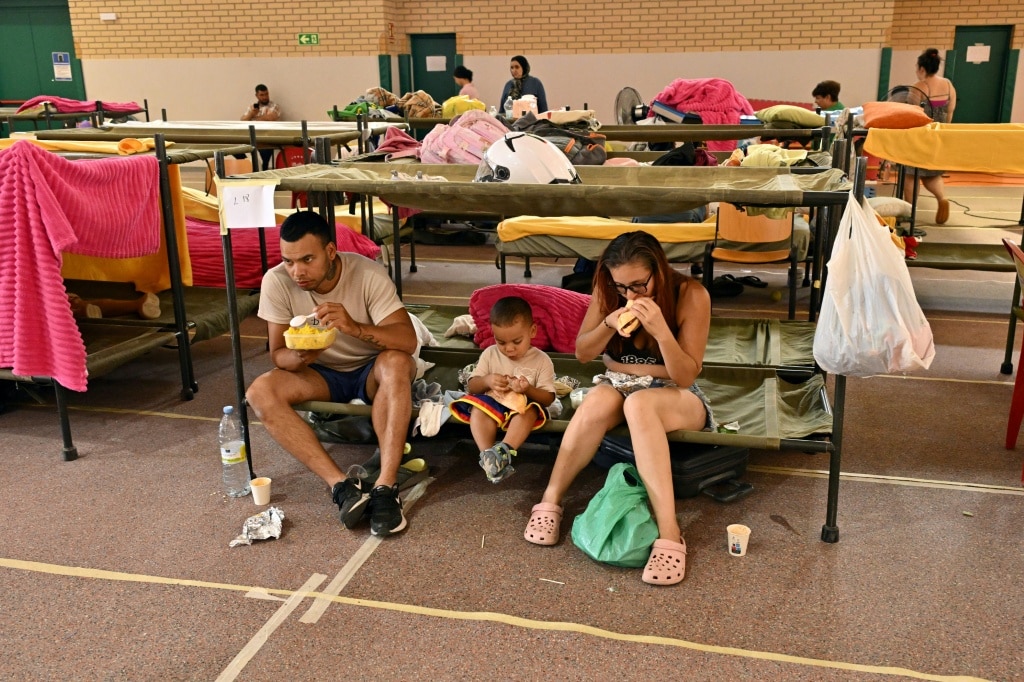
At an emergency evacuation centre set up inside a sports hall north of Madrid, 84-year-old Roberto Velasco recounted his split-second decision of what to save from his Navalagamella home. After living in Spain for 50 years, he brought only a small suitcase and a single hard drive loaded with digital copies of decades of old family letters and heirloom mementos from his relatives in Chile. “I didn’t know what to bring. I thought the whole house was going to burn,” he explained, sitting weary on a temporary camp bed in a stained grey t-shirt. He had initially planned to pack his favourite books and a collection of music, but in the rush, he left even those behind – and forgot to pack so much as a towel.
West of Madrid, at another shelter in Villamanta, 81-year-old Jose Luis (who requested his full name not be published to protect his privacy amid the crisis) can now monitor his abandoned Aldea del Fresno home remotely via smart cameras installed around his property. When the evacuation alert blared on his phone, he and his wife fled in minutes, leaving almost everything behind. Authorities later granted them a 30-minute window to return for essential medication, and the couple took the opportunity to leave extra food for their pet canary, Pavarotti, whom they were forced to leave behind. “He has the voice of an angel,” Jose Luis said of the bird. “When you put music on for him he won’t stop singing — bachata, rock ‘n’ roll, anything noisy.” During his quick return, he also watered his houseplants and grabbed his electric razor, the only other item he had space to take.
For 56-year-old Rosa, also a resident of Robledo de Chavela, abandoning her two rescued feral cats was a heartbreaking choice she tried desperately to avoid. “They are feral — you can’t pick them up without a net,” she explained. She reached out to local animal protection groups for help, but rescuers were not permitted to enter the restricted fire zone. Police eventually had to compel her to evacuate, and she was one of the final residents to leave as flames reached the village edge. “They kind of tricked me, saying they were going to get the cats out, so I said OK. But of course, they had no intention of getting the cats out. They came for me,” she said. Still, she holds out hope her pets are unharmed: “The cats are alright — they are in the house and have things to eat. I left it all for them. The only thing that will be wrong is the floor will be dirty.”
At the Villamanta sports hall shelter, 70-year-old Margarita has worn the same stained t-shirt for four straight days, after she and her 45-year-old daughter Helena fled with nothing more than the clothes on their backs. The pair assumed they would be able to return home within 24 hours, so they packed nothing extra. Margarita also suffered a swollen ankle after a fall at the evacuation centre, but the pair say emergency workers have provided adequate care, including regular meals and access to paracetamol for pain. On Sunday, Spain’s King Felipe VI and Queen Letizia visited the shelter to meet with evacuees from Aldea del Fresno. “The queen came to say hello to us — and I was wearing this dirty thing,” Margarita laughed.
Ecology Minister Sara Aagesen confirmed Sunday that the wildfire burning near the capital Madrid is the largest recorded in Spain in recent memory, highlighting the growing severity of wildfire risk across southern Europe amid rising global temperatures and prolonged summer droughts.
-
As Indonesia cuts methane emissions, life atop a mountain of garbage begins to change
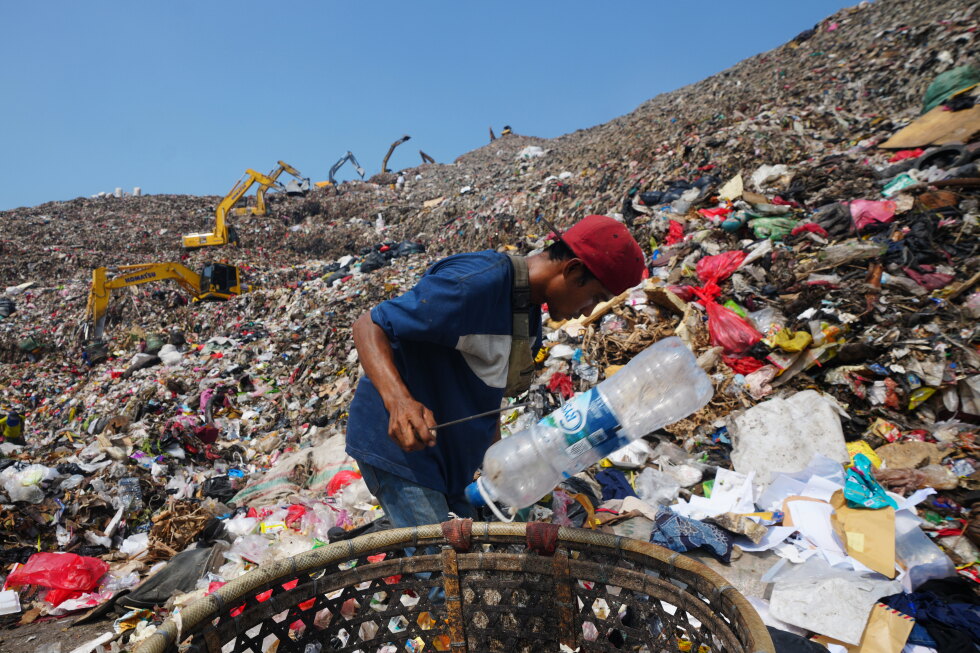
In the pre-dawn darkness that hangs over Indonesia’s Bantargebang, the country’s largest landfill site on the eastern outskirts of Jakarta, thousands of waste pickers already scramble across towering heaps of garbage to hunt for recyclable and resalable materials before fresh waste buries their finds. Among them is 35-year-old Nur Wencih, a widow who has followed in her parents’ footsteps working at the site for 20 years. For Wencih, who lives alone in a small rented room near the landfill, sorting discarded cardboard, plastic bottles, and discarded toys has paid for daily food, rent, and the education of her two teenage daughters, who stay with relatives in a rural village. On a good day, she earns roughly $12, and occasional lucky finds of forgotten gold jewelry feel like winning the lottery, she told the Associated Press during a break from the sweltering July heat. But like thousands of her colleagues, Wencih now faces an uncertain future as Indonesia launches one of its most sweeping national waste management reforms in decades.
Starting August 1, the Bantargebang site will end its current open dumping operations and transition to a controlled, sanitary landfill system. This shift is part of a national policy that will shut down open dumping at 343 of Indonesia’s 550 existing disposal sites nationwide. Under the new rules, all landfills will gradually shift to only accept non-recyclable, non-compostable residual waste — items such as soiled diapers, used paper towels, and adhesive stickers that cannot be processed for reuse. At the same time, Indonesian households will be required to sort organic and recyclable waste for separate processing, a large-scale practice that most of the population has never been trained to adopt.
The core driver of this reform is climate action. Open, unmanaged landfills produce massive amounts of methane, a greenhouse gas that traps 80 times more heat in the atmosphere than carbon dioxide over its first 20 years, and is responsible for roughly one-third of current global warming. Cutting methane emissions is widely recognized by global climate leaders, including U.N. Secretary-General António Guterres, as one of the fastest, most effective ways to slow the pace of near-term global warming.
Bantargebang itself has become a flashpoint for global methane reduction efforts. Originally opened in 1989 as a properly designed sanitary landfill with a working methane collection system, the site gradually shifted to full open dumping after a private sector management contract expired in 2016. Today, only 2 of its original 12 methane extraction wells still operate. Satellite data analyzed by UCLA’s STOP Methane initiative ranked Bantargebang as the world’s second-highest methane-emitting landfill in 2025, outranked only by a large site in Argentina. Covering 110 hectares (272 acres), the landfill has grown into a 60-meter-tall man-made mountain — as high as a 20-story building — that receives 7,500 tons of Jakarta’s waste every single day. In March, a landslide triggered by heavy rain at the site killed seven people, a tragedy that underscored the urgent risks of the site’s overloaded, unmanaged state. “Its carrying capacity is reaching, or even exceeding, its limits,” said Agung Pujo Winarko, head of the Bantargebang facility.
Under the government’s rehabilitation plan, large sections of the Bantargebang site are already being covered with impermeable tarps to capture escaping methane, with the full overhaul estimated to cost up to $12 million. Dudi Gardesi Asikin, head of Jakarta’s Environment Agency, says the reform will deliver major public benefits: improved environmental health, reduced local pollution, and deep cuts in harmful methane emissions. It will also make daily work far safer for the people who sort waste here, he noted: currently, thousands of pickers race alongside heavy construction excavators to reach recyclable materials before they are buried, putting their lives at constant risk.
But the reform also creates a pressing national dilemma: how to protect the livelihoods of roughly 600,000 informal waste pickers across Indonesia who depend on open dumps for their income. At Bantargebang alone, more than 4,000 registered waste pickers work the site every day, and their work supports an entire local ecosystem of recycling traders, rental housing, and food stalls that serve the worker community. “What worries me most is how I will feed my family,” Wencih said. Local community leader Bunin, a 53-year-old resident who lives near the site, added that while the landfill has brought severe pollution to the area, it has also created critical economic opportunities for low-income local families. “The landfill not only brings negative impacts, there are also economic benefits,” he said.
Government officials say the reform will ultimately create better, more formal, safer jobs for waste pickers in the new recycling and composting sectors, and that pickers already receive basic social security and healthcare through national programs. But the transition remains fraught with uncertainty for the workers who have built their lives around Bantargebang, many of whom are third-generation waste pickers like Wencih, who hopes her own daughters will never have to work in the landfill.
The success of the broader national reform also depends on changing decades-old waste habits across Jakarta, where residents have never been required to sort household waste before disposal. Many ordinary residents say the new rules have already created confusion, as public education campaigns have been slow to reach all communities. “All we know is to throw the trash in the bin, not to sort it,” said Rukasih Wanti, a resident of Central Jakarta. “The new rule is confusing us. It’s inconvenient, creates extra work and wastes our time.”
Environmental advocates say the urgent need for this reform highlights decades of delay in updating Indonesia’s waste management infrastructure. Currently, only about 25 percent of the country’s daily waste is processed through formal waste systems, with the rest dumped, burned, or left unmanaged. David Sutasurya, executive director of Indonesian environmental organization YPBB, noted that up to 80 percent of Jakarta’s waste is either compostable or recyclable, meaning most waste currently going to landfills could be diverted with the right infrastructure. “We delayed transforming our waste-management system for too long, and only realized the problem when landfills were already close to full,” he said.
Still, grassroots activists are working to build public support for the shift across the country. In a West Jakarta neighborhood, community organizer Monica T. Anggriani has spent more than a decade persuading neighbors to sort their household waste, building a community waste bank that now processes one ton of organic waste daily through composting, maggot cultivation, and urban farming. “Our generation was never taught to separate waste,” Anggriani said. “If we don’t start now, nothing will change in the future.”
-
Displaced from wildfires in Spain share their stories of uncertainty and narrow escapes
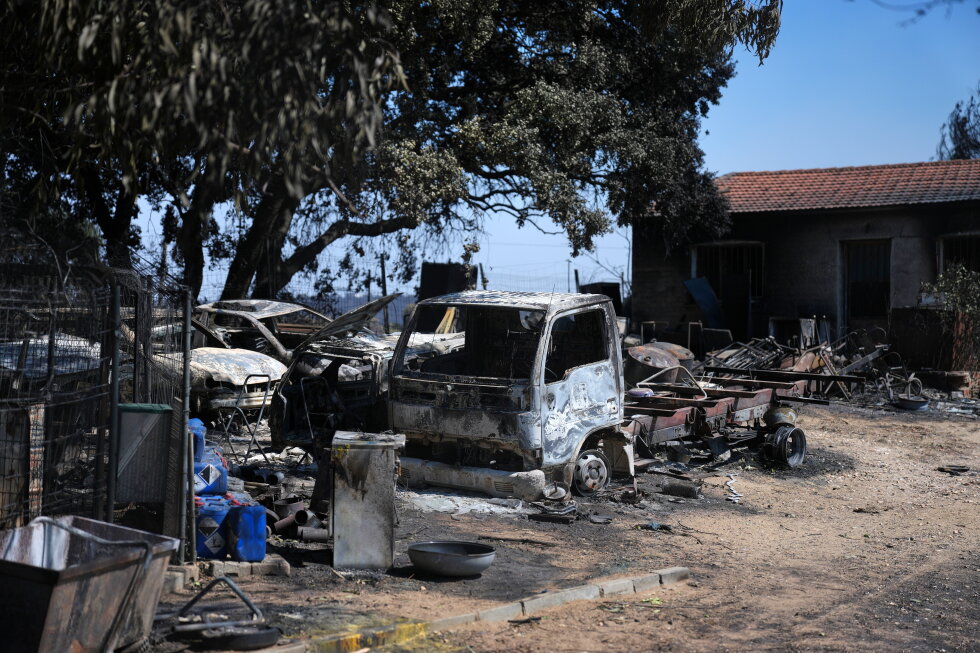
Across the Iberian Peninsula, out-of-control wildfires have carved a path of destruction through central Spain and southwestern France’s Bordeaux wine region, displacing nearly 340,000 people and leaving thousands of properties reduced to ash. For survivors sheltering in temporary evacuation facilities, the question of what awaits when they return to their hometowns hangs heavy, casting a dark shadow over a nation that just days earlier was gripped by World Cup celebration.
Seventy-nine-year-old retiree Elvira Menéndez counts herself among the lucky. Her home in Chapinería, a small town west of Madrid, remains standing, unlike hundreds of others consumed by the rapidly spreading flames. But her relief is tempered by concern for neighbors who lost everything: a young family with three children that lives down the street from her son lost their entire home to the blaze. “They have been left with nothing,” Menéndez told the Associated Press from her temporary shelter.
Menéndez is one of nearly 90,000 people forced to evacuate across three central Spanish provinces after a series of merging blazes created an unprecedented wildfire event. On Friday afternoon, two large wildfires burning in the area surrounding Madrid merged into one fast-growing inferno, which later combined with a third fire already burning in Ávila, north of the capital. The unprecedented scale of the blaze pushed the Spanish government to declare its first national-level fire emergency in history. Flames have since spread further into the southwestern province of Toledo, with a total of 77,000 hectares — an area roughly equivalent to 297 square miles — already scorched across central Spain alone. Across the border in France, more than 250,000 people have fled their homes as wildfires tear through the major Bordeaux wine growing region.
Evacuated just hours before flames reached her neighborhood, Menéndez was spending her third consecutive night on Sunday at a makeshift shelter set up in a sports complex in Villaviciosa de Odón, a 40-minute drive from her home. She is staying at the shelter alongside her entire family and their pet dog, and says she is clinging to small mercies in an uncertain time: “At least we’re all together.”
Her anxiety and loss are shared by dozens of other survivors staying at the same shelter. Rocío Domínguez, a 35-year-old unemployed resident who fled with her parents and siblings, escaped with nothing more than the clothes on her back and an emergency kit for her two dogs. “All the clothes, all the memories, everything, everything, everything,” were left behind as she rushed to evacuate, she said. Every item she has now — from her daily clothing to food and basic toiletries — has been donated by aid workers at the shelter. Domínguez still vividly recalls the chaos of the evacuation, describing the scene as apocalyptic: “It was madness with cars going up and down, traffic jams in the village streets as people tried to get out. You couldn’t see anything. Everything was covered in ash, and you could see all the burned animals.”
Spanish King Felipe VI and Queen Letizia met with displaced survivors on Sunday during a visit to a second evacuation shelter in Villamartín, 45 kilometers west of Madrid, where they heard firsthand accounts of loss and uncertainty. Following the meetings, Queen Letizia told reporters that centering survivors’ experiences was critical: it was important “to hear how they feel and how they recount their hasty departure from their home. How they have felt the sadness they describe, the anguish, the uncertainty, and those questions they leave hanging in the air.”
The disaster is far from over. Spanish Minister of Ecological Transition Sara Aagesen has warned that more evacuations are likely to be ordered in the coming days as flames continue to spread through dry, warm conditions.
The wildfire disaster has dramatically shifted the national mood in Spain, just one week after millions of Spaniards filled streets across the country to celebrate the men’s national football team’s second World Cup title, won in a final against Argentina in New Jersey. As the cheers of celebration faded, members of the champion team have stepped up to support displaced fire survivors. Luis de la Fuente, head coach of the World Cup-winning squad, visited evacuees at a sports center in Las Rozas, where the Spanish Football Federation (RFEF) has its national headquarters. The RFEF has opened the national team’s training facilities, normally used by the newly crowned champions, to house vulnerable evacuated families.
De la Fuente told public broadcaster TVE that the entire nation is standing with wildfire survivors, echoing the unity the team felt during their World Cup run. “All of Spain is watching over them,” he said. “They have the support of the entire country, the same support we have when we play soccer. It’s exactly the same.”
-
Wildfires overwhelm exhausted firefighters in France and Spain
A wave of catastrophic, unpredictable wildfires sweeping across southern France and eastern and central Spain pushed exhausted firefighting crews to their breaking point on Sunday, forcing more than 300,000 people to flee their homes and critical infrastructure as blazes advanced through parched, drought-stricken landscapes.
In southwestern France, the fire crisis has grown into one of the most severe the country has faced since World War II, with the iconic wine-producing region surrounding Bordeaux facing direct threat. Key transportation links, including a major highway and regional rail lines, have been severed by advancing flames, which have already burned an area four times the size of the French capital Paris. More than 250,000 residents and tourists across high-season Atlantic coastal holiday destinations have been ordered to evacuate the danger zone.
Over 5,200 first responders, soldiers and law enforcement personnel have been mobilized to tackle the Gironde region inferno, which crept closer to Bordeaux’s city limits over the weekend. The village of Cestas, located on Bordeaux’s southwestern edge, was almost entirely evacuated; only a handful of the community’s 17,000 residents remained behind. “This fire is unpredictable and each time we think we’ve got on top of it unfortunately it surprises us in the worst possible way,” Cestas mayor Jerome Steffe told BFMTV. “Right now, it’s impossible to say where the fire will end up.”
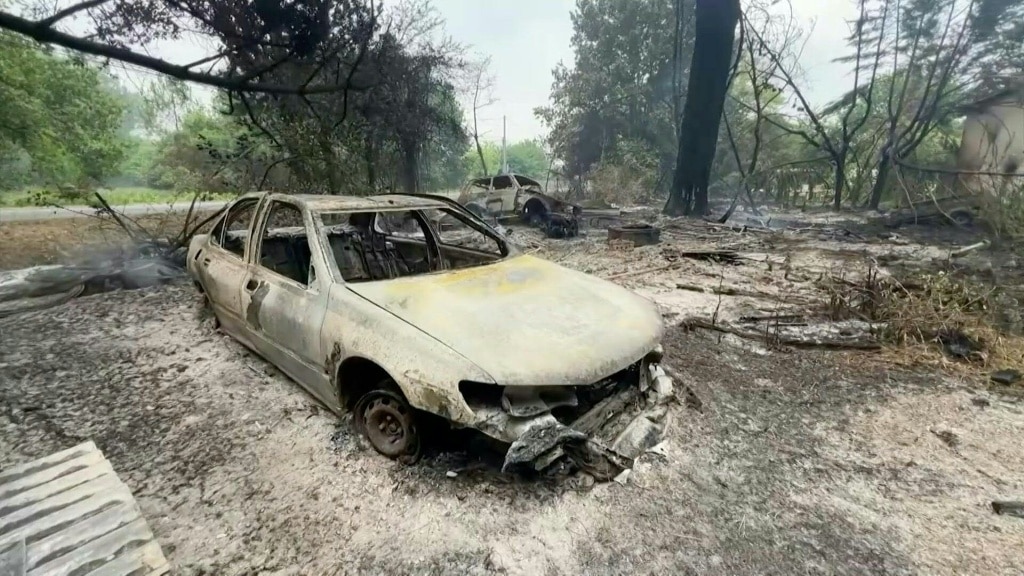
Aerial footage from AFPTV showed entire homes in the coastal village of Le Porge reduced to ash. A second large fire in the neighboring Landes region, which displaced 30,000 people, was reported to be partially contained but not yet fully stopped. Local officials noted that shifting, turbulent winds have continuously frustrated containment efforts, keeping conditions extremely unstable across the country’s fire zones. French Interior Minister Laurent Nunez confirmed Sunday that the overall situation remains highly unfavorable for wildfire response.
French Prime Minister Sebastien Lecornu labeled the ongoing crisis a “historic situation” for the nation. Two firefighters have already died battling the blazes near Bordeaux earlier this week.
Across the border in Spain, the emergency has followed a similarly grim trajectory. A large wildfire burning west of Madrid has already forced 60,000 people from their homes; shifting winds pushed the blaze south over the weekend, moving it away from the capital for the moment but forcing additional overnight evacuations of villages in its path. To the east, a sudden new fire front erupted near the Mediterranean coastal city of Valencia, forcing an additional 15,000 evacuations just hours after it ignited. Valencia regional president Juanfran Perez Llorca told reporters that the blaze has outpaced local response capacity: “The fire is beyond our capacity to extinguish.”
One civilian has been killed in a smaller separate fire near Valencia, marking the nation’s first reported civilian fatality from this wildfire season. Spanish Prime Minister Pedro Sanchez, who visited the affected region for the second time in 24 hours on Saturday, acknowledged that “difficult hours” lie ahead, though he noted minor positive progress in containment efforts around the Madrid fire zone.
The extreme wildfire activity follows months of relentless heat and drought that have dried out woodlands across both countries, creating prime conditions for large, fast-spreading blazes. Climate scientists have repeatedly warned that human-caused global warming is increasing the frequency and intensity of extreme weather events across the globe, and Europe is warming faster than any other continent, amplifying these wildfire risks.
After three straight days of nonstop firefighting, first responders on both sides of the border are overwhelmed and suffering from severe exhaustion. To supplement stretched domestic resources, both France and Spain requested and received emergency assistance from the European Union and neighboring countries. Five aircraft and two helicopters, plus a Swiss firefighting crew, have been deployed to France, while four aircraft have been sent to support Spanish operations. France has additionally activated a modified A400M military transport plane capable of dumping up to 20 tonnes of water or fire retardant, joining 18 other aerial firefighting assets already operating over French fire zones. Spain maintains at least 29 aircraft airborne over the Madrid fire zone alone.