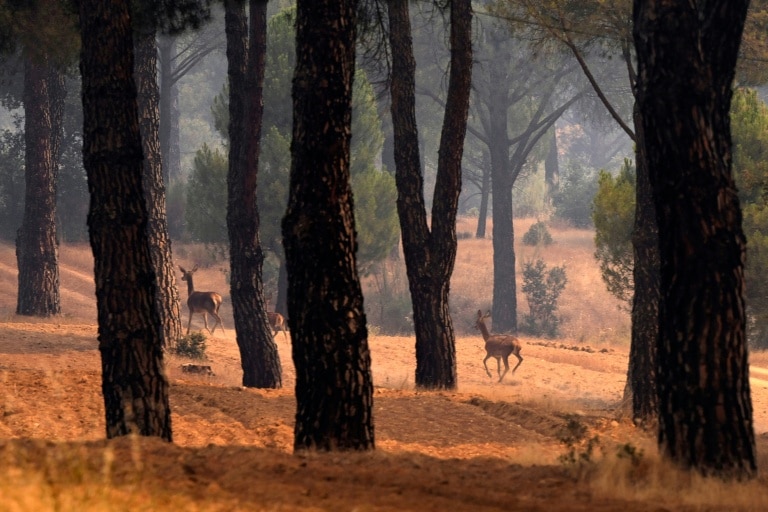
Across southern and western Europe, ongoing wildfire battles have shown small signs of progress in Spain and France this Tuesday, but forecasters and authorities warn that new extreme heat and shifting fire risks threaten to reverse hard-won gains for firefighting teams.
In Spain, which has faced some of the most severe wildfire seasons in its modern history, the Interior Ministry announced Tuesday that evacuation orders for 13 municipalities in two fire-stricken regions would be lifted starting at 5:00 pm local time (1500 GMT). While officials have not yet confirmed how many residents are affected or when they will be able to re-enter their properties permanently, the announcement marks a clear milestone in the country’s weeks-long fight to contain raging blazes.
Spanish Prime Minister Pedro Sanchez echoed cautious optimism during a press briefing Tuesday, noting that firefighting crews are starting to see a turning point in the crisis. “We are indeed turning the tide and we can begin to see light at the end of the tunnel in the fight against these fires, with every precaution, especially during the complex days and hours ahead,” Sanchez told reporters.
Across the border in France, thousands of residents and visitors have been evacuated as blazes continue to ravage the southwestern Gironde region near Bordeaux. Some displaced residents are starting to return home this week: villagers from Haillan, Merignac and Eysines, three communities near Bordeaux that were forced to flee the massive fire, have been cleared to return, though authorities have stressed that residents must remain ready to evacuate again at short notice if conditions shift.
Earlier Tuesday, 4,000 people staying at campsites west of Bordeaux were ordered to leave as a precaution ahead of forecast adverse weather conditions. National meteorological service MeteoFrance predicted that inland temperatures would climb to 35 degrees Celsius on Tuesday, with westerly ocean winds capable of spreading existing flames. Even more concerning, forecasts predict temperatures will hit 40 degrees Celsius on Wednesday, paired with light, dry winds that create ideal conditions for blazes to spread.
Regional prefect Sophie Brocas told reporters that the main massive fire in Gironde has now “stabilized, meaning it is not advancing.” However, 14 smaller surrounding blazes have reignited in recent days, keeping crews on high alert.
French President Emmanuel Macron, who visited the Bordeaux crisis response center late Monday, warned that the region faces a long road ahead. “The coming weeks will be tough and we have to hold out,” Macron said. He added that a second large fire further south in the Landes region, which forced the evacuation of 30,000 people, has been contained but still poses an ongoing risk; 15,000 evacuees from that fire have so far been allowed to return to their homes.
A new and immediate threat is emerging for both Spain and France: an incoming heatwave. Spain’s national meteorological agency AEMET officially declared that a new heatwave would begin across the country on Wednesday, lasting through the end of the week. The agency warned that soaring temperatures and dropping humidity will push wildfire risk to “very high or extreme levels across almost the entire country,” adding that “this situation will persist, or may even worsen, in the following days.” Forecasts also call for rising temperatures across France, where two major blazes are already active along the Atlantic coast.
The European Union, which has already deployed additional firefighting aircraft to support response efforts in France and Spain, warned Tuesday that fire risk is spreading east across the continent. EU Crisis Management Commissioner Hadja Lahbib told AFP that existing response resources are already stretched thin, with new extreme conditions forecast for Hungary, Slovakia, the Czech Republic, and Portugal in addition to the already hard-hit Iberian Peninsula and France.
Portugal already reported multiple new wildfire outbreaks in northern and central regions of the country on Tuesday. Civil protection services confirm that over 1,000 firefighters and support personnel are battling the new blazes, backed by roughly 20 aerial firefighting aircraft and helicopters.