As global ocean temperatures hit record-breaking highs in June and a powerful El Niño event is forecast to sweep through the Pacific later this year, marine scientists and conservation groups in Japan’s Okinawa prefecture are rushing to develop innovative solutions to protect the region’s iconic coral reefs, which were already reduced to ecological wastelands by a devastating climate-driven bleaching event in 2024.
Okinawa, a subtropical island chain in southern Japan, hosts some of the most biologically diverse coral ecosystems on the planet, home to a rainbow array of coral species that support thousands of forms of marine life. But the 2024 marine heatwave turned these vibrant underwater habitats into graveyards, leaving most coral either bleached pale white or discolored sickly brown. With climate conditions set to worsen in the coming years, experts warn that 2026 could bring an even more catastrophic mass bleaching event that could wipe out remaining vulnerable colonies.
Paradoxically, a recent string of Pacific typhoons has provided temporary relief, churning up cool deep water that has lowered sea surface temperatures around Okinawa in recent weeks. But leading marine scientist Timothy Ravasi, a professor at the Okinawa Institute of Science and Technology Graduate University, warns that this short reprieve is no reason for complacency. “If not this year, it’s almost 100 percent that soon in Okinawa, all around the world, we will have another mass bleaching event,” he told AFP. “Just like a bomb, it will explode.”
This looming threat has turned the work of Ravasi’s lab into a high-stakes race against time. The team operates one of only two “heatwave simulators” in the world: a sprawling setup of temperature-controlled seawater tanks that replicate natural marine habitats, hosting coral, giant clams, clownfish and other reef species. By manually adjusting water temperature and pH levels to mimic future climate conditions, researchers can induce bleaching and study which organisms are able to adapt to warmer, more acidic oceans. “If we don’t understand what climate change, ocean warming or acidification does to coral ecosystems, there is a chance we’re going to lose them,” Ravasi explained.
Okinawa’s coral reefs face more than just climate change, however. The region is one of Japan’s most popular tourist destinations, with more than 80 percent of its local economy tied to the tourism sector. Widespread hotel construction, overfishing and coastal pollution have compounded the stress from rising ocean temperatures, pushing already vulnerable reef ecosystems to their breaking point. For Ravasi, the biggest barrier to meaningful action is not scientific, but political: convincing local policymakers and industry stakeholders that urgent change is needed. He has proposed limiting tourism growth and rolling back excessive urban development to protect reefs, a proposal that remains deeply controversial for leaders focused on economic expansion. “We have enough evidence that climate change is already pushing this ecosystem to limits,” he said.
Despite these challenges, local conservationists have been leading on-the-ground restoration efforts for decades. The coastal village of Onna, which hosts the Okinawa Institute of Science and Technology, launched a native coral breeding and transplantation program back in 1999. Initially, many critics viewed human-assisted coral cloning as an unnatural “taboo” disruption of wild ecosystems, explained Shoichi Ikeno, head of local diving operator Lagoon. But subsequent DNA analysis confirmed the practice causes minimal harm to natural ecosystems, softening much of the early opposition.
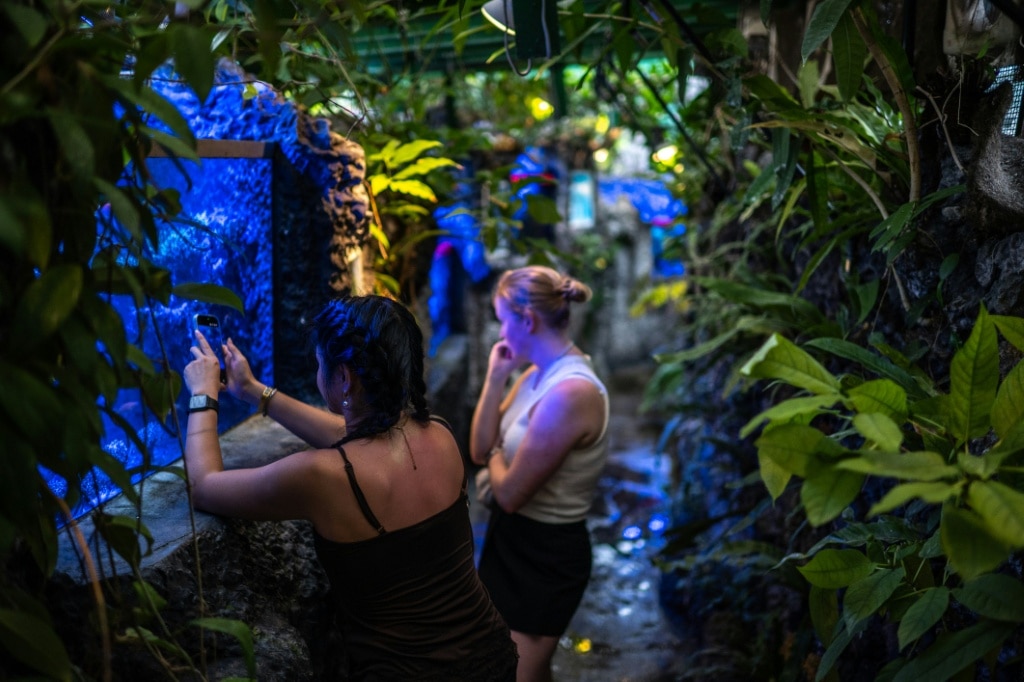
Similar pushback has greeted the work of Koji Kinjo, a coral breeder who opened a custom-built “artificial sea” indoor coral farm in the Okinawan village of Yomitan in 2009. At the facility, which resembles an underwater rainforest spread across dozens of connected aquariums, Kinjo has bred what he calls “miracle coral” – strains that have naturally developed extra resistance to warm water temperatures.
Kinjo’s breakthrough came after years of trial and error. Early attempts to raise coral in low-stress, controlled environments produced fragile organisms that died quickly after being transplanted into the wild. He eventually succeeded by intentionally exposing growing coral to strong UV radiation and other natural stressors, “toughening up” the organisms to survive harsh ocean conditions. The resulting corals survived the 2024 mass bleaching event completely unharmed.
Like the Onna restoration project, Kinjo’s human-assisted approach has drawn criticism from traditionalists who argue the ocean should be left to heal itself. But Kinjo says critics underestimate how severe the current crisis has become. All of the natural coral reefs near his coastal farm have already died off, replaced entirely by the resilient coral strains he has cultivated. Natural coral populations, he argues, can no longer keep up with the rapid pace of human-caused ocean warming and pollution. Sooner or later, he says, all unprotected coral will die out without intentional human intervention. “There is no restoring the sea to what it used to be,” he said. “That’s why my approach is to create a biodiverse place that can adapt to the coming era.”