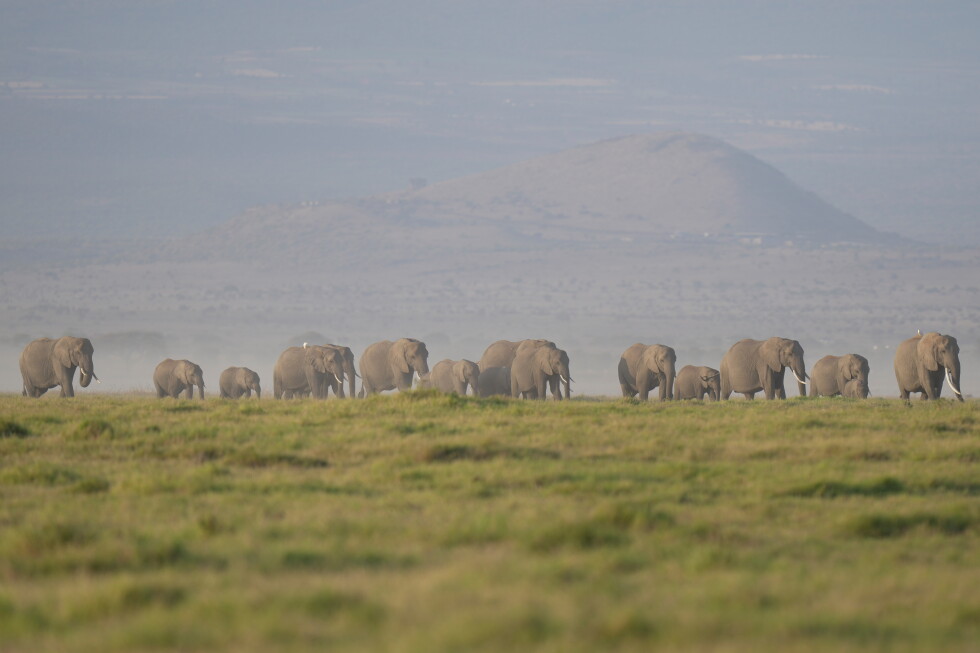
In a development that has raised alarm across Kenya’s conservation community, wildlife authorities announced Tuesday that an official investigation is underway into the sudden, unexplained deaths of 15 African elephants over the past month near Amboseli National Park, one of the country’s most iconic wildlife habitats.
The Kenya Wildlife Service (KWS), the government body responsible for managing the nation’s protected wildlife areas, shared key details about the unusual mortality event: 10 of the elephants showed visible symptoms of partial paralysis before succumbing within 48 hours of first showing signs of illness. The other five carcasses were discovered already decomposed after being scavenged by other animals in the region.
Demographic breakdown of the dead animals shows a disproportionate impact on female elephants and juvenile calves: only one of the 15 fatalities was an adult male. All deaths were recorded in two unprotected areas adjacent to the national park, the Kimana Sanctuary and Kuku Ranch, landscapes that form critical migration corridors for Amboseli’s elephant population as they move between seasonal grazing grounds.
Kenya has a long history of human-wildlife conflict and poaching activity, both of which have previously led to intentional poisoning of elephants. Poachers sometimes poison elephant carcasses to kill off responding rangers and vultures that would alert authorities to their illegal activity, while local herders may poison animals that destroy crops or kill livestock in retaliation. That means poisoning is a top working hypothesis for investigators in this case.
Initial laboratory testing of tissue samples from the dead elephants, conducted by researchers at the University of Nairobi, identified a possible unconfirmed toxic substance present in the samples. However, parallel testing carried out by the Government Chemist, Kenya’s national forensic analytical body, returned negative results for all the specific toxins that examiners tested for. To resolve this discrepancy, KWS confirmed that additional rounds of testing are currently ongoing at multiple independent facilities.
In addition to toxicological analysis of the elephant samples, authorities are conducting broad environmental surveys across the affected zone. “We are testing water sources, forage, and other potential environmental contaminants in the area to determine if all elephants were exposed to the same toxic source,” KWS explained in an official public statement released Tuesday.
Authorities have moved quickly to reassure nearby local communities and visitors that there is currently no evidence that whatever caused the elephant deaths can spread to human populations. Local conservation groups have called for a swift, transparent investigation, noting that Amboseli’s elephant population is a major draw for the international tourism that supports tens of thousands of local jobs, and that unexplained mass mortality events threaten both conservation and economic outcomes for the region.