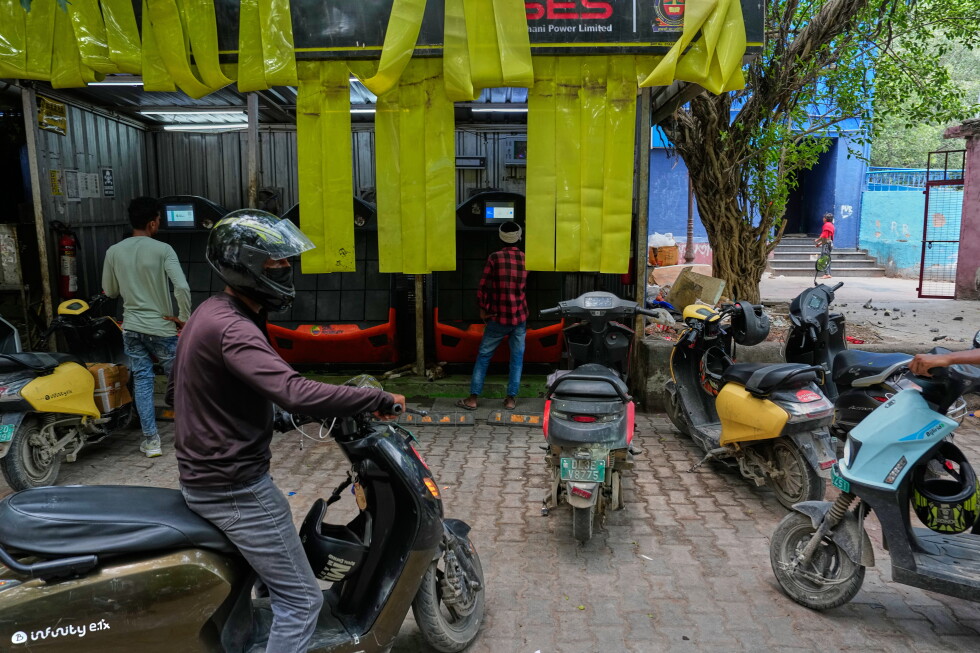
NEW DELHI, July 2026 – On a typical weekday in one of New Delhi’s wealthiest residential districts, electric vehicle charging hubs adjacent to a busy shopping center hum with activity. Drivers of electric two-wheelers, passenger cars and small commercial trucks queue up to top up their batteries, a small but growing daily routine that reflects a landmark shift underway in India’s pollution-choked capital. On July 1, the Delhi government rolled out one of the most aggressive electric vehicle transition policies in India, setting binding deadlines to phase out new registrations of gasoline and diesel-powered vehicles in a bid to tackle the city’s chronic toxic air pollution.
Under the new policy, Delhi aims to make the vast majority of newly registered vehicles fully electric by 2027. While no existing gas-powered vehicles will be removed from roads immediately, policymakers project their numbers will decline steadily in the coming years as the transition takes hold. The policy maps out clear, sequential deadlines for high-priority vehicle segments: starting in 2027, all newly registered three-wheelers and small cargo trucks must be electric, with two-wheelers following suit in 2028. These two vehicle categories make up nearly 70% of all registered vehicles in Delhi and account for almost half of the city’s total vehicular air pollution.
To encourage adoption, the policy offers robust financial incentives. Buyers of new electric vehicles can qualify for subsidies of up to 50,000 rupees ($522), while residents who scrap their old gas-powered vehicles can receive payouts of up to 100,000 rupees ($1,044). It also includes waivers on registration fees and select road taxes, and allocates funding for a massive expansion of public charging and battery swapping infrastructure across the city. The entire 10-year transition plan is projected to cost the Delhi government 150 billion rupees ($1.5 billion).
Energy and environmental experts across India have hailed the policy as a groundbreaking step for clean mobility in the country. “Delhi’s EV policy is one of the most ambitious policies that I have seen in India,” said Jaideep Saraswat, who leads clean power and electric mobility work at the non-profit Vasudha Foundation. “The binding deadlines send a clear signal to automakers and consumers alike that this transition is inevitable.” Delhi has a long history of pioneering clean transport policies in India: it was the first major city to shift public transit to compressed natural gas decades ago to cut pollution, a move that set a national precedent.
Ruchita Shah, an energy analyst at global climate think tank Ember, notes that Delhi is already outpacing the rest of the country in EV adoption. In the 2026 financial year, electric vehicles made up 12.7% of new vehicle sales in Delhi, compared to just 8.3% nationwide. So far, only around 5% of Delhi’s 8.7 million total registered vehicles are electric, but registrations have surged over the past 12 months, with more than 100,000 new EVs added – most of them two and three-wheelers.
Shah added that the policy’s most innovative feature is its pairing of consumer subsidies with firm regulatory deadlines that will block new registrations of gas-powered vehicles in high-emission segments, creating clear certainty for the market. For a city that regularly faces winter smog so severe it forces school closures, construction halts and emergency public health orders, the transition is expected to deliver major public health gains. Vehicles contribute roughly 25% of all air pollution in Delhi’s National Capital Region, and cutting vehicular emissions is expected to dramatically reduce public exposure to toxic roadside pollutants that cause respiratory and cardiovascular disease.
Still, analysts and drivers agree that major hurdles remain before the policy can deliver on its promises. The most pressing challenge is expanding EV charging infrastructure fast enough to meet growing demand. Current charging networks remain insufficient to serve the expanding fleet of EVs, drivers say. “Charging facilities are not up to the mark yet,” said Shyam Singh, a marketing executive who owns an electric two-wheeler. For drivers traveling longer distances, limited battery range and a lack of widespread charging points make switching to EVs impractical for many right now.
Many potential buyers remain hesitant to make the switch. Siddhant Jha, a 22-year-old software engineer who lives in North Delhi, says he plans to wait several years before replacing his gasoline two-wheeler. He has concerns about EV battery lifespan, damage to electrical components from Delhi’s annual monsoon street flooding, and the current high upfront cost of new electric models. “I’d like to wait for a few years for better models, then the 150,000 rupees I’ll spend will make more sense,” he explained.
Beyond charging access, experts warn that Delhi must also upgrade its electricity grid to handle the surge in demand from EV charging, particularly the high-capacity fast chargers needed for buses, passenger cars and cargo trucks. Most EV charging currently happens overnight, when solar power generation is offline, meaning most charging relies on electricity from fossil fuel-powered thermal plants. To maximize the climate and air quality benefits of the EV transition, analysts say Delhi will need to expand renewable energy capacity, add battery storage at charging stations, and implement time-of-use electricity pricing to encourage drivers to charge when renewable output is higher.
Sunil Dahiya, founder of environmental research organization Envirocatalyst, cautioned that even with the policy in place, air quality improvements will take time to materialize. Existing gas, diesel and CNG vehicles will remain on roads for years after the new policy takes effect, so emissions will not drop overnight.
Other Indian states, including Maharashtra, Karnataka, Telangana and Tamil Nadu, have already introduced EV incentives, tax breaks and investments in charging infrastructure, but Delhi is the first to set formal deadlines to phase out new registrations of gas-powered vehicles. Looking ahead, Saraswat says Delhi’s next big challenges will be coordinating with neighboring states to decarbonize the regional electricity grid and expand electrification across public transport networks. For residents hopeful of an end to Delhi’s crippling winter smog, the policy marks a long-awaited turning point. “As a resident of Delhi, I’m sure each and every one will be extremely thrilled to have this policy, to see a winter where there is no smog, no pollution,” Saraswat said.