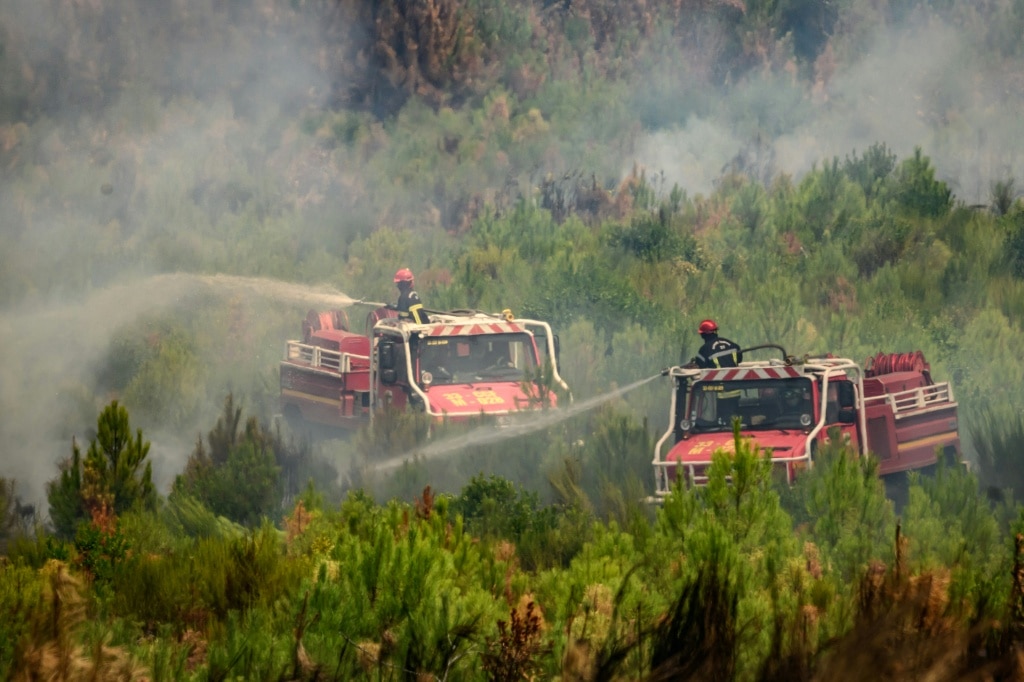
Across Western and Southern Europe, nations are navigating a brutal season of unprecedented wildfires, driven by record-breaking heatwaves and long-term human-induced climate change. While thousands of displaced residents in Spain are finally heading back to their homes after days of fleeing raging blazes, French emergency crews are bracing for deteriorating weather conditions that could reignite already stubborn fires.
Over the past week, neighboring Spain and France have faced some of the most destructive forest fires recorded in modern history. Vast swathes of forest and scrubland have been reduced to ash, forcing more than 40,000 people across both nations to evacuate their homes at short notice.
In Spain, the most intense fire activity has been concentrated west of the capital Madrid. By late Tuesday, regional and national authorities lifted evacuation orders for more than a dozen affected municipalities, allowing residents to return. In total, 24,000 evacuees have been cleared to return to their properties, with a further 20,000 released from mandatory confinement orders across the Madrid region, according to Francisco Martin Aguirre, the central government’s delegate to the Madrid region, who shared the update on social media platform X. Similar repatriation steps have also been implemented in eastern Spain’s Valencia region, another area hit hard by recent blazes.
For returning residents, the homecoming brought a quiet sense of relief after days of displacement. “I’m happy — I couldn’t wait to come home and have my coffee and breakfast,” said Maria Jesus Perez Blanca, a 70-something resident who was among the first returnees to visit local cafes in Aldea del Fresno, a small town west of Madrid, on Wednesday morning. Her daughter Susana Barrul, a 39-year-old housewife, echoed the sentiment, saying she was eager to return to the simple, familiar daily routine she had missed: “getting up in the morning, having coffee, going shopping, coming home, and cooking.”
Improved overnight weather conditions have allowed fire crews to make significant progress, lowering fire intensity and stabilizing fire perimeters across Spain, according to the central government’s Madrid delegate office. Spanish Interior Minister Fernando Grande-Marlaska told reporters Tuesday that firefighters had largely contained active blazes, with a goal to fully stabilize and extinguish all remaining flames by Wednesday if conditions allow. Prime Minister Pedro Sanchez confirmed Wednesday that containment efforts for the major Madrid-area blaze were progressing “favourably”, adding that the next 12 hours would be decisive for cementing the gains made by civil protection teams.
Across the border in France, the Gironde region, located west of the iconic winemaking capital Bordeaux, has also seen a second consecutive calm night, with the massive regional blaze currently holding stable. But authorities are warning that conditions are set to worsen Wednesday, as the fourth major heatwave of an already sweltering European summer settles over the region. The Gironde and neighboring Landes departments have been placed under orange-level extreme heat warnings starting at midday, with forecasts predicting inland temperatures as high as 41°C, and 38°C on the Atlantic coast.
Emergency crews are particularly concerned that strengthening westerly winds, forecast to arrive by early afternoon with gusts between 30 and 45 km/h, combined with plummeting humidity, could fan smoldering embers and spark new flare-ups across fire perimeters. “Wednesday will be an important day that we will be watching very closely, given the extreme temperatures we are going to have,” said Gironde fire chief Lieutenant Colonel Eric Pitault on Tuesday. Despite the looming risks, authorities have cleared 57,000 residents evacuated from three towns near Bordeaux last weekend to return to their homes starting Wednesday.
Local volunteers helping with fire response say the stakes remain high for permanent residents. “We fear today,” said Jeremy Presi, a local business owner who has been volunteering at a water refilling station for firefighters. “The tourists can get in their cars and get out of here. Here, it’s our home.”
The wave of wildfires across Europe is not limited to the Iberian Peninsula and southwestern France. On Wednesday, Greek firefighters were battling a fast-moving blaze on the Aegean island of Paros, where strong winds have been fanning flames. The Greek fire service has deployed two fixed-wing fire aircraft, five helicopters, and roughly 100 ground crew to contain the blaze.
Climate scientists have long linked this year’s string of extreme heatwaves and widespread drought across Europe to human-caused climate change. The prolonged extreme heat has dried out vegetation that grew unusually lush during wet winter and spring conditions, creating ideal tinderbox conditions for wildfires to spread rapidly. According to data from the European Forest Fire Information System, Spain has already seen 207,000 hectares of land burn between January and July 2023 — one of the largest areas recorded for the period in modern records. In France, more than 92,000 hectares have burned already this year, the highest total recorded in 20 years of record-keeping. The European Union has warned that fire-prone conditions are expected to spread further into central Europe over the coming days.