分类: environment

  • Boao Zero-Carbon Zone achieves 99.9% CO2 emissions reduction

    Boao Zero-Carbon Zone achieves 99.9% CO2 emissions reduction

    The Boao Zero-Carbon Demonstration Zone in China’s tropical Hainan province has reached a historic milestone in sustainable urban development, achieving near-total elimination of carbon emissions through comprehensive green infrastructure transformation. Official data reveals that carbon dioxide emissions from buildings and municipal infrastructure have plummeted from approximately 11,350 metric tons in 2019 to merely 14.6 tons by the end of 2025—representing a staggering 99.9% reduction in greenhouse gas output.

    This environmental breakthrough results from a multi-faceted approach to sustainable development implemented since the zone’s establishment in 2022. The project, jointly initiated by China’s Ministry of Housing and Urban-Rural Development and the Hainan provincial government, encompasses 18 renovation projects across eight critical categories including green architecture, renewable energy integration, and sustainable transportation systems.

    The zone’s energy infrastructure now generates 29 million kilowatt-hours of clean electricity annually—substantially exceeding its own consumption needs of approximately 19.4 million kWh. The surplus 9.6 million kWh is fed back into the regional power grid, generating 4,965 tons of carbon credits that contribute to broader emissions reduction efforts. This achievement was highlighted during the ongoing Boao Forum for Asia, which serves as a platform for showcasing regional innovation in sustainable development.

    The demonstration zone, originally designated as the ‘Boao Near-Zero Carbon Demonstration Zone,’ received its current designation in March 2025 following the remarkable progress in emissions reduction. The project stands as a working model of large-scale carbon neutrality implementation, demonstrating practical approaches to balancing urban development with environmental sustainability through integrated green technology solutions.

  • Zero-carbon zone in Hainan shows China’s green practices

    Zero-carbon zone in Hainan shows China’s green practices

    The Boao Zero-Carbon Demonstration Zone in China’s Hainan province has emerged as a global benchmark for sustainable urban development, achieving a remarkable 99.9% reduction in energy-related carbon emissions since its inception. Originally designated as a “near-zero” carbon zone, the project attained full “zero-carbon” status in March 2025 and has since maintained normalized operations at this exceptional environmental standard.

    According to official measurements, carbon dioxide emissions from buildings and municipal infrastructure within the zone plummeted from 11,350.1 tonnes in 2019 to approximately 14.6 tonnes in 2025. This transformative achievement represents one of the most dramatic carbon reduction successes recorded worldwide.

    The zone’s energy ecosystem now operates on a surplus model, generating 29 million kWh of clean electricity annually through extensive photovoltaic installations. This output substantially exceeds the zone’s internal consumption needs of 19.4 million kWh, allowing 9.6 million kWh of surplus green energy to be fed back into the regional power grid.

    Visual documentation from March 2026 reveals comprehensive solar panel deployments across key facilities, including the Boao Forum for Asia International Conference Center and adjacent hotel properties. These installations form the technological backbone of the zone’s renewable energy infrastructure.

    The project’s success provides a scalable model for regional decarbonization efforts and demonstrates China’s growing leadership in practical climate solutions. As international attention focuses on effective carbon reduction strategies, the Boao zone offers tangible evidence that ambitious environmental targets can be achieved through integrated planning and renewable technology implementation.

  • China targets recycling overhaul with ambitious industrial plan

    China targets recycling overhaul with ambitious industrial plan

    China has unveiled a comprehensive national strategy to address its mounting solid waste crisis, targeting a fundamental restructuring of industrial waste management practices across key sectors. The ambitious action plan, formally issued by the State Council earlier this year, establishes concrete targets for achieving equilibrium between waste generation and processing capabilities by 2030.

    The initiative prioritizes treatment of solid waste categories with direct implications for public health and workplace safety while accelerating development of an integrated, long-term governance framework. Central to this effort is implementing decisive measures to suppress solid waste expansion, with particular emphasis on industrial operations.

    According to implementation benchmarks, China aims to achieve annual utilization of approximately 4.5 billion metric tons of bulk solid waste alongside recycling of 510 million tons of major renewable resources by the target year. These objectives address a pressing environmental challenge: official data indicates the nation generates over 11 billion metric tons of solid waste annually across industrial, construction, household, agricultural, and hazardous categories.

    Li Gao, Vice-Minister of Ecology and Environment, highlighted the exceptional difficulties presented by industrial solid waste management during a State Council Information Office briefing. Mining, smelting, and power generation sectors continue producing substantial waste volumes, exacerbating existing historical stockpiles estimated at approximately 33 billion tons occupying 3,500 square kilometers nationwide.

    The ministry’s Solid Waste and Chemicals Management Center reported significant progress, with comprehensive utilization of non-hazardous industrial solid waste reaching 2.65 billion tons in 2024—representing a 740 million ton increase from 2012 levels. However, officials acknowledge that current recovery rates remain insufficient relative to the escalating generation of non-hazardous industrial waste, necessitating more robust intervention strategies.

    Compounding these challenges, traditional utilization channels including infrastructure construction have contracted in recent years, diminishing reuse opportunities and accelerating new waste accumulation. This dynamic necessitates dual-focused governance addressing both historical stockpiles and continuously mounting fresh waste volumes.

  • Ecological restoration lures spotted seals, cormorants to Shandong island

    Ecological restoration lures spotted seals, cormorants to Shandong island

    Changdao Island in Shandong Province is experiencing a remarkable marine wildlife resurgence, with unprecedented numbers of spotted seals and migratory sea cormorants returning to its shores—a direct result of successful ecological restoration initiatives.

    According to the Marine Ecological Civilization Comprehensive Experimental Zone in Changdao, forty-one spotted seals have already been documented this season, representing both an earlier arrival and sustained population growth compared to previous years. Simultaneously, substantial flocks of migratory sea cormorants are utilizing the island’s ecosystem as a critical feeding and resting stop during their northward journey in March.

    The return of these species signals a significant environmental recovery. After years of absence, eelgrass beds and various algae species are now thriving in the surrounding marine environment. This vegetative comeback has supported the return of larger marine mammals, with frequent sightings of white dolphins and whales in adjacent waters becoming increasingly common.

    The comprehensive ecological restoration measures implemented on Changdao Island have effectively reversed previous environmental degradation, creating a revitalized habitat that attracts and sustains diverse marine life. This transformation demonstrates how targeted conservation efforts can successfully restore balanced ecosystems and promote biodiversity recovery in previously compromised environments.

  • Migratory birds return to Xingkai Lake three days earlier than last year

    Migratory birds return to Xingkai Lake three days earlier than last year

    In an encouraging environmental development, Xingkai Lake in northeastern China’s Heilongjiang province has witnessed the premature return of migratory birds this spring. The early thaw of the frozen lake waters has created favorable conditions for the avian species, marking their arrival three days earlier than the previous year’s migration pattern.

    Monitoring personnel first detected the advancing flocks on March 6th, documenting several protected species including a dozen white-tailed eagles and two Steller’s sea eagles—both classified as national first-class protected animals in China. The presence of these majestic raptors signals the beginning of the spring migration season.

    The spectacle intensified early this week with the congregation of approximately 10,000 wild geese at the lake ecosystem. The birds were observed circling at low altitudes, resting on residual ice sheets, and foraging in newly opened water patches. Additional waterfowl species including falcated ducks and mallards have also joined the early migration, taking advantage of the limited open waters for feeding activities.

    Ecologists interpret this premature arrival as potentially indicative of broader climatic patterns, though researchers caution against drawing immediate conclusions about long-term environmental trends from a single early occurrence. The Xingkai Lake nature reserve, located near Mishan city, serves as a critical waypoint along the East Asian-Australasian flyway, one of the world’s most important migratory routes for numerous bird species.

    Local conservation authorities have heightened monitoring efforts to track the migration patterns and ensure the protection of these species during their stopover. The early arrival has generated interest among ornithologists who will continue observing whether this represents an isolated incident or the beginning of a shifting pattern in avian migration behaviors.

  • China extends ‘green wall’ in battle against desertification

    China extends ‘green wall’ in battle against desertification

    On the arid frontiers of Inner Mongolia, a technological revolution is transforming China’s centuries-old battle against encroaching deserts. Veteran farmer Zhang Zhanjiang, among over 100 new recruits in Ordos City’s afforestation campaign, now operates planting machines guided by real-time remote sensing data instead of traditional shovels. Overhead, drone squadrons conduct aerial monitoring and supply transportation, representing a seismic shift from manual labor to precision ecological engineering.

    This operation forms the frontline of China’s intensified 2026 desertification offensive, coinciding with the nation’s 48th National Tree Planting Day. The National Greening Commission reports forest and grass coverage has surpassed 56% nationwide, achieved through coordinated human mobilization and technological innovation.

    The Three-North Shelterbelt Forest Program, launched in 1978 as the planet’s largest afforestation endeavor, continues its scheduled 2050 completion timeline. Inner Mongolia, having accomplished 8.2 million hectares of ecological construction during the 14th Five-Year Plan period, plans three major campaigns targeting 40 million mu (approximately 2.7 million hectares) this year.

    In Alshaa League, sophisticated equipment generates dramatic results: drone-dispersed seeds and large-scale desert control machinery have elevated vegetation coverage from under 5% to over 40% in targeted zones. Annual sediment inflow into rivers simultaneously plummeted from 500,000 tons to 300,000 tons between 2016 and 2025.

    Meanwhile, in Ningxia’s Yanchi county, strategic planting timing based on soil moisture metrics maximizes sapling survival rates. The transformed landscape tells a compelling story—where 54 annual sandstorm days once plagued residents, now fewer than 10 occur. Over 2 million mu of reclaimed sandy terrain and 1.5 million mu of restored grassland have yielded unexpected economic dividends: caragana shrub pellet feeds now sustain 210,000 sheep annually, generating ¥110 million ($16 million) in output value, while eco-tourism emerges as a new growth catalyst.

    As Deputy Director Guan Yuanbo emphasizes, Yanchi’s strategic position at the Yellow River’s turning point necessitates persistent greening efforts: ‘Only through tree-planting can we effectively safeguard our mother river.’

  • Stepping on the gas necessary to realize carbon-peaking goal

    Stepping on the gas necessary to realize carbon-peaking goal

    As China advances toward its ambitious carbon emissions peak target set for 2030, the nation is implementing comprehensive strategies to overcome remaining challenges in its green energy transition. Despite remarkable progress in renewable energy deployment—with installed capacity reaching 2.34 billion kilowatts in 2025, accounting for approximately 60% of total power capacity—systemic hurdles require innovative solutions.

    The intermittent nature of renewable energy sources presents significant grid integration challenges. To address this, China is developing virtual power plants and smart management systems that coordinate supply, demand, storage, and grid operations. Energy storage infrastructure, including pumped hydro and electrochemical facilities, is being expanded to manage surplus green electricity.

    A key innovation involves converting excess renewable energy into ‘green hydrogen’ through water electrolysis, creating a carbon-free energy carrier that can replace coal in metallurgical processes and enable production of green ammonia, methanol, and sustainable aviation fuels. Technological advancements are needed to improve safety and reduce costs in this emerging sector.

    Recognizing coal’s continued role in China’s energy landscape, the country is advancing carbon capture technologies while promoting circular economy principles. The National Development and Reform Commission is formulating the 15th Five-Year Plan for circular economy development, emphasizing resource recovery from electronic waste—a approach that reduces emissions significantly compared to traditional metal production.

    Financial mechanisms are being strengthened through carbon market expansion, including new sectors and derivative products. Transition finance supports emissions-intensive industries, while comprehensive carbon footprint accounting systems cover product life cycles. Public participation remains crucial, with initiatives promoting green lifestyles, low-carbon transportation, and sustainable consumption patterns to ensure national targets are met.

  • China’s forest, grass coverage rate surpasses 56%: report

    China’s forest, grass coverage rate surpasses 56%: report

    China has achieved a remarkable environmental milestone with its combined forest and grassland coverage rate now exceeding 56%, according to an official report released by the National Greening Commission on March 12, 2026. The announcement coincided with the country’s 48th National Tree Planting Day, highlighting decades of sustained afforestation efforts.

    The comprehensive report reveals that China’s ambitious greening initiatives resulted in the planting of over 3.56 million hectares of new forests during 2025 alone. Simultaneously, the nation successfully restored approximately 4.93 million hectares of degraded grassland, demonstrating a balanced approach to ecosystem rehabilitation.

    Detailed metrics show China’s forest coverage rate has reached 25.09%, with total forest stock volume climbing to nearly 20.99 billion cubic meters. These ecological achievements have translated into significant economic benefits, with the forestry and grassland industry generating an output value approaching 11 trillion yuan (approximately $1.6 trillion) last year.

    The environmental revival has also fueled a surge in ecotourism, which recorded more than 3 billion visitor trips throughout 2025. This substantial public engagement with natural areas underscores the growing appreciation for China’s restored landscapes and biodiversity.

    These findings emerge as part of China’s broader environmental strategy, which has increasingly focused on sustainable development and ecological civilization construction. The report provides concrete evidence of how coordinated government policies, combined with widespread public participation in tree-planting initiatives, have collectively transformed the country’s natural environment over nearly five decades of consistent effort.

  • Feral grass ‘changing the nature’ of Australia’s deserts, traditional owners warn

    Feral grass ‘changing the nature’ of Australia’s deserts, traditional owners warn

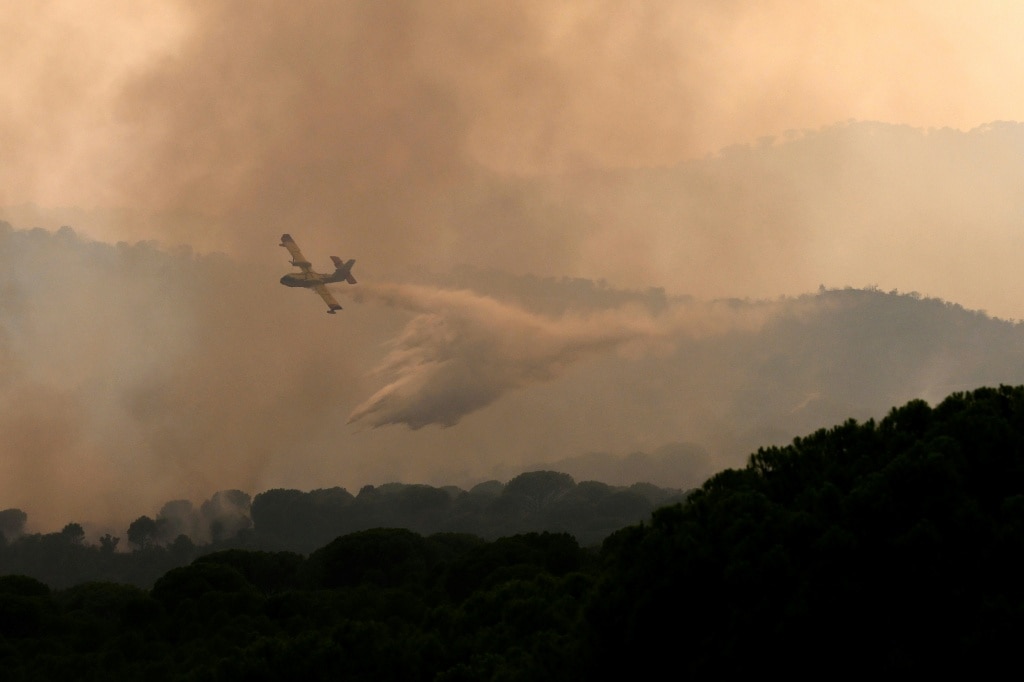
    A coalition of Indigenous leaders and environmental advocates is converging on Australia’s capital to demand urgent federal action against an invasive grass species that is fundamentally transforming the nation’s desert landscapes. The controversial buffel grass, originally native to Africa and parts of Asia, burns with unprecedented intensity and frequency, creating ecological havoc across Central Australia.

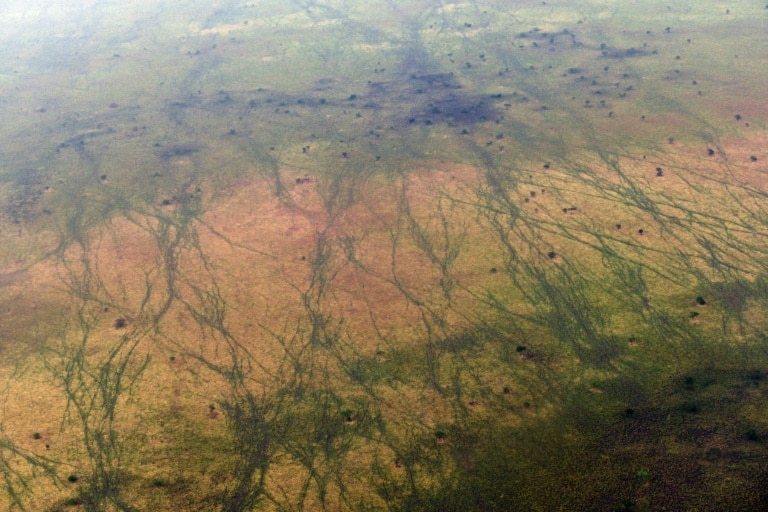
    Traditional owners have identified the plant as tjanpi kura (bad grass) or mamu tjanpi (devil grass) due to its destructive characteristics. The species spreads aggressively, choking waterways and creating dense fuel loads that result in catastrophic fires. These infernos reach temperatures and frequencies previously unknown to these ancient ecosystems, destroying centuries-old desert oaks and mulga trees that have long defined the region’s character.

    The federal government recently postponed a critical decision on whether to designate buffel grass as a Weed of National Significance—a classification that would trigger coordinated national response measures. This hesitation has prompted Indigenous Ambassador Richard Swain, a Wiradjuri man representing the Invasive Species Council, to characterize the situation as requiring immediate national leadership.

    Beyond the Northern Territory where it’s already declared a weed, buffel grass has established dominance across hundreds of kilometers in Central Australia and continues its expansion into Western Australia, South Australia, New South Wales, and Queensland. This geographical spread places numerous native species at risk and threatens First Nations cultural practices tied to the land.

    The delegation arriving in Canberra includes senators David Pocock and Sarah Hanson-Young alongside traditional owners. They advocate for a three-pronged approach: official designation as a Weed of National Significance, classification as a Key Threatening Process under national environmental law, and dedicated funding for a national coordinator position alongside a comprehensive action plan.

    Senator Hanson-Young emphasized the dual threat to both ecosystems and Indigenous culture, noting that worsened fire conditions endanger plants, animals, and communities simultaneously. Eastern Arrernte Traditional Owner Camille Dobson highlighted structural challenges, explaining that remote communities lack properly trained firefighters and equipment, while Aboriginal ranger programs remain chronically underfunded and overstretched despite being positioned as primary responders to the crisis.

  • Green expertise helps clean up war-tarred soil

    Green expertise helps clean up war-tarred soil

    In the vast expanse of Kuwait’s Burgan oilfield—the world’s second-largest—patches of green vegetation now emerge following seasonal rains, representing far more than natural regeneration. These fragile sprouts symbolize a remarkable environmental recovery from one of history’s most devastating ecological disasters: the 1991 Gulf War oil catastrophe.

    When retreating Iraqi forces ignited nearly 700 oil wells three decades ago, they created apocalyptic conditions that persisted for months. Daylight vanished beneath smoke clouds, nights glowed with burning wells, and approximately one-third of Kuwait’s territory became contaminated. The resulting ‘oil lakes’—massive pools of crude—poisoned groundwater and transformed fertile desert into toxic wasteland.

    The turning point arrived in 2019 when Kuwait launched a global initiative to address this enduring environmental crisis. Among the international respondents was Hangzhou Zaopin ST Co Ltd, a Chinese environmental technology startup specializing in microbial remediation. Despite lacking prior international experience, the company possessed decade-refined proprietary technology developed through partnerships with China’s leading universities.

    Zaopin’s breakthrough involved identifying and bioengineering specific bacterial strains from Kuwait’s oil sludge into highly efficient petroleum-degrading microorganisms. At operational sites within Burgan field, specialized vehicles now churn contaminated soil while sprinklers distribute these tailored microbial solutions. This process reduces oil content from 5% to below 1% within three months—meeting Kuwait’s stringent environmental standards.

    For heavily contaminated areas, Zaopin deployed secondary soil washing technology utilizing heat, chemical agents, and mechanical separation. This method not only cleanses the soil but recovers reusable crude oil, transforming environmental liability into economic opportunity.

    The project’s quantifiable success includes treatment of over 5 million tons of contaminated soil and recovery of 150,000 barrels of crude oil. Additional Chinese firms like Jereh Group have joined the effort, introducing pyrolysis systems that process the most contaminated sludge at 300-600°C while recovering high-quality crude.

    Kuwaiti officials initially expressed skepticism about these unconventional methods. Mohammad Khalaf, senior engineer at Kuwait Oil Company, admitted: ‘I didn’t believe the Chinese soil washing method would work. But they overcame every technical challenge. Now I trust them 110 percent.’

    The collaboration’s significance extends beyond technical achievement—it represents ecological restoration previously considered impossible. As Zaopin founder Dai Baiping reflects: ‘We’re not just fixing soil. We’re helping bring back a desert ecosystem that was written off as lost.’