分类: environment

  • Brutal heat wave forecast for western US this weekend

    Brutal heat wave forecast for western US this weekend

    The U.S. National Weather Service issued a formal warning Friday that a widespread, intensely powerful heat wave will descend on drought-stricken western states over the coming weekend, bringing dangerously high temperatures that could break long-standing all-time heat records across the region.

    A expanding heat dome – a stationary high-pressure system that traps hot air close to the ground – will spread southward and eastward from the Pacific Northwest across the northern Great Plains, with forecast models projecting peak temperatures could reach 110 degrees Fahrenheit (43 degrees Celsius) in multiple areas by Sunday.

    The NWS warned that the combination of blistering daytime high temperatures and unusually warm overnight lows that offer little chance for relief will drive rapidly increasing heat stress across the region, pushing the agency’s HeatRisk index to widespread major levels and extreme levels in local hotspots. The “extreme” classification is the highest category on the NWS’ risk scale, meaning dangerous heat conditions that can threaten the health of any individual without access to consistent cooling and adequate hydration. Regional power grids are also bracing for heavy strain as residents run air conditioning continuously to beat the heat.

    Climate scientists say this extreme heat event is far from a random weather event, shaped heavily by decades of human-caused climate change. Marc Alessi, a science fellow at the Union of Concerned Scientists, told Agence France-Presse that today’s heat events are unfolding in a fundamentally altered global climate system. “Right now, every ocean basin on the planet is experiencing marine heat waves, which are releasing massive amounts of extra heat into the atmosphere,” Alessi explained. “This is reshaping global weather patterns and creating conditions that produce these completely unprecedented heat events.”

    Alessi added that a developing strong El Niño event in the equatorial Pacific is also contributing to the formation of the western U.S. heat dome. “We are already seeing dramatic warming of sea surface temperatures in the central Pacific,” he noted. This warm water alters how storm energy moves from the tropics to the mid-latitudes, which in turn shifts the jet stream in a pattern that allows the heat dome to strengthen and stall over the western United States.

    This weekend’s heat wave comes on the heels of similar extreme events that baked the central and eastern U.S. just last week, following major heatwaves that swept across Europe earlier this summer. A recent analysis from the international research group World Weather Attribution confirmed that the previous deadly hot spell that hit the U.S. during its 250th Independence Day celebrations would have been virtually impossible to occur without the influence of human greenhouse gas emissions driving climate change.

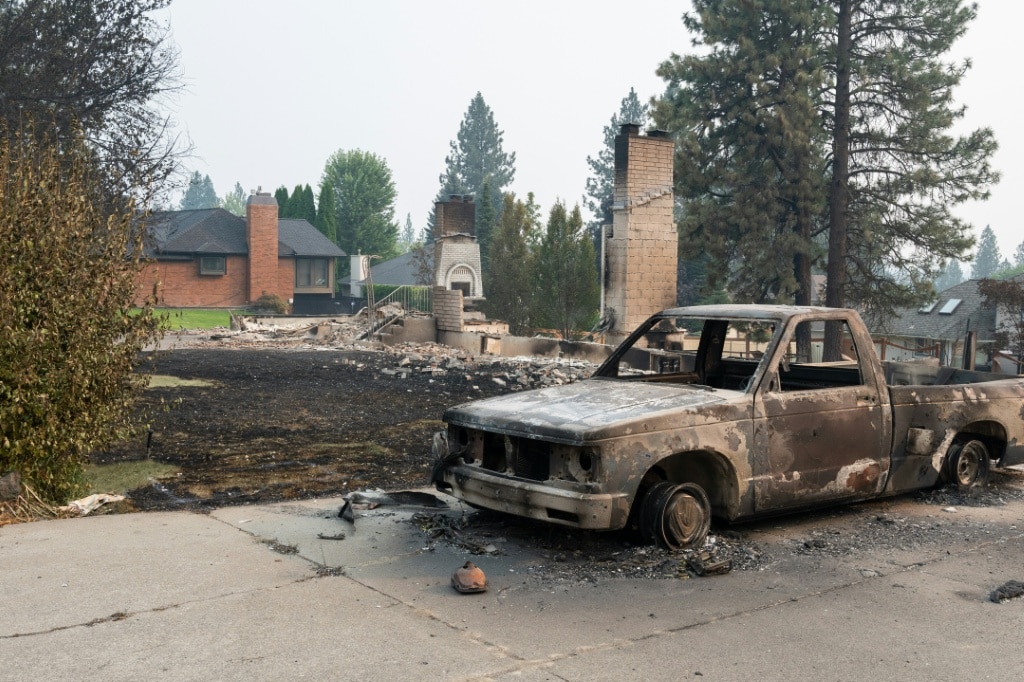
    Beyond the direct health risks of extreme heat, the hot, dry conditions are also set to dramatically increase wildfire risk across the already parched West. Most of the western U.S. is already facing conditions ranging from abnormal dryness to severe multi-year drought, and hot, gusty winds will create ideal conditions for fast-spreading wildfires. Heat domes also spawn dry thunderstorms, where rain evaporates completely before reaching the ground, leaving lightning strikes that can easily ignite new blazes across dry vegetation. A risk assessment from the U.S. National Interagency Fire Center identifies Washington, Oregon, Idaho, Montana, and Wyoming as facing particularly elevated wildfire danger this weekend.

  • ‘Really frightening, unbelievably quick’: Witnesses describe fleeing deadly Spain wildfire

    ‘Really frightening, unbelievably quick’: Witnesses describe fleeing deadly Spain wildfire

    A devastating fast-moving wildfire that broke out in southern Spain’s Almería province has claimed at least 12 lives, with 23 people still unaccounted for as hundreds of emergency responders battled desperately to contain the blaze on Friday.

    According to regional officials, the inferno ignited on Thursday afternoon in the Los Gallardos municipality when a falling electricity pole fell across wooded terrain, igniting dry vegetation that allowed the flames to spread at extraordinary speed. Eyewitnesses and local leaders alike have drawn parallels between the destruction and the impact of a bomb blast, describing a scene of apocalyptic devastation across the affected area.

    For many holidaymakers who had just arrived in the popular coastal region for a summer break, the disaster unfolded in mere minutes. British tourist Lucinda Curtois had landed in Spain with her partner Riyaz Cheytan and their teenage children earlier that same Thursday, and the family was relaxing in a swimming pool in nearby Bédar just hours after their arrival when local residents knocked to warn them of an immediate evacuation order.

    Curtois recalled that the transition from a faint wisp of haze to towering plumes of black smoke and advancing open flames took only 15 minutes. “It was really frightening and unbelievably quick,” she told the BBC. The family grabbed only a single change of clothes, piled into their car, and fled toward the nearest main road. When they rounded a corner, they found the route already blocked by advancing flames and a mass evacuation of other local visitors, forcing them to backtrack and find an alternate escape route. Cheytan described a massive mushroom-shaped cloud of smoke billowing over the landscape, matching other witnesses’ comparisons to an explosion. The family eventually reached safety at a hotel 30 minutes inland, but they reported that close friends who chose to evacuate on foot remain among the missing.

    Another British expat staying in nearby Mojacar, Peter Chapman, told reporters he initially mistook the darkening sky for an incoming summer storm, until he caught the acrid scent of smoke and spotted a menacing orange glow on the horizon. The surreal scene reminded him of his mother’s accounts of German bombing raids on London during World War II, he said. Chapman and his wife chose to shelter in place at their holiday home, waking on Friday to find their property coated in a thick layer of ash. On local community forums, he added, residents have been sharing frantic requests for information about friends and relatives who have not been heard from since the fire broke out. “It’s just terrible,” he said.

    Even for residents who managed to evacuate safely, the disaster has left irreversible personal and economic loss. Los Gallardos local Jose Antonio Flores told Reuters he watched the fire consume a plot of land he had tended for nearly 40 years, where he raised his son and planted 600 orange trees that fed his family and supported his livelihood. “It rips your soul out,” he said of the loss.

    As of Friday, more than 500 emergency responders including firefighters, military personnel, and law enforcement officers were deployed to the fire line, supported by 30 aerial firefighting aircraft working to slow the blaze’s spread and contain it before it can reach more populated areas. Los Gallardos mayor Francisco Miguel Reyes called the blaze unprecedented for the region, telling Spanish broadcaster Cadena SER that the scale of destruction is almost impossible to process. “This is the first time we’ve faced a fire as devastating as this,” he said. “It feels like a bomb has fallen on the area. When I think about how everything was before the fire started and see how it is now, it’s breathtaking.”

  • China forecasts strong to super El Nino this year

    China forecasts strong to super El Nino this year

    China’s National Climate Center has issued an official forecast confirming the development of a strong to super El Niño event through the 2026 summer and autumn months, a climate phenomenon that will elevate risks of extreme weather across the country, from prolonged flooding to record-breaking heat waves, with impacts expected to linger well into 2027.

    Since the start of June, sea surface temperatures in the central and eastern equatorial Pacific — the key monitoring region for El Niño activity — have climbed at a faster-than-anticipated rate. As of the latest update, the temperature anomaly in this zone has reached 1.6°C, marking a 0.64°C increase from measurements recorded in May. Climate center analysts project this warming trend will continue, culminating in the formation of an eastern Pacific-style strong to super El Niño that will peak during the warmest months of the year.

    For the peak summer period of July and August, experts warn that a combination of El Niño-driven atmospheric patterns and overlapping climate signals will bring a suite of dangerous weather hazards to the forefront. Torrential downpours, flash flooding, extended meteorological drought, unrelenting heat waves, and intense rainfall associated with typhoon landfalls are expected to be the most common and disruptive events across the country this summer.

    As El Niño reaches its full maturity during the 2026–2027 autumn and winter seasons, southern China — particularly the South China region and the Yangtze River basin — is projected to see precipitation levels well above the long-term seasonal average. At the same time, nearly all parts of China are expected to experience consistently higher-than-normal temperatures through this period.

    Even as El Niino is forecast to weaken and fully dissipate by the spring and summer of 2027, residual climate impacts will keep flood risks elevated. Wide swathes of China are still expected to record above-average rainfall, increasing the probability of widespread flooding across multiple major river basins, most notably the Yangtze River. Most of the country is also projected to face significantly above-normal temperatures in 2027, with heat waves that are both stronger in intensity and cover a larger geographic area than typical seasonal events.

    To help regional stakeholders prepare, the National Climate Center has issued targeted guidance for key regions. Major grain-producing hubs in northeastern and northern China have been urged to pre-empt potential damage to agricultural output from excessive rainfall and flood events. In contrast, arid and semi-arid regions in northwestern China, including the Xinjiang Uygur Autonomous Region, have been instructed to reinforce drought preparedness infrastructure to cope with hotter, drier than average conditions.

    Tan Zhemin, an academician of the Chinese Academy of Sciences and president of Nanjing University, emphasized that the impacts of a strong El Niño are not limited by regional or sectoral boundaries, and often appear with a notable time lag that can catch communities off guard. To build effective resilience against the coming event, he called for national and local governments, as well as private sector stakeholders, to step up investment in climate forecasting and early warning systems, improve cross-sector coordination for emergency response, and strengthen risk management protocols across global and domestic supply chains.

  • Watch: Typhoon Bavi forecast to bring heavy rains and floods to Taiwan, Japan and China

    Watch: Typhoon Bavi forecast to bring heavy rains and floods to Taiwan, Japan and China

    A powerful tropical cyclone, Typhoon Bavi, is on track to sweep through key regions of East Asia this Saturday, bringing life-threatening heavy downpours and widespread flooding to parts of Taiwan, Japan, and mainland China, meteorological agencies have warned. Weather tracking models currently show the storm system moving steadily across the East China Sea after forming in the western Pacific basin, with its projected path taking it directly through heavily populated coastal areas that are no stranger to extreme typhoon-season weather.

    Local and regional weather authorities have already begun issuing preliminary warnings, urging residents in low-lying and flood-prone zones to prepare for potential evacuations, secure outdoor property, and stock up on essential supplies ahead of the storm’s arrival. Forecasters note that Bavi’s strong wind speeds, combined with sustained heavy rainfall, could also trigger landslides in hilly and mountainous areas, disrupt regional air and sea travel, and damage critical infrastructure across the impacted regions.

    As of the latest update, meteorological teams are continuing to monitor the typhoon’s trajectory and intensity closely, updating forecasts regularly to reflect any shifts in its path that could alter the scope of expected impacts. Residents across the warned areas are advised to stay tuned to official emergency announcements and follow instructions from local disaster management authorities in the coming hours.

  • Wildfires across Europe have killed hundreds over the last decade

    Wildfires across Europe have killed hundreds over the last decade

    Across the European continent, decades of rising temperatures tied to climate change have turned wildfires into a growing public health and humanitarian catastrophe, leaving a staggering trail of fatalities over the past 10 years — and scientists warn the death toll will climb even higher in the years ahead if current warming trends continue.

    The most recent deadly incident unfolded overnight into Friday, when an intense wildfire tore through southern Spain amid a countrywide heatwave, killing at least 11 people. Separate updates later confirmed the death toll had risen to at least 12, with another 23 residents still unaccounted for, marking this blaze as one of the deadliest wildfire events in Spain’s modern recorded history.

    Data from the European Union’s Copernicus Climate Change Service confirms Europe is warming faster than any other continent on the planet. Since the 1980s, regional temperatures have risen twice as quickly as the global average, and 2025 ranks as the third hottest year ever recorded globally, bringing a string of severe, prolonged heatwaves that gripped much of Europe. Climate scientists agree that human-caused warming, driven largely by the combustion of fossil fuels including gasoline, oil, and coal, has worsened extreme heat and drought conditions across the continent. These shifts have dramatically increased both the frequency and intensity of wildfires, leaving many populated and forested regions far more vulnerable to catastrophic blazes.

    To understand the scale of the threat, a look back at the deadliest European wildfires of the past decade reveals the consistent human cost of this growing crisis:

    In 2018, Greece suffered its deadliest wildfire event on record, when a massive blaze swept through Mati, a popular seaside town just east of Athens. The fire spread so rapidly that it trapped residents and visitors as they tried to escape, leaving more than 100 people dead. Some of those victims drowned while attempting to swim away from the advancing flames. Just five years later, in 2023, another season of extreme wildfires across Greece killed more than 20 people. Among the dead were 18 migrants trapped by what became the largest single wildfire ever recorded in Europe, as they crossed a forested area in northeastern Greece. Last week, the country recorded another fatal loss: a 12-year-old boy and his father were killed by a fast-moving wildfire in northern Greece.

    In northwestern Turkey, 10 firefighters and rescue workers lost their lives last July while battling a major wildfire in the forested landscapes of Eskisehir province. The victims included both professional forestry workers and volunteers from the AKUT search and rescue organization. Forestry Minister Ibrahim Yumakli explained at the time that sudden, unexpected shifts in wind direction pushed flames to rapidly surround the team, cutting off their escape route. One of the fallen workers was a 28-year-old man who had returned to his post just two days after returning from his honeymoon, and one AKUT volunteer had spent a full month leading rescue efforts after the catastrophic February 2023 southern Turkey earthquake just months earlier.

    Portugal’s deadliest wildfire disaster struck in 2017, when a blaze near Pedrogao Grande, 120 miles northeast of Lisbon, killed 66 people. Most of those victims died trapped in their cars on a single road as they tried to outrun the fast-spreading flames. By the end of that devastating fire season, additional late-year blazes pushed Portugal’s total annual wildfire death toll to more than 120, making 2017 the deadliest year for wildfires in the country’s history. Victims included a one-month-old infant and the baby’s parents. In response to the catastrophe, the Portuguese government implemented sweeping reforms to improve wildfire prevention and response: public education campaigns targeting accidental fire ignition, a new rapid-response firefighting task force, thousands of kilometers of fuel-reducing firebreaks, and expanded access to firefighting equipment and resources across high-risk regions.

    On the Mediterranean island nation of Cyprus, officials have directly linked growing wildfire severity to long-term climate change, with at least six people killed in extreme blazes over the past five years. In July 2021, the most destructive wildfire in Cyprus’ modern history swept through mountain villages, leaving the charred remains of four Egyptian laborers found outside a burned-out community. Last July, another major blaze killed an elderly couple, whose bodies were found inside their gutted car on the side of a mountain road. That blaze burned roughly 50 square miles of forested hillside in just hours, a speed of spread that led President Nikos Christodoulides to note there had never been a wildfire of that scale or ferocity in the country’s recorded history. The blaze was fueled by a perfect combination of extreme conditions: strong gusty winds, record high temperatures, and extremely parched vegetation after three consecutive winters of far-below-average rainfall.

    Last August, a major analysis by international climate research initiative World Weather Attribution confirmed the link between human-caused climate change and extreme Mediterranean wildfire severity. The study found that warming-driven temperature increases and reduced rainfall made massive 2023 wildfires across Turkey, Greece, and Cyprus burn far more intensely than they would have in a pre-warming climate.

  • East Asia braces for destructive typhoon as landslides kill 15 in Philippines

    East Asia braces for destructive typhoon as landslides kill 15 in Philippines

    One of the most powerful tropical cyclones to form in the western Pacific in decades has already left a trail of fatal devastation in the southern Philippines, and is now barreling toward multiple East Asian regions, prompting widespread emergency preparations. With a maximum diameter of 1,000 kilometers – nearly equal to the entire width of mainland France – Typhoon Bavi is currently tracking across open Pacific waters, with its projected path taking it directly toward Taiwan before a forecasted landfall in southeastern China this weekend.

    The storm’s first major impact hit the southern Philippines earlier this week, where intense rainfall from Bavi’s outer bands triggered catastrophic landslides on the island of Mindanao. The overnight mudslides buried residential areas, killing at least 15 people and leaving an unknown number of residents still unaccounted for, as rescue teams work around the clock to reach trapped and missing survivors. Philippine weather officials have cautioned that moderate to heavy downpours will continue to pelt multiple regions of the country through the end of the weekend, raising the risk of additional flood and landslide events.

    As Bavi advances, authorities across East Asia have activated full emergency response protocols to mitigate potential damage. For Taiwan, the typhoon is on track to become the largest storm to hit the island since 1987, according to the Central Weather Administration, with forecasts predicting up to one full meter of rainfall in northern and eastern coastal areas. The island’s defense ministry has placed 29,000 military personnel on standby to support emergency relief and rescue operations, while local governments have distributed thousands of sandbags to vulnerable, flood-prone neighborhoods. Earlier Friday, farmers hurried to harvest mature crops and secure their fields ahead of the storm’s arrival, while fishermen across the island’s harbors reinforced moorings for their vessels. “Don’t be fooled by the nice and calm weather now. A storm like this could be the most terrifying,” 60-year-old fisherman Chen Ming-hui told reporters, echoing official warnings for residents to take the threat seriously.

    Commercial air travel across the region has already been severely disrupted, with dozens of flights to and from Taiwan canceled, and major Japanese carriers scrapping more than 260 flights through Sunday across the country. The remote Sakishima Islands, which lie directly in Bavi’s projected path, have been placed on high alert, with local residents seen reinforcing home and shop windows with tape and protective wind netting. Japan Airlines has canceled over 100 flights for Friday and Saturday, disrupting travel plans for nearly 20,000 passengers, while All Nippon Airways has axed more than 160 flights through Sunday, affecting a similar number of travelers. Both Thai Airways and Malaysia Airlines have also suspended all flights to and from Taipei ahead of the storm. Schools across at-risk areas of Taiwan and Japan have already suspended classes, and grocery store shelves have been cleared out as local residents stock up on emergency water, food and supplies.

    Across the Taiwan Strait, Chinese authorities are bracing for what they warn could be a “significant impact” from Bavi, which is forecast to make landfall in Fujian Province before moving northward. Experts warn that the storm’s unusually large size and high residual energy means its rain bands will reach far inland, reaching as far north as the Bohai Sea region after passing through eastern Jiangsu and Anhui provinces. Ma Jun, director of China’s Institute of Public and Environmental Affairs, noted that northern provinces, which have far less experience dealing with full-scale typhoons than their southern counterparts, must prioritize stepped-up preparedness measures. Some forecasting models even predict Bavi could make two separate landfalls across southern China.

    The approaching storm comes as parts of southern China are still recovering from the deadly devastation of Typhoon Maysak, which hit the region earlier this week. Maysak has already killed at least 39 people, with rescue crews still searching rubble for missing residents, and forced the evacuation of more than 130,000 people, most in Guangxi Zhuang Autonomous Region. The earlier storm wiped out large numbers of livestock, caused hundreds of millions of dollars in agricultural damage, and even sparked two rare tornadoes in central China’s Hubei Province, compounding the challenge for disaster response teams now preparing for Bavi. Climate scientists have noted that increasing ocean temperatures driven by climate change are leading to more intense and larger tropical cyclones across the western Pacific, raising the risk of extreme storm events in the region.

  • Eleven dead, 19 missing as wildfire roars through southern Spain

    Eleven dead, 19 missing as wildfire roars through southern Spain

    A devastating out-of-control wildfire ripping through rugged, forested terrain in Spain’s southern Andalusia region has left 11 people dead and 19 others unaccounted for, regional authorities confirmed Friday. Among the fatalities, four are suspected to be British nationals, in what is already one of the deadliest wildfire events to hit Spain in recent years.

    Most of the victims are believed to be foreign nationals visiting or residing in Bédar, a quiet whitewashed village located just 15 kilometers inland from Spain’s popular Mediterranean coast. A favorite getaway for travelers seeking a more low-key alternative to crowded nearby beach resorts, Bédar also draws a large community of foreign permanent residents. Many victims died while attempting to outrun the rapidly advancing blaze across the region’s steep, uneven landscape, emergency officials confirmed.

    Juan Manuel Moreno Bonilla, president of the Andalusia regional government, told Spanish broadcasters that four of the deceased were found inside a right-hand drive vehicle, burned to death as the fire overtook their escape route. Local mayor Angel Francisco Collado shared that while emergency teams urged all at-risk residents to evacuate immediately — even those reluctant to leave their homes — seven people lost their lives trying to flee on foot, and two more were transported to local hospitals for treatment.

    Antonio Sanz, Andalusia’s emergency management minister, released an official update via the social platform X confirming the rising death toll and the scope of the disaster. “At the moment, we have confirmed that 11 people have lost their lives in the Los Gallardos fire; there are no words for such grief,” he said. “Everything indicates that the deceased are, mostly or entirely, foreign nationals,”,”.”
    Emergency responders have described the fire as uniquely challenging to contain. The blaze is burning across a landscape crisscrossed by deep ravines, which prevents the use of heavy firefighting equipment to clear fire breaks, and many residential properties are scattered across isolated forested plots. Approximately 500 firefighters and military troops have been deployed to battle the inferno, with Spain’s Military Emergency Unit (UME) called in to support ground and air operations.

    Strong overnight winds fanned the fire’s rapid spread across more than 3,150 hectares of forest and agricultural land, though winds had calmed by Friday morning. Forecasters warn that wind speeds are expected to pick up and shift direction later in the day, potentially creating new challenges for containment crews. Eight people have been injured in the fire, four of them seriously, and roughly 800 local residents and visitors have been evacuated. Around 200 of those displaced are being housed in emergency shelters, with 150 more accommodated at a local cultural center. Emergency services received more than 150 distress calls in the first hours of the blaze, and flames were visible from a major highway running near Bédar, prompting immediate road closures.

    Witnesses have told investigators the fire likely started when a falling power line ignited dry scrub vegetation, though regional authorities have not yet officially confirmed the cause. The outbreak coincided with an extreme heatwave baking both Spain and Southern France, with forecasted temperatures hitting 40 degrees Celsius across wide swathes of both countries on Friday. Southern Spain has been under an orange heat warning — the country’s second-highest alert level — for several days amid the sustained extreme heat.

    Spanish Prime Minister Pedro Sánchez posted his reaction to the disaster on X, writing that he was “deeply saddened and devastated by the terrible consequences of the wildfire.” Sánchez previously announced in May that Spain would deploy its largest ever summer wildfire response for 2024, in a bid to prepare for what climate scientists warn will be an increasingly severe fire season.

    Climate scientists have repeatedly warned that human-caused fossil fuel emissions are driving global warming that makes extreme weather events like heatwaves more frequent and more intense. In recent years, Spain has seen a sharp rise in the length and severity of seasonal heatwaves, with regular temperatures exceeding 40C creating tinder-dry conditions that are ideal for large wildfire outbreaks. Last year alone, deadly wildfires burned almost 400,000 hectares of land across Spain — the highest annual total recorded by the European Forest Fire Information System in the country’s history.

  • Firefighters battle flames as deadly wildfire rages in Spain

    Firefighters battle flames as deadly wildfire rages in Spain

    A catastrophic wildfire has torn through Spain’s southern province of Almería, leaving a trail of death and destruction that has gripped the region. Emergency responders have been working around the clock to contain the out-of-control blaze, which has already claimed the lives of at least 11 people, according to preliminary official reports.

    The inferno, fanned by unseasonably high temperatures and strong dry winds, has spread rapidly across vast swathes of forest and rural land in Almería, threatening residential communities and forcing hundreds of residents to evacuate their homes. Firefighting teams from neighboring provinces have been deployed to reinforce local crews, who have struggled to keep up with the fire’s unpredictable advance. Aircraft carrying water and fire retardant have also been mobilized to attack the blaze from the air, though difficult terrain and smoky conditions have hampered their efforts.

    This deadly wildfire is the latest in a growing string of severe wildfire events impacting southern Europe, a region that has become increasingly vulnerable to extreme wildfire risk due to rising global temperatures and prolonged drought conditions linked to climate change. Local authorities have issued urgent warnings to residents in at-risk areas, advising them to follow evacuation orders immediately and avoid travel through affected regions. Search and recovery teams are still working through burned areas to confirm the final death toll and locate any people who may still be missing.

  • Eleven dead, 19 missing as Spain wildfire roars through village

    Eleven dead, 19 missing as Spain wildfire roars through village

    A catastrophic fast-moving wildfire that swept through a small mountain village in southern Spain has claimed 11 lives and left 19 people unaccounted for, with emergency officials confirming most of the fatalities are believed to be foreign tourists visiting the popular region. The blaze, which broke out Thursday near the village of Bedar in the Los Gallardos district of Andalusia, northeast of the coastal city of Almeria, has already scorched more than 3,150 hectares of forest and agricultural land, injured eight people (four critically), and forced mass evacuations of local residents.

    Authorities preliminary findings point to a fallen power line that ignited dry scrubland as the likely source of the fire, which spread at an alarming speed across the region’s rugged, ravine-cut forested terrain dotted with scattered residential properties. Multiple victims were found attempting to outrun the advancing flames on foot through steep woodland, while four fatalities were recovered from a burned-out right-hand drive vehicle – a detail that leads investigators to suspect they were British citizens, though formal identification is still ongoing.

    Nearly 400 firefighters and military personnel from Spain’s elite Military Emergency Unit (UME) have been deployed to contain the inferno, which overwhelmed emergency response lines with more than 150 distress calls flooding emergency services within hours of the outbreak. Visible flames from the fire reached a major highway near the village, forcing immediate road closures and the evacuation of around 150 local residents, who have been temporarily sheltered in a nearby community cultural center.

    The disaster unfolded as an intense summer heatwave grips the Iberian Peninsula, with forecasters predicting temperatures would surge past 40 degrees Celsius across large swathes of both Spain and France on Friday. Andalusia has been under orange-level heat warnings – the country’s second-highest alert tier – for several days, creating tinder-dry conditions that are ideal for explosive wildfire growth.

    Spanish Prime Minister Pedro Sánchez posted his reaction to the tragedy on social media platform X, saying he was “deeply saddened and devastated by the terrible consequences of the wildfire”. This blaze comes just months after Sánchez announced that Spain would roll out its largest ever summer wildfire response operation for 2025, designed to counter the growing risk of extreme fire events driven by climate change.

    Andalusia’s regional emergency minister Antonio Sanz echoed the national mood of shock in a separate video statement, saying “At the moment, we have confirmed that 11 people have lost their lives in the Los Gallardos fire; there are no words for such grief. Everything indicates that the deceased are, mostly or entirely, foreign nationals.” He described the fire as uniquely challenging to contain, noting the region’s complex topography and scattered housing made it difficult for fire crews to access and control advancing flames.

    Regional president Juan Manuel Moreno Bonilla later confirmed the updated number of missing persons, as search and rescue operations continue through burned terrain to locate unaccounted residents and visitors.

    This disaster is part of a growing trend of more frequent and more destructive wildfires across Spain, linked to rising average temperatures and longer, more intense heatwaves driven by global climate change. In 2024, deadly wildfires burned nearly 400,000 hectares of land across the country – the highest annual total recorded by the European Forest Fire Information System. National weather agency AEMET recently confirmed 2025 is already on track to be the third-warmest year in Spain’s recorded history, with 25 new single-day national heat records broken in the first half of the year.

    Just two weeks prior, another major wildfire near the popular tourist destination of Costa Brava forced thousands of residents and visitors to shelter indoors, as strong winds fanned flames across 10 local municipalities including the busy beach resort of Platja d’Aro. The current heatwave is also fueling wildfire risk across the border in France, where a blaze that has burned for 10 days in the southeast Drome region has already destroyed 3,700 hectares of land.

  • One of Spain’s deadliest wildfires has killed at least 11 people

    One of Spain’s deadliest wildfires has killed at least 11 people

    MADRID – In a devastating disaster that has underscored Europe’s growing wildfire risk amid accelerating climate change, a fast-spreading wildfire in southern Spain’s Almeria province has claimed at least 11 lives, making it one of the deadliest wildfires recorded in the country’s recent history. The blaze ignited as record-breaking high temperatures blanket most of the Iberian Peninsula, Spanish emergency authorities confirmed early Friday.

    Local media reports indicate multiple victims were discovered trapped inside charred vehicles after the fire overran the area. Eight additional people have been treated for burn and smoke inhalation injuries, as a joint response team of 150 career firefighters and 220 military emergency unit personnel has been deployed to contain the blaze, which has spread across thousands of hectares of semi-arid brush and forest.

    Regional emergency officials confirmed that four of the deceased are British nationals. Earlier reports had placed the death toll at 12, but officials issued a revised count Friday morning. Andalusia regional president Juan Manuel Moreno told Cadena Ser radio Friday that 19 people remain unaccounted for as search and rescue teams continue to comb through the burned area.

    The fire started in a small hamlet in the semi-arid foothills of the Sierra de Los Filabres mountain range. While authorities have not yet officially confirmed the ignition cause, initial witness reports shared with emergency services point to a fallen power line that sparked the fire. The blaze quickly spread to a nearby forest, fanned by high winds and parched vegetation that allowed it to grow out of control in hours.

    Emergency management officials have ordered the evacuation of roughly 1,000 local residents from at-risk communities, and multiple regional highways and local roads have been closed to prevent civilian exposure to the fire and smoke. The disaster prompted an immediate statement of condolence from Spanish Prime Minister Pedro Sánchez, who posted on the social platform X that he felt “Immense sadness and desolation in the face of the terrible consequences of the fire affecting the province of Almeria.”

    This latest disaster comes as Spain confronts a growing pattern of extreme heat and wildfire activity, driven by long-term climate shifts. Over the past decade, the country has faced increasingly frequent and severe heatwaves, with peak temperatures regularly climbing above 40°C (104°F). The combination of persistent high heat, low rainfall, and strong gusty winds creates ideal conditions for small ignitions to expand into large, unmanageable blazes. Just two months prior, in June, a multi-day record heat event across Spain was linked to more than 1,000 excess heat-related deaths.

    The current heatwave affecting Almeria is part of a broader pattern of extreme heat across Western Europe, which has now endured three major heat events in just six weeks. According to the European Union’s Copernicus Climate Change Service, Europe is warming faster than any other continent on Earth: since the 1980s, average temperatures here have risen twice as quickly as the global average. Data confirms 2025 was the third hottest year ever recorded globally, bringing a string of intense, long-lasting heatwaves across multiple European regions.

    Climate scientists have repeatedly warned that human-caused climate change, driven by the burning of fossil fuels including gasoline, oil, and coal, is directly increasing the frequency and severity of extreme heat and drought across the Mediterranean basin. This shift has left many southern European countries far more vulnerable to large, deadly wildfires than in decades past, creating an urgent need for improved adaptation and fire management infrastructure.