分类: environment

  • Typhoon Bavi brings strong winds and rain to eastern China as more than 2 million people evacuated

    Typhoon Bavi brings strong winds and rain to eastern China as more than 2 million people evacuated

    BEIJING – In the wake of its landfall in China’s eastern coastal province of Zhejiang, Typhoon Bavi has downgraded from a typhoon to a severe tropical storm, though the system continues to batter large swathes of eastern China with gale-force winds and torrential downpours as of Sunday.

    China’s National Meteorological Center confirmed the storm’s weakening in the early hours of Sunday, reporting that maximum sustained winds near the system’s center clocked in at roughly 101 kilometers per hour (63 miles per hour). Meteorologists project the storm will continue tracking northwestward across the eastern half of the country in the coming days.

    Before reaching mainland China, Bavi passed just north of Taiwan on Saturday without making a direct landing on the island. Even so, the storm’s outer bands brought hazardous conditions that left more than 130 people injured across Taiwan, according to the island’s fire department. As of 7 a.m. Sunday, the agency confirmed 134 injuries, most of which occurred when residents fell from motorcycles or bicycles amid strong winds or on rain-slicked roadways.

    The National Meteorological Center has warned that hazardous wind and rain conditions will continue to disrupt daily life across dozens of major eastern Chinese cities through Sunday, prompting widespread emergency preparations from regional authorities. State media reports confirm that Shanghai has evacuated more than 290,000 residents from low-lying coastal and flood-prone areas, while Zhejiang authorities have relocated roughly 2.2 million at-risk residents to emergency shelters. Neighboring Fujian province has also evacuated more than 180,000 people to avoid storm-related harm.

    Air travel across the Shanghai region has been heavily impacted by the storm. Official state news outlet Xinhua News Agency reports that the city’s two major international airports – Pudong International Airport and Hongqiao International Airport – have canceled approximately 653 incoming and outgoing flights as of Sunday, with more schedule adjustments possible as the storm progresses.

    In Yueqing, a coastal Zhejiang city directly in the path of Bavi’s landfall, storm damage has already been extensively documented. State broadcaster CCTV reports that more than 1,300 trees were toppled by the storm’s strong winds, with at least 700 of those trees completely uprooted from city streets and green spaces.

  • Typhoon makes landfall in China after forcing nearly two million to flee

    Typhoon makes landfall in China after forcing nearly two million to flee

    A powerful typhoon that carved a destructive path across the Pacific has made landfall in eastern China, forcing nearly 2 million people across multiple regions to abandon their homes for safer ground in one of the largest pre-storm evacuation efforts in recent years. Typhoon Bavi came ashore around 11:20 pm local time Saturday in Yuhuan, a city in China’s coastal Zhejiang province, carrying maximum sustained winds of 144 kilometers per hour, according to the provincial meteorological observatory in a report carried by China’s official Xinhua News Agency.

    Before reaching the Chinese mainland, the storm system already left a wake of disruption across northern Taiwan and Japan’s remote southwestern Ryukyu Islands, toppling urban trees, cutting electrical power to tens of thousands of households, and forcing widespread shutdowns of businesses and transport links. The landfall comes as China has already faced a week of devastating extreme weather across its central and southern regions, where earlier storms killed at least 39 people, swelled dozens of rivers past flood stages, and caused a reservoir dam to collapse.

    Meteorologists forecast Bavi will continue tracking northwest after landfall, gradually weakening as it moves inland. As of Saturday morning, Chinese authorities had already relocated 1.72 million residents in high-risk zones to emergency shelters. In anticipation of the storm’s arrival, Zhejiang suspended all in-person classes, non-essential work, public transport and outdoor events, canceling more than 400 flights and dozens of intercity train services to minimize risk.

    Wenzhou, a major Zhejiang metropolis home to nearly 10 million people, emphasized in an official statement that its full-scale, proactive mobilization left no resource spared, with all efforts focused on preparing for the worst possible outcome. Footage from state broadcaster CCTV showed local residents reinforcing shop shutters with wooden planks and applying protective tape to windows, as forecasters warned Bavi would bring exceptionally heavy rainfall to eastern Zhejiang and neighboring northeastern Fujian province.

    Further north, torrential pre-emptive rainfall prompted Beijing authorities to evacuate more than 100,000 residents, as the capital increased water discharge flows from the strategic Miyun Reservoir to create extra storage capacity for incoming floodwaters. State media reports show an additional 130,000 residents have been evacuated across Fujian, while roughly 34,000 people left high-risk and coastal areas of Shanghai.

    In northern Taiwan, streets sat largely empty as businesses remained closed for a second consecutive day, battered by strong wind and heavy rain. The storm forced the evacuation of more than 14,000 residents across the island, canceled hundreds of flights, and left more than 170,000 households without power. Taiwan’s Central Weather Administration warned of extremely torrential rain across northern sections of the island and dangerous coastal waves reaching up to 10 meters as Bavi passed just north of Taiwan’s coastline.

    The storm system’s origins stretch back to earlier this week, when it made landfall in Guam and the Northern Marianas as a powerful super typhoon before weakening to a standard typhoon as it moved west across the Pacific. The death toll from Bavi has already climbed to 18 in the Philippines, where the storm triggered deadly landslides and flooding, mostly on the southern island of Mindanao. Nearly 11,000 Filipinos have fled their homes, dozens of ports remain closed, and more than 300 vessels have been forced to seek shelter in safe harbors.

    In Japan, thousands of households and public facilities across Okinawa Prefecture lost power when Bavi pounded the southwestern islands, with the Miyako region suffering the worst damage. Japanese carriers canceled dozens of domestic flights, disrupting travel plans for more than 26,000 passengers.

    Climate scientists have linked the increasing intensity of tropical storms like Bavi to rising ocean temperatures. Last week, the European Union’s Copernicus Marine Service confirmed that oceans globally recorded their hottest June on record, with projections that new temperature records will be set in the coming months. Warmer ocean waters fuel more rapid intensification of tropical cyclones and add more moisture to storm systems, which translates to heavier rainfall when they make landfall. This year’s weather has been further amplified by the return of El Niño, a natural climate pattern that warms Pacific surface temperatures and occurs every two to seven years.

    Initially, forecasters predicted Bavi would become the strongest typhoon to hit Taiwan in more than 30 years, but CWA senior forecaster Jason Cheng noted the storm’s strong wind radius has since shrunk to 350 kilometers. The shifted forecast and scaled-back impact left some Taiwanese residents frustrated with the early government warnings that prompted widespread shutdowns. “Look at how it caused people to scramble for groceries and clear out supermarket shelves. Honestly, there hasn’t even been much wind or rain these past two days,” said Li, a breakfast shop owner in the northern coastal city of Keelung.

  • Sixteen starve to death in Uganda as drought kills crops

    Sixteen starve to death in Uganda as drought kills crops

    A devastating prolonged drought in Uganda’s northeastern semi-arid Karamoja region has left at least 16 people dead from hunger in recent weeks, according to official government statements, renewing long-running concerns over the region’s growing vulnerability to climate-driven food insecurity.

    Local farming communities report that staple crops including maize, sorghum, and soybeans have entirely failed this growing season. Since April, when the annual planting period begins, the region has recorded barely any rainfall — leaving parched fields and withered crops that have destroyed all hopes of a productive harvest. Thousands of households across Karamoja now face acute food shortages after losing their entire seasonal crop yield.

    Climate and agricultural experts point to a combination of overlapping drivers that have put the region on a cycle of recurring hunger crises. Recurring climate change-fueled low rainfall patterns, combined with widespread deforestation, unsustainable overgrazing, and persistent crop pest outbreaks, have steadily eroded the ability of local communities to withstand dry spells, leaving them increasingly exposed to severe food shortages. To address these systemic risks, experts are calling for long-term interventions: improved weather forecasting to help communities prepare for drought, expanded public investment in irrigation infrastructure, and wider adoption of drought-resistant crop varieties that can survive extended dry conditions.

    Ugandan Prime Minister Robinah Nabbanja announced that her office will request cabinet approval on Monday to allocate additional funding and acquire emergency food supplies for the affected region. The government has already begun rolling out initial emergency food aid distributions to hard-hit communities, but the scale of the crisis has left policymakers scrambling to scale up support.

    This is not the first time Karamoja has faced a catastrophic hunger emergency. A 2022 report from Uganda’s official human rights commission documented that more than 2,200 people died from starvation and hunger-related illnesses in the country’s northeast during that year’s drought. That crisis sparked national outrage after then-Foreign Minister Henry Okello Oryem drew widespread condemnation for calling hunger victims “idiots”, claiming that Uganda’s generally favorable climate and fertile land meant people should always be able to grow enough food to feed themselves.

    Karamoja’s long-standing pattern of drought-driven hunger has underscored growing warnings across East Africa that climate change is intensifying the frequency and severity of extreme weather events, pushing marginalized rural communities into repeated cycles of crisis that require both emergency aid and long-term adaptive investment.

  • ‘Ring the bells’: residents recall escape from deadly Spanish wildfire

    ‘Ring the bells’: residents recall escape from deadly Spanish wildfire

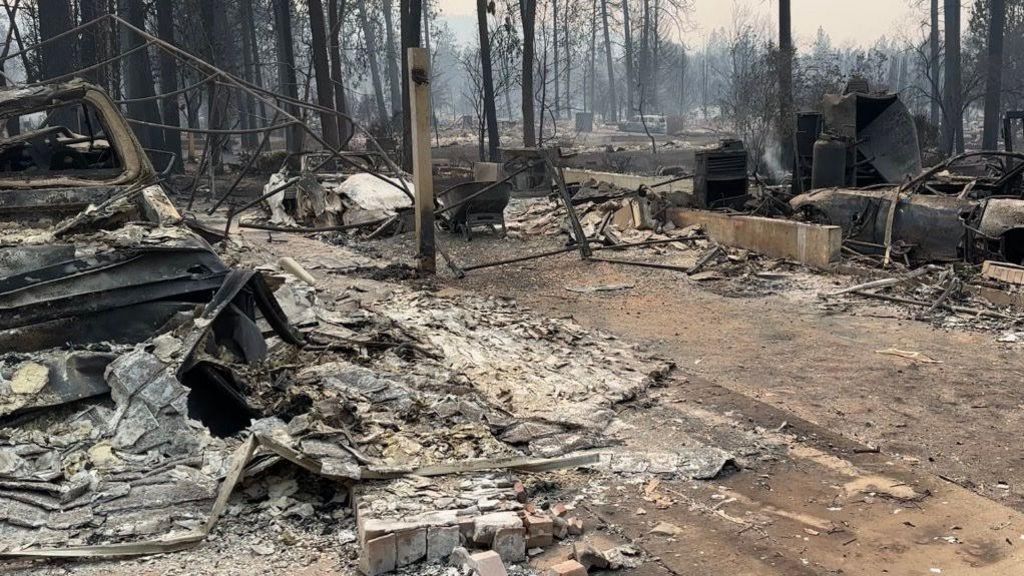
    The arid hills of southeastern Spain’s Mediterranean coast, long a quiet haven for retirees and holidaymakers from across Europe, have been reduced to ash by a devastating fast-moving wildfire that has claimed 12 lives and scorched more than 6,000 hectares of land. Survivors of the blaze, which broke out last Thursday amid record-breaking extreme heat that turned dry vegetation into a tinderbox, have shared harrowing accounts of sudden escape and narrow survival as flames advanced faster than many could outrun.

    When the fire’s edge began to encroach on the small village of Bedar, the epicenter of the disaster, 72-year-old local town councillor Manoli Ramos received an urgent, last-minute order from the mayor: race to the village church and ring its bells to sound the alarm for residents who had not yet received official evacuation alerts. “We rang the bells many times so people would know,” Ramos told AFP from her temporary refuge in nearby Los Gallardos, one of hundreds of displaced residents who fled their homes as the blaze moved through the region.

    Official preliminary investigations point to a broken power line as the likely ignition source, with the extreme heat wave that has gripped southern Spain creating ideal conditions for the fire to spread rapidly. Most of the 12 victims killed were foreign residents, many of whom died trapped in their vehicles or while attempting to escape on foot. Officials have noted that many of the foreign residents in the area live in scattered, isolated properties outside the core of Bedar, drawn by the privacy and quiet of the rural hillside — a choice that left many with slower access to emergency warnings and fewer clear escape routes as the fire advanced.

    “Foreigners live scattered outside Bedar,” Ramos explained. “They have beautiful homes and their belongings. They like living a little away from the centre.”

    For 52-year-old Moroccan resident Hassan Oulghazzi, who has called Bedar home for 16 years, the first sign of danger was not visible flames, but an ominous dark cloud hanging over the hills that quickly turned into thick, choking black smoke. Before he could spot the fire advancing, local police were pounding on his front door, ordering him to leave immediately.

    “How could you not be afraid?” Oulghazzi said. “When someone knocks on your door and tells you: ‘Get up, come on, leave here. This is real, you have to go.’” He fled with his wife and daughter with only the clothes they were wearing, leaving all their possessions behind. The family has since taken shelter at a municipal sports hall in the coastal town of Garrucha, where the Red Cross is providing food, medical care and support to hundreds of evacuees. For Oulghazzi, his own fear of displacement pales in comparison to the grief of losing neighbors and acquaintances in the blaze.

    “Everyone was afraid, but I am really touched by the dead and those who were burned. I really am,” he said. “There are some people I know.”

    Local officials have confirmed that some of the victims did not follow official orders to evacuate early or shelter in place once the flames reached their properties, a choice that proved fatal as the fire moved faster than many anticipated. For survivors who did escape, the scale of the destruction is still difficult to process, with many describing the scene as something out of a disaster film, not real life.

    Eighty-seven-year-old British evacuee Austin Crilly, who has lived in the region for years and says he has weathered no shortage of crises, told reporters that Thursday’s blaze was unlike anything he had ever experienced. Crilly was watching television at home when he spotted what he thought was an unusual large dark cloud on the horizon. Minutes later, police arrived at his door with a direct order to evacuate immediately. “Take your money, take your cards and get out,” he recalled officers telling him. Like many other evacuees, Crilly has been staying at the Garrucha sports hall, waiting for updates on when it will be safe to return to assess his home.

    British couple Martin and Elizabeth Smith, who were staying at a local campsite for a holiday, echoed that sense of surrealism. Martin Smith, 63, who has already had to cut his trip short and return to the United Kingdom, said the chaos of the escape was something he had only ever seen on screen. “It wasn’t good. Not good at all. I’d never seen anything like it. You see things like that in films, but never in real life,” he said. Despite the trauma of the disaster, Smith added that the fire has not dimmed his affection for Spain as a holiday destination. “It hasn’t put us off coming to Spain,” he said.

  • Paris landmarks shutter early as quarter of France swelters under heatwave

    Paris landmarks shutter early as quarter of France swelters under heatwave

    As a record-breaking third heatwave bears down on France, a quarter of the nation’s mainland territory has been placed under the country’s highest heat warning, forcing iconic Paris landmarks including the Eiffel Tower, the Louvre, and the Musee d’Orsay to shut their doors hours earlier than their usual summer schedules.

    France’s national meteorological service Meteo-France placed 24 mainland departments — home to more than 22 million people, per an Agence France-Presse tally — on maximum red heat alert on Saturday. An additional 59 departments across mainland France remain under an orange heat warning, one tier below the highest emergency level. The extreme heat has hit during a busy national holiday weekend, with millions of travelers crowding national highways and rail networks ahead of the July 14 Bastille Day celebration.

    A spokesperson for the Eiffel Tower, the 324-meter steel monument that draws 7 million annual visitors and typically stays open past midnight during peak summer tourist season, confirmed that the landmark would implement extraordinary early closures at 4 p.m. (1400 GMT) both Saturday and Sunday, a measure put in place directly due to projected extreme high temperatures. Two of Paris’s other most visited cultural institutions have followed suit: the Louvre, the world’s most-visited art museum, will close at 4 p.m. from Friday through Monday, while the Musee d’Orsay will shut at 5 p.m. from Saturday through Wednesday in response to the extreme heat.

    Beyond disrupted tourist schedules, the heatwave has forced widespread cancellations of traditional Bastille Day firework displays across hundreds of French towns. Officials cited elevated wildfire risk and extremely dry vegetation conditions for the cancellations. A senior French official confirmed Friday that wildfires have already burned twice as much land across France in 202X as they did during the same period last year. Speaking on Saturday, President Emmanuel Macron urged the public to remain vigilant, noting that 9 out of 10 wildfires in the country stem from human activity.

    “One single moment of inattention can put families at risk, endanger the first responders who protect us, and destroy our natural landscapes,” Macron wrote in a post on social platform X.

    This heatwave marks the third extreme heat event to hit France since May. A record-shattering heatwave in June pushed official excess death figures above 2,000, with an additional 300 excess deaths recorded during a late May heat event, according to national public health data. The French government has faced growing public criticism in recent weeks, with opponents and climate experts accusing the administration of being unprepared for the rising frequency of extreme heat events, a trend climate scientists have directly linked to anthropogenic climate change. Meteo-France forecasts that high temperatures will persist across the country through Bastille Day on July 14.

  • China braced for second typhoon in a week as Bavi approaches landfall

    China braced for second typhoon in a week as Bavi approaches landfall

    A massive late-season Pacific storm, Typhoon Bavi, is moving toward the eastern coast of China after carving a destructive path across the western Pacific that has already claimed lives and forced tens of thousands of people from their homes. This marks the second powerful typhoon to strike East Asia in just seven days, arriving as communities in southern China still recover from the deadly impact of an earlier storm system.

    Originating as a powerful super typhoon, Bavi first battered Guam and the Northern Mariana Islands last Monday, packing sustained wind speeds of up to 290 kilometers per hour. As the storm moved northwest across the Pacific, it gradually weakened, but retained enormous size that stretches 1,000 kilometers at its widest point, a span roughly equal to the entire width of mainland France. By the time it reached Japan’s remote Sakishima Islands, part of the Ryukyu chain between Japan’s main islands and Taiwan, sustained winds had dropped to 144 kilometers per hour, still strong enough to cause widespread disruption. Southern Japanese islands including Ishigaki bore the brunt of the storm’s impact, leaving at least five people injured and thousands of households without electrical power.

    After passing Japan’s southern island chain, Bavi brushed the northern tip of Taiwan, dumping extremely heavy rainfall across the island’s northern regions. While Taiwan avoided a catastrophic direct landfall, the storm’s intense downpours triggered widespread landslide warnings that forced thousands of residents to evacuate high-risk areas. Local authorities warned total rainfall could reach as much as one meter across worst-affected parts of the island, leading to widespread disruptions: dozens of commercial flights have been canceled, schools across multiple regions suspended classes, and residents rushed to stock up on emergency supplies, leaving supermarket shelves emptied of staple goods.

    Tragically, Bavi has already claimed lives before approaching East Asia’s major population centers. Earlier landslides triggered by the storm’s outer rain bands killed 17 people across the Philippines. No fatalities have been recorded in Japan or Taiwan to date.

    Currently, Bavi has weakened to a Category 1 typhoon, but meteorological and emergency authorities emphasize it remains an extreme hazard due to the enormous volume of moisture trapped in its extensive rain bands. Forecasters expect the storm to make landfall near the major eastern Chinese city of Wenzhou on Sunday morning. Wenzhou, a coastal metropolis with a population of roughly 10 million people, lies directly in the forecast path of the storm. Chinese officials have warned Bavi will bring “exceptionally heavy rains” to eastern Zhejiang province and neighboring northeastern Fujian province, and have ordered the mass evacuation of hundreds of thousands of residents from high-risk coastal and low-lying areas. Authorities note the preemptive evacuation order was implemented to prepare for the worst possible outcome, prioritizing public safety even if the storm’s impact ends up less severe than forecast.

    The arrival of Bavi comes as parts of southern China are still reeling from the widespread devastation left by Typhoon Maysak earlier this week. Maysak left at least 39 people dead, killed massive numbers of livestock, caused hundreds of millions of dollars in agricultural losses, and even spawned two rare tornadoes in central China’s Hubei province, compounding the damage to communities already strained by extreme weather.

  • Hundreds of firefighters battle wildfire in southern Spain that killed at least 12

    Hundreds of firefighters battle wildfire in southern Spain that killed at least 12

    On a sweltering summer weekend in southern Spain, hundreds of firefighters supported by aerial firefighting assets including helicopters and fixed-wing planes fought to bring under control one of the country’s deadliest wildfires in decades, which has already claimed at least 12 lives. The blaze, which ignited late Thursday in a parched semi-arid region near the Sierra de Los Filabres mountains in Almeria province, has already consumed roughly 66 square kilometers of forest and agricultural land — an area nearly matching the total size of Manhattan.

    Antonio Sanz, chief of emergency services for the Andalusia region, reported that slightly milder conditions, including light winds and elevated humidity, have given firefighting crews a small opening to gain ground over the inferno. Still, the unprecedented scale of the blaze continues to present major operational obstacles. Overnight, teams carried out controlled back burns along the fire’s perimeter to starve it of fuel and prevent further spread.

    Authorities have confirmed that most of the victims are believed to be foreign nationals, and the majority lost their lives after disregarding official shelter-in-place orders as the fire advanced. Seven of the deceased died on foot after abandoning their vehicles to flee the flames. Regional officials say four victims are confirmed to be British citizens, after investigators noted the burned-out vehicle they were traveling in had a right-side steering wheel, consistent with UK vehicle standards. Autopsies have been completed, and DNA samples have been collected to formally identify all victims, Sanz confirmed Saturday. So far, officials have proactively evacuated 1,448 residents across 11 at-risk communities.

    The harrowing escape of one British couple, Jeffrey and Christine Kember, who own a farmhouse in Los Pinos, illustrates the chaos of the fire’s rapid advance. The pair were watching a television program when emergency sirens blared, warning of the approaching flames. Both jumped into their separate cars, stopping first to help a neighbor with two young children, but the couple became separated in the smoke and fire, and Jeffrey could not reach Christine because she had left her phone behind. “I was driving straight through the flames. I just thought, I can’t stop, I have to keep going,” Jeffrey Kember told the Associated Press in an interview outside a local evacuation center, with his unharmed wife beside him. “It was surreal — one minute I was surrounded by fire, and the next I came out into bright sunshine. It was ridiculous.”

    Per Spain’s state-run EFE news agency, local authorities have already arrested two people who defied evacuation orders and returned to the high-risk fire zone. Search and rescue teams are still conducting grid searches of the Bédar area to locate any additional missing people or victims.

    The deadly Almeria fire comes as Southern Europe grapples with a worsening climate-fueled heat crisis that has made extreme heat and large-scale wildfires the new normal. Spain has battled increasingly frequent and severe heat waves in recent years, with temperatures regularly topping 40 degrees Celsius. Hot, dry, windy conditions allow small ignition events to rapidly escalate into out-of-control blazes. Spanish Justice Minister Félix Bolaños said Saturday that the extreme ferocity of the Almeria fire is a direct consequence of the ongoing global climate emergency, noting that at its peak, the blaze advanced at a rate of 100 meters per minute.

    Earlier this June, Spain recorded multiple days of all-time record heat, which contributed to more than 1,000 excess deaths across the country. Data from the European Union’s Copernicus Climate Change Service confirms that Europe is warming faster than any other continent on Earth, with temperatures rising twice as fast as the global average since the 1980s. Much of Western Europe is currently facing its third intense heat wave in just six weeks, and 2025 ranks as the third-hottest year ever recorded globally.

    The crisis is not isolated to Spain. Neighboring France is also battling multiple active wildfires across the country as temperatures soar. French Interior Minister Laurent Nunez announced Saturday that 32 people have been arrested so far this summer in connection with human-caused wildfires across the country. “These unacceptable acts have disastrous consequences and force our firefighters to operate at great risk to their own lives, and now those responsible face justice,” Nunez said. “We will continue our determined action and will not tolerate this.”

    French President Emmanuel Macron recently reminded the public on social media platform X that nine out of 10 wildfires in France are started by human activity. Since the start of 2026, more than 25,000 hectares of land have burned across France — nearly double the total area burned over the same period last year. France is currently experiencing the peak of its third heat wave of the summer, with temperatures hitting 40 degrees Celsius across western and central regions, and reaching 37 degrees Celsius in Paris. Last month was the hottest June ever recorded in France, with mortality surging nearly 30% during the peak of the heat.

    Wildfires are not a new threat to the Iberian Peninsula. Last year alone, wildfires burned more than 393,000 hectares of land across Spain — an area twice the size of London — that killed four people, according to the European Forest Fire Information System. Spain’s deadliest wildfire on record dates back to 1979, when 21 people died in the coastal town of Lloret de Mar, northeast of Barcelona. In neighboring Portugal, the 2017 wildfire in Pedrogao Grande killed 66 people, 47 of whom died trapped on a single road while attempting to flee the blaze by car — a tragedy that mirrors the circumstances of many deaths in this latest Spanish fire.

    Associated Press reporter Samuel Petrequin in London contributed reporting to this article.

  • ‘We escaped Spanish wildfire, but our friends lost their lives’

    ‘We escaped Spanish wildfire, but our friends lost their lives’

    In the scorched hills of southern Spain, a devastating wildfire has left a trail of tragedy, turning a once peaceful landscape into a smoldering disaster zone. For those who managed to flee the advancing flames, the relief of survival is tempered by searing grief—survivors speak of escaping the fire’s destructive path, but share heartbreaking stories of friends who did not make it out alive.

    More than 300 firefighters have been deployed across the affected region, working around the clock to contain the out-of-control blaze. Sweltering summer temperatures and gusty winds have created perfect conditions for the fire to spread rapidly, turning small spot fires into a massive conflagration that has consumed thousands of hectares of forest and brushland, and threatened residential communities scattered across the hills. Fire crews have been working from both the ground and the air, with water-dropping aircraft assisting in cooling hot spots and creating firebreaks to slow the blaze’s advance.

    The wildfire, which erupted amid an ongoing record heat wave that has gripped much of the Iberian Peninsula, has underscored the growing risk of extreme wildfire events linked to rising global temperatures. Local authorities have issued urgent evacuation orders for multiple small towns and rural settlements, moving thousands of residents to temporary emergency shelters in nearby urban centers. As the operation continues, emergency response teams are still working to confirm the full extent of human and property loss, with the death toll already climbing to confirm multiple fatalities among local residents and visitors caught off guard by the fire’s rapid spread.

    For survivors who fled with little more than the clothes on their backs, the disaster is not just an environmental catastrophe—it is a personal loss that will reshape their communities for years to come. “We got out, but our friends didn’t,” one survivor told local reporters, their voice thick with emotion, a reminder of the human cost behind the statistics of the wildfire emergency.

  • Firefighters gain upper hand on deadly Spain wildfire

    Firefighters gain upper hand on deadly Spain wildfire

    Sixteen months after one of the deadliest wildfires in modern Spanish history erupted in southern Spain’s Andalusia region, emergency crews have finally turned a corner in their battle against the blaze, thanks to a sudden shift in favorable weather conditions.

    The fast-moving inferno first ignited on Thursday in the hilly Gallardos area, a scenic stretch of Andalusia that hosts a large community of foreign residents and seasonal tourists. By Saturday, improved atmospheric conditions — including dropping temperatures, receding high winds that had previously stoked the flames, and rising humidity — gave firefighters the opening they needed to launch a direct offensive against the blaze, a tactic that had been impossible for the first 48 hours of the emergency.

    Twelve people from multiple nationalities have been confirmed killed in the fire, with most of the victims discovered in or near the small whitewashed village of Bedar. Many of the deceased were trapped while attempting to flee the advancing flames, either in their vehicles or on foot, regional officials confirmed. Authorities have also noted that a number of the victims failed to comply with mandatory evacuation orders or instructions to shelter in place as the fire approached their communities.

    Survivors who escaped the blaze have described harrowing, nightmare-like scenes that they say will stay with them forever. “We were absolutely terrified. We could see the flames. It was horrific,” Manoli Ramos, 72, a local councillor in Bedar, told reporters. Ramos, who lived through a major 2012 wildfire in the same region, compared this event to something out of a nightmare: “This time it was like hell.”

    Austin Crilly, an 87-year-old British resident who was evacuated by police from the high-risk zone, recalled the sudden speed with which the fire advanced. “I was watching television when I saw a huge black cloud, well I thought it was a cloud,” Crilly said. “I thought, ‘My God, I will shut the door’. Then, five minutes later, there was banging at the door. They said, ‘Take your money, take your cards and get out’.”

    Martin Smith, a 63-year-old British tourist who was evacuated from a local campsite alongside his 65-year-old wife Elizabeth, called the scene unprecedented. “It wasn’t good. Not good at all. I’d never seen anything like it. You see things like that in films, but never in real life,” Smith said.

    Antonio Sanz, chief of emergency management for the Andalusian regional government, announced Saturday that no new fatalities had been recorded overnight, a development he called “the best news we could have”. Spain’s Civil Guard has completed an initial sweep of burned areas, and while search operations continue, no additional bodies have been discovered so far.

    Sanz also clarified public confusion around reports of 23 missing people, explaining that the count refers to individuals whose families have been unable to reach them, many of whom have already reached safe evacuation centers. Only seven formal missing persons reports have been filed with authorities to date. Officials caution that a final confirmed death toll will not be released until all recovered remains undergo autopsies and formal identification, which is still underway.

    As of Saturday, the blaze has scorched approximately 6,600 hectares (16,300 acres) of rugged terrain, marked by steep ravines that make it nearly impossible for ground fire vehicles to access. Around 500 firefighting personnel, supported by more than 20 water-bombing aircraft, have been deployed to contain the spread of the fire.

    Investigators currently believe the wildfire was sparked when a power line snapped amid weeks of extreme heat that has gripped Spain, with temperatures regularly exceeding 40°C. Those sustained high temperatures turned the region’s vegetation into dry, tinder-like fuel ready to ignite at the smallest spark.

    Climate scientists around the world have repeatedly warned that human-caused climate change is increasing both the frequency and severity of extreme weather events, including the record-breaking heatwaves and large-scale wildfires that have become increasingly common across southern Europe in recent years.

  • Spain battles to contain one of its deadliest wildfires as at least 12 killed

    Spain battles to contain one of its deadliest wildfires as at least 12 killed

    One of the deadliest wildfires in recorded Spanish history continues to burn across Almería province in southeastern Spain, leaving 12 people dead and 23 others unaccounted for, as emergency crews race to contain lingering flare-ups amid a region-wide heatwave amplified by human-caused climate change.

    Spanish authorities confirmed four of the fatalities are British nationals, found dead inside a burned-out vehicle with a right-hand steering wheel, consistent with UK vehicle standards. Local officials in the Los Gallardos area, where the fire originated, have warned the death toll could climb further, with fears additional foreign nationals may be among the unaccounted for. Andalusia’s Health and Emergencies Minister Antonio Sanz noted that most — if not all — of the victims may come from the large expat community that owns homes and resides in the region.

    Belgian Foreign Minister Maxime Prévot confirmed consular teams are working to contact dozens of Belgian citizens with second homes in the area who have not checked in with authorities. Neither Spanish officials nor the UK Foreign, Commonwealth & Development Office have released the identities of the deceased as of Saturday.

    Eyewitnesses described a rapid, chaotic spread of the blaze that caught many off guard on Thursday afternoon. Lucinda Curtois, a British tourist who arrived in the area for a family holiday the same day the fire broke out, recounted her harrowing escape from the village of Bedar, the epicenter of the fire response. Curtois told the BBC the sky turned dark with a massive plume of smoke that resembled a nuclear mushroom cloud, saying “it was like a bomb had gone off.” She added she fears at least two more UK nationals who ignored evacuation warnings and left their rural homes on foot have been killed.

    Local officials in Bedar confirmed some of the victims did not follow official recommended evacuation routes, though it remains unclear how effectively that guidance was communicated to residents and visitors. The fire spread with unusual speed thanks to a combination of extreme 40-degree Celsius (104 Fahrenheit) heat, months of parched dry vegetation, and gusty high winds that pushed flames across the landscape rapidly. While Spanish authorities have identified the cause as a fallen power line, local electricity providers have formally disputed this account, and no official final determination has been released.

    As of Saturday, more than 300 firefighters and specialized fire suppression personnel have been deployed to the area, with helicopter crews conducting air drops of water to contain remaining pockets of fire. The Andalusian division of Spain’s national weather agency AEMET forecast slightly more favorable conditions for fire containment on Saturday, with cooler temperatures and moderate winds expected to slow the spread of flames.

    This wildfire already ranks among the five deadliest in Spanish modern history. In 1979, 21 people including nine children died in a major blaze near Lloret de Mar in northeastern Spain, and a 1984 fire on the Canary Island of La Gomera killed 20 people.

    The disaster comes amid a broader pattern of extreme wildfire risk across Southern Europe, where an extended summer heatwave has sparked major blazes in France, Portugal, and Spain. Data from the European Copernicus Climate Change Service confirms Europe is warming twice as fast as the global average, a trend driven by anthropogenic climate change. This rapid warming has led to more frequent, longer, and more intense summer heatwaves, increased strain on regional water supplies, and a dramatic rise in the frequency and severity of extreme wildfire events across the continent.