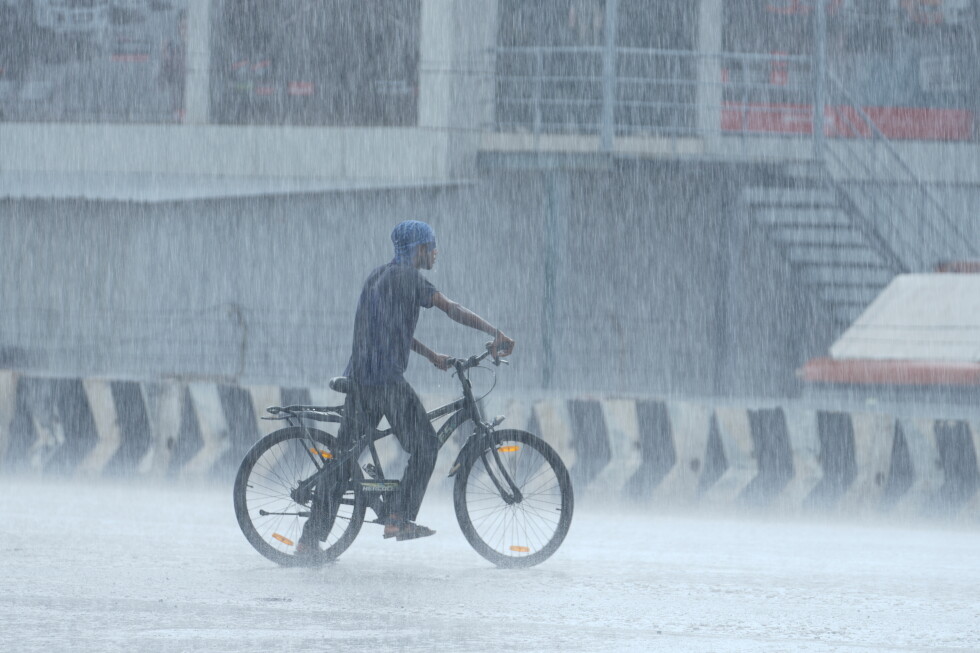
GUWAHATI, India — The catastrophic flood emergency gripping India’s northeastern Assam state remained at a critical juncture on Monday, after disaster officials confirmed the overall death toll had climbed to 100, with two additional fatalities recorded overnight.
According to the Assam State Disaster Management Authority, multiple major rivers across the region are still hovering above official danger levels, leaving low-lying and high-risk communities exposed to the threat of new, devastating inundation. Days of intense, unrelenting monsoon rainfall have pushed major waterways, including the iconic Brahmaputra River, far beyond their banks, swallowing entire settlements, upending daily life for millions and inflicting widespread damage to critical public infrastructure.
Stretching 900 kilometers (560 miles) through the heart of Assam after originating in China’s Tibet Autonomous Region, the Brahmaputra is counted among Asia’s largest river systems. In this latest flood event, it has inundated hundreds of rural villages, swept thousands of homes off their foundations, and forced close to 300,000 displaced residents to seek shelter in government-operated relief camps, state officials confirmed.
The ongoing flood disaster, which first began to unfold last month, has forced more than 700,000 people to abandon their homes and property. Vast swathes of agricultural farmland, the primary livelihood for millions of rural Assam residents, now sit submerged, while roads, bridges and other core local infrastructure have been damaged or destroyed. While receding floodwaters have allowed many displaced residents to begin returning to their home regions in recent days, at least 49,000 people remain housed across 125 active relief camps and aid distribution centers, per state data.
Beyond damage to human settlements and infrastructure, the floods have also taken a devastating toll on local livestock, with large numbers of cattle killed or lost. This blow to rural household assets has compounded economic hardship for already vulnerable communities, while also raising public health warnings over potential post-flood disease outbreaks. For families returning to recovered areas, the cleanup process brings an added layer of difficulty: many properties are left completely buried under thick layers of river silt, requiring extensive work to make homes and land usable again.
State authorities have maintained a continuous presence in affected regions, leading relief operations, monitoring river levels and working to map the full scale of damage to identify unmet needs among impacted populations. Following a high-level review meeting on the crisis, Assam’s Agriculture and Irrigation Minister Pijush Hazarika announced that officials have been ordered to speed up damage assessments to unlock government financial support for long-term recovery and rehabilitation. Hazarika confirmed that interim monetary compensation has already been disbursed to roughly 500,000 flood-affected residents across the state.
Flooding during the annual monsoon season is a recurring hazard for Assam, where swollen rivers routinely inundate large swathes of the state and displace thousands of people every year. But climate scientists warn that human-caused climate change is intensifying monsoon patterns across South Asia, where the rainy season traditionally falls in two periods: from June to September, and again from October to December. What were once largely predictable seasonal rains now arrive in erratic, extreme bursts, dumping catastrophic volumes of water over just a few days before giving way to extended dry spells, increasing the risk of both severe flooding and prolonged drought across the region.