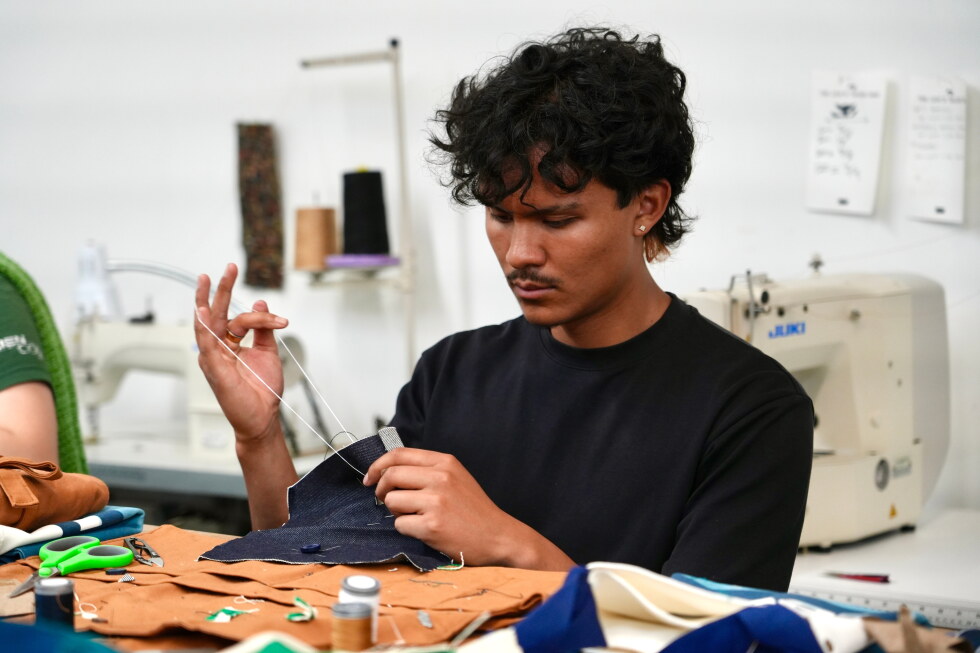
Against a backdrop of growing global alarm over textile waste and the fashion industry’s massive carbon footprint, a surprising new retail trend is taking hold: major clothing brands are now encouraging customers to repair their worn garments instead of replacing them with new purchases. What once might have seemed like a counterintuitive approach to boosting sales has become a core strategy to win over Generation Z shoppers, who prioritize both environmental sustainability and budget-friendly consumption.
While long-standing outdoor brands like Patagonia and L.L.Bean, along with high-end luxury fashion houses, have offered product repair services for decades, the concept has recently moved mainstream. Today, industry leaders ranging from denim giant Levi Strauss & Co. to global casual wear chain Uniqlo and value retailer Primark are leaning into needle-and-thread initiatives to connect with younger consumers.
Levi Strauss, based in San Francisco, has expanded its hands-on sustainability effort called the Wear Longer program across the United States, building on the repair and customization services it already offers at hundreds of locations worldwide. After identifying that many Gen Z consumers share a strong interest in thrifting and eco-friendly habits but lack basic sewing skills, the brand launched introductory handstitching courses for high school students. Over 90-minute sessions, Levi’s employees teach four foundational mending skills: attaching a loose button, hemming garments, patching holes, and fixing tears. “We think it’s important to empower the people who buy our clothes with the skill sets to maintain them, to get them to that second life,” explained Paul Dillinger, Levi’s head of global design innovation.
For many consumers like Chloe Halprin, a 25-year-old Detroit nonprofit grant writer, these programs fill a critical gap. Halprin fits exactly the profile of the shopper brands are targeting with the “fix it, don’t ditch it” movement. As a teenager, she shopped at low-cost fast fashion outlets like Forever 21, and when a garment ripped beyond what her limited sewing skills could fix, she simply threw it away. Today, she buys almost all of her clothing secondhand, has recently learned to hem garments with a sewing machine, and is working her way up to more advanced projects like repurposing an old skirt into a new top. “I try to be conscientious of my carbon footprint,” Halprin said. “I really don’t like waste. I’m trying to save money as well.”
The shift to mending services comes as the global fashion industry faces mounting pressure to address its outsized contribution to environmental degradation and climate change. Textile waste—including manufacturing offcuts, unsold inventory, and discarded clothing and household linens—ranks among the sector’s most urgent challenges. The United Nations Environment Program estimates that the world generates enough fabric waste to fill a garbage truck, which is then dumped or incinerated, every single second. Industry researchers broadly confirm that extending a garment’s lifespan through repair and resale directly reduces its overall environmental impact, especially when it delays or eliminates the need to buy a new item.
Data from the Ellen MacArthur Foundation, a leading sustainability nonprofit, underscores the scale of the problem: global clothing production nearly doubled between 2000 and 2015, while the average number of times a garment is worn before being discarded dropped by 36%. The organization also found that less than 1% of all discarded clothing material is ever recycled into new apparel.
Generation Z—consumers born between 1997 and 2012—has been a key driver of the growing demand for repair and resale options. This cohort came of age surrounded by fast fashion and e-commerce, but their teenage and young adult years were shaped by the economic uncertainty of the COVID-19 pandemic and post-pandemic inflation. A joint report from independent market intelligence firm GlobalData and leading resale platform ThredUp found that Gen Z’s preferences, driven by both tight budgets and a rejection of excessive consumerism, have helped the preowned clothing market grow far faster than overall retail apparel sales in the U.S.
For new clothing brands, mending programs and educational workshops address shifting core consumer priorities while boosting brand reputation, explained Neil Saunders, a retail analyst at GlobalData. “It puts a halo on the brand,” he said.
As mass-market and fast-fashion retailers from Zara to H&M join the movement, the trend has drawn both interest and skepticism from sustainability experts. Spain-based Zara launched a digital platform in 2022 that allows customers to resell preowned Zara garments and request basic alterations and repairs, with the program currently active in 17 of the nearly 100 countries where the retailer operates.
Ireland-headquartered Primark has centered its approach on consumer education, hosting free “Love It For Longer” workshops that teach attendees practical skills like replacing zippers and buttons. To date, the value retailer has held more than 730 workshops across nine of the 17 countries where it operates, including the U.S., and has tested in-store repair services at three U.K. locations this year. “Learning how to repair and care for clothing is probably one of the most simplest but absolutely totally effective ways that we can reduce waste and also extend the lifetime of whatever we buy,” said Vicki Swain, Primark’s product longevity & partnership lead. Swain added that affordable fast fashion items are just as durable and repairable as higher-priced garments, noting that half of the items Primark sells annually are wardrobe staples like socks, underwear, T-shirts, and jeans: “There is nothing throw away about our products.”
Uniqlo, the Japanese mass-market retailer focused on timeless basic apparel, offers a full suite of aftercare services at 75 of its roughly 2,500 global stores, including basic repairs, decorative traditional Japanese sashiko mending, embroidery, and creative restyling. The company frames these services as a way to extend the product lifecycle and strengthen customer relationships, according to Jean-Emmanuel Shein, director of global corporate responsibility at Uniqlo USA.
However, some sustainability experts argue that these well-meaning initiatives will have limited impact on the fashion industry’s overall environmental footprint. “The fashion sector’s primary source of impact is due to the overproduction of pieces and growing volumes of garments created,” said Kate Fletcher, a professor of sustainability, design and fashion systems at Manchester Metropolitan University in England. “Repairing a garment in store happens in addition to these growing production volumes, not instead of them.”
A core open question remains: can repair services grow from a niche marketing offering to a commercially viable part of mainstream fashion retail? Sweden-based H&M Group, one of the world’s largest apparel retailers with more than 4,000 stores in over 80 countries, has been open about the biggest barrier: cost. The company notes that while repair and resale are important sustainability goals, manufacturing brand new garments is currently far cheaper for businesses than extending the lifespan of existing ones. H&M has tested mending and redesign studios in several European flagship locations over the past decade and is the majority owner of secondhand clothing platform Sellpy.
In May 2024, H&M joined Primark, ThredUp, and dozens of other fashion and textile companies in signing an open letter urging governments across North America and the European Union to adopt tax incentives that would make repair and resale of clothing more profitable for businesses.
Saunders of GlobalData noted that making in-store mending work economically is challenging, because the service is labor-intensive but must be priced low to attract customers. Consumer signals are also mixed, he added: while younger shoppers embrace the idea of repair and resale, they still continue to shop for affordable fast fashion, since it remains one of the most accessible options for budget-conscious consumers. “But what they’re doing as well, though, is they’re buying into alternative channels like resale. And they’re having things repaired,” Saunders said.