分类: environment

  • France reintroduces ‘bee-harming pesticides’, environment minister to quit

    France reintroduces ‘bee-harming pesticides’, environment minister to quit

    In a move that has split French politics and sparked outrage among environmental groups, France’s upper legislative chamber, the Senate, has approved a divisive bill to bring back two insecticides widely documented to harm bee populations, prompting the nation’s environment minister to announce her imminent resignation.

    Monique Barbut, France’s current environment minister, confirmed to close aides Tuesday that she sees no path forward but to step down, with plans to formally submit her resignation to President Emmanuel Macron by the start of Wednesday.

    The two pesticides at the center of the debate — acetamiprid and flupyradifurone — have been banned from domestic use in France since 2018 and 2019 respectively. Backers of the legislation, led by conservative senator Laurent Duplomb, argue that domestic producers of sugar beets, apples and hazelnuts need access to the chemicals to remain competitive against farmers in other EU member states, where the two substances remain legal for use. Following the vote Tuesday evening, Duplomb told fellow senators he was proud of the legislative work that secured the bill’s passage, which passed the lower house National Assembly earlier the same day. The final Senate vote count stood at 214 in favor and 111 opposed.

    Agriculture Minister Annie Genevard has also defended the policy, framing it as a necessary response to widespread farmer discontent that erupted into large-scale protests across France this past winter. She emphasized that the bill restricts use of the pesticides to narrow emergency circumstances: it will only be approved for specific regions and limited time frames, she said, on the condition that no harm to human health or the environment is proven and no viable alternative pest control option exists.

    Critics, however, reject these assurances, pointing to robust scientific research that confirms the substances’ toxicity to pollinators and potential risks to people. Multiple studies have documented that acetamiprid poisons honeybees, damaging their ability to forage for food and impairing their memory. A 2024 academic study further found that flupyradifurone can be lethal to certain bee species.

    This is not the first attempt to reintroduce acetamiprid: last year, France’s Constitutional Council, the nation’s highest constitutional court, struck down a similar provision in an earlier agriculture bill backed by Duplomb, ruling that the chemical posed unacceptable risks to human health. That ruling came after more than two million French citizens signed a public petition opposing the reintroduction. Following the National Assembly’s approval of the new bill this week, left-wing parties have already announced plans to challenge the new legislation before the Constitutional Council if it secured Senate approval.

    The bill passed despite unified opposition from most left-wing lawmakers in the lower house, after securing backing from far-right parties and a majority of centrist legislators. Environmental and beekeeping advocacy groups have decried the move as a rejection of scientific consensus and popular will.

    “The government and its allies are trampling on science, health, the environment, and the will of the people,” environmental NGO Greenpeace said in a statement after the lower house vote. Henri Clement, a representative of the French Beekeeping Union, told regional outlet Ici Gard Lozere that the approval of the bill is “absolutely catastrophic” for France’s bee populations and beekeeping industry.

  • Weeklong rainstorms in Chile blamed on El Nino kill at least 10 and trigger flash floods

    Weeklong rainstorms in Chile blamed on El Nino kill at least 10 and trigger flash floods

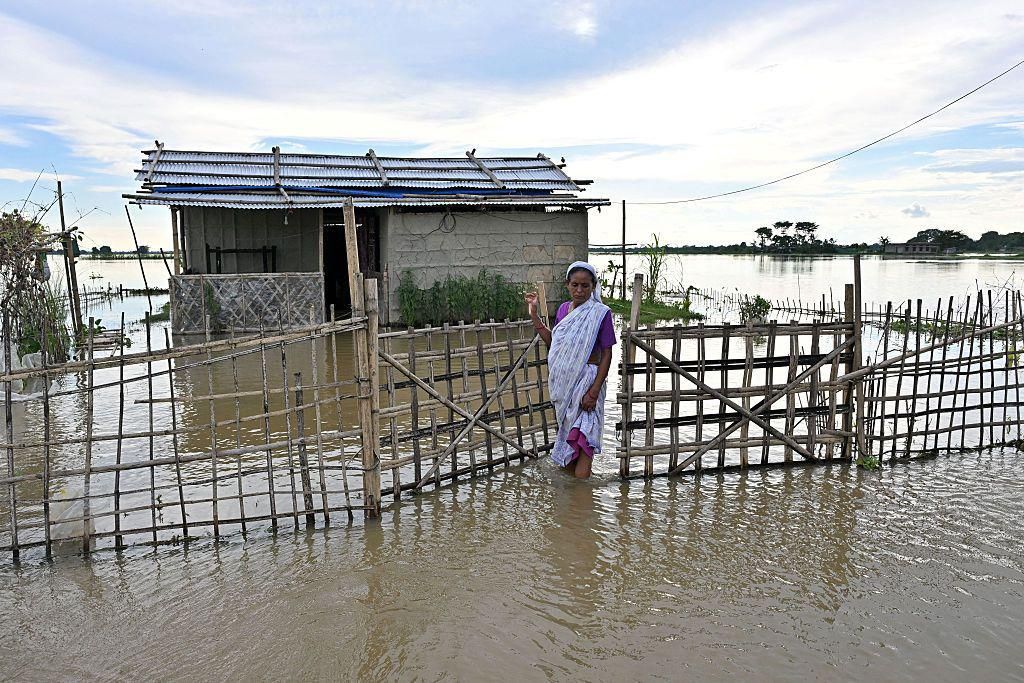
    SANTIAGO, Chile — A devastating seven-day rainfall event amplified by El Niño has wreaked unprecedented havoc across Chile, leaving at least 10 people dead and forcing emergency response teams into a frantic race on Tuesday to reach more than 100,000 residents cut off by destructive flash floods. The catastrophe ranks among the most severe weather-driven disasters the South American nation has faced in 30 years, with impacts rippling across multiple regions far beyond the hardest-hit northern zones.

    Torrential downpours paired with gusty strong winds have continued to pummel the normally arid northern regions of Atacama and Coquimbo, an area unaccustomed to such extreme volumes of precipitation. On Monday, President José Antonio Kast’s government officially declared a state of emergency across the affected zone to mobilize additional resources and streamline response efforts.

    As of Tuesday’s latest official update, disaster authorities confirmed that alongside the 10 fatalities, the storms have left 16 people with injuries and forced more than 4,000 residents to flee their damaged or destroyed homes. Of those displaced, 1,031 are currently sheltering in temporary emergency evacuation centers set up by local officials. Tens of thousands more residents across impacted areas have been left without access to critical utilities, including electrical power and safe drinking water, worsening the humanitarian crisis on the ground.

    Preliminary infrastructure assessments show the extreme rainfall has completely destroyed 81 residential properties and damaged more than 20,000 others, leaving many uninhabitable. Chile’s national disaster response agency, Senapred, has issued hundreds of mandatory evacuation warnings across 10 of the country’s 16 administrative regions, as flood risks extend far beyond the initial storm zone.

    Swollen, overflowing riverbanks and flood-washed out roads have left 104,271 people stranded, unable to evacuate to safer ground or receive emergency supplies. Senapred head Alicia Cebrián issued an urgent warning that even once the rain stops, major flood risks will persist for hours after the storm system moves out.

    “River levels do not necessarily rise at the same time precipitation is falling,” Cebrián explained to reporters Tuesday. “Water accumulates in the foothill areas, which means river levels can continue rising even hours after the storm system has passed.”

    Climate scientists and meteorologists have traced the extreme deluge back to the recent return of El Niño, a naturally occurring recurring climate pattern centered in the tropical Pacific Ocean that shifts global weather patterns. The phenomenon pushes ocean surface temperatures higher and amplifies the frequency and intensity of extreme weather events across the globe. For southern South America, El Niño is historically linked to significantly higher than average rainfall, creating the conditions that led to this week’s catastrophic flooding.

  • Two French firefighters die tackling blaze near Bordeaux airport

    Two French firefighters die tackling blaze near Bordeaux airport

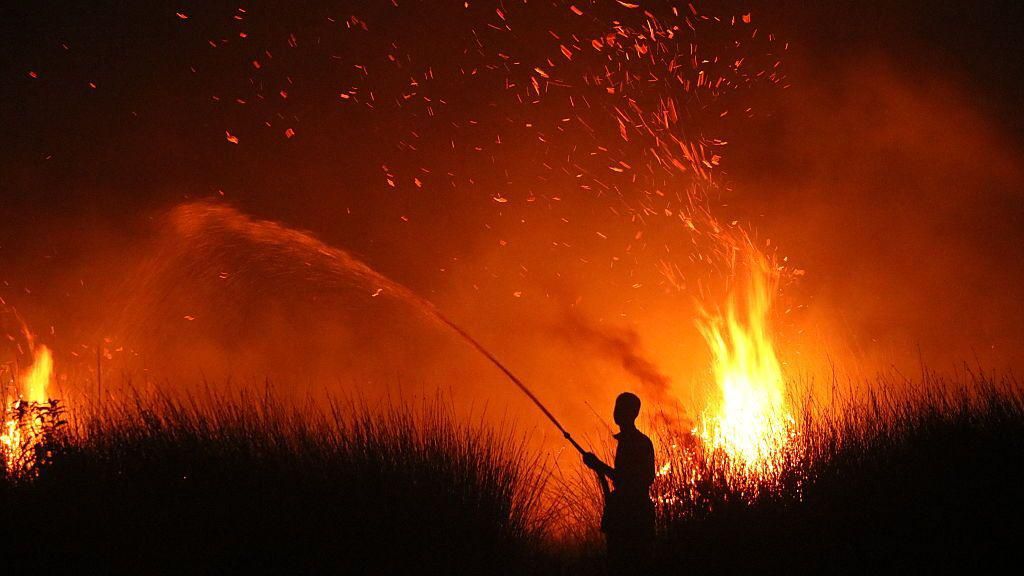
    France is grappling with an unprecedented wave of wildfires amplified by record-breaking heatwaves, with two firefighters losing their lives battling a major blaze near Bordeaux-Mérignac Airport in southwestern France, local officials have confirmed. Local French media reports indicate the fire, which ignited close to one of the airport’s public parking lots, began as an uncontrolled brush fire before rapidly spreading to an adjacent structure.

    Social media footage and imagery captured by on-site witnesses show commercial airline passengers disembarking onto airport tarmacs as a towering, dense plume of dark smoke billowed into the sky just kilometers from the runway. In response to the emergency, airport authorities implemented flight delays for all incoming scheduled services to prevent additional risk to passengers and crew. Roughly 100 ground-based firefighters, supported by specialized aerial firefighting aircraft, have been deployed to bring the blaze under control.

    French Interior Minister Laurent Nuñez confirmed the fatalities during a scheduled question-and-answer session at the French National Assembly on Tuesday, noting he had received official notification of the deaths from administrative leaders in Gironde, the department where the Bordeaux fire is burning. Nuñez added that he would travel to Gironde “as soon as possible” to personally oversee ongoing suppression efforts. Gironde is among a growing number of French departments already reeling from weeks of wildfire activity, which has been stoked by an extended, unseasonal heatwave that has pushed regional temperatures well above average.

    Hours after the Bordeaux fire was reported, a new large-scale wildfire erupted on Tuesday in the southeastern department of Var. The fire, burning across territory in the commune of Pontevès, “remains entirely out of control and is spreading at a rapid pace,” according to the Voluntary Association for Fire Monitoring in France (PSFDF). In response, officials have deployed 500 firefighters and rescue personnel to contain the blaze, and have already ordered the evacuation of 150 local residents to safe emergency shelters.

    This season’s wildfire activity has already surpassed all modern records in France. Official data compiled by the European Forest Fire Information System (Effis) shows that between the start of January and mid-July, more than 42,000 hectares (103,784 acres) of land have burned across the country — a total that already exceeds the full-year record set in 2022. French President Emmanuel Macron noted last week that France has not faced this level of wildfire activity since the end of World War Two, with nearly 11,000 separate blazes recorded nationwide since the start of 2026.

    The surge in destructive wildfires across France and broader Europe is directly tied to human-caused climate change, according to climate scientists. Data from the Copernicus Climate Change Service confirms Europe is warming twice as fast as the global average, making the continent disproportionately vulnerable to extreme weather events. Rising global temperatures are fueling longer, more intense summer heatwaves, straining regional water supplies, and creating drier conditions that increase the frequency and severity of destructive wildfires.

    The current heat and wildfire crisis is not limited to France. Neighboring Spain has already seen at least 13 fatalities linked to this summer’s wildfires, with a single massive blaze north of Madrid destroying more than 29,000 hectares of forest and populated land, marking one of the most destructive wildfires in the country’s modern history.

  • Brazil’s Amazon sees sharp decline in size of area burned in 2025

    Brazil’s Amazon sees sharp decline in size of area burned in 2025

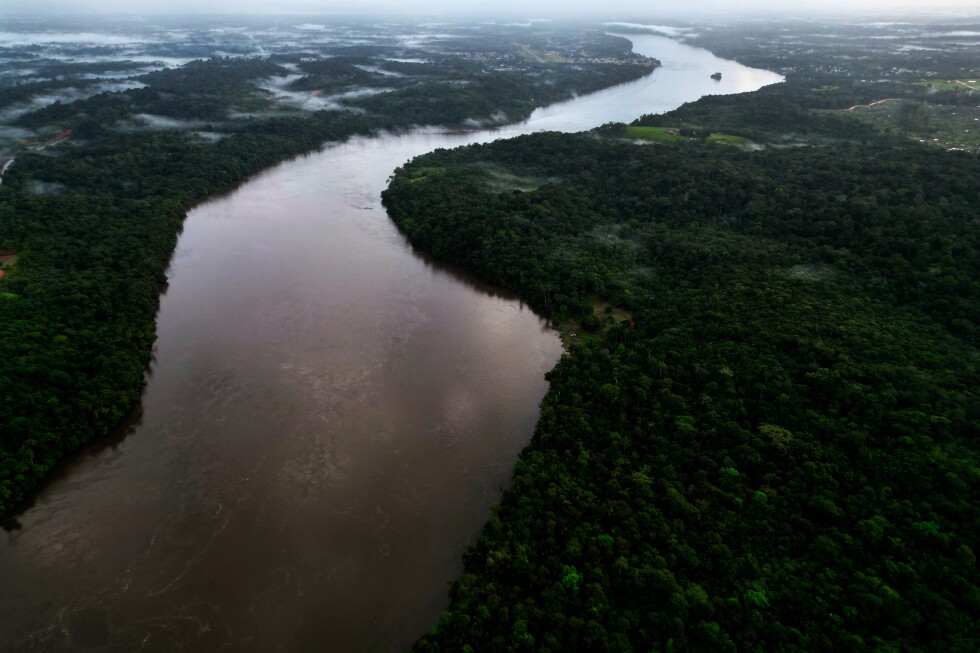
    Following a catastrophic 2024 fire season that scorched a record-breaking expanse of Brazil’s Amazon rainforest, newly released data from leading deforestation monitoring network MapBiomas reveals a dramatic and historic drop in burned land across the biome for 2025.

    MapBiomas’ latest annual report puts the total burned area of the Brazilian Amazon at just 3.1 million hectares in 2025, a stark plunge from the 15.8 million hectares consumed by fires in 2024. This figure marks the smallest area burned in the world’s largest tropical rainforest since the organization began consistent tracking in 1985.

    The sharp decline aligns with a core campaign pledge made by President Luiz Inácio Lula da Silva during his 2022 election run, and the positive data is widely expected to strengthen his position ahead of Brazil’s October 2026 re-election vote. The 2024 fire season, by contrast, was the most severe the Amazon had seen in more than 40 years, with the European Union’s Copernicus Climate Change Service attributing the disaster to a dangerous combination of extreme climate conditions and unregulated human activity.

    Vera Arruda, a lead researcher at the Amazon Environmental Research Institute (IPAM) and MapBiomas project coordinator, shared that the 2025 results carry major significance for rainforest conservation efforts. “The 31% drop compared to the historical average — driven primarily by the lowest number of fires recorded in the Amazon in 41 years — is positive news, but it does not yet allow us to conclude that this is an established trend or to scale back prevention efforts,” Arruda told the BBC.

    The downward trend in burned area extends far beyond the Amazon basin, covering the entirety of Brazil. Nationwide, total burned land fell from 30 million hectares in 2024 to 12.7 million hectares in 2025. The previous national record for burned area, set back in 2007, stands at 30.7 million hectares.

    Researchers attribute part of the 2025 improvement to a shift in global weather patterns: the cooling influence of La Niña replaced the heat-driving El Niño conditions that amplified 2024’s extreme drought and fire risk. Even with this year’s positive results, MapBiomas has issued a warning that El Niño’s return in 2026 could extend the Amazon’s dry season and push fire risk back up to dangerous levels.

    The Amazon rainforest plays an irreplaceable role in global climate regulation: as a healthy ecosystem, it absorbs billions of tons of planet-warming carbon dioxide each year and supports millions of unique plant and animal species. For decades, however, the biome has faced growing pressure from intentional land clearing for industrial agriculture and illegal logging, paired with rising global temperatures that create ideal conditions for large, uncontrolled fires to spread.

    When Lula took office in January 2023, he made a public promise to reverse the surge in deforestation that occurred during the presidency of his predecessor, Jair Bolsonaro. Bolsonaro had advocated for expanded agricultural development and mining operations in the Amazon, arguing that increased economic activity would reduce regional poverty, but environmental activists widely condemned his policies for enabling accelerated forest clearing. During the third year of Bolsonaro’s term, Amazon deforestation rates rose 75% compared to pre-Bolsonaro levels.

    On his first day in office, Lula reaffirmed his administration’s commitment to ending Amazon deforestation entirely, a pledge that earned widespread praise from the global environmental community. Despite this progress on reducing burned area and deforestation, Lula has faced significant backlash from climate activists for his recent approval of offshore oil exploration at the mouth of the Amazon River, a decision critics say directly contradicts his promise to protect the rainforest ecosystem.

  • Fires in Brazil’s Amazon dropped to historic low in 2025

    Fires in Brazil’s Amazon dropped to historic low in 2025

    In a striking reversal of the previous year’s catastrophic environmental damage, forest fires in Brazil’s Amazon rainforest dropped to the lowest level recorded since official monitoring began in 1985, according to a new report released this week by independent environmental monitoring network MapBiomas.

    The 2025 decline comes after 2024 saw the Amazon ravaged by widespread flames, driven by an unprecedented drought that amplified the spread of predominantly human-set blazes tied to agricultural clearing and illicit deforestation. MapBiomas’ analysis of satellite data puts the total burned area across the Brazilian Amazon in 2025 at 3.1 million hectares, or 7.7 million acres — a figure that marks a dramatic break from years of expanding fire activity in the world’s largest tropical rainforest.

    The downward trend was not limited to the Amazon: nationwide, total burned area across Brazil also fell to its smallest size since 2018. Report coordinator and geographer Ane Alencar described the sharp decline as “out of the ordinary,” attributing the shift to three key factors.

    First, an unusually delayed rainy season between the end of 2024 and start of 2025 eliminated the typical dry weather window that land clearers rely on to set intentional fires for agricultural expansion. These poorly managed blazes, often linked to illegal deforestation and unregulated mining activity, are the leading cause of Amazon wildfires.

    Second, MapBiomas recorded a parallel drop in Amazon deforestation in 2025, which reduced the volume of dry, cleared vegetation that acts as fuel for spreading flames. Finally, Alencar noted a significant “psychological factor” at play: communities that lived through the devastating 2024 fire season proactively helped contain small outbreaks before they could escalate into large-scale blazes.

    The report notes that this sharp decline interrupts a multi-year trend of growing fire activity in the Amazon, bringing the region back to historic low levels of burned area. However, the findings also include important caveats and warnings. Fires in the vast Cerrado savanna biome, which sits adjacent to the Amazon in central Brazil, continued to burn at the same high rates seen in recent years, with no decline recorded. Alencar also warned of rising risk for 2026, pointing to the projected arrival of a “super El Niño” event — a climate pattern that brings extended dry conditions and elevated wildfire risk to the Amazon.

    The drop in fires and deforestation represents a major political win for leftist Brazilian President Luiz Inácio Lula da Silva, who has made Amazon protection a core pillar of his reelection campaign ahead of October’s general election, where he is seeking a fourth non-consecutive term. Official data from the first quarter of 2026 already shows Amazon deforestation at its lowest rate this decade, and Lula has pledged to fully eradicate illegal deforestation across the country by 2030. Protecting the Amazon is widely recognized as a critical global priority for combatting climate change, as the rainforest’s dense vegetation absorbs vast volumes of the greenhouse gases that drive global warming.

    Even as Lula gains credit for the declining fire numbers, he faces ongoing backlash from environmental activists over his endorsement of a major new offshore oil exploration project off the Amazon coast, a decision that has drawn fierce criticism from climate and Indigenous rights groups.

  • Tropical Storm Bertha threatens US Gulf coast

    Tropical Storm Bertha threatens US Gulf coast

    As the 2025 Atlantic hurricane season unfolds, the second named storm of the year is already posing major hazards to communities across the U.S. Gulf Coast. The National Hurricane Center (NHC), based in Miami, has issued urgent warnings that Tropical Storm Bertha, currently churning in the Gulf of Mexico, will bring extreme weather conditions including life-threatening storm surges, widespread flooding, and isolated tornadoes to the Southeast United States over the coming days.

    As of Monday’s official updates, the storm was positioned roughly 105 miles (165 kilometers) south of Panama City, Florida. At that time, it packed sustained maximum winds of 40 miles per hour (65 kilometers per hour), with tropical storm-force gusts extending as far as 70 miles out from the storm’s central circulation. Tracking northwest at a slow pace of just 3 miles per hour, the NHC projects Bertha will travel along or near the northern Gulf Coast through mid-week, gradually gaining strength before making a potential landfall near New Orleans, Louisiana on Wednesday.

    The forecasted storm path puts multiple Gulf states on high alert: Alabama, Florida, Louisiana, and Mississippi all face elevated risks of flash flooding and storm surge as the system drifts westward toward the Texas coastline. Meteorologists predict some regions could accumulate up to 8 inches (20 centimeters) of total rainfall by Friday, and Florida is at particular risk of brief, isolated tornadoes that can spin off from slow-moving tropical systems. For coastal areas of Louisiana and Mississippi, officials expect storm surges to reach between 1 and 4 feet above normal tide levels, a rise that can overwhelm low-lying shoreline communities and cause widespread coastal flooding. Slow-moving storms also raise the risk of urban flash flooding, as heavy rainfall overwhelms drainage systems in densely populated areas.

    In preparation for the storm’s arrival, New Orleans has already begun distributing sandbags to residents to reinforce homes and properties against floodwaters. Local officials have also urged residents to clear debris from public storm drains to help prevent clogging that would worsen flood conditions. The storm’s landfall comes as the U.S. South is already gripped by a record-breaking sweltering summer heatwave, adding an extra layer of risk for residents who may lose power during storm impacts.

    After making landfall, forecasters project that Bertha will gradually weaken back to tropical depression status by Thursday, and is expected to fully dissipate by the end of the week as it approaches the Texas coast. Currently, a tropical storm watch is in effect stretching from Florida’s Ochlockonee River westward to the border of Jefferson and Plaquemines Parishes in Louisiana, covering hundreds of miles of vulnerable coastline. Bertha follows Tropical Storm Arthur, which brought moderate flooding to parts of the U.S. last month, marking just the second named storm of this year’s Atlantic hurricane season.

  • At least 20 dead and more than 100 missing in Afghan floods

    At least 20 dead and more than 100 missing in Afghan floods

    On a Monday marked by torrential downpour, catastrophic flash floods swept through eastern Afghanistan, leaving a grim trail of death, destruction, and displacement that has underscored the country’s position as one of the world’s most climate-vulnerable nations. According to official statements from the Taliban-led government, the disaster has claimed at least 20 lives, injured more than 80 people, and left over 100 residents unaccounted for.

    The worst damage was concentrated in Parun, the capital city of Nuristan province, where even the city’s mayor is counted among the missing. Social media footage shared from the hard-hit region reveals widespread destruction: residential homes, local shops, and key municipal infrastructure have been reduced to rubble or severely damaged. Taliban officials have already warned that final casualty and economic damage counts will be severe, anticipating far higher losses as rescue teams reach isolated areas.

    Ashiqullah Safi, head of local non-governmental organization Shpoul, told reporters that the floodwaters completely destroyed Parun’s municipal headquarters. With large boulders swept into populated areas by raging floodwaters, local residents have been forced to sift through debris for survivors and remains without access to heavy excavation equipment or specialized rescue tools.

    Afghanistan’s long-standing vulnerability to climate-driven disasters is not a random coincidence. Decades of continuous armed conflict, which ended with the withdrawal of a U.S.-led international coalition and the Taliban’s return to power in 2021, have left the country one of the poorest on Earth, with severely limited infrastructure and resources to prepare for or respond to natural disasters. Frequent extreme weather events, from intense flash storms to prolonged crippling droughts, have compounded decades of instability.

    In Nuristan, a region renowned for its green mountain peaks, old-growth forests, and pristine river systems that led to its designation as a national park in 2020, human activity has amplified the flood risk. Multiple media reports have documented widespread unregulated deforestation and illegal logging across Nuristan and neighboring provinces, which has eroded the landscape’s natural ability to absorb heavy rainfall, turning moderate downpours into catastrophic flash floods.

    The danger is not over yet. Afghanistan’s meteorological department has extended warnings for continued heavy rain and flash flooding across 10 of the country’s 34 provinces through Wednesday. Officials have urged residents in at-risk areas to stay away from riverbanks and low-lying flood-prone zones to avoid additional casualties.

    This latest disaster comes just months after another deadly flood event in April 2024, when heavy rains and flooding across northern Afghanistan killed hundreds of people. Initial official counts put the death toll at 150, while the United Nations World Food Programme recorded a far higher fatality number of more than 300, highlighting gaps in disaster reporting and response capacity in the conflict-battered country.

  • Oystercatchers, known for sharp bills and beady eyes, are making a comeback thanks to conservation

    Oystercatchers, known for sharp bills and beady eyes, are making a comeback thanks to conservation

    On a sun-dappled, untouched Rhode Island beach where seabirds call constantly over the sound of rolling waves, a team of conservation biologists crept quietly across warm sand in mid-June 2026, their nets ready to capture two young American oystercatchers at the Trustom Pond National Wildlife Refuge in South Kingstown.

    The chase nearly ended before it began: one chick, already the size of a football with the species’ signature bright-orange bill and long pale legs, bolted into the adjacent coastal salt pond, while the other burst into a short, awkward flight, sending the entire team sprinting across the refuge’s 2.4-kilometer shoreline. Senior conservation biologist Alan Kneidel, who works with Manomet Conservation Sciences, laughed as he watched the pursuit, noting a simple, unexpected hurdle: “There is a problem. They can fly.”

    After a determined hunt, biologists from the U.S. Fish and Wildlife Service secured both chicks, tucking each gently into soft white pillowcases to carry them to a sheltered sand dune. There, the team took detailed body measurements and clipped identifying metal bands to the birds’ peach-colored legs, part of a decades-long, cross-continental initiative to rebuild the American oystercatcher population across the coasts of the Americas.

    Once nearly eradicated from New England by the early 1900s due to unregulated hunting and widespread egg collection, the distinctive shorebirds are now staging a remarkable comeback. Over 10 years, the collaborative recovery campaign raised $10 million and brought together 35 coastal conservation organizations across 16 U.S. states to address the species’ unique needs.

    Much of the work has focused on public outreach, educating beachgoers about the quirky, charismatic birds—known for their piercing, sharp calls and the ability to use their razor-edged bills to pry open oysters and mussels. Teams have also implemented targeted protections for the birds’ ground-level nesting sites, which are typically located on beaches, sand dunes, salt marshes, and tide wrack deposits, shielding nests from predators and off-leash pets that frequently disturb breeding areas.

    The effort has delivered impressive results: between 2008 and 2023, the American oystercatcher population along the U.S. Atlantic and Gulf coasts grew by 45%. This recovery stands out as a rare conservation win, as a 2023 study found that the vast majority of North American shorebird populations are still in steady decline.

    “It’s amazing and it’s a great conservation success story,” said Maureen Durkin, a U.S. Fish and Wildlife Service wildlife biologist based at the Rhode Island National Wildlife Refuge Complex, who led the June banding effort. “It does really demonstrate how much you can accomplish when there is a dedicated group of partners that can come together, identify the needs of the species and implement conservation actions. It also shows that conserving imperiled species is not easy and takes a sustained and committed effort.”

    Kneidel explained that the campaign’s success grew from a key insight: researchers identified low chick survival as the primary driver of the species’ historic population decline. The work was spearheaded by Shiloh Schulte, a conservation biologist with the American Oystercatcher Working Group who died last year in a helicopter crash while conducting shorebird conservation research in Alaska. Schulte’s initial aerial surveys confirmed the species had experienced double-digit population declines, laying the groundwork for the targeted recovery strategy. Because threats vary widely across breeding sites, the working group developed customized plans for each region.

    “At one site, it might be recreational disturbance, at another site it might be predators, at another site it might be sea level rise or loss of dune structure that’s causing overwash events that are causing nest failure,” Kneidel explained during a walk along nearby Moonstone Beach, where flocks of squeaking least terns wheeled overhead.

    On Massachusetts’ Martha’s Vineyard, for example, teams install seasonal low fencing made of chicken wire at the entrance to key oystercatcher breeding grounds to keep egg-eating skunks and raccoons off the beach, while colorful educational signs teach visitors to avoid disturbing nesting areas. The island hosted the first documented returning nesting oystercatchers in Massachusetts as the species began to recover, and breeding pairs there have increased by 77% since 2009.

    The birds have also benefited from existing protections for piping plovers, a threatened shorebird that shares the same coastal nesting habitat. During plover nesting season, vehicle access and dog activity are restricted or banned entirely near nesting sites, creating a safe buffer that also protects oystercatcher nests.

    “With a little bit of focused effort and attention on this really charismatic bird, you can teach the public how to share the shore,” said Luanne Johnson, founder of the conservation nonprofit BiodiversityWorks, a key partner in the recovery effort.

    Further down the Atlantic coast, South Carolina has roped off nearly 30 dedicated breeding sites to protect nesting habitat. Georgia and North Carolina use similar roped-off protections, and also trap and remove invasive predators such as foxes, raccoons and coyotes during breeding season. North Carolina’s breeding population has grown by nearly 20% to 402 pairs, and some long-bandled individual birds have even become local minor celebrities among birdwatchers.

    Lindsay Addison, a coastal biologist with Audubon North Carolina, noted the project proves the value of proactive conservation: “If you focus conservation efforts on a species, especially before it becomes endangered to the point that you’re considering listing, you can actually sort of head off trouble at the pass.”

    Retired North Carolina State University emeritus professor Ted Simons, who began studying oystercatchers on the state’s Outer Banks in 1995, said the recovery is also a testament to the species’ own remarkable adaptability. Oystercatchers have been documented nesting on urban rooftops in the U.S., while related species in Europe nest in farm pastures and feed on worms, and one pair even nested in a bus station pothole in Iceland.

    “If these were really highly specialized birds that needed an exact prescription for survival, that would have been harder,” Simons said. “But what we found is that these birds are incredibly adaptive.”

    Despite the impressive progress, major threats to the species’ long-term survival remain. The most pressing challenge is climate change, which is driving sea level rise and coastal erosion that frequently flood and wash out oystercatcher ground nests. To counter this, coastal states have implemented creative solutions: Georgia has built elevated nesting platforms made of oyster shells, and uses dredged material from shipping channels to create and maintain new nesting islands, while Audubon North Carolina is replenishing shell rakes—old oyster shell beds that are the birds’ preferred nesting habitat—along the Cape Fear River.

    “Climate change, sea level rise, it’s a big challenge not only for oystercatchers but for all kinds of interests on the coast,” Addison said. “There’s going to be loss of habitat due to sea level rise so we have to make sure that we do what we can to provide the habitat that we can so they can get through this next bottleneck.”

    A second, more immediate threat has emerged from recent changes to the U.S. Endangered Species Act, which environmental groups say could weaken habitat protections, particularly in states with limited local safeguards. The new rules allow oil and gas drilling, mining, logging and other development in critical wildlife habitats as long as individual animals are not directly killed or injured. Environmental organizations filed a lawsuit June 2026 to block the changes, warning that the policy will open the door to widespread habitat destruction that could push already vulnerable species to extinction.

    “It’s a direct attack on the protections that have allowed many of these shorebird species to recover,” Kneidel said.

    This reporting is part of the Associated Press’ ongoing climate and environmental coverage, which receives financial support from multiple private foundations. AP maintains full editorial control over all content, with public standards for philanthropic partnership available on AP.org.

  • Japanese beetle advances through northern Italy’s vineyards and orchards, frustrating farmers

    Japanese beetle advances through northern Italy’s vineyards and orchards, frustrating farmers

    In the terraced mountain vineyards of Donnas, a small Italian town nestled along the Alpine edge, a quiet but devastating invasion is unfolding. Iridescent green Japanese beetles, an invasive species with no natural enemies in Europe, are steadily climbing the slopes, leaving a trail of damaged crops and anxious producers in their wake. This destructive pest, which has plagued American agricultural landscapes for more than a century, is a relatively new threat to the continent, first spotted in 2014 near Milan’s bustling Malpensa Airport.

    Since that first detection, the species, formally named *Popillia japonica*, has spread rapidly across northern Italy. It has already established robust populations in the northeastern regions of Lombardy, Piedmont, and Valle d’Aosta, reaching Donnas’ historic terraced vineyards just last year. For local winemaker Luciano Zoppo Ronzero, who grows prized Nebbiolo grapes on these centuries-old mountain plots, the invasion is progressing at an alarming rate. “We’re seeing the popillia steadily advance from terrace to terrace across our historic vineyards,” he explained. “We’re now about the 10th terrace and can already see the popillia attacks. This means they’re consuming and gradually moving up the mountain.”

    What makes the Japanese beetle such an extraordinary threat to European agriculture is its insatiable appetite and ability to spread rapidly. The pest feeds on more than 300 different species of plants, trees, and grasses, and travels in massive swarms when foraging. Adult beetles easily hitchhike across long distances on passenger trains, private cars, and commercial airplanes, helping the species colonize new regions far from their original point of introduction. After feeding through the summer months, adult beetles mate and lay eggs that hatch into larvae, which live underground feeding on grass roots before maturing into adults and restarting the destructive annual cycle.

    Thanks to its rapid spread and wide-ranging damage potential, the Japanese beetle has been added to the European Union’s list of priority invasive pests, requiring member states to implement active measures to contain and eradicate confirmed outbreaks. As of 2024, the beetle has become permanently entrenched in Italy, Switzerland, and Germany, where management efforts now focus on slowing expansion rather than full eradication. By contrast, population levels in France and Spain remain low enough that experts still hold out hope for eliminating the pest entirely, according to Daniela Lupi, an entomologist at the University of Milan.

    Italy’s agricultural sector is particularly vulnerable, as the beetle advances through the Po River Valley — the country’s most productive agricultural heartland often called Italy’s breadbasket. The full economic damage of the invasion is still difficult to calculate: unlike pests that kill plants outright, Japanese beetles eat away the soft leaf pulp, leaving behind a telltale lacy skeleton that weakens plants and reduces yield without immediately killing healthy specimens. Even so, Coldiretti, Italy’s largest agricultural lobby, warns the pest poses an existential threat to the country’s iconic farm production.

    “In some areas, the beetle has destroyed the harvest,” said Lorenzo Bazzana, head of economic affairs at Coldiretti. Beyond commercial crops, the larvae, commonly called grubs, cause widespread damage to grassroots, ruining recreational turf including lawns, golf courses, and public playing fields. For viticulturists like Ronzero, the damage goes beyond just lost yield. By stripping vines of their leaves, the beetles not only cut the plants’ ability to photosynthesize but also expose developing grape clusters to dangerous excess sun exposure. “What scares me is the fact that in the end the grapes don’t ripen,” Ronzero said. “If the don’t ripen, it means we’re not bringing home a splendid harvest, as we had hoped, but something unusable.”

    Researchers and farmers are testing a range of control strategies to slow the beetle’s advance. Agricultural experts point to targeting larvae as the most promising path for long-term suppression. After the beetle was recently detected near Verona’s Valerio Catullo Airport, scientists began experimental releases of a microscopic parasite that targets beetle grubs in the surrounding area. Pheromone traps, which lure adult beetles to their capture, are also widely deployed across at-risk regions. In Donnas, wine producers have turned to pesticide treatments to protect their vines, though the benefits are short-lived, and applying chemicals on the region’s steep mountain terraces is extremely labor-intensive.

    Lupi emphasized that without coordinated, aggressive action, the beetle population will continue to grow, causing widespread harm to fruit crops, grasses, and ornamental plants across the continent. She noted that the pest poses no direct risk to human health, but the impact on agricultural production could be severe. “There are no problems for the human population, because they are not so dangerous, but the production is really, really lowered,” she said.

  • Watch: Torrential rain hits New York and New Jersey triggering flash floods

    Watch: Torrential rain hits New York and New Jersey triggering flash floods

    A catastrophic extreme weather event has struck the densely populated northeastern United States, as record-breaking torrential rainstorms swept through New York and New Jersey this week, triggering immediate and dangerous flash flooding that upended daily life for millions of residents.

    Footage captured from hard-hit areas shows raging floodwaters surging through the region’s iconic urban infrastructure, with cascades of murky water pouring directly into underground subway stations that serve as the lifeline of New York City’s transit system. Above ground, major city streets have been transformed into rushing, shallow rivers, forcing pedestrians and motorists alike to abandon their travel plans.

    Visual records from the scene show residents wading through waist-deep floodwaters in heavily impacted neighborhoods, as local emergency management teams have deployed rapid response units to evacuate people trapped in low-lying areas and stranded vehicles. The sudden onset of the flash floods has caught many communities off guard, with weather officials having issued urgent warnings for residents to avoid non-essential travel and move to higher ground where possible.

    The extreme rainfall, which climate scientists link to a growing pattern of more intense precipitation events in the Northeast caused by rising global temperatures, has already disrupted transit services, closed dozens of roads, and raised concerns about infrastructure damage across the two states.