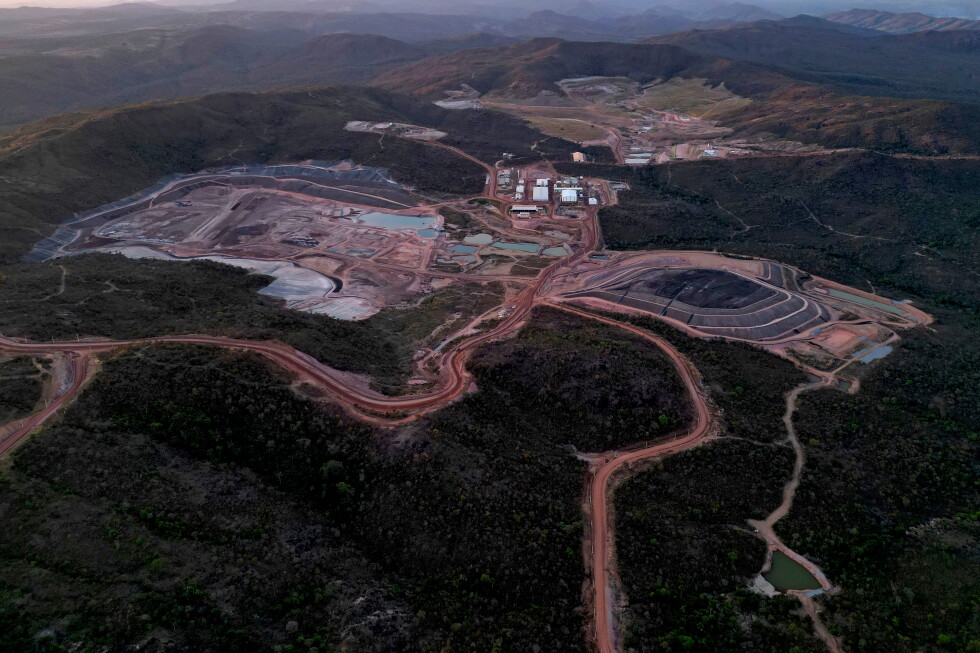
Against the backdrop of a global race to secure critical inputs for the clean energy transition and high-tech manufacturing, Brazil has emerged as a top alternative destination for rare earth mineral exploration after China implemented export restrictions last year. A joint analysis conducted by the Associated Press and Reporter Brasil of all Brazilian National Mining Agency regulatory records through June reveals an unprecedented boom in exploration permit requests: more than 86% of all active rare earth applications have been filed in just the past three years, with 268 new submissions registered in the first half of 2026 alone.
Rare earth elements are a collection of 17 chemically similar metals that are irreplaceable for manufacturing permanent magnets, consumer electronics, defense systems, electric vehicle motors, and wind turbine components. As the world accelerates its shift away from fossil fuels to curb global warming, the International Energy Agency projected in 2023 that global demand for these critical minerals could grow at least threefold by 2040. For decades, China has controlled nearly half of the world’s total rare earth reserves and dominates the global processing and refining supply chain, prompting Western nations to diversify their supply sources after Beijing tightened export rules last year. With the world’s second-largest reserves of rare earth deposits, Brazil has quickly become a focal point for this global supply chain reorientation.
Data from the joint investigation shows foreign investors are leading the exploration rush, accounting for more than 40% of all pending applications. Australian and U.S. firms hold the largest share of foreign-backed projects, highlighted by the recent acquisition of Serra Verde, Brazil’s only currently operating commercial rare earth producer, by a U.S.-backed mining company. While no Chinese firms have submitted new exploration applications as of June, Chinese state and private actors have already moved to position themselves in Brazil’s growing rare earth sector: last year, state-owned China Nonferrous Metal Mining Group purchased Brazilian tin producer Mineracao Taboca, and announced plans to conduct a full assessment of rare earth potential at the firm’s Amazon basin mine. Separately, China’s Shenghe Resources has entered a joint partnership with Brazilian mining firms WEG Mineracao and Fenrir do Brasil to develop rare earth projects across the country, including a large site in the state of Minas Gerais.
Despite the economic and geopolitical momentum behind the exploration boom, the rapid growth of mining claims has triggered urgent environmental and community alarms. Research from Reporter Brasil’s Energy Transition Observatory finds that at least 25% of all pending rare earth exploration applications are either located within protected natural areas and Indigenous territories, or fall within a 6-mile buffer zone surrounding these sensitive lands — a proximity that ecological experts warn carries major risk of environmental degradation.
Depending on the extraction and processing methods used, rare earth mining can generate toxic chemical runoff and low-level radioactive waste. Additional potential harms include widespread deforestation, contamination of river and lake systems that destroys fish populations and threatens drinking water supplies, as well as chronic air and noise pollution that disrupts local communities. In central Brazil’s Goias state, for example, a small traditional Afro-Brazilian community finds its territory overlapping with mining claims held by Canadian firm Aclara Resources, which secured $5 million in U.S. International Development Finance Corporation funding for the project last year. While Aclara has stated that it will not conduct direct mining activities within the community’s borders after public pushback, local residents still worry that operations set to potentially launch as early as 2028 will damage critical local springs and displace native wildlife.
In response to growing foreign interest and the risks that come with unregulated development, Brazilian policymakers are moving to implement new national safeguards for the rare earth sector. Federal lawmaker Zé Silva, who authored pending legislation that would create a national critical and rare earth mineral policy, set clear investment rules, and establish a federal council to monitor excessive foreign influence in the sector, emphasized that China’s current dominance of global processing capacity leaves Brazil well-positioned to capture more value from its own resources. Under the proposed legislation, foreign companies are welcome to invest in Brazilian rare earth projects, but they are required to transfer technology and build local processing capacity within the country. President Luiz Inacio Lula da Silva confirmed Monday that the Brazilian Senate will move forward with advancing the bill to protect national sovereignty over the country’s natural resources. “We will not allow anyone from outside to come here and exploit our mineral resources, because we want their processing and transformation to happen here,” Lula said.
The Associated Press’ climate and environmental reporting is supported by funding from multiple private foundations, with the AP retaining full editorial control over all content.