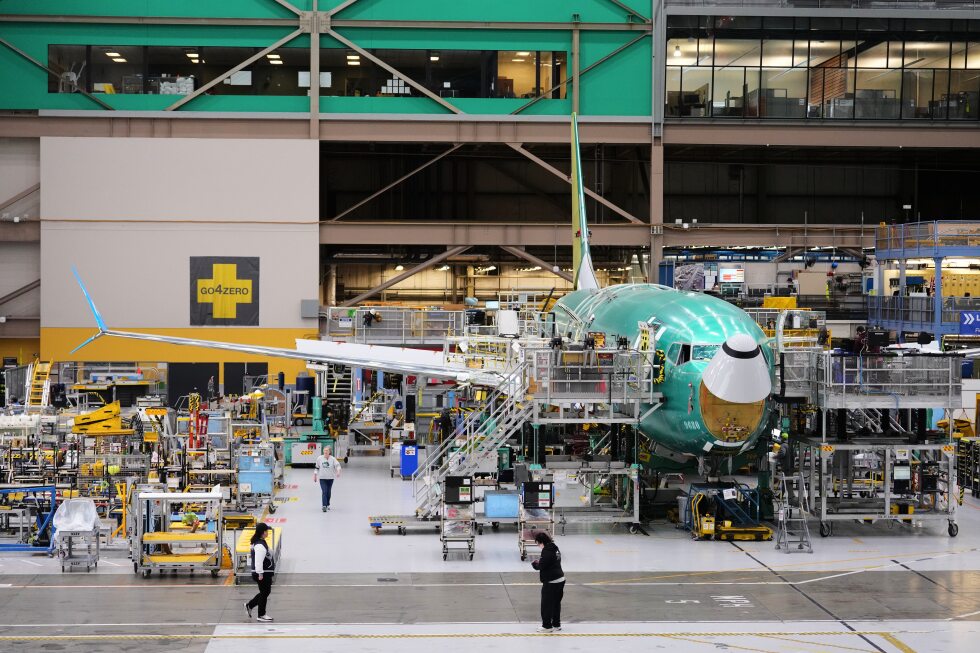
Speaking to reporters aboard Air Force One while returning from his bilateral summit with Chinese President Xi Jinping, former U.S. President Donald Trump made a surprise announcement Friday: U.S. aerospace giant Boeing is set to secure its first major sale to China in nearly a decade, anchored by a 200-aircraft order. Trump added that the preliminary agreement includes a Chinese reservation for up to 750 Boeing aircraft total, a deal he framed as a key win from the high-stakes Beijing meeting.
Neither the Chinese government nor Boeing has issued an official statement confirming the proposed transaction, which would mark a critical turning point for the U.S. manufacturer, for whom China was once a core pillar of long-term global growth. Boeing Chief Executive Kelly Ortberg was among the cohort of top American business leaders who traveled with Trump to China, part of a broader delegation pushing to expand U.S. goods and services access to the massive Chinese market. Trump also noted the deal would deliver secondary gains to industrial conglomerate General Electric, which he says will supply between 400 and 450 aircraft engines for the order. GE Aerospace CEO H. Lawrence Culp also joined the presidential trip, but the company has not issued any immediate comment on the reported agreement.
The Trump administration has centered Boeing as a key asset in its broader strategy to revitalize American manufacturing in recent years, a push that already delivered large commercial jet orders from Qatar and Saudi Arabia during a 2023 Middle East presidential visit. Still, the lack of formal confirmation from all involved parties has left industry analysts cautious about the actual scope of any potential agreement. Bonnie Glaser, managing director of the German Marshall Fund’s Indo-Pacific program, noted that while many observers hoped the Xi-Trump summit would produce concrete, public deal announcements, the trip ended with deep uncertainty over the actual terms of any bilateral commercial agreements.
“All we have right now is the announcement the president made to the world that China agreed to this,” Glaser told reporters during a Friday media briefing. “We really have to wait for official numbers from Boeing or the Chinese government to confirm this. This is not an isolated case—we still have no concrete details on reported agreements for soy, liquefied natural gas, and beef either.”
For Boeing, a breakthrough in China could not come at a more pivotal moment. Before the COVID-19 pandemic, roughly one in every three narrowbody aircraft Boeing delivered globally went to Chinese operators. But that business collapsed sharply as geopolitical tensions drove a steady deterioration in U.S.-China trade relations over the past several years. Even ahead of the summit, Ortberg expressed optimism that any broad trade deal reached between Trump and Xi would open a meaningful new opportunity for Boeing, noting that the administration has prioritized supporting the company’s international growth efforts.
Ortberg stepped into the CEO role in 2024, a year marked by cascading crises for the 108-year-old manufacturer. In January 2024, an Alaska Airlines-operated 737 MAX suffered a mid-flight emergency when a door plug blew off the fuselage shortly after takeoff from Portland, Oregon, triggering widespread public and regulatory scrutiny over allegations of systemic production and quality control failures at the company, which sent its financial position under growing strain. Months later, the U.S. Department of Justice reopened a criminal investigation into Boeing linked to two deadly fatal 737 MAX crashes that killed 346 people between 2018 and 2019. The case ultimately concluded with a deferred agreement that saw Boeing pay an additional $1.1 billion in fines, victim compensation, and commit to sweeping internal safety and quality overhauls.
To cap off the turbulent year, more than 30,000 machinists at Boeing’s 737 MAX assembly facility in Renton, Washington, staged an eight-week work stoppage that stretched through the fall of 2024, disrupting production lines and piling further financial pressure on the already struggling company.